
Reviewed · BUENOS AIRES TOURS
Pachamama – Argentine Cooking Experience in Buenos Aires
Argentine cooking makes more sense when you get your hands into it. At Pachamama, you start with a homemade picada and vermouth, then work through empanadas, chimichurri, humita, chipá, and flamed dulce de leche crepes with ice cream. The meal is paired with Durigutti wines from Mendoza, so this is both a cooking class and a long Argentine lunch.
I especially like the small-group format, limited to 10 people, and the way food comes with stories about Argentine customs, regional ingredients, and mate. I also like the practical extras: a PDF recipe book, class photos, and Buenos Aires tips. The main thing to know is that you work as a group, so you may not personally prepare every dish from start to finish.
Key points
- A five-step Argentine menu: Picada, chipá, beef empanadas, humita stew, and dulce de leche crepes.
- Franco and the Pachamama team: English-speaking hosts guide the cooking and shared meal.
- Wine pairing included: Durigutti wines from Las Compuertas, plus vermouth, lemonade, and water.
- Hands-on, but collaborative: You take turns helping with several dishes rather than cooking four full recipes alone.
- Useful take-home extras: Recipes arrive by QR code, and class pictures and local Buenos Aires advice are included.
- Flexible for diets: The menu can be adapted for vegetarian, gluten-free, and lactose-free diners.
A Buenos Aires food lesson that ends at the table
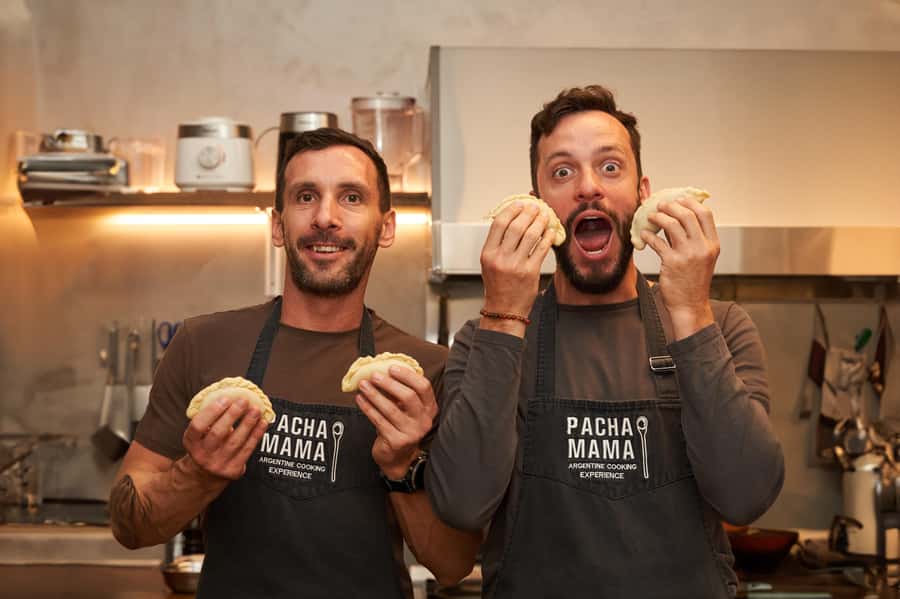
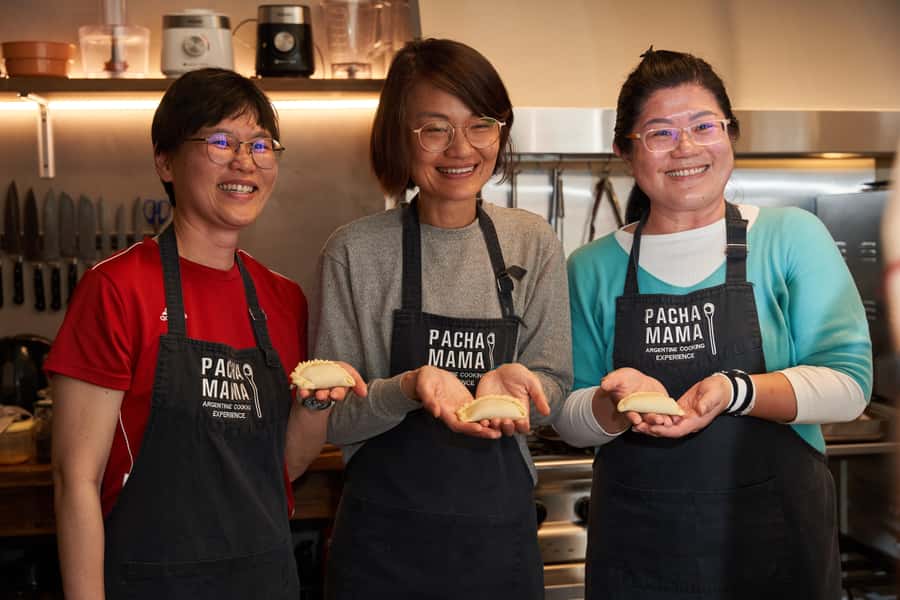
Pachamama is built around a simple Argentine idea: food is for sharing. You do not merely watch a chef assemble a plate. You sit down with other people, learn why the dishes matter, help prepare them, and eat the results together.
The setting is described as cozy and homey, which fits the format. This is not a formal restaurant meal with a chef performing at a distance. It is a social cooking session, with the instructors moving the group through the menu and explaining the customs behind it.
The class is given in English, and the small size matters. With a maximum of 10 participants, you should have a reasonable chance to take part, ask questions, and follow the work. The provider also lists a capacity of up to 14 people, so check the specific booking details for your date if group size is important to you.
The standard experience lasts about three hours, though the detailed schedule describes it as 3.5 hours. Private groups can arrange a shorter version of about 2.5 hours. I would allow at least half a day around the booking, since the final meal and wine pairing are part of the point, not an afterthought.
more Buenos Aires days to weigh up
- Buenos Aires: Empanadas and Alfajores Guided Cooking Class
★ 4.8 · 486 reviews - Buenos Aires: Empanada & Alfajor Cooking Lesson in Palermo
★ 4.6 · 186 reviews - BA: Empanadas and Alfajores Cooking Experience in Palermo
★ 5.0 · 112 reviews
Starting with picada, vermouth, and Argentine food customs
The class begins with a homemade picada, local bread, preserves, and pickles. You also receive a vermouth cocktail, a fitting start in Argentina, where vermouth is often enjoyed as a relaxed pre-meal drink.
This opening gives you time to meet the group before the cooking begins. It also sets up the cultural side of the class. The team introduces the background of Argentine cuisine and touches on familiar local customs such as mate, chimichurri, and the spice-filled regional empanada.
The picada is useful because it gives you a first taste of the balance the class aims for: preserved foods, bread, savory bites, and drinks before the main cooking starts. You are not beginning hungry and rushed. At the same time, the early food means you should pace yourself. The class includes several more courses, wine, and dessert.
This part will suit you if you like context with your meal. You learn not only what goes into a dish, but also how it fits Argentine daily life and local traditions. If you want a fast class focused only on knife skills and recipes, the cultural introduction may feel slower than expected.
Chipá and sauces: a quick lesson in regional flavor
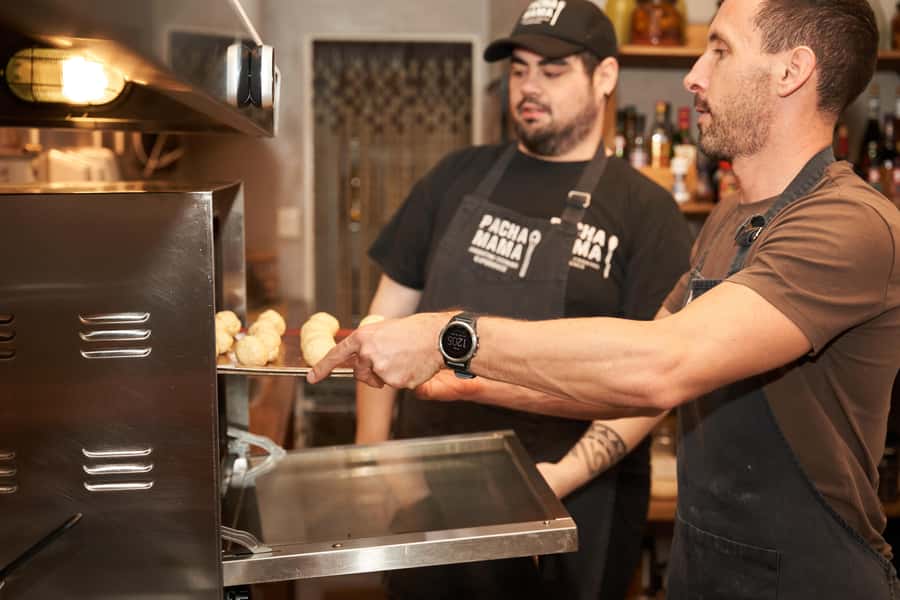
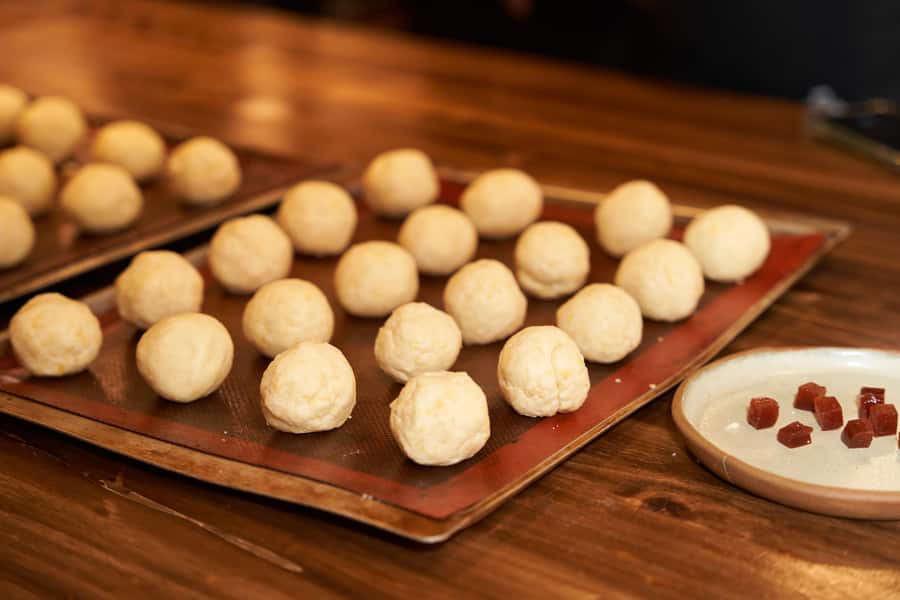
One of the first prepared items is chipá with barbecue sauce and fermented spicy sauce. Chipá is a small cheese bread associated with the wider northeastern region of Argentina and neighboring Paraguay. It gives the class a different flavor from the better-known beef dishes that many visitors expect.
The sauces add contrast. Barbecue sauce brings sweetness and smoke, while the fermented spicy sauce supplies heat and acidity. You will get a sense of how Argentine food can be more varied than the familiar image of steak and red wine.
The cooking is hands-on, but it is important to set your expectations correctly. The group shares the preparation, and people take turns helping with different parts. You are not promised four separate mini-courses in which you alone make every recipe. For many people, this is more social and less stressful. For a serious home cook, it may mean you want to pay close attention and ask to help with the dishes that interest you most.
Beef empanadas and the case for making chimichurri
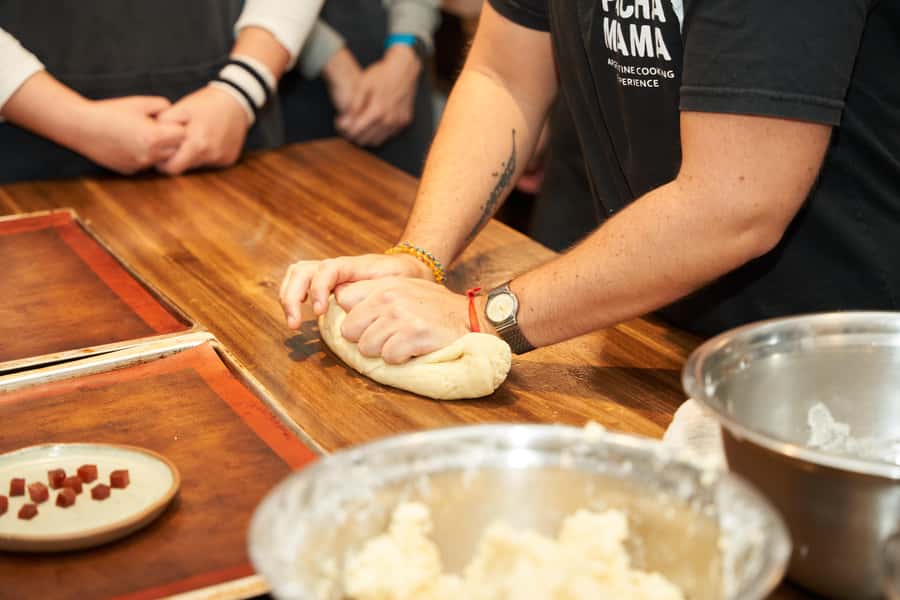
Empanadas are one of Argentina’s essential foods, and the Pachamama menu includes beef empanadas with chimichurri sauce. This is one of the most useful parts of the class because empanadas are easy to recognize in Buenos Aires, but their fillings, seasonings, and folding styles can vary by region and household.
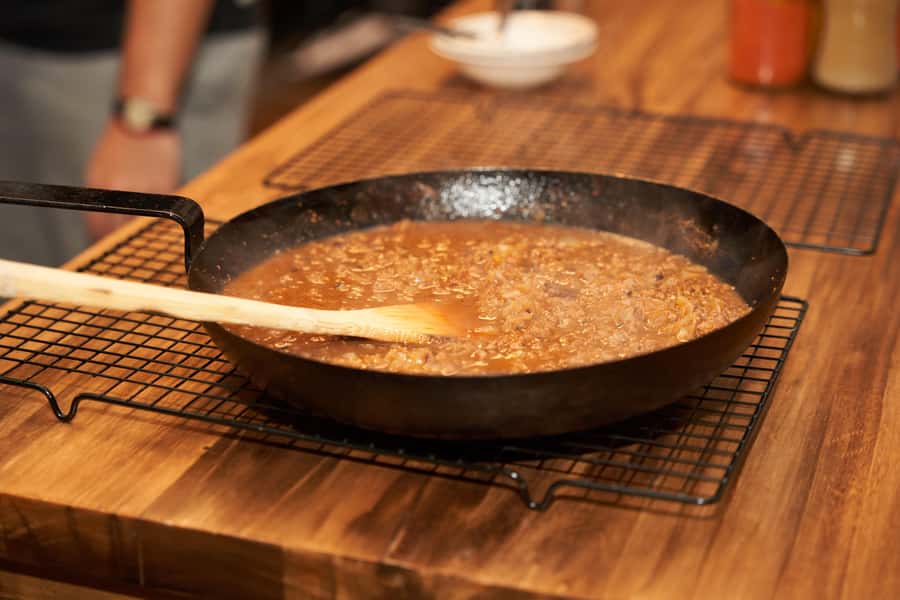
You get to see how the filling comes together and how the dough is handled. The chimichurri gives you another practical skill to take home. It is a fresh, sharp sauce that can brighten grilled meat, vegetables, bread, or anything else that needs a lift.
I like this pairing because it explains two pieces of Argentine food culture at once. The empanada is portable, filling, and tied to regional cooking. Chimichurri connects naturally to the country’s love of grilled beef, yet it is simple enough to recreate after your trip.
The class does not promise that you will prepare a full batch independently. Instead, you will contribute as part of the group. If you are hoping to master a particular folding technique, tell the instructor you want a turn rather than waiting for an opening.
Completely different, still leaving from Buenos Aires:
- Buenos Aires Hop-On Hop-Off Bus, Free Walking Tours & Discounts
★ 4.5 · 2,218 reviews - Buenos Aires: Piazzolla Tango Show with Optional Dinner
★ 4.4 · 2,122 reviews - Buenos Aires: City Highlights Guided Tour with Transfer
★ 4.7 · 1,946 reviews - Buenos Aires: Hop-On Hop-Off City Bus Tour
★ 4.2 · 1,855 reviews
Humita stew gratin brings a different side of Argentina
The main savory course is humita stew gratin. Humita is a corn-based dish with roots in Indigenous South American cooking, and it offers a change from the meat-heavy food often associated with Argentina.
The gratin treatment gives the stew a baked, comforting finish. It also helps round out the menu. You have bread and sauces, a filled pastry, and then a soft corn dish with a different texture and flavor. This is a good reason to choose the class over an activity focused only on grilling or steak.
The menu is designed as a progression rather than a pile of unrelated samples. You begin with small bites, move into empanadas, then have a substantial savory course before dessert. The included water, homemade lemonade, and wine give you ways to pace yourself throughout the meal.
If you are vegetarian, the team can adapt the menu. Vegetarian, gluten-free, and lactose-free adjustments are available, but you should communicate your needs when booking or before the class. The supplied information does not specify the exact replacement dishes, so do not assume every item will be identical to the standard menu.
Ending with flamed dulce de leche crepes
Dessert is a strong finish: flamed dulce de leche crepes with ice cream and homemade limoncello. Dulce de leche is one of Argentina’s signature flavors, and using it in crepes makes the dessert familiar enough for most people while still feeling distinctly local.
The flame adds a bit of theater, but the important part is the combination of warm crepe, sweet milk caramel, cool ice cream, and the citrus note from limoncello. After several savory courses, it gives the meal a clear final act.
You should not expect a light dessert. Dulce de leche is sweet and rich, and the class includes a full menu before it arrives. Save room, eat slowly, and treat the dessert as part of the social meal rather than something to rush through.
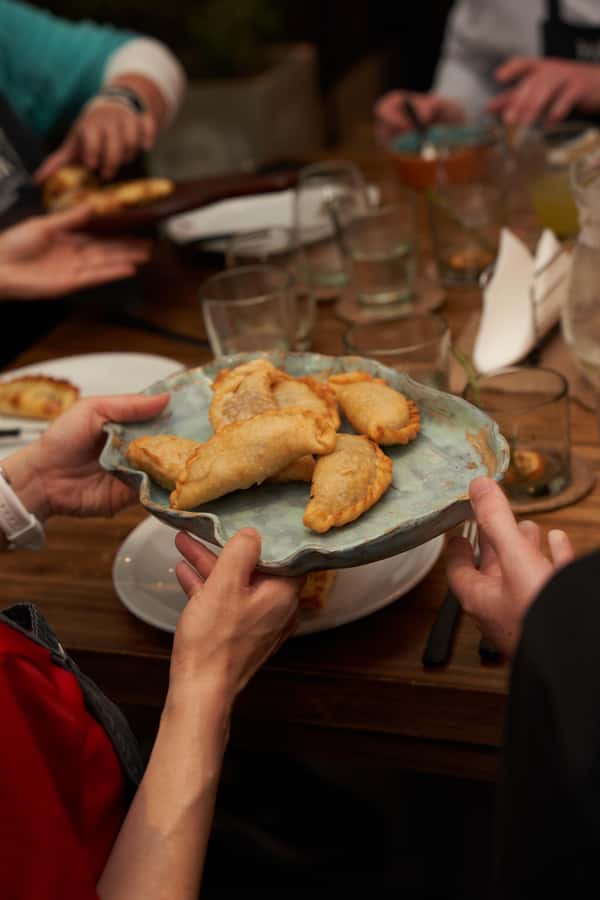
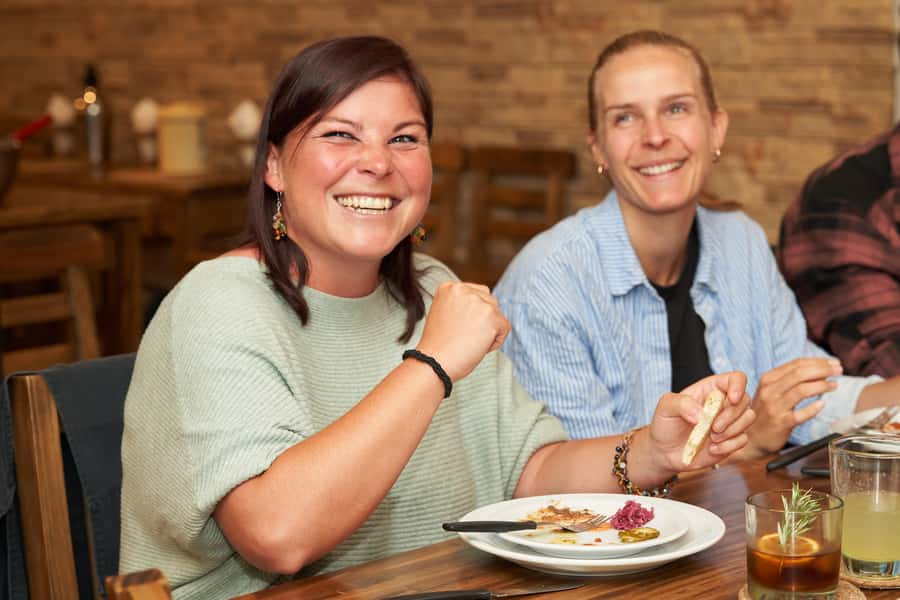
The cooking section ends with everyone sitting around the table to eat what the group prepared. That shared meal is where the class earns its social character. You can compare techniques, ask about ingredients, and meet people from different countries without the pressure of a formal restaurant setting.
Durigutti wines from Mendoza add real value
The wine pairing uses Durigutti wines from Las Compuertas in Mendoza. Vermouth, water, and homemade lemonade are also included, along with the opening vermouth cocktail.
At $75 per person, the drink package helps make the price easier to understand. You are not paying only for a demonstration. The fee covers an instructor-led cooking class, a five-step menu, several drinks, the shared meal, and recipe material afterward. It also includes the social value of a small class, where you can take part rather than simply sit and watch.
I would compare this with the likely cost of a good meal in Buenos Aires, then add the value of instruction and the wine. The class is not the cheapest way to eat Argentine food, and it may not suit someone who wants a basic market lunch. But for a visitor who wants a meal, a cultural introduction, and practical recipes in one booking, the price is reasonable.
The wine pairing also makes the class feel more like an Argentine gathering. Mendoza is Argentina’s best-known wine region, and drinking local wine alongside food from the country gives the meal a stronger sense of place.
What the small group feels like in practice
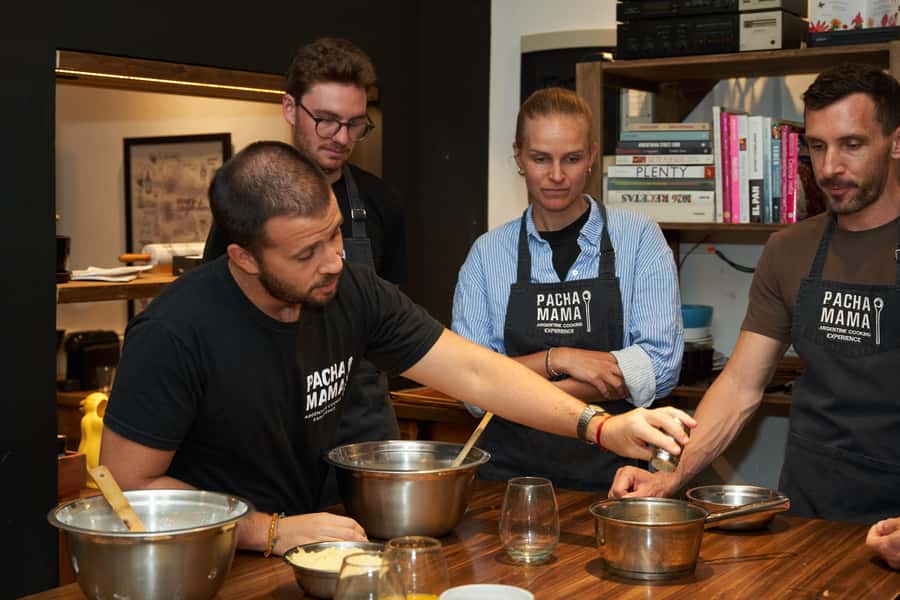
The class is limited to 10 participants according to the activity details, while the provider also gives a maximum capacity of 14. Either way, this is far smaller than a large cooking demonstration.
The instructors are described as organized, professional, friendly, and fun. Franco is specifically named as one of the hosts, and the team is presented as taking an active role in keeping the session moving and making sure people can participate.
That organization matters. A menu with dough, fillings, sauces, a stew, dessert, wine, and several explanations could easily become messy. The class is planned around shared preparation, so expect to move between watching, helping, tasting, and talking.
One useful point from the experience is that the class is not a private lesson. You may assist with only part of the preparation while another person handles a different step. I see this as a plus for couples and solo visitors who want a relaxed social afternoon. It is less ideal if your main goal is to produce every dish yourself.
Recipes, photos, and Buenos Aires advice after class
The practical extras give Pachamama more value than a meal that disappears once you leave. Recipes are supplied in PDF format through a QR code, and class pictures are included as memories of the session.
You also receive local Buenos Aires recommendations. This can be especially useful early in your stay, when you are still deciding where to eat and what neighborhoods or sights to add to your plans. The information is part of the class rather than a separate city tour, so think of it as a helpful bonus, not a full itinerary planner.
The recipes are the most useful take-home item. Empanadas, chimichurri, chipá, humita, and dulce de leche crepes are all dishes you can connect with the city after you return home. You will still need access to suitable ingredients, but the class gives you a clear starting point.
Who should book Pachamama
I would recommend this experience to you if you want to understand Argentine food through participation, not just eating. It works especially well for couples, solo visitors, food-focused families, and anyone who likes meeting people during a trip.
It is also a good rainy-day or mid-stay activity. The class gives you a break from sightseeing while still adding cultural knowledge to your Buenos Aires visit. Because the menu includes meat, corn, cheese, sauces, wine, and dulce de leche, it offers a broad introduction to local flavors in one sitting.
Vegetarians can join, and gluten-free or lactose-free adjustments are possible. Still, you should ask what your adapted menu will include before booking if your diet is strict.
I would be more cautious if you dislike shared preparation, avoid alcohol entirely, or want to cook every item alone. The group format is central to the experience. Hotel pickup and drop-off are not included, so you also need to make your own way to the venue in Buenos Aires Province.
The class is wheelchair accessible, and instruction is in English. Private groups can request Spanish, according to the activity details.
Should you book this Argentine cooking class?
Book Pachamama if you want a friendly, food-centered way to learn about Argentina in roughly three hours. The strongest reasons are the well-rounded menu, the included Mendoza wines, the small group, and the useful recipes and city advice afterward.
The one important trade-off is the shared cooking format. You will help prepare the dishes, but you may not personally make every recipe from beginning to end. If that suits you, the class offers a satisfying mix of cooking, culture, conversation, and a full meal for $75.
Free cancellation is available up to 24 hours before the experience, and you can reserve now and pay later. Check the start time for your date, allow extra time for the meal, and tell the team about dietary needs in advance.
FAQ
How long does the Pachamama cooking experience last?
The activity is listed as three hours, while the detailed description gives an experience length of 3.5 hours. Private groups can adapt the class to about 2.5 hours.
What food will I prepare?
The menu includes a homemade picada, chipá with barbecue and fermented spicy sauces, beef empanadas with chimichurri, humita stew gratin, and flamed dulce de leche crepes with ice cream and homemade limoncello.
Are drinks included?
Yes. The experience includes Durigutti wines from Las Compuertas, a vermouth cocktail, vermouth, water, and homemade lemonade.
Is the class taught in English?
Yes. The regular experience is given in English. Private groups can arrange the class in Spanish.
Can the menu accommodate dietary restrictions?
The menu can be adapted for vegetarian, gluten-free, and lactose-free diets. Contact the provider about your needs before attending.
How many people are in the group?
The activity is described as a small group limited to 10 participants. The provider also lists capacity for up to 14 people, so check the details for your chosen date.
Is hotel transportation included?
No. Hotel pickup and drop-off are not included.
Can I cancel the booking?
Yes. You can cancel up to 24 hours in advance for a full refund. The experience also allows you to reserve now and pay later.
Recently added in Buenos Aires
- Buenos Aires: Private City Tour by Car with Hotel or Pickup★ 5.0 · 3 reviews
- Guided tour Boca Juniors Museum & Stadium + Caminito★ 3.3 · 3 reviews
- Buenos Aires: Montserrat, San Telmo, La Boca, and Puerto …★ 5.0 · 3 reviews
- Unique Tigre and Delta Private Day Cruise Navegation★ 5.0 · 3 reviews
- Buenos Aires: MALBA Museo de Arte Latinoamericano Tour★ 4.1 · 3 reviews
- Buenos Aires: Mate Workshop y Otras Yerbas★ 5.0 · 3 reviews
- Tango Show at: MichelAngelo★ 4.5 · 3 reviews
- From Colonialism to Eclecticism, Buenos Aires arquitectonica★ 5.0 · 3 reviews
Buenos Aires Tours, compared.

Buenos Aires: Piazzolla Tango Show with Optional Dinner
Read our review →
Buenos Aires: City Highlights Guided Tour with Transfer
Read our review →
Buenos Aires: La Boca Guided Walking Tour in English
Read our review →
Buenos Aires: La Recoleta Cemetery Guided Tour in English
Read our review →
Buenos Aires: Tango Show at Tango Porteño & Optional Dinner
Read our review →
Buenos Aires: 9-Course Argentine Meat Tasting at Fogón Asado
Read our review →

Buenos Aires: Madero Tango Show with Optional Dinner
Read our review →Browse the lists this tour appears in