
Reviewed · BUENOS AIRES TOURS
Buenos Aires: Hop-On Hop-Off City Bus Tour
Buenos Aires is too spread out to understand from one plaza, and this bus gives you a useful first look at the whole city. In one long circuit, you pass tango districts, football stadiums, grand avenues, waterfront parks, Palermo, Belgrano, and Recoleta without wrestling with directions or changing public transport.
I like the 25-minute service and the freedom to stay aboard for the full loop or hop off when something catches your eye. I also like the multilingual audio guide, which fills the ride with city background and even local music between sections.
The catch is time. A full circuit can take about three hours, and traffic can stretch the gap between buses beyond 25 minutes. If you want to visit several museums or neighborhoods in one day, you will need to plan your stops rather than simply ride and hope.
Key points to know before boarding
- The full red route takes about three hours, making it useful for a first-day overview but too long for a quick taxi substitute.
- La Boca, Caminito, Puerto Madero, Palermo, Recoleta, and Belgrano all appear on the route, giving you a broad look at Buenos Aires.
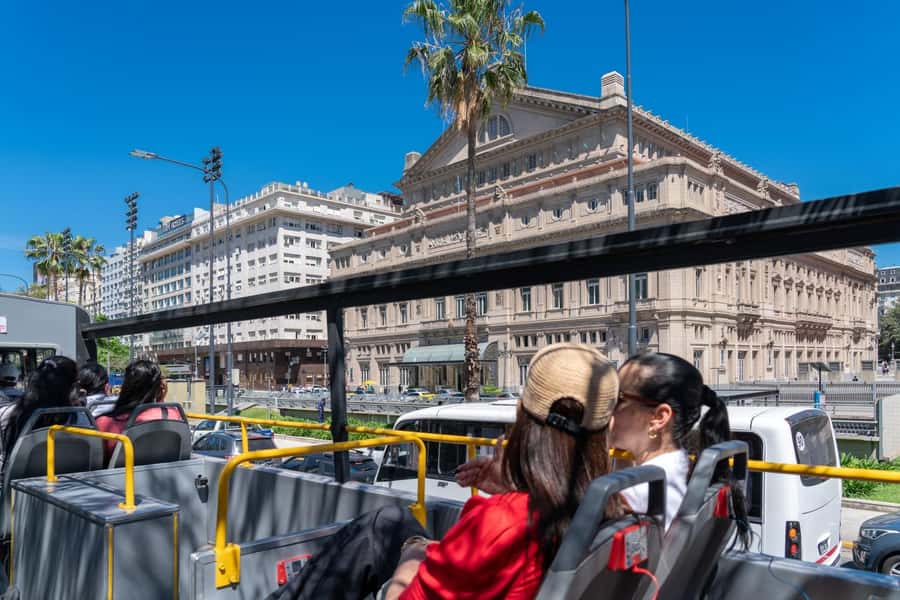
- The open-top upper deck offers the best views, while air conditioning and a sunroof help on hot or changeable days.
- Audio commentary comes in 11 languages, including English, Spanish, Portuguese, Japanese, Chinese, Russian, Italian, French, German, Ukrainian, and Korean.
- River Plate and Boca Juniors stadiums are served, but stadium tours do not operate on match days.
- WiFi is included on the buses and at bus stops, though you should not depend on it for navigation.
Why this bus works well for a first look at Buenos Aires
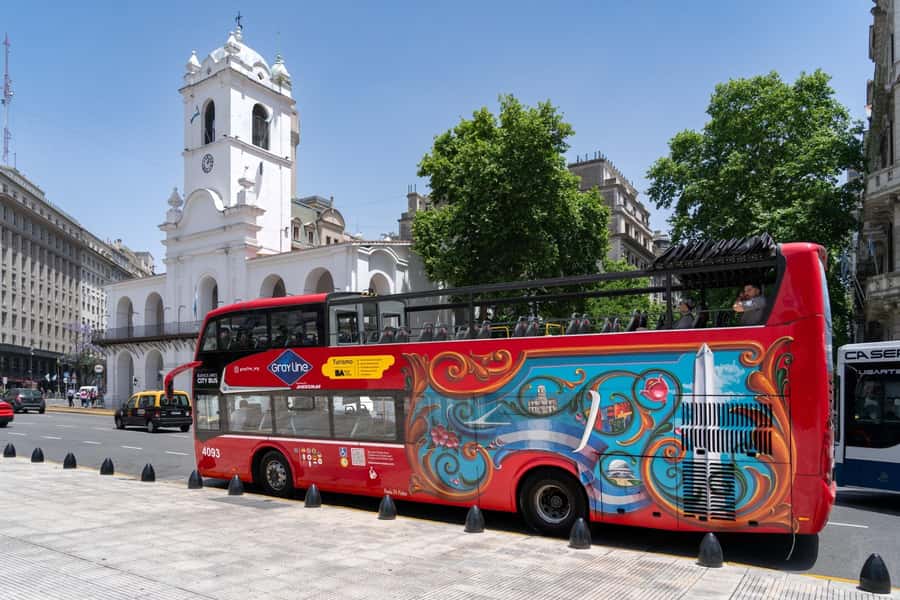
Buenos Aires is a city of separate personalities. The central streets feel formal and European, La Boca is painted in bright colors, Puerto Madero is sleek and modern, and Palermo spreads out with parks, museums, and broad roads. A walking tour can show you one corner well, but it takes more effort to connect these districts.
That is the main value here. You get a citywide orientation before choosing where to spend your limited time. I would use the first ride as a moving introduction, listening to the audio and watching how the neighborhoods change. On a second day, I would use the pass more selectively, getting off for the places that made me curious.
The service runs daily, with buses operating from about 9:30 a.m. to 6 p.m. The first buses begin around 9:20 a.m. from stop 0 on Diagonal Norte and stop 12 on Avenida Santa Fe. The last buses leave at about 5:30 p.m. and complete only half a circuit, so do not leave your longest ride until the end of the day.
More City Tours in Buenos Aires
- Buenos Aires: City Highlights Guided Tour with Transfer
★ 4.7 · 1,946 reviews - Best of Buenos Aires: Guided Sightseeing City Tour
★ 4.0 · 402 reviews - Buenos Aires Private City Tour with Local Guide
★ 5.0 · 308 reviews
Starting at Diagonal Norte or Plaza San Martín
You can board at any stop, but the two listed starting points are stop 0 at Avenida Presidente Roque Sáenz Peña 728, near the central Diagonal Norte area, and stop 12 at Avenida Santa Fe 808 by Plaza San Martín. This flexibility is handy if you are staying outside the center.
The city-center stop is a sensible place to begin because the first part of the route leads through major civic and historic areas. Plaza San Martín is also practical if you are already near Recoleta, Retiro, or the elegant northern center.
The ticket starts counting when you first board, not simply when you buy it. The pass is offered for 24, 48, or 72 hours, although the booking information describes the activity as lasting one to two days in some places. Check the exact option shown at booking if you want the 72-hour version.
One unusual detail matters if your reservation includes the El Gato Negro brunch arrangement. The selected booking time refers to that reservation, and missing it means losing the brunch without a refund. The bus ticket itself can be activated at any time on the initial reserved day.
The southern route: Congreso, San Telmo, and La Boca
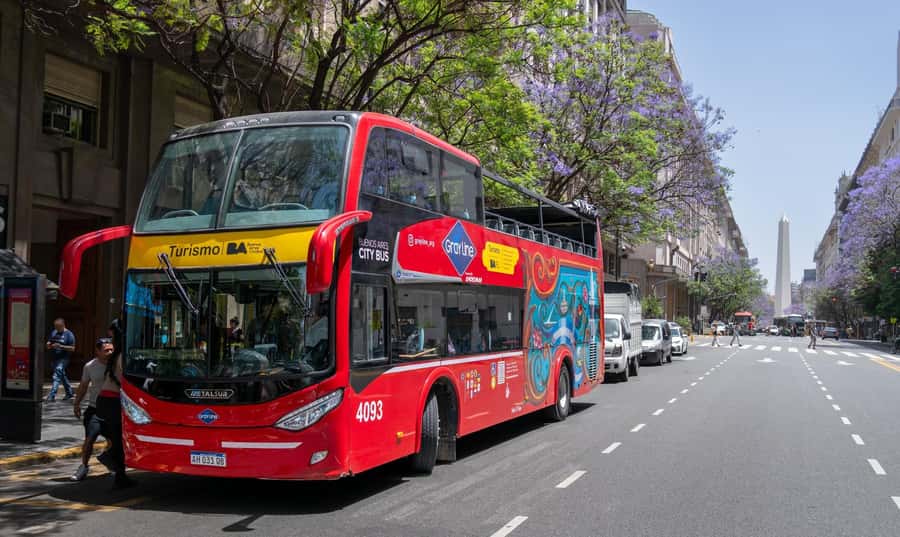
The route first brings you past the Palace of the Argentine National Congress, an impressive civic building and a useful introduction to the scale of central Buenos Aires. You also pass the El Loco Chávez stop and the Paseo de la Historieta, which connects to the city’s comic-art tradition.
Plaza Dorrego marks the San Telmo section. This is one of the most atmospheric areas on the route, with old streets, cafés, antiques, and tango associations. The bus only gets you to the neighborhood. To experience San Telmo properly, get off and walk.
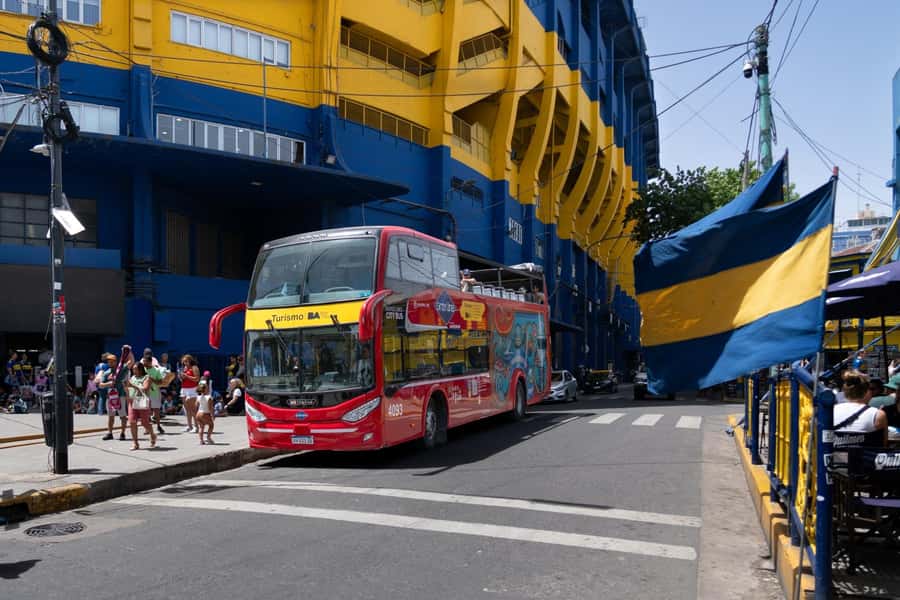
Next comes Usina del Arte, a striking cultural center in a former power station, followed by La Bombonera, the blue and yellow home of Boca Juniors. Football is not a side note in Buenos Aires, and the stadium stop gives you a quick sense of that local passion even if you do not take a stadium tour.
Caminito is the essential La Boca stop. Its painted buildings, street art, tango performances, and souvenir stalls make it one of the city’s most recognizable corners. It is also one of the places where you should keep your visit focused. The colorful tourist streets are the main draw, and the bus is useful because it takes you directly to them.
You can access the Boca Museum from the Bombonera stop. On days when Boca Juniors or River Plate has a match, stadium tours do not operate, so check the football schedule if either club is a priority.
Waterfront Buenos Aires: Costanera Sur and Puerto Madero
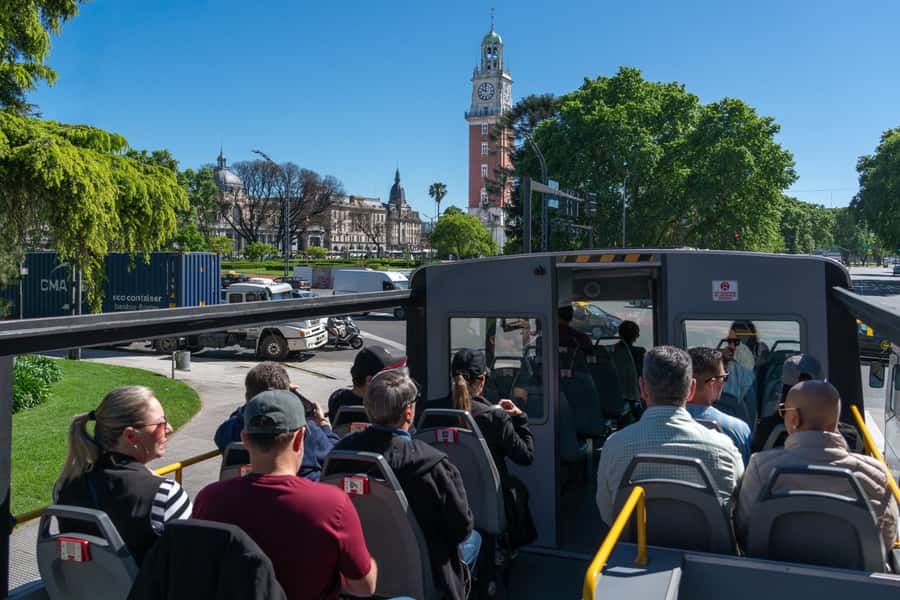
After La Boca, the bus heads toward Costanera Sur and Puerto Madero. Costanera Sur gives you a break from dense streets, with open public space beside the river. It is a different side of Buenos Aires from the old neighborhoods and grand downtown buildings.
Puerto Madero is the city’s polished modern district, with renovated dock buildings, restaurants, and contemporary towers. The contrast with San Telmo and La Boca is the point. Stay aboard for the changing views, or hop off if you want a waterfront meal and a closer look at the former port area.
The route also serves the tourist circuit and Estación Fluvial area. The audio guide is particularly useful here because the view alone does not explain how the port district changed. Still, commentary can occasionally arrive a little late, describing a building just after the bus has passed it. I would keep my eyes up and treat the recording as background rather than a perfectly timed walking guide.
more hop-on hop-off routes in Buenos Aires
- Buenos Aires Hop-On Hop-Off Bus, Free Walking Tours & Discounts
★ 4.5 · 2,218 reviews - Buenos Aires Hop-On Hop-Off Bus and Exclusive Benefits
★ 4.4 · 1,714 reviews - Buenos Aires: Hop-On Hop-Off Bus and Football Museums
★ 4.3 · 39 reviews - Mendoza Hop-On Hop-Off Wine Tour
★ 4.0 · 130 reviews
The northern center: Galerías Pacífico and Plaza San Martín
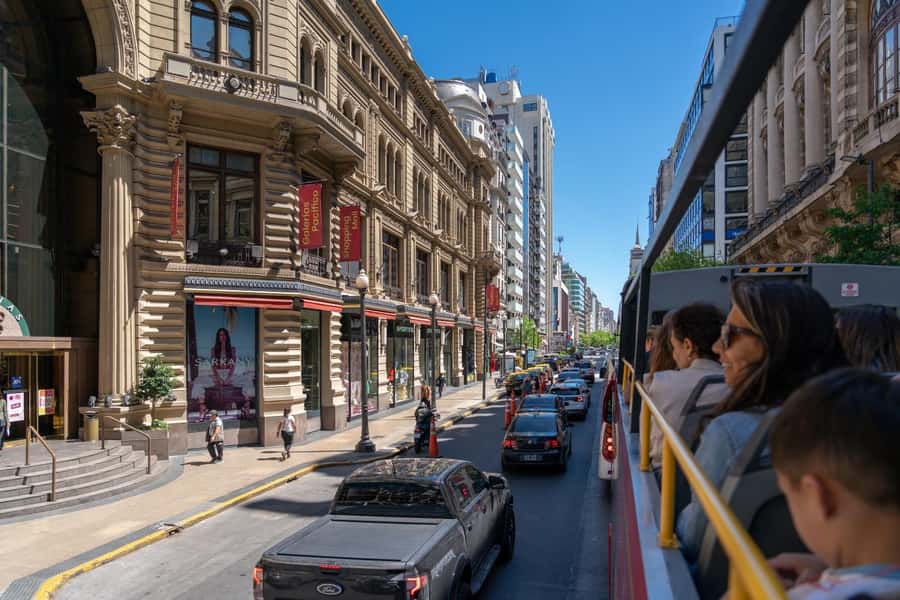
Galerías Pacífico is one of the route’s useful urban stops. The shopping center is known for its grand interior, making it more than a place to buy something. Nearby Plaza San Martín provides a leafy pause from the traffic and connects well with Retiro and the central business district.
This is also stop 12, where the operator’s office is located. If you want help with the route, tickets, or the audio system, it is a practical place to get oriented.
The bus then passes the Floralis Genérica, the large metal flower sculpture that opens and closes according to its mechanism. It is one of the easiest landmarks to spot from the upper deck, though you may want to hop off for a better photograph.
Palermo’s museums, planetarium, and parks
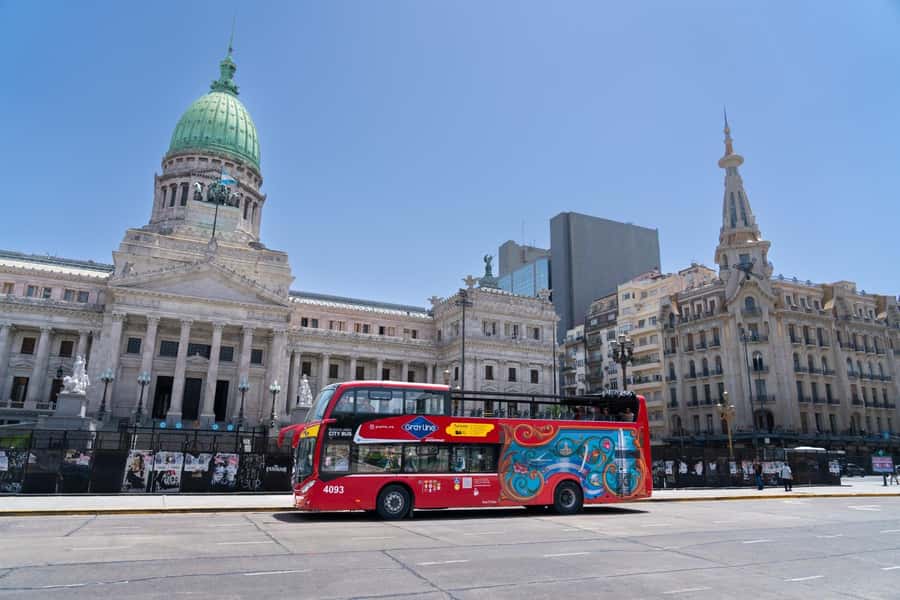
The northern section is where the ride becomes especially useful for first-time visitors. The Museum of Latin American Art of Buenos Aires, usually known as MALBA, brings major modern and contemporary Latin American art to the route. Admission is not included, so treat this as a transport connection, not a museum ticket.
The Planetario Galileo Galilei follows, set in the parks of Palermo. The planetarium’s distinctive building is enjoyable to see from the bus, while getting off gives you more time in the surrounding green spaces.
You also pass the Club de Pescadores and Jorge Newbery Airfield. These stops show the city’s relationship with the river and its broad recreational corridors. They are less essential for a short visit than La Boca or Recoleta, but they help explain why Buenos Aires can feel spacious despite its size.
The open upper deck is the best place to watch Palermo go by. On a sunny day, you get a clear view of tree-lined roads and large public spaces. On a hot day, the lower deck’s air conditioning is welcome. One practical complaint is that some passengers find it cool inside, while the headphone cords upstairs can be short. Bring a light layer and settle close enough to the audio socket.
Memory, Monumental, and Belgrano
Parque de la Memoria is one of the most serious stops on the route. The park commemorates victims of Argentina’s state terrorism and offers a quiet change of pace from the city’s monuments, shopping streets, and football culture. If you get off here, allow time to absorb the setting rather than treating it as a quick photo stop.
The bus then reaches Estadio Monumental Antonio Vespucio Liberti, home of River Plate. The River Museum is accessible from stop 19. As with Boca, stadium activity can change on match days, and tours do not take place when River or Boca are playing at home.
Chinatown and the Argentine Polo Association follow. Chinatown offers food shops and a different local flavor, while the polo stop points to a sport closely linked with Argentine identity. These are good examples of why the route is more useful than a simple monument circuit. You see how sports, immigration, public parks, and neighborhood life fit into the wider city.
The Carta Magna Monument is another northern landmark before the bus turns back toward Recoleta and the center.
Recoleta and Teatro Colón
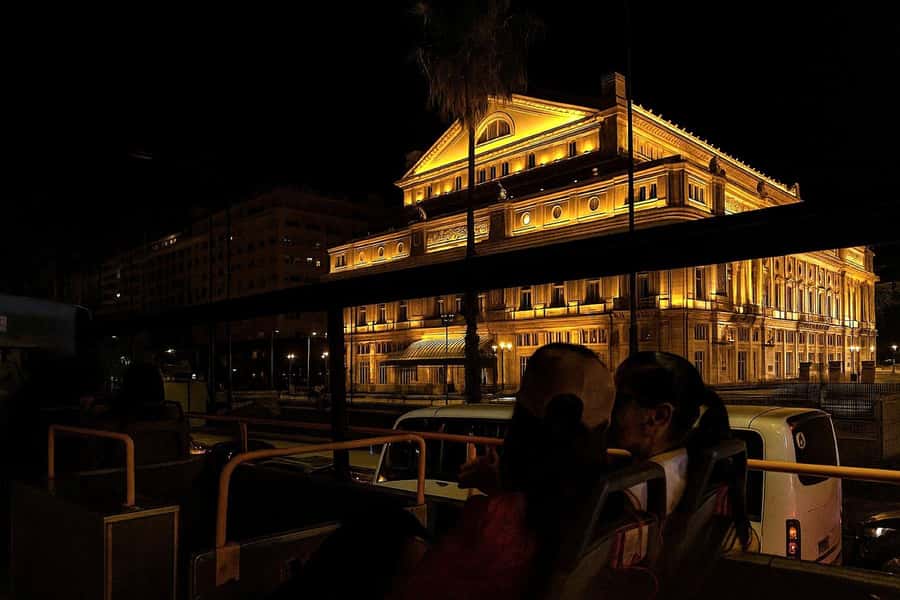
Recoleta is one of the most popular parts of Buenos Aires, and the bus gives you a convenient connection to its museums, cafés, grand buildings, and cemetery. One limitation is worth noting: the red route does not stop directly at the famous Buenos Aires Cemetery. The nearest stop is about a mile away, and another route may serve it more closely.
If Recoleta Cemetery is high on your list, plan the walk before you board. The bus can still help with the broader neighborhood, but it is not the most direct way to reach the cemetery entrance.
The final major sight is Teatro Colón, the city’s celebrated opera house. Even from outside, its central position and grand architecture make it an important stop. The bus then returns toward the starting points, completing a circuit that can take roughly three hours.
That length surprises some people. It is not a flaw if you want a city overview, but it matters if you are trying to fit in a museum, lunch, and several neighborhoods before closing time. I would not schedule a tight appointment immediately after boarding.
How to use the 24-, 48-, or 72-hour pass
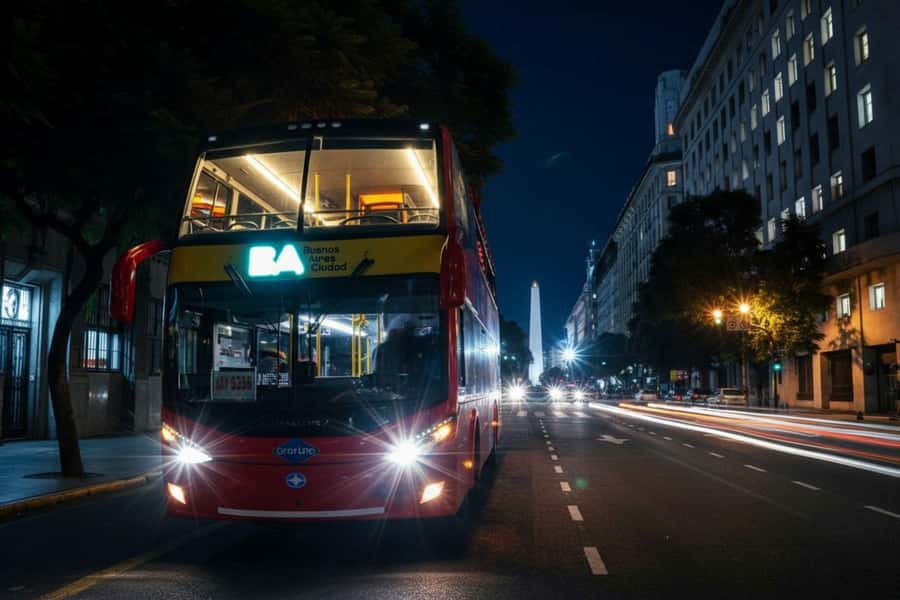
A 24-hour ticket is enough for a full loop and a few carefully chosen stops. It suits you if you have one free day and mainly want orientation, photographs, and easy access to La Boca, Puerto Madero, Palermo, and Recoleta.
The 48-hour pass offers better value if you want to get off often. Use the first day for the full circuit or the southern half, then return to your favorite areas on the second day. You can give San Telmo, La Boca, MALBA, Recoleta, and Puerto Madero more time instead of trying to squeeze them all into one ride.
A 72-hour ticket makes the most sense if you want a relaxed pace and several museum visits. The ticket period is continuous after first use, so start it when you are ready to use the bus, not simply when you arrive in the city.
The advertised price is about $35 per person. That is fair if you use the bus for sightseeing and transport over two days, especially in a large city where long taxi rides can add up. It is less compelling for a single short loop, since taxis or public transport may be cheaper for one specific journey.
Audio, WiFi, and the ride itself
The audio guide covers Spanish, English, Portuguese, Japanese, Chinese, Russian, Italian, French, German, Ukrainian, and Korean. Live assistance is listed in Spanish, English, and Portuguese. The commentary provides city facts, landmark explanations, and context for the neighborhoods passing outside your window.
The timing is not always exact. At times, the recording may describe a sight after the bus has already passed it. On other rides, staff announcements and the recording can overlap. I would use the guide to understand the city rather than expect a perfectly synchronized museum-style presentation.
Local music plays between sections, which adds some character to the ride. The system generally offers clear volume, but test the headphones early. Upstairs sockets may leave the cable tight, and lower-deck air conditioning can feel chilly.
Free WiFi is offered on the buses and at the stops. It may help with checking the route, but service can be unreliable. Keep an offline map or a screenshot of your stop plan, especially if you are using the bus to reach a timed attraction.
Timing, traffic, and practical value
The 25-minute frequency is good on paper and usually makes the system easy to use. In real city traffic, the wait can be longer, with one reported wait of about 35 minutes. Buses may also pause while passengers board at busy stops.
For the smoothest day, start early, ride the route in the morning, and choose two or three main stops. La Boca and Recoleta need time on foot. MALBA, the Boca Museum, the River Museum, and Teatro Colón all require separate admission, so do not count the bus ticket as a sightseeing pass.
There is no hotel pickup or drop-off. Food and drinks are also not included. That is normal for this type of service, but it means you should plan lunch near a stop rather than assume the bus will provide a break.
The open-top design gives you a good view of building fronts, sculptures, parks, and street life. A sunroof and air conditioning make the bus usable in different weather, though the upper deck is still the best choice when conditions are pleasant.
Who should book this Buenos Aires bus tour?
I would recommend it to first-time visitors, families, people with limited time, and anyone who wants a simple city orientation before exploring on foot. It is also useful if you want to see both football stadiums, since the route connects with La Bombonera and Monumental.
It suits independent sightseers who dislike fixed walking groups. You control how long you stay at each stop, and you can remain upstairs for the full loop when your feet need a rest.
I would be more cautious if you already know Buenos Aires well or want detailed time inside each attraction. The bus can get you close, but it cannot replace walking in San Telmo, exploring La Boca, or spending an afternoon in Recoleta. Traffic and the long circuit also make it a poor choice for tightly timed plans.
The operator offers free cancellation up to 24 hours before the activity, and reserve-now, pay-later booking may help if your schedule is still shifting. Check the exact departure details and ticket duration before paying.
Should you book it?
Book this tour if you want to understand the shape of Buenos Aires quickly and value easy transport between far-flung neighborhoods. The best plan is a 48-hour ticket, an early start, one full loop, and selected stops on the following day.
Choose the 24-hour option if you are short on time and mainly want the overview. Skip it if your entire visit is centered on one compact neighborhood or if you need exact point-to-point timing.
For most first visits, the bus earns its place as a practical orientation tool. Just allow for a three-hour loop, possible traffic delays, imperfect audio timing, and a little walking from stops. That small amount of planning lets you enjoy the city rather than spend your day figuring out how to cross it.
FAQ
How long is the Buenos Aires hop-on hop-off ticket valid?
You can choose a 24-, 48-, or 72-hour ticket. The time begins the first time you board the bus.
How often do the buses run?
Buses are scheduled about every 25 minutes during the day. Traffic and boarding can sometimes make the wait longer.
What are the operating hours?
The service runs daily from about 9:30 a.m. to 6 p.m. The first buses begin circulating around 9:20 a.m. from stops 0 and 12. The last buses leave around 5:30 p.m. and complete only half a circuit.
Where can I start the tour?
You can board at any bus stop. The two listed starting points are Diagonal Norte at Avenida Presidente Roque Sáenz Peña 728 and Plaza San Martín at Avenida Santa Fe 808.
Is the audio guide included?
Yes. The multilingual audio guide is included with the bus ticket.
Which languages are available for the audio guide?
The audio guide is available in Spanish, English, Portuguese, Japanese, Chinese, Russian, Italian, French, German, Ukrainian, and Korean.
Is a live guide included?
Live tour guide support is listed in Spanish, English, and Portuguese.
Does the ticket include attraction admission?
No. Admission to museums, stadiums, Teatro Colón, and other attractions is not included.
Does the bus go to La Boca and the football stadiums?
Yes. The route serves La Boca and Caminito, with access to the Boca Museum from the Bombonera stop. It also serves Monumental, where you can access the River Museum.
Can I use the bus on a different date?
After purchasing, you have six months to begin using the ticket. If you want to change the date within that period, you do not need to process the change through the website.
Recently added in Buenos Aires
- Buenos Aires: Private City Tour by Car with Hotel or Pickup★ 5.0 · 3 reviews
- Buenos Aires: Montserrat, San Telmo, La Boca, and Puerto …★ 5.0 · 3 reviews
- Guided tour Boca Juniors Museum & Stadium + Caminito★ 3.3 · 3 reviews
- Unique Tigre and Delta Private Day Cruise Navegation★ 5.0 · 3 reviews
- Buenos Aires: MALBA Museo de Arte Latinoamericano Tour★ 4.1 · 3 reviews
- Tango Show at: MichelAngelo★ 4.5 · 3 reviews
- Buenos Aires: Mate Workshop y Otras Yerbas★ 5.0 · 3 reviews
- From Colonialism to Eclecticism, Buenos Aires arquitectonica★ 5.0 · 3 reviews
Buenos Aires Tours, compared.
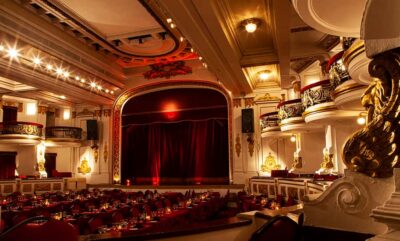
Buenos Aires: Piazzolla Tango Show with Optional Dinner
Read our review →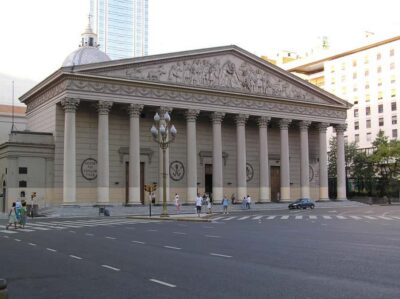
Buenos Aires: City Highlights Guided Tour with Transfer
Read our review →
Buenos Aires: La Boca Guided Walking Tour in English
Read our review →
Buenos Aires: La Recoleta Cemetery Guided Tour in English
Read our review →
Buenos Aires: Tango Show at Tango Porteño & Optional Dinner
Read our review →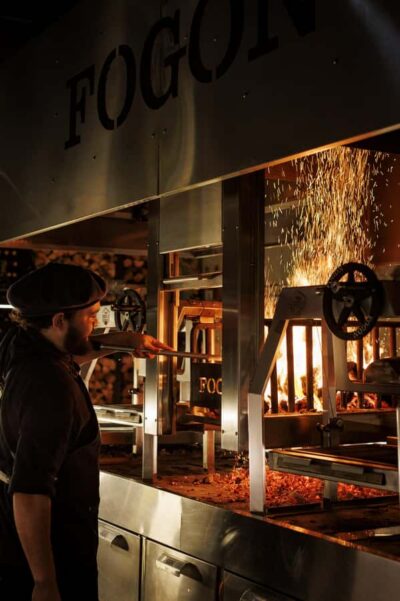
Buenos Aires: 9-Course Argentine Meat Tasting at Fogón Asado
Read our review →

Buenos Aires: Madero Tango Show with Optional Dinner
Read our review →Browse the lists this tour appears in