
Reviewed · BUENOS AIRES TOURS
Buenos Aires: La Recoleta Cemetery Guided Tour in English
La Recoleta Cemetery is less a quiet burial ground than a stone-built history of Buenos Aires. Behind its gates, more than 4,000 mausoleums crowd narrow paths, with statues, columns, stained glass, and family names tied to Argentina’s politics, wealth, art, and scandals. The stories make the place far more rewarding than a solo stroll with a map.
I like two things right away: the guide connects individual graves to the story of Argentina, and the tour brings you to legends you might easily miss, including the Sailor and his daughter and the Wild Bull of the Pampas. Guides such as Victoria, Mariano, Maru, and Vito are praised for clear English, humor, and a steady pace.
The main catch is the extra cemetery admission fee, which is paid separately to the City of Buenos Aires. You also need to allow time to buy your ticket before the group starts, since delays at the entrance can hold everyone up.
Key points to know before you book
- Evita’s resting place: Learn why Eva Perón’s grave is less grand than many nearby mausoleums, yet draws the cemetery’s biggest crowd.
- Two hours on foot: The 110-minute walk gives you time for stories, architecture, photographs, and questions.
- A crash course in Argentina: The tour uses cemetery residents to explain Buenos Aires politics, society, culture, and family power.
- English-speaking guides: Victoria, Mariano, Maru, Vito, Marietta, and others have led recent tours, with clear English and lively storytelling often singled out.
- Bring time for the entrance ticket: The government admission fee is extra, and payment at the cemetery is by credit or debit card.
- Good value, with one price wrinkle: The $13 tour fee is modest for a guided two-hour walk, but your total cost is higher once admission is added.
Why Recoleta Cemetery deserves two hours
You may wonder why a cemetery needs a guided tour. Recoleta answers that question quickly. This is not a broad park with rows of identical headstones. It is a compact maze of elaborate family tombs, each built to display status, grief, ambition, or a carefully shaped public memory.
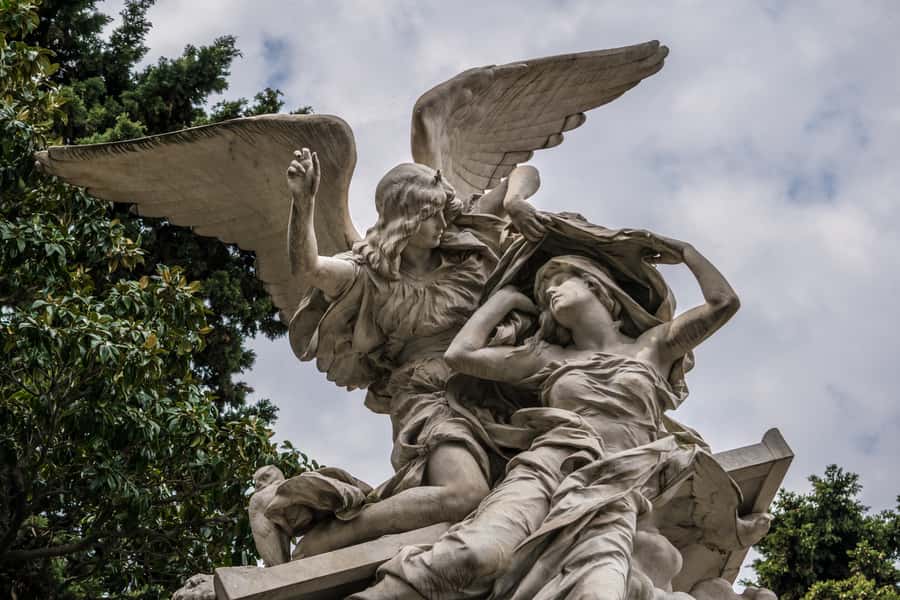
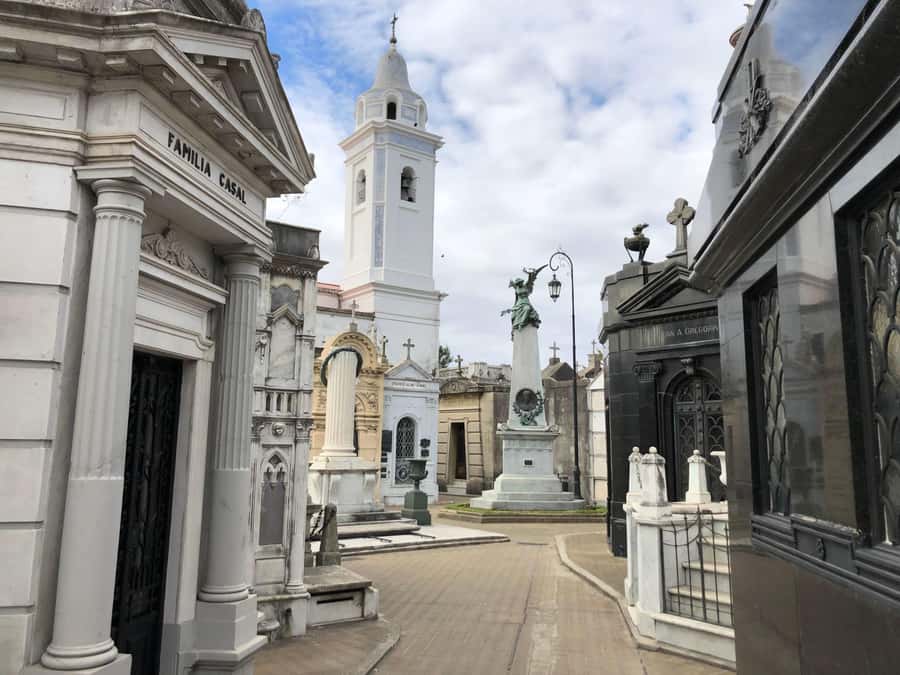
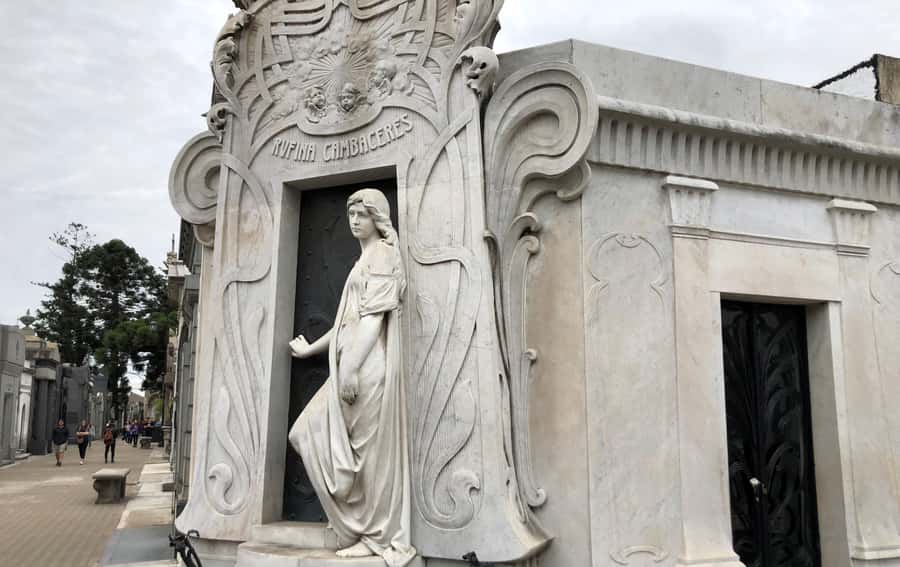
The cemetery contains mausoleums connected with Argentine presidents, military leaders, writers, artists, and powerful families. The buildings range from restrained classical designs to highly decorated structures with angels, saints, grieving figures, ironwork, and sculpted details. You can admire the architecture on your own, but you will not always know why one tomb matters more than another.
That is where the guide earns the fee. A good guide turns a name on a wall into a person with allies, enemies, ambitions, and flaws. The strongest guides on this walk, including Victoria, Mariano, and Vito, are praised for mixing dates and facts with humor and human stories. That balance matters in a cemetery, where a long list of names can become tiring fast.
The tour also gives you a compact introduction to Argentina. You are not only learning who was buried inside the mausoleums. You are hearing how political power worked, how wealthy families presented themselves, and how public memory can differ from private life.
more recoleta wandering
- Buenos Aires Bike Tour: North Districts, Recoleta and Palermo
★ 4.5 · 91 reviews - Recoleta Cemetery – Small Group Tour of History & Secrets
★ 5.0 · 53 reviews - Buenos Aires: Recoleta and Retiro Tip Based Walking Tour
★ 4.7 · 50 reviews
Meeting your guide at Junín 1760
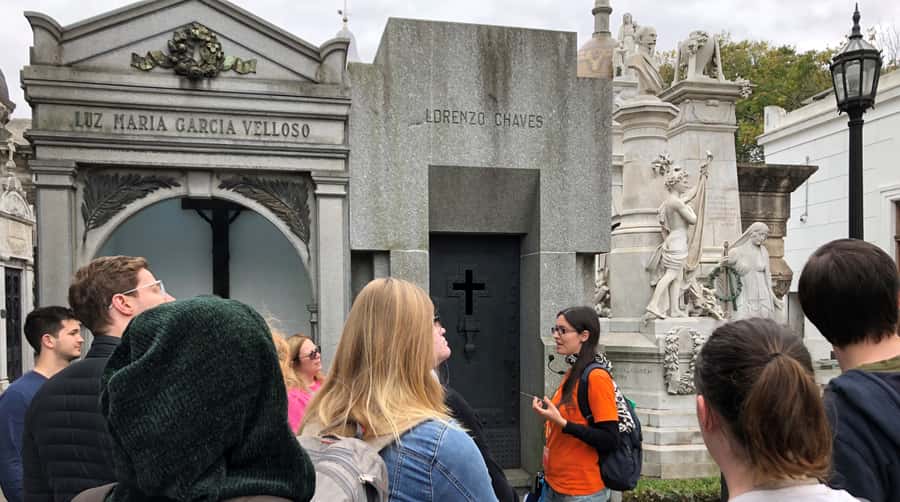
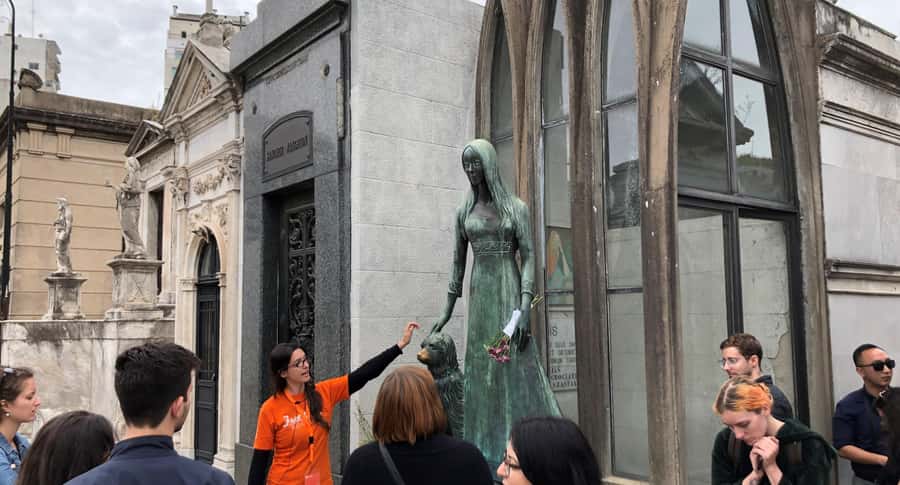
The meeting point is at the Recoleta Cemetery entrance on Junín Street. The supplied address is Junín 1760, C1113 CABA, while the route begins at Junín 1801. Look for the guide in an orange T-shirt near the gate and ticket booth.
This is the part to handle carefully. The cemetery admission ticket is mandatory, separate from the walking tour, and paid to the government of the City of Buenos Aires. The stated cost is approximately $13 to $15 for foreign visitors, so check the official cemetery website for the current amount.
You can buy the ticket at the entrance with a credit or debit card, or purchase it through the cemetery website. I would sort this out before the scheduled start, or arrive at least 20 minutes early if you plan to buy it on site. Several people have found the pre-tour timing unclear, and the group may wait while others complete the ticket purchase.
The tour is offered in English, with Spanish also listed among the language choices in the booking information. Since this particular product is promoted as the English tour, check that you have selected English when booking.
The first walk through the mausoleum lanes
Once inside, the guide leads you through the cemetery for about 110 minutes, returning to the Junín entrance at the end. Expect a walking tour rather than a seated talk. You will stop at selected mausoleums while the guide explains the people, architecture, and events linked to each place.
The route does not try to cover every tomb. That would be impossible and would turn the visit into a blur of names. Instead, the guide uses a smaller set of important and unusual sites to explain the cemetery as a whole.
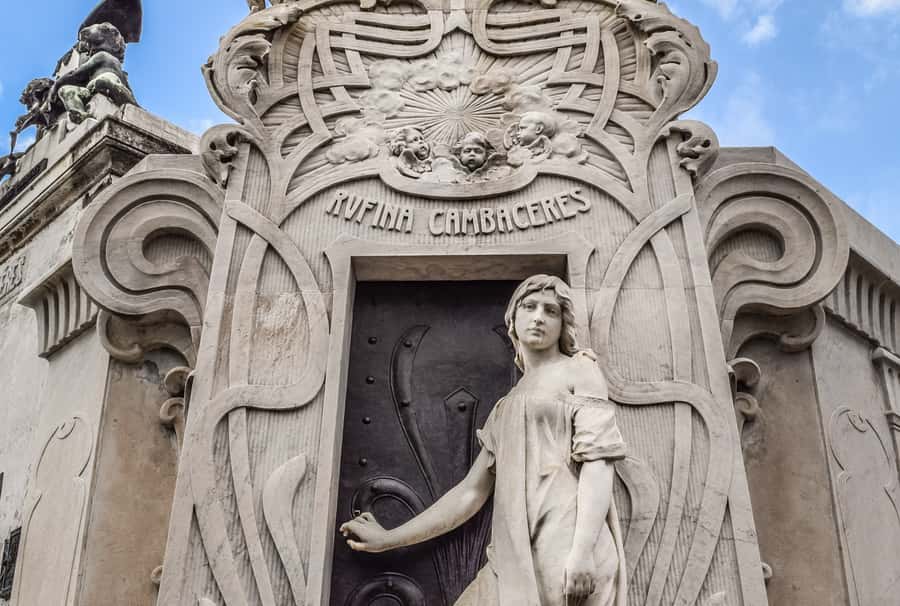
Pay attention to the buildings as well as the people. The mausoleums were designed to be seen. Their size, materials, ornament, and position can tell you something about the family that commissioned them. A statue may express sorrow, faith, military pride, or an idealized version of the person inside.
This is also where the group size can affect the feel of the tour. One recent booking described a group of about 60 people, and another found the start disorganized when English and Spanish groups were being arranged. Once inside, the guides generally kept people moving and made space for photographs, but a large group can make it harder to hear or get close to every stop.
Evita’s grave and the power of public memory
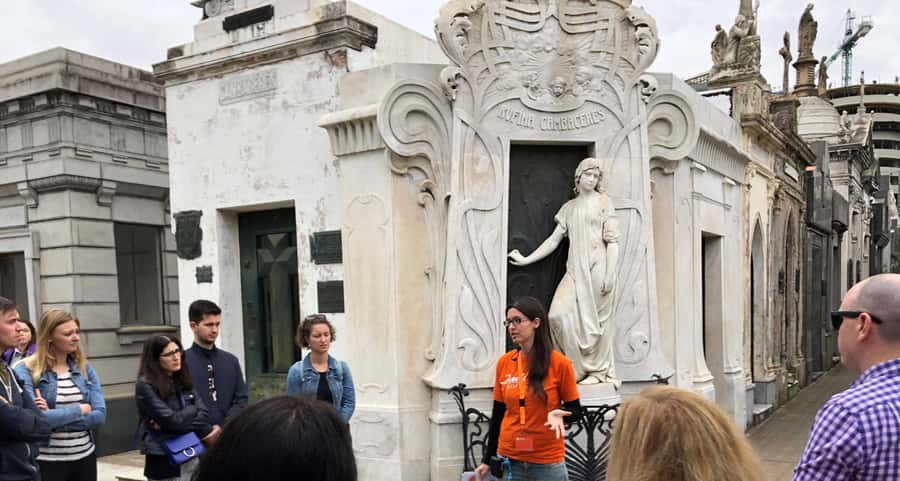
The best-known stop is the Duarte family mausoleum, where Eva Perón is buried. Evita’s resting place is one of the cemetery’s great puzzles for first-time visitors because it is not the grandest tomb in the complex.
Her grave is visited because of the force of her life and legacy, not because the structure overwhelms the surrounding mausoleums. The guide explains the mystery and history surrounding her resting place, giving you context for why this particular corner attracts such attention.
This stop works best when treated as more than a celebrity grave. Eva Perón remains a deeply important figure in Argentina, admired by some and viewed critically by others. A good explanation helps you understand why her name carries such weight and how her public image became part of the country’s political story.
The guide also places Evita among the other figures buried nearby. That contrast is useful. You see the difference between old family wealth, formal public honor, and a grave that became a place of popular devotion.
more guided days in Buenos Aires
- Buenos Aires: City Highlights Guided Tour with Transfer
★ 4.7 · 1,946 reviews - Buenos Aires: La Boca Guided Walking Tour in English
★ 4.8 · 1,587 reviews - Palermo: Graffiti and Street Art Guided Tour in English
★ 4.8 · 684 reviews - Buenos Aires: Teatro Colon Guided Tour
★ 4.3 · 571 reviews
Legends that make the cemetery memorable
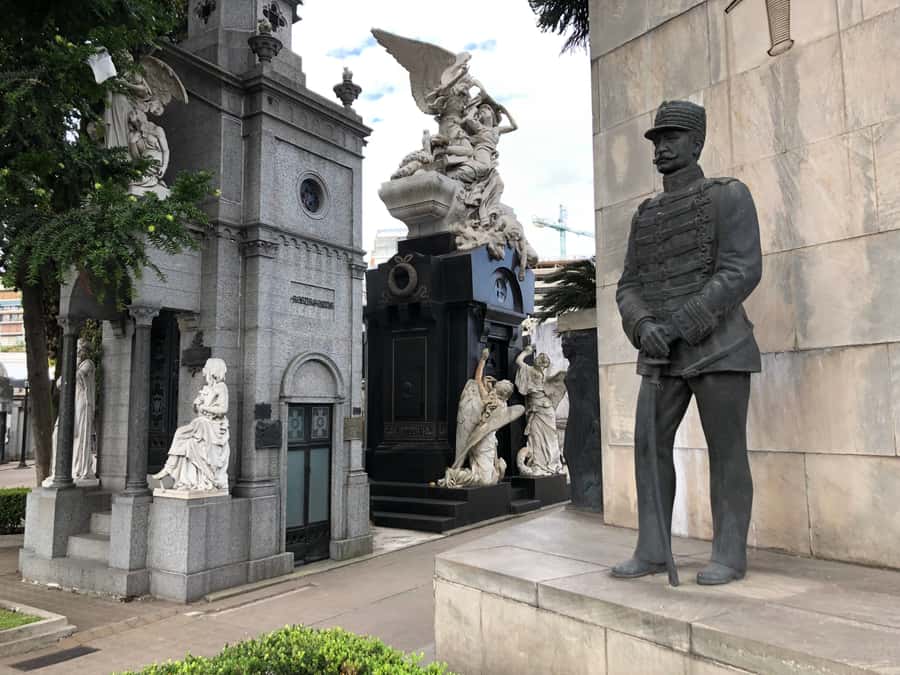
The tour includes several stories that add mystery and humor to the architecture. Two named examples are the legend of the Sailor and his daughter and the tale of the Wild Bull of the Pampas.
These are the kinds of stories you might pass without noticing if you simply walked through with a guidebook. They give the cemetery a local voice and show that its appeal is not limited to presidents and famous national figures.
The guide’s storytelling style matters here. The strongest accounts describe Victoria, Mariano, Maru, Vito, Marietta, and Mariana as engaging, clear, and able to keep a group interested through a full two hours. One guide was praised for using the tour to provide a compact history of Argentina; another was appreciated for explaining how the cemetery operates today as well as what happened in the past.
You should not expect a ghost tour in the theatrical sense. The legends are part of a wider look at memory, family stories, tragedy, and public reputation. The tone includes humor, but it remains a history and architecture walk.
Presidents, families, and the story of Buenos Aires
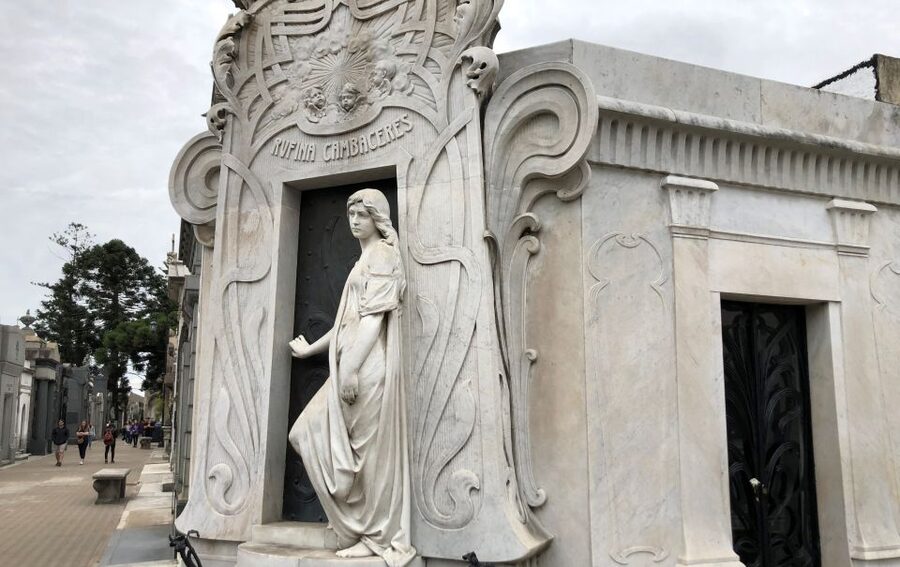
Recoleta Cemetery is useful because it shows how Buenos Aires remembers its leaders. Several Argentine presidents are buried here, along with people from the families that shaped the nation’s political and social life.
The guide does not simply recite office dates. The stops connect individuals to broader changes in Argentina. You may hear about political rivalries, social class, public image, and the role of prominent families. This turns the cemetery into a kind of outdoor lesson in how the country developed.
I particularly like this approach for anyone arriving in Buenos Aires without much background in Argentine history. You get enough context to make later visits to museums, government buildings, and historic neighborhoods easier to understand.
The format also suits people who dislike standard lecture tours. You keep walking, look closely at the statues and tombs, and pause for questions. The guides are described as willing to answer questions in detail, while still maintaining a pace that prevents the group from stalling at every stop.
Art and architecture beyond the famous names
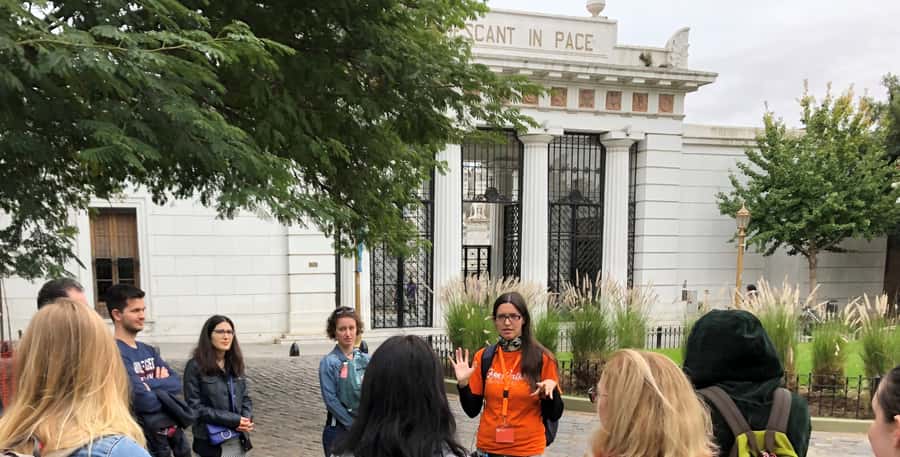
Even if you know little about the cemetery’s residents, the architecture gives you plenty to study. The mausoleums use formal facades, sculpted figures, decorative metalwork, and other details meant to honor the dead and impress the living.
The guide helps you read these choices. You learn to see the cemetery not as a collection of expensive tombs, but as a record of taste and social position. Some structures are theatrical. Others are more restrained. Together they create the unusual visual character that makes Recoleta one of Buenos Aires’ most visited landmarks.
Bring a camera, but do not let photography take over. The group usually stops long enough for pictures, and one guide was specifically praised for moving people in an orderly way so everyone could photograph each featured site. Still, narrow paths and a large group may limit your position.
The cemetery can also be hot. Guides have been praised for keeping groups in the shade when possible, checking that people were comfortable, and adjusting the pace on warm days. Wear light clothing, carry water, and choose sensible walking shoes.
Is the $13 tour fee good value?
At $13 per person, the guided walk is reasonably priced for nearly two hours of live instruction in a major Buenos Aires sight. The value comes from the interpretation. You are paying to understand what you are seeing, not simply to enter the gates.
The total cost needs a closer look. The cemetery admission is not included and is approximately $13 to $15 for foreign visitors, with the final price set by the city government. That means the outing can cost roughly twice the advertised tour price once both charges are combined.
Even so, I think the overall value is strong if you care about history, architecture, or local culture. A self-guided visit costs less if you already know the cemetery well or prefer to wander alone. For a first visit, the guide helps you find important graves and unusual stories that would otherwise be easy to miss.
The main value is time. In 110 minutes, you get a structured route, explanations in English, and answers to questions. You also avoid spending your entire visit trying to work out which mausoleums are significant.
Timing, access, and practical comfort
The stated duration is two hours, with the walking portion listed as 110 minutes. Starting times vary, so check availability for your chosen date.
The activity is listed as wheelchair accessible, but the supplied information does not describe the condition of every path or the exact route used. If you use a wheelchair, confirm the current route and entrance arrangements before booking.
Free cancellation is available up to 24 hours before the tour for a full refund. You can also reserve now and pay later, which helps if your Buenos Aires schedule is still changing.
The tour meets at the cemetery rather than providing transport. Plan your own way to Junín Street and keep the entrance location in mind. The orange-shirted guide should be waiting near the gate and ticket booth.
The walk is best for you if you enjoy stories, architecture, and history more than a quick photo stop. It is also a good fit if you want an accessible introduction to Argentina’s public figures and social structure. Families with older children may appreciate the legends and humor, though the two-hour walking format may feel long for very young children.
Should you book the Recoleta Cemetery tour?
Yes, I would book it if this is your first visit to Buenos Aires and you want more than a look at ornate tombs. The cemetery is visually striking, but the guide is what gives the place shape. You will hear about Evita, presidents, powerful families, unusual legends, and the way the cemetery functions today.
Book with two precautions. Buy the government admission ticket online or arrive early with a card, and confirm that you have selected the English-language departure. If you dislike large groups or prefer complete freedom to wander, visit independently instead.
For most people, though, the modest tour fee is justified. Recoleta Cemetery can look like a maze of beautiful stone until someone explains the lives behind it. With a strong guide such as Victoria, Mariano, Maru, Vito, or Marietta, those mausoleums become a memorable way to understand Buenos Aires.
FAQ
How long does the Recoleta Cemetery tour last?
The activity lasts two hours, with the guided cemetery walk listed as approximately 110 minutes.
Is the tour conducted in English?
Yes. This experience is described as an English-language guided tour with a live English-speaking guide. Spanish is also listed as an available tour language in the booking information.
Is the cemetery entrance fee included?
No. You must pay the mandatory cemetery admission separately to the government of the City of Buenos Aires.
How much is the cemetery entrance fee?
The supplied information gives an approximate price of $13 to $15 for foreign visitors. Check the official cemetery website for the current amount.
How can I pay for the cemetery ticket?
You can buy the ticket at the cemetery entrance with a credit or debit card, or purchase it through the cemetery website.
Where do I meet the guide?
Meet at Recoleta Cemetery at Junín 1760, near the gate and ticket booth. Look for the guide wearing an orange T-shirt.
Is the tour wheelchair accessible?
Yes. The activity is listed as wheelchair accessible. The supplied information does not give further details about every path or the exact accessible route.
Recently added in Buenos Aires
- Buenos Aires: Private City Tour by Car with Hotel or Pickup★ 5.0 · 3 reviews
- Guided tour Boca Juniors Museum & Stadium + Caminito★ 3.3 · 3 reviews
- Buenos Aires: Montserrat, San Telmo, La Boca, and Puerto …★ 5.0 · 3 reviews
- Unique Tigre and Delta Private Day Cruise Navegation★ 5.0 · 3 reviews
- Buenos Aires: MALBA Museo de Arte Latinoamericano Tour★ 4.1 · 3 reviews
- Tango Show at: MichelAngelo★ 4.5 · 3 reviews
- Buenos Aires: Mate Workshop y Otras Yerbas★ 5.0 · 3 reviews
- From Colonialism to Eclecticism, Buenos Aires arquitectonica★ 5.0 · 3 reviews
Buenos Aires Tours, compared.
Buenos Aires: Piazzolla Tango Show with Optional Dinner
Read our review →
Buenos Aires: City Highlights Guided Tour with Transfer
Read our review →
Buenos Aires: La Boca Guided Walking Tour in English
Read our review →
Buenos Aires: Tango Show at Tango Porteño & Optional Dinner
Read our review →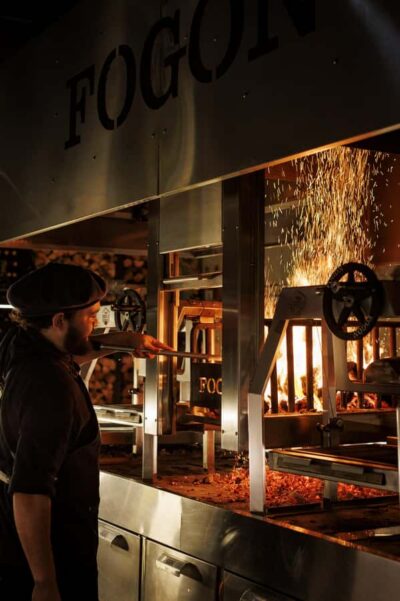
Buenos Aires: 9-Course Argentine Meat Tasting at Fogón Asado
Read our review →
Buenos Aires: Madero Tango Show with Optional Dinner
Read our review →
Buenos Aires: North or South Buenos Aires Bike Tour
Read our review →Browse the lists this tour appears in