
Reviewed · BUENOS AIRES TOURS
Recoleta & Cemetery for curious people
Recoleta Cemetery is only part of this experience. The real subject is how Buenos Aires turned wealth into architecture, then turned memory into marble tombs. Starting near Plaza San Martín, you walk through grand avenues and mansions before reaching the city’s most famous cemetery, discussing who built this elegant quarter and who got left out.
I like the interactive format, which gives you room to ask questions instead of sitting through a fixed lecture. I also like the broad route, from Edificio Kavanagh and Torre Monumental to Palacio Duhau and Recoleta. The main consideration is that cemetery admission costs extra, and the walk covers many stops in 150 minutes, so some sites receive only a brief look.
Key points at a glance
- A story that begins before the cemetery: The walk starts at Rapa Nui and uses Plaza San Martín as the opening chapter.
- Argentina’s elite in stone and stucco: Mansions, embassies, clubs, and palaces show how Buenos Aires tried to look like Paris.
- A discussion, not a speech: You are encouraged to question the city’s official story and connect its past with its future.
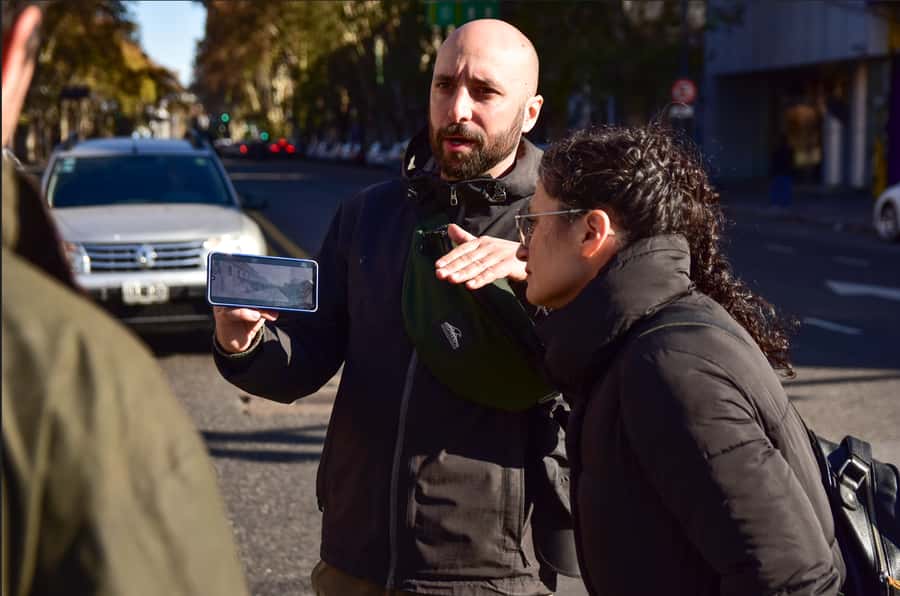
- Guides with strong historical backgrounds: Nicolas and Ignacio are praised for clear explanations, humor, local anecdotes, and thoughtful answers.
- A 45-minute cemetery visit: Recoleta Cemetery is the longest stop, but entry is optional and not included in the $34 price.
- Flexible format: Private and small-group options are available, with Spanish, English, and French guiding.
Why this walk is about more than Recoleta Cemetery
Recoleta is often sold as a cemetery visit. That misses half the point. This tour treats the cemetery as the final piece of a much larger story about landowners, political power, migration, money, taste, and national ambition.
I like the way the route lets you see the city’s elite world before you enter its city of the dead. The grand façades are not just pretty backdrops. They help explain the social order that produced them. The cemetery then gives that order a permanent address.
The central question is simple: what does a capital choose to remember? Inside Recoleta, some people have enormous tombs and famous names. Others are absent from the public story. Your guide uses the setting to ask who is honored, who is forgotten, and what those choices tell you about Argentina.
This is a good fit if you enjoy history with a point of view. It is less suited to someone who wants a fast list of celebrity graves, a long stop at every building, or a tour focused only on architecture.
more recoleta wandering
- Buenos Aires: La Recoleta Cemetery Guided Tour in English
★ 4.8 · 1,359 reviews - Buenos Aires Bike Tour: North Districts, Recoleta and Palermo
★ 4.5 · 91 reviews - Recoleta Cemetery – Small Group Tour of History & Secrets
★ 5.0 · 53 reviews
From Rapa Nui to Plaza San Martín
The meeting point is the Rapa Nui store. From there, the walk moves toward Plaza General San Martín, one of the key public spaces in central Buenos Aires.
The plaza gives your guide a useful starting point. Rather than opening with isolated dates, the tour sets up the larger story of Buenos Aires as a capital shaped by ambition. Here, you begin thinking about the city’s public image and the private fortunes behind its grand neighborhoods.
The first two guided segments at Plaza San Martín are listed as roughly ten minutes each. That suggests the guide may use different parts of the square to explain its setting, monuments, and role in the city. Exact emphasis can vary with the group, which is helpful if you prefer questions over a rigid script.
You should pay attention here to the tour’s main theme: Buenos Aires wanted to be seen as a modern, sophisticated capital. The coming buildings make that ambition visible.
Edificio Kavanagh and Torre Monumental
Edificio Kavanagh gives you a sharp change of mood. Its tall, modern profile belongs to a later stage of Buenos Aires, when the city was no longer expressing wealth only through low-rise mansions and European-style palaces.
The stop is scheduled for about ten minutes, so expect an exterior explanation rather than a long architectural study. Your guide can use the building to show how the city’s image changed over time, from aristocratic display to modern urban power.
At Torre Monumental, the story returns to public symbols and imported ideas. The tower is a useful place to consider the outside influences that shaped Buenos Aires and its desire to present itself as a polished international capital.
I would not book this walk expecting entry into these buildings. The value comes from connecting them as part of a street-level story. You see how different generations expressed status, taste, and confidence in the city.
Mansión Estrugamou and Casa Basavilbaso
The route continues to Mansión Estrugamou, also identified as Casa Basavilbaso. This is where the walk’s attention to private wealth becomes especially clear.
A mansion can tell you more than who lived there. Its scale, materials, and location raise questions about the economic system that allowed a small group to live so grandly. Your guide uses the building to discuss the old landowning elite and the era when Argentina seemed capable of becoming one of the world’s leading powers.
That rise is one of the tour’s strongest subjects. Argentina’s story is not presented as a smooth climb from poverty to prosperity. Instead, you discuss the country’s dramatic turns, including the gap between national promise and the fortunes of the people who controlled so much land and money.
The tour gives this stop about ten minutes. That is enough to frame the building and its owners, but not enough to inspect every decorative detail. If you are an architecture specialist, you may want to add a separate visit to the area later.
Completely different, still leaving from Buenos Aires:
- Buenos Aires Hop-On Hop-Off Bus, Free Walking Tours & Discounts
★ 4.5 · 2,218 reviews - Buenos Aires: Piazzolla Tango Show with Optional Dinner
★ 4.4 · 2,122 reviews - Buenos Aires: City Highlights Guided Tour with Transfer
★ 4.7 · 1,946 reviews - Buenos Aires: Hop-On Hop-Off City Bus Tour
★ 4.2 · 1,855 reviews
Palacio San Martín and the diplomatic quarter
Palacio San Martín adds another layer: government, diplomacy, and public power. The building helps shift the discussion from private mansions to the institutions that represented Argentina abroad.
This is an important distinction. A city can copy Parisian façades, but it also needs diplomatic, financial, and political strength to support its international image. Your guide brings those pieces together as the walk moves through the district.
At this stage, I find the tour’s interactive approach particularly useful. You can ask how the city’s elite related to the state, how Argentina’s international ambitions changed, and what remains of that old order today.
There is also a short five-minute break at Carrefour Express. It is not a full meal stop, but it gives you a chance to buy water or a quick snack. Bring comfortable shoes and water anyway. The route is a walking tour, and the scheduled pauses are brief.
Embassy of France, Jockey Club, and Palacio Duhau
The Embassy of France continues the theme of the Parisian illusion. Buenos Aires adopted European references with such confidence that it earned comparisons to Paris. The tour asks you to look beyond the nickname and consider what it meant socially.
Was this style an expression of national confidence? Was it a way for the elite to claim a place in the world? Or did it create a polished image that concealed sharp inequality? These are the kinds of questions that give the walk its anthropological angle.
The Jockey Club brings the elite into sharper focus. Clubs like this represent networks of wealth, influence, leisure, and social access. Even from the outside, the setting allows you to discuss who had the power to shape the city and who did not.
Palacio Duhau, now the Park Hyatt Buenos Aires, offers another example of aristocratic architecture adapted for modern use. The stop is shorter, about five minutes, but it reinforces a useful point: old elite spaces can survive by changing purpose, even as the social world that created them fades.
These exterior stops require some imagination. You will not spend long periods inside each property, and the tour does not promise access to private interiors. In return, you get a connected walk through several significant addresses rather than a single-building visit.
Entering Recoleta Cemetery, if you choose to pay
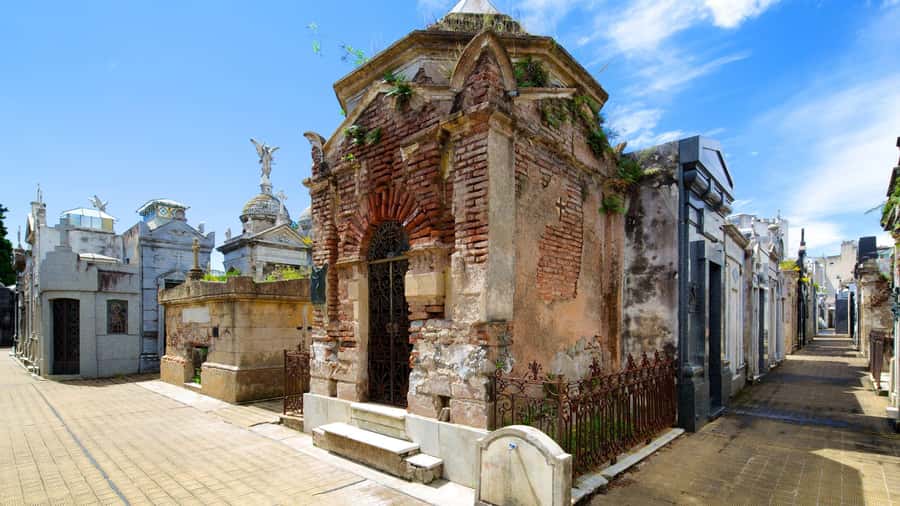
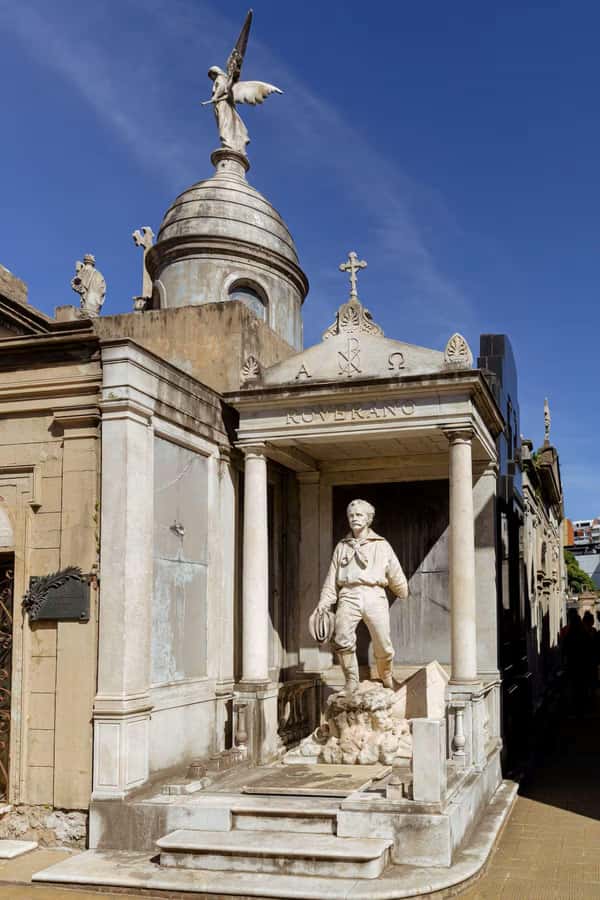
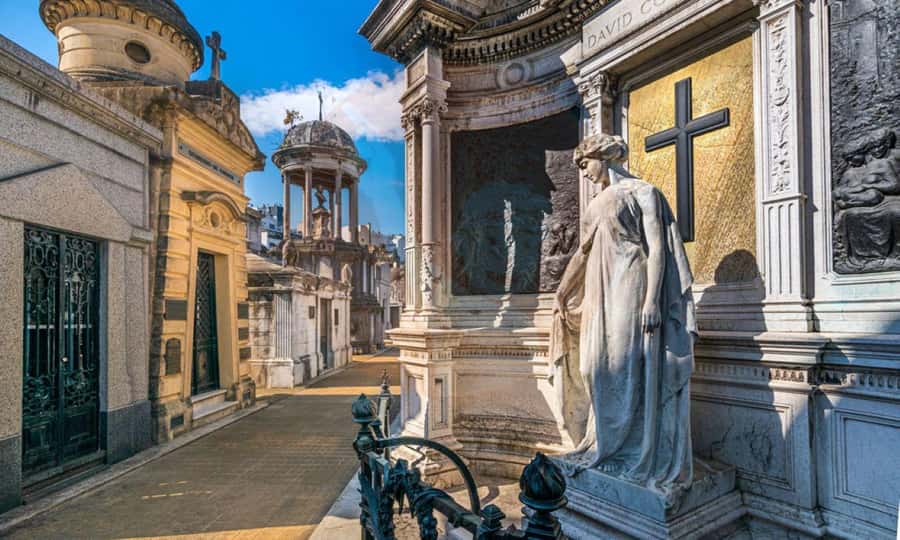
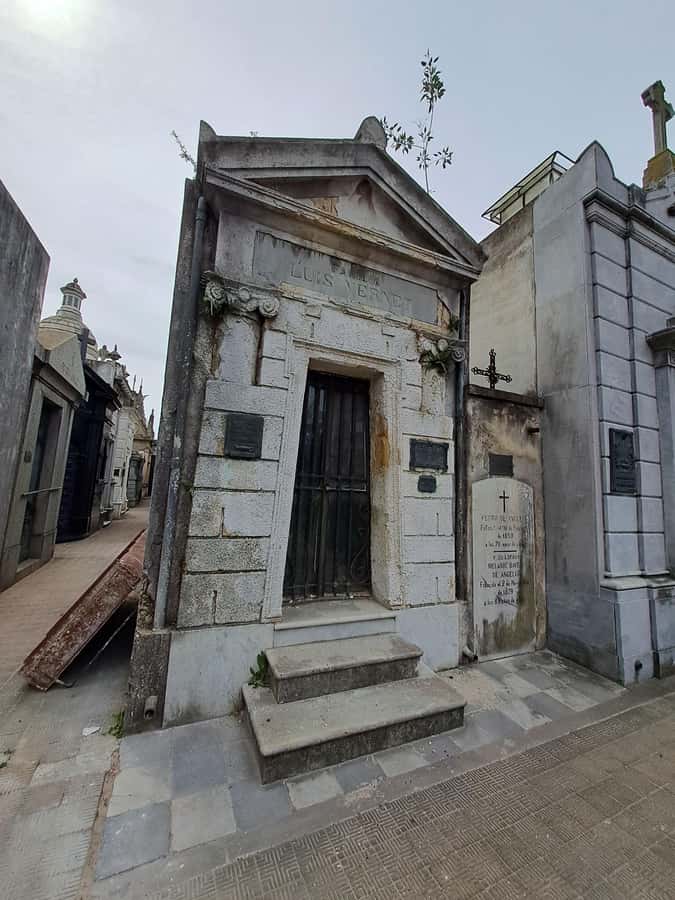
Recoleta Cemetery receives about 45 minutes, the longest single portion of the walk. Entry is optional, and the ticket is not included in the $34 tour price. You can buy admission at the entrance or arrange it online in advance.
That extra cost is worth considering when you compare this experience with a cemetery-only visit. You are paying for the guide-led walk through the city as well as the cemetery explanation. If you already know the surrounding neighborhood and only want to see the tombs, a self-guided visit may be cheaper. If you want the cemetery connected to Argentina’s political and social story, the added context makes the price more reasonable.
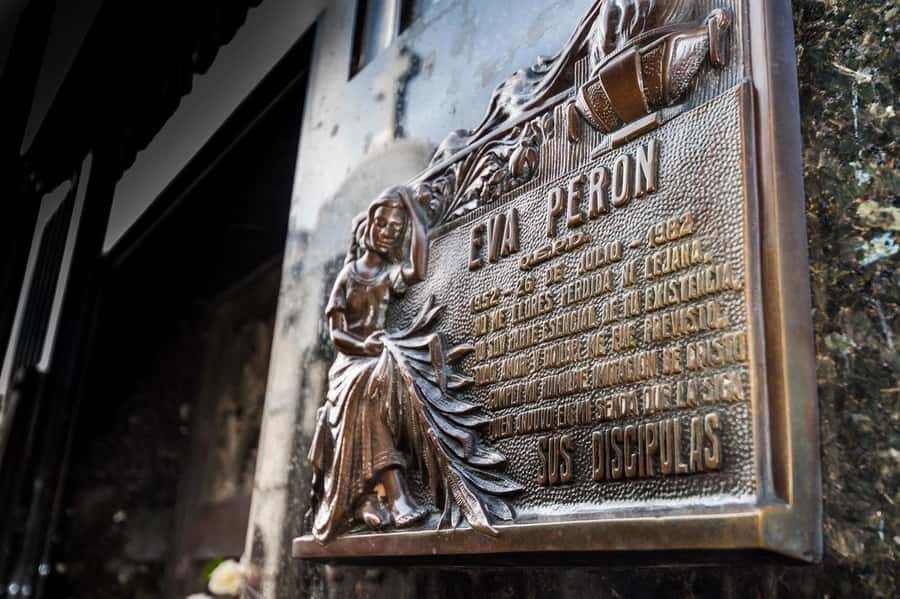
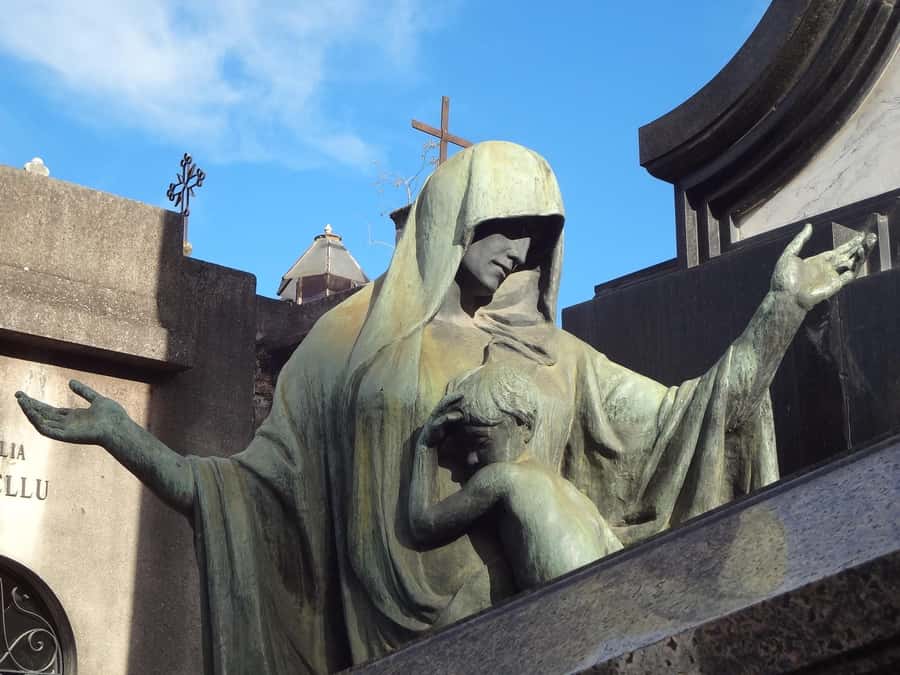
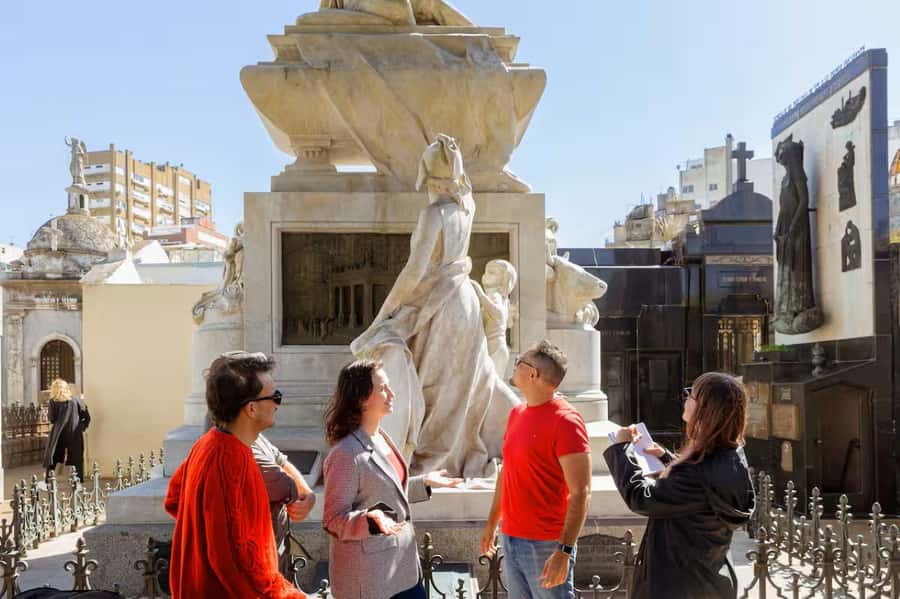
Inside, the guide treats Recoleta as a small model of society. Tombs show status, family connections, public reputation, and changing ideas about memory. You may hear about well-known figures, but the emphasis is not simply on famous names. The guide asks why certain people occupy prominent places in the national imagination.
That approach makes the cemetery more interesting than a parade of mausoleums. Marble and elaborate façades can look like pure decoration until you understand them as statements. Families used these structures to preserve identity, display rank, and claim a lasting place in the city.
The 45-minute visit is enough for a focused introduction. It is not enough to see every important tomb or wander every passage at leisure. If the cemetery is your main priority, plan extra time after the tour, assuming opening arrangements and admission conditions allow it.
What the guides add to the experience
The strongest part of this experience is the guide’s role. Nicolas, also called Nico, is praised for historical detail, humor, little-known side stories, and patient answers. One especially useful feature is his willingness to adjust the pace and let the group decide how long to spend on subjects that catch their interest.
Ignacio is also singled out for making the visit a strong way to understand Buenos Aires. The available guiding languages are Spanish, English, and French, and the experience can be arranged privately or for a small group.
I would choose a small group if you want conversation. The tour is built around questions and discussion, so a compact group should make it easier to speak up and follow your interests. A private format may suit families or friends who want more control over the pace, though the supplied details do not specify a separate private-group price.
The guide’s university degree is part of the experience’s design. That does not mean you will hear a dry academic lecture. The descriptions emphasize lively interaction, local anecdotes, and humor. You should still expect serious history, especially around Argentina’s elite and its rise and fall as a possible world power.
Is $34 a fair price?
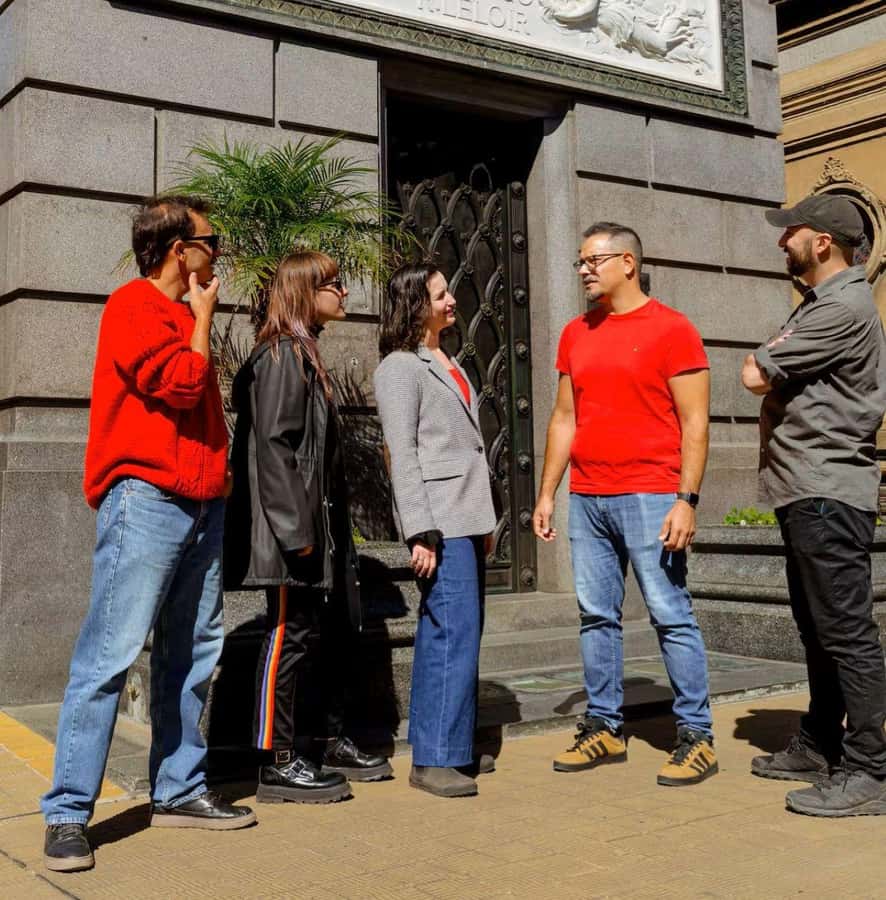
At $34 per person, this is not the cheapest way to see Recoleta Cemetery. Admission is extra, and most of the buildings on the route are exterior stops. The value depends on how much you want interpretation rather than simple sightseeing.
For me, the price makes sense if you want a connected explanation of Buenos Aires. You get 150 minutes, a route across several important addresses, a guide who can answer questions, and a cemetery discussion that places famous names inside a wider social story.
The value is weaker if you plan to rush from one landmark to another or prefer to read plaques at your own pace. The tour spends roughly ten minutes at many stops, which means you get breadth rather than extended visits.
Flexible booking terms help reduce the risk. You can cancel up to 24 hours ahead for a full refund, and you can reserve while paying later. The experience is wheelchair accessible, though the route’s walking demands and the cemetery’s conditions are worth confirming for your own needs before booking.
Who should book this walk?
I would recommend it to first-time visitors who want to understand how Buenos Aires was built, not just photograph it. It also suits people who enjoy social history, architecture, political discussion, and the meaning behind public monuments.
You will get the most from it if you ask questions. Bring curiosity about Argentina’s past and present, and be ready to consider its future. The tour is designed as a conversation, so a passive approach may leave you with less than the experience can offer.
It is also a good choice if you have already seen central Buenos Aires and want a more focused look at Recoleta’s elite quarter. The route gives you a framework for returning to the buildings and cemetery on your own.
I would hesitate if you have limited mobility and want a very short route, if you dislike discussion, or if your only goal is to see cemetery highlights. The 150-minute walk covers a lot of ground, and the many short exterior stops require attention to context rather than lengthy visits.
Should you book Recoleta and Cemetery for curious people?
Book this tour if you want the story behind the façades. Its best quality is the way it links Plaza San Martín, elite residences, diplomatic buildings, clubs, and Recoleta Cemetery into one argument about Argentina’s power and memory.
The most praised qualities are the guides’ historical range, humor, patience, and willingness to answer individual questions. Nicolas and Ignacio appear especially well suited to groups that want more than a standard script.
Skip it if you want a simple cemetery entrance ticket or a building-by-building architectural inspection. For everyone else, $34 is a fair price for a thoughtful, small-group walk that gives Buenos Aires a stronger human and political context.
FAQ
How long does the experience last?
The guided walk lasts 150 minutes, or two and a half hours.
Where does the tour meet?
The meeting point is the Rapa Nui store.
Is cemetery admission included?
No. Entry to Recoleta Cemetery is optional and must be paid separately. Tickets can be bought at the entrance or online in advance.
What languages are available?
The tour is available in Spanish, English, and French.
Is the experience wheelchair accessible?
Yes, the activity is listed as wheelchair accessible.
Can I book a private group?
Yes. Private and small-group options are available.
What is the cancellation policy?
You can cancel up to 24 hours in advance for a full refund. You can also reserve now and pay later.
Recently added in Buenos Aires
- Buenos Aires: Private City Tour by Car with Hotel or Pickup★ 5.0 · 3 reviews
- Guided tour Boca Juniors Museum & Stadium + Caminito★ 3.3 · 3 reviews
- Buenos Aires: Montserrat, San Telmo, La Boca, and Puerto …★ 5.0 · 3 reviews
- Unique Tigre and Delta Private Day Cruise Navegation★ 5.0 · 3 reviews
- Buenos Aires: MALBA Museo de Arte Latinoamericano Tour★ 4.1 · 3 reviews
- Tango Show at: MichelAngelo★ 4.5 · 3 reviews
- Buenos Aires: Mate Workshop y Otras Yerbas★ 5.0 · 3 reviews
- From Colonialism to Eclecticism, Buenos Aires arquitectonica★ 5.0 · 3 reviews
Buenos Aires Tours, compared.

Buenos Aires: Piazzolla Tango Show with Optional Dinner
Read our review →
Buenos Aires: City Highlights Guided Tour with Transfer
Read our review →
Buenos Aires: La Boca Guided Walking Tour in English
Read our review →
Buenos Aires: La Recoleta Cemetery Guided Tour in English
Read our review →
Buenos Aires: Tango Show at Tango Porteño & Optional Dinner
Read our review →
Buenos Aires: 9-Course Argentine Meat Tasting at Fogón Asado
Read our review →

Buenos Aires: Madero Tango Show with Optional Dinner
Read our review →Browse the lists this tour appears in