
Reviewed · BUENOS AIRES TOURS
La Boca Out off the Beaten Track
La Boca is more than Caminito’s painted facades and tango poses. This 150-minute walk with Paola De Luca, who grew up in the neighborhood, takes you into the streets behind the postcard view, where immigrant life, political groups, football, religion, and local art all meet.
I like the visit to a corrugated-metal conventillo, now used as a cultural center, and the stop at Argentina’s first volunteer firefighter station. I also like that coffee at an old cafe from 1882 is included. The main consideration is that the tour begins at the harbor and ends at Caminito, so you should be comfortable walking through a neighborhood with uneven character and limited conventional sightseeing polish.
Key points at a glance
- A local connection: Paola spent her childhood and youth in La Boca, bringing personal memories to the neighborhood’s immigrant story.
- Behind the postcard streets: The route reaches murals, old buildings, harbor warehouses, and corners that see fewer sightseeing groups.
- Real community history: You enter a former conventillo and Argentina’s first volunteer firefighter station.
- Two La Boca passions: The tour explains the place of Boca Juniors football and the Salesian Church in local life.
- Coffee with history: The walk finishes with an included coffee in a Notable Cafe dating from 1882.
- Small-group format: With no more than 10 people and Spanish or English guiding, you get room for questions.
La Boca beyond the colorful Caminito strip
La Boca is often reduced to one short tourist lane. Caminito is worth seeing, but it is only the bright front room of a neighborhood shaped by port workers, new arrivals, mutual-aid groups, artists, football supporters, and religious institutions.
This walk begins at the corner of Martín Rodríguez and Avenida Don Pedro de Mendoza, near the waterfront. From there, Paola sets the scene before taking you toward places that are easy to miss if you come only for photographs.
I appreciate that the experience does not treat La Boca as a collection of colorful walls. It asks why the walls look the way they do, who lived in the area, and how immigrant communities built support systems when they had little money or security.
That approach makes the neighborhood easier to understand. You see the paint, murals, and tango imagery, but you also get the social story behind them.
more san telmo and la boca walks
- Buenos Aires: La Boca Guided Walking Tour in English
★ 4.8 · 1,587 reviews - Buenos Aires: Navigation from Pto. Madero to La Boca
★ 4.1 · 147 reviews - Buenos Aires: San Telmo and Market Guided Walking Tour
★ 4.8 · 102 reviews
The harbor, warehouses, and immigrant arrivals
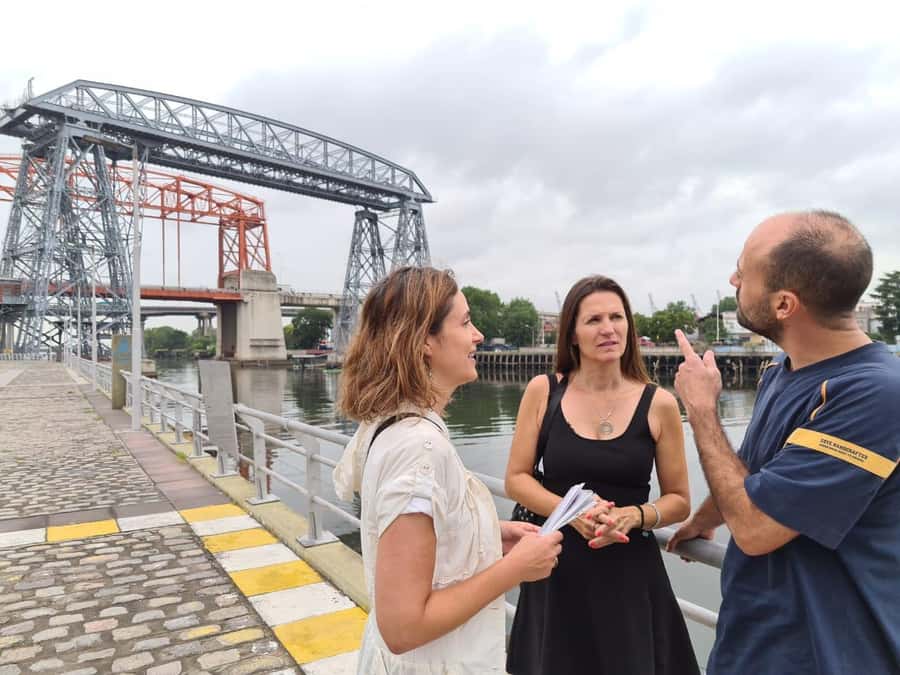
The opening section focuses on the port area, warehouses, and a picturesque train station associated with large waves of immigrants. This is an important starting point because La Boca’s identity grew from movement: people arriving, finding work, forming communities, and sharing limited space.
You will not simply be looking at old buildings. Paola connects the physical setting with the people who passed through it. Her own childhood in La Boca gives the walk a personal angle, while her explanations place local memories alongside the wider story of Buenos Aires as an immigrant city.
The harbor setting also helps you see why La Boca developed its particular working-class character. The experience does not promise a polished district. Instead, it shows you a place with rough edges, layered buildings, and a strong local identity.
Bring comfortable shoes. The tour lasts two and a half hours, and much of its value comes from moving through streets rather than sitting in one attraction.
Inside a corrugated-metal conventillo
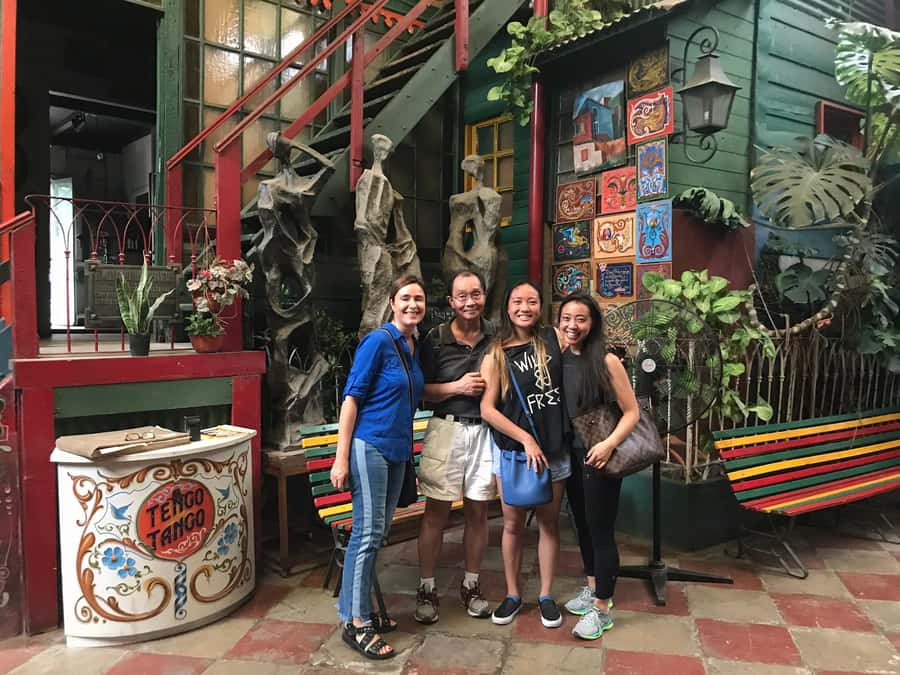
One of the most useful stops is the chance to enter a former conventillo, a type of tenement house that once sheltered immigrants. These buildings provided cramped accommodation for people who arrived with little money and few local connections.
The structure is clad in corrugated metal, a material strongly associated with La Boca’s working neighborhoods. Seeing the interior gives you a better sense of communal housing than a quick look at an outside facade can provide.
Today, this building houses a cultural center. That change matters. You are not looking at a preserved home frozen in the past, but at a place where the neighborhood’s built history has been given a new public purpose.
For me, this is one of the tour’s strongest features because it turns a broad subject, immigrant life, into something concrete. You can connect the words conventillo and community to an actual building.
The stop may be less comfortable for anyone expecting a conventional museum. The appeal is the setting and the explanation, not a long line of polished exhibits.
The first volunteer firefighter station in Argentina
La Boca’s immigrant communities did not wait for large institutions to solve every problem. Mutual-assistance groups helped residents cope with danger, illness, poverty, and other pressures.
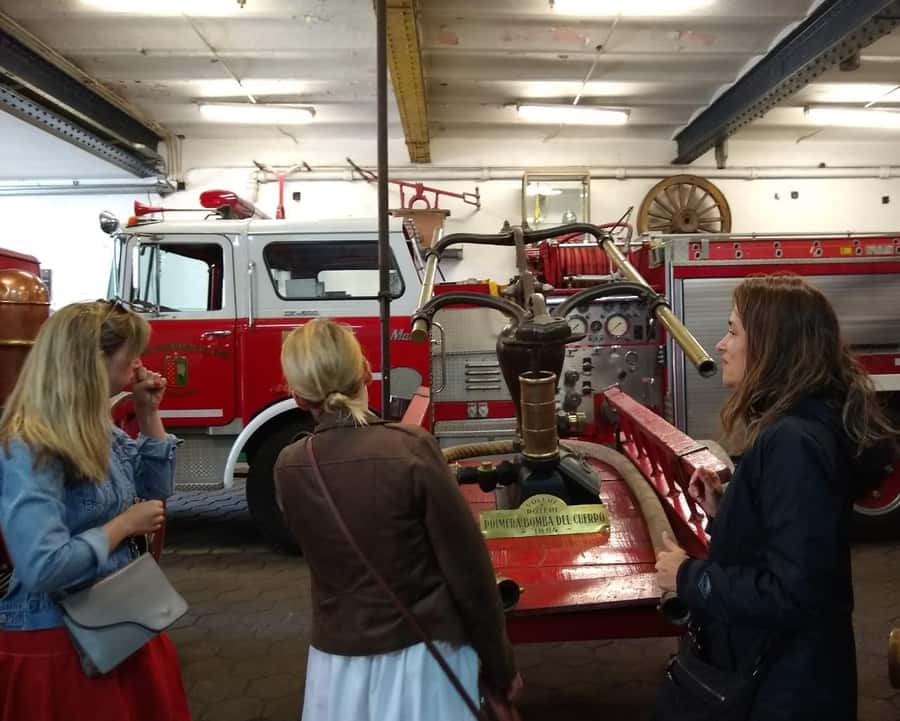
The tour enters the first volunteer firefighter station created in Argentina. This is a particularly good stop for understanding how local residents organized themselves and protected one another.
The visit is included in the price, and it adds a practical side to the neighborhood story. You are not only hearing about social bonds in the abstract. You are seeing one of the institutions that grew from them.
The station also helps explain why volunteer organizations matter so much in neighborhoods formed by newcomers. People who shared little beyond language, work, or origin still had strong reasons to cooperate.
Because the group is capped at 10, you should be able to hear the guide clearly and ask about details that catch your attention. That small size is useful in interior spaces, where a large group could make the visit feel hurried.
Completely different, still leaving from Buenos Aires:
- Buenos Aires Hop-On Hop-Off Bus, Free Walking Tours & Discounts
★ 4.5 · 2,218 reviews - Buenos Aires: Piazzolla Tango Show with Optional Dinner
★ 4.4 · 2,122 reviews - Buenos Aires: City Highlights Guided Tour with Transfer
★ 4.7 · 1,946 reviews - Buenos Aires: Hop-On Hop-Off City Bus Tour
★ 4.2 · 1,855 reviews
Murals that ask more than a photo
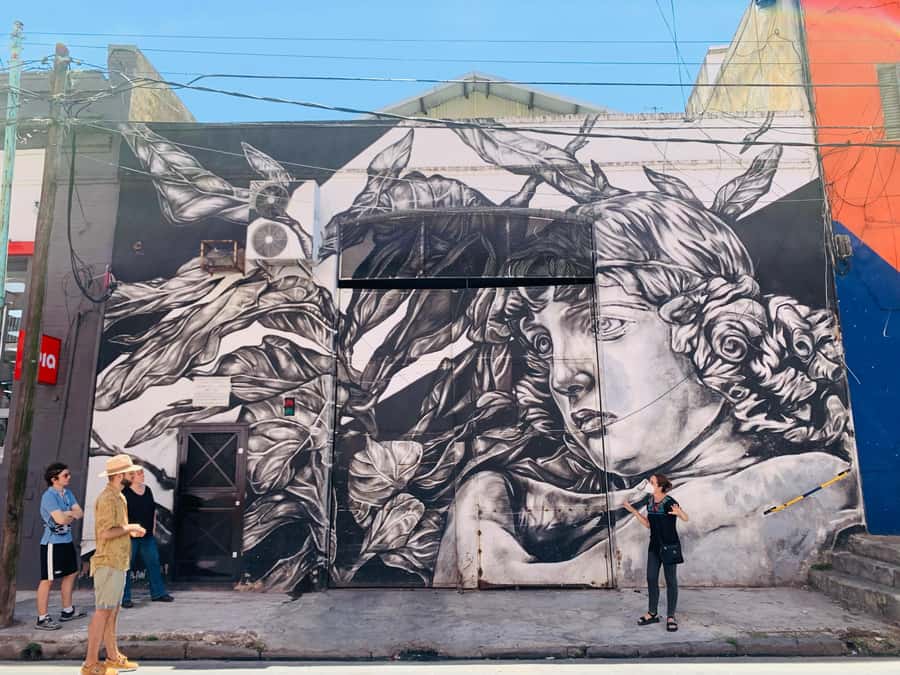
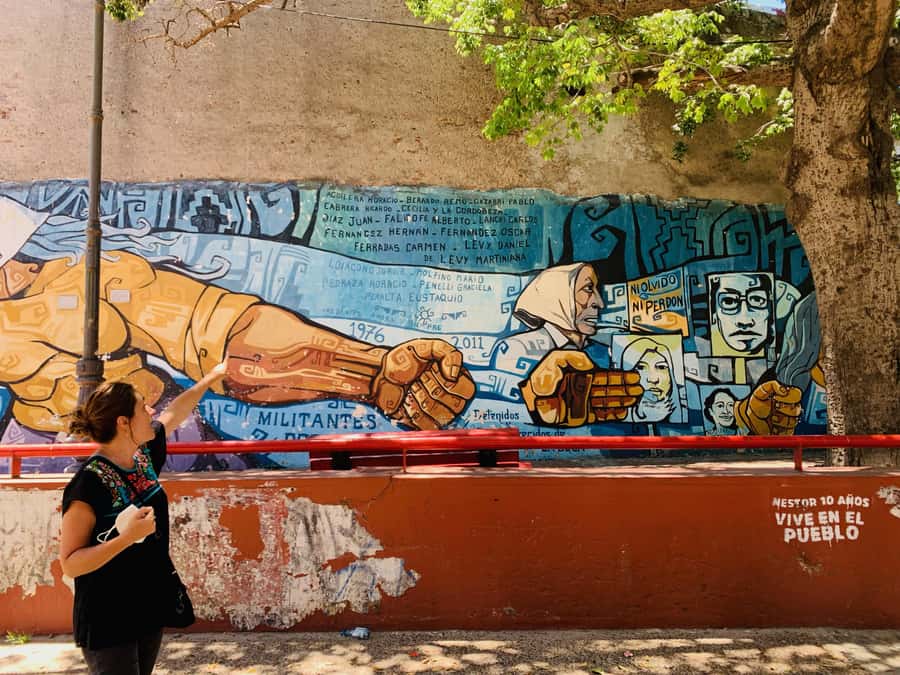
La Boca’s murals are not just decoration. The route includes large works that reflect social issues, and Paola explains the ideas and local background behind them.
This is a major difference between seeing a mural alone and seeing it with a guide. Without context, you may notice the colors and figures, take a picture, and move on. With the story, you can think about what the artist is addressing and how the work relates to the neighborhood.
One particularly appealing part of the experience is the attention to artists connected to La Boca. The tour may include a visit to a typical Boca house belonging to friends of Paola who are important local artists. The supplied details do not guarantee every private artist visit on every departure, so treat it as a special part of the neighborhood connection rather than the central promise of the walk.
The same applies to the Museo de Bellas Artes de La Boca, associated with Benito Quinquela Martín. The museum can be visited, and part of its building was once the artist’s home, but its admission ticket is not included.
If you are interested in Argentine painting, you may want to ask Paola about the museum during the walk. It can help you decide if you want to pay for entry separately.
Anarchist newspapers, bordellos, and old buildings
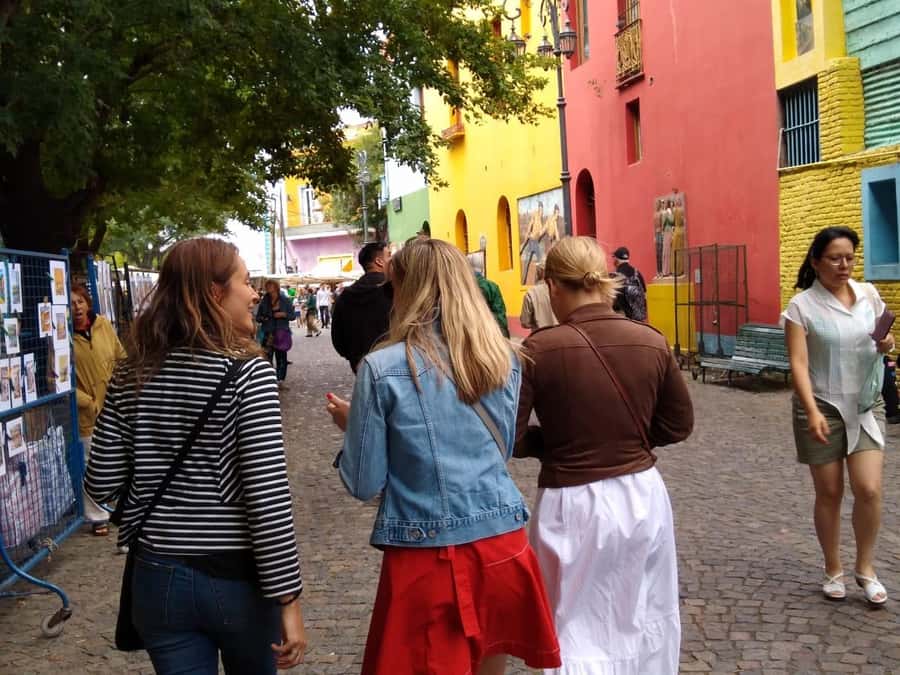
La Boca’s early twentieth-century story was not tidy. The walk points out old buildings that once housed anarchist newspapers and bordellos.
These details add useful tension to the tour. La Boca was not only a place of hard work, colorful art, football loyalty, and family life. It was also a district where political ideas circulated and where businesses developed around the needs and hardships of port communities.
The former newspaper sites connect the neighborhood with Argentina’s strong history of labor and political organization. The bordello references offer a different glimpse of city life, showing how commercial entertainment and exploitation could exist alongside immigrant housing and mutual aid.
You should expect interpretation rather than dramatic reconstruction. The value is in seeing an ordinary building and learning what happened there, then noticing how much urban history can sit quietly behind a plain facade.
Boca Juniors from the outside
Football is one of La Boca’s two great local icons on this route. The other is religion. You see the Boca Juniors stadium from outside and learn why the club means far more here than a sports venue.
The stadium is part of the neighborhood’s identity, and Paola gives the football story a local setting. One German visitor specifically praised the way the tour explained the culture and passion around Boca Juniors, which has its home in La Boca.
You will not be entering the stadium on this experience. That is important if your main goal is a stadium tour, museum visit, or match-day access. Here, the stadium is one piece of a wider explanation of the neighborhood.
I like this balance. Football is neither ignored as a distraction nor allowed to take over the whole walk. You see how sport helps define belonging in La Boca, alongside family, art, work, and faith.
The Salesian Church and community refuge
The Salesian Church represents the religious side of La Boca’s identity. The tour presents it as one of the refuges that served rootless communities.
That word matters. New arrivals often needed more than a room and a job. Churches, clubs, mutual-aid societies, and other associations could offer structure and a sense of belonging.
The Salesian Church helps broaden the portrait of La Boca. If the stadium shows collective passion through sport, the church shows how religion could provide support and stability.
The supplied details do not promise a long interior visit or special access, so you should think of this as a contextual stop rather than a standalone church tour. Its value lies in how it fits the larger story.
Caminito, tango, and fileteado
The walk ends in Caminito, where tango and fileteado appear around nearly every corner. Fileteado is the decorative painted style associated with Buenos Aires, often marked by ornate lettering, sweeping lines, and strong color.
By reaching Caminito at the end, the tour lets you see the famous area after learning about the less polished neighborhood around it. The result is a more useful visit. You can enjoy the painted facades and tango atmosphere without mistaking this small tourist zone for the whole of La Boca.
Caminito is also the finish point, not the meeting point. You begin at Martín Rodríguez and Avenida Don Pedro de Mendoza, then end in Caminito. That makes the walk convenient if you want to continue sightseeing there, but it means you should plan your transport to the starting corner rather than the final destination.
The tour information does not promise a tango performance or a meal. You may find performers and photo opportunities around Caminito, but those are separate from the included experience.
Coffee in an 1882 Notable Cafe
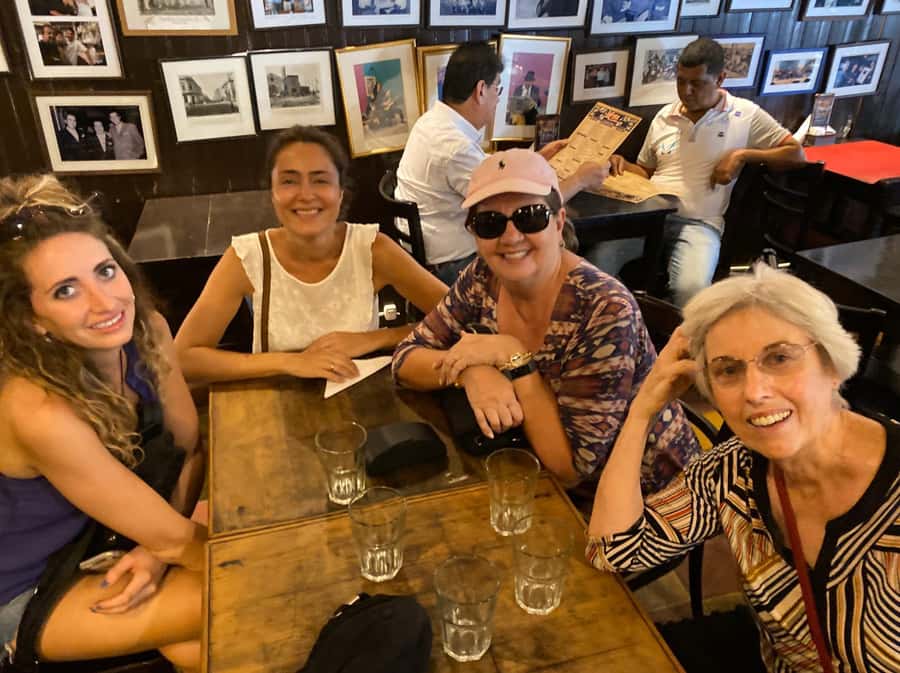
The final coffee is a small detail with real appeal. You are invited to have coffee in an old cafe dating from 1882, and the coffee is included.
Buenos Aires cafes are part of the city’s social history, so this is more than a refreshment stop. After walking through immigrant housing, old political buildings, murals, and community institutions, you get time to sit and talk about what you have seen.
The 30-minute coffee portion also gives the experience a gentler finish. It is a chance to ask Paola questions, clarify the names of artists or buildings, and get suggestions for the rest of your time in Buenos Aires.
Food is not included, so do not expect the coffee stop to replace lunch. If you need a full meal, plan for that separately.
What Paola adds to the walk
Paola De Luca is the key reason this experience feels different from a standard neighborhood circuit. She lived in La Boca during childhood and youth, so she can connect broad events with the daily character of the area.
The strongest praise attached to the experience focuses on her personal connection, clear explanations, warmth, and care for the group. One visitor noted that she stayed attentive to everyone’s comfort during intense heat. Another described her English as excellent, while the tour is also offered in Spanish.
That combination matters. La Boca’s story includes unfamiliar names, social movements, immigrant groups, artistic references, and football traditions. A guide who can explain these clearly without turning the walk into a lecture makes a real difference.
You should also expect conversation. A small group of up to 10 people is better suited to questions than a large, fixed-format tour. Several visitors wanted more time with Paola, which suggests the route may leave you wishing for a longer version rather than feeling padded.
Price, timing, and practical value
At $35 per person, the price is fair if you want more than a photo stop. The fee includes the guided walk, entry to the volunteer firefighter station, entry to the conventillo, and coffee.
It does not include food or the ticket for the Quinquela Museum. That is reasonable, since you can decide for yourself if the museum fits your interests and schedule.
The full experience lasts 150 minutes. The listed structure includes about one hour of guided touring and 30 minutes for coffee, with the remaining time used for walking and visits. Because the route covers several different subjects, the time should feel active rather than slow.
Free cancellation is available up to 24 hours before the start, and you can reserve now and pay later. Check the available starting times when booking, since the exact departure time is not fixed in the supplied information.
The tour is conducted in Spanish or English. The age information says it is not suitable for people over 95, while the listed restrictions prohibit jewelry, alcohol, and drugs, and exclude electric wheelchairs. No further accessibility details are provided, so ask before booking if you need specific support.
Who will get the most from this experience
I would choose this walk if you want to understand how La Boca became La Boca. It suits first-time visitors who want local context, art lovers curious about the neighborhood’s painters, and football fans who want Boca Juniors explained within its home district.
It also fits anyone who prefers small groups and direct conversation. Paola’s personal background gives the tour a human scale that a purely academic guide might not provide.
You may want something else if your priority is a match, stadium entry, a long museum visit, or an organized tango show. Those are not the main purpose here.
The walk also asks for curiosity. Some stops concern social problems, political history, crowded housing, and prostitution. If you only want cheerful photographs, the experience may feel more serious than expected. That seriousness is part of its value, but it is worth knowing in advance.
Should you book La Boca Out off the Beaten Track?
Book it if you want La Boca explained through people and places, not just painted houses. The conventillo, firefighter station, murals, old newspapers, Salesian Church, Boca Juniors stadium, and 1882 cafe create a well-rounded route.
I especially recommend it for visitors who have already seen Caminito and want to understand what lies beyond it, though it also works as a first introduction. At $35, the included entries, coffee, small group, and local guide make good value for a two-and-a-half-hour experience.
Skip it only if you need a stadium interior visit, a full museum tour, or a purely entertainment-focused afternoon. For a personal, thoughtful look at La Boca’s immigrant roots and present-day identity, this is a strong choice.
FAQ
Where does the tour begin?
It begins at the corner of Pedro de Mendoza and Martín Rodríguez in La Boca.
Where does the tour finish?
The experience ends in Caminito, also in the La Boca neighborhood.
How long does the experience last?
It lasts 150 minutes, or two and a half hours.
What languages are available?
The live tour guide is available in Spanish and English.
How large is the group?
The group is limited to 10 participants.
Is coffee included?
Yes. Coffee at a Notable Cafe dating from 1882 is included.
Are the conventillo and firefighter station visits included?
Yes. Entrance to the former conventillo and the first volunteer firefighter station in Argentina is included.
Is the Quinquela Museum ticket included?
No. If you choose to visit the Museo de Bellas Artes de La Boca, its admission ticket is separate.
Can I cancel for a full refund?
Yes. You can cancel up to 24 hours in advance for a full refund. You can also reserve now and pay later.
Recently added in Buenos Aires
- Buenos Aires: Private City Tour by Car with Hotel or Pickup★ 5.0 · 3 reviews
- Guided tour Boca Juniors Museum & Stadium + Caminito★ 3.3 · 3 reviews
- Buenos Aires: Montserrat, San Telmo, La Boca, and Puerto …★ 5.0 · 3 reviews
- Buenos Aires: MALBA Museo de Arte Latinoamericano Tour★ 4.1 · 3 reviews
- Unique Tigre and Delta Private Day Cruise Navegation★ 5.0 · 3 reviews
- Tango Show at: MichelAngelo★ 4.5 · 3 reviews
- Buenos Aires: Mate Workshop y Otras Yerbas★ 5.0 · 3 reviews
- From Colonialism to Eclecticism, Buenos Aires arquitectonica★ 5.0 · 3 reviews
Buenos Aires Tours, compared.

Buenos Aires: Piazzolla Tango Show with Optional Dinner
Read our review →
Buenos Aires: City Highlights Guided Tour with Transfer
Read our review →
Buenos Aires: La Boca Guided Walking Tour in English
Read our review →
Buenos Aires: La Recoleta Cemetery Guided Tour in English
Read our review →
Buenos Aires: Tango Show at Tango Porteño & Optional Dinner
Read our review →
Buenos Aires: 9-Course Argentine Meat Tasting at Fogón Asado
Read our review →

Buenos Aires: Madero Tango Show with Optional Dinner
Read our review →Browse the lists this tour appears in