
Reviewed · BUENOS AIRES TOURS
Buenos Aires: Puerto Madero Tour For Small Groups
Puerto Madero gives you two very different Buenos Aires experiences in one walk: polished waterfront architecture beside old port machinery, followed by open paths, birds, and wildlife at the ecological reserve. The contrast between the docks and the reserve is the tour’s main appeal.
I like the chance to see the Women’s Bridge, the Sarmiento Frigate, Lola Mora’s Fountain of the Nereids, and the old warehouses without spending much. I also like that guide Miguel brings local knowledge and personal enthusiasm to the walk. The main consideration is that the tour is in Spanish, lasts around three and a half hours, and includes a long reserve walk that is not suitable for wheelchair users or children under 10.
Key Points To Know Before You Go
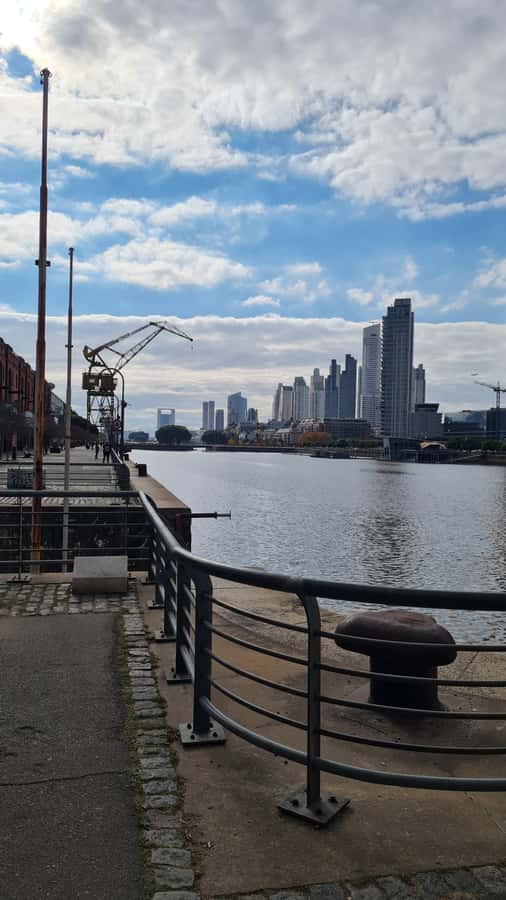
- Two sides of Puerto Madero: See modern towers, historic port buildings, restaurants, and working-era machinery in the same district.
- Miguel leads in Spanish: The guide is noted for his detailed knowledge of Puerto Madero and Buenos Aires, with a discussion-focused style.
- The ecological reserve takes 90 minutes: This is not just a quick photo stop. You will walk through an area known for birds, animals, and views back toward the city.
- The tour ends at Museo de la Cárcova: The final stop adds art to a route already filled with architecture, ships, bridges, and nature.
- A strong $20 value: For the price of a casual meal or a few drinks in Puerto Madero, you get a guided walk lasting about 210 minutes.
- Bring sun protection: Comfortable shoes, a hat, sunscreen, and water matter here, especially during the reserve section.
Why Puerto Madero Works So Well On Foot
Puerto Madero is one of the easiest parts of Buenos Aires to understand through a walking tour. The district is compact enough to cover on foot, yet each section tells a different story.
The old docks are lined with warehouses built from English bricks. Today, these buildings house fine restaurants and the prestigious Pontifical Catholic University of Argentina, or UCA. Their original industrial look remains visible, so you can see how a former port district changed into one of the city’s most polished areas.
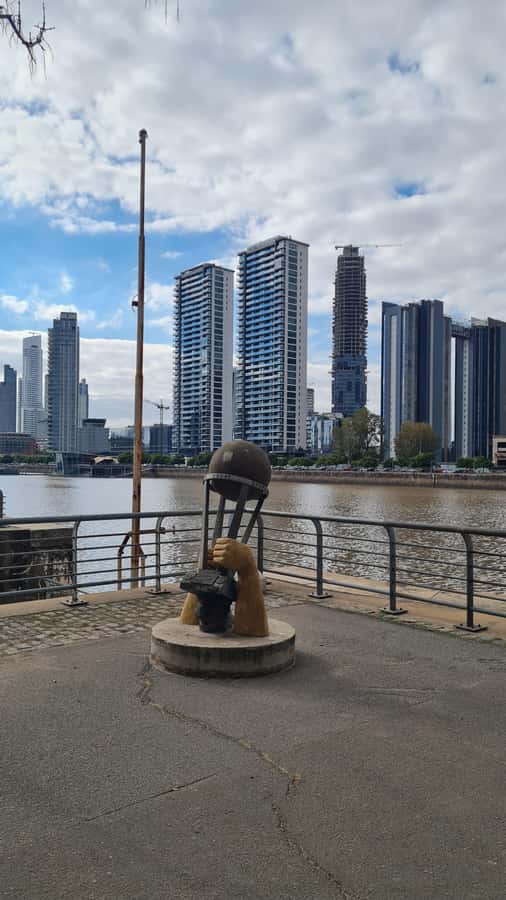
Across the water, newer towers rise above the old dock buildings. This gives you a useful visual lesson in Buenos Aires development without needing a museum display or a long lecture. You are looking at the city’s past and present at the same time.
I especially like that the route does not stop at the postcard view. After the restaurants and towers, you head toward plazas, gardens, and the ecological reserve. That change keeps the walk from feeling like a simple architecture loop.
The setting also gives you a chance to compare different kinds of city space. Puerto Madero has broad waterfront areas, formal public spaces, historic structures, and a large natural area at the edge of the city. You will need to walk between them, but the variety is what makes the route worthwhile.
Other Buenos Aires days worth putting on the same trip:
- Buenos Aires Hop-On Hop-Off Bus, Free Walking Tours & Discounts
★ 4.5 · 2,218 reviews - Buenos Aires: Piazzolla Tango Show with Optional Dinner
★ 4.4 · 2,122 reviews - Buenos Aires: City Highlights Guided Tour with Transfer
★ 4.7 · 1,946 reviews
Meeting The Sarmiento Frigate
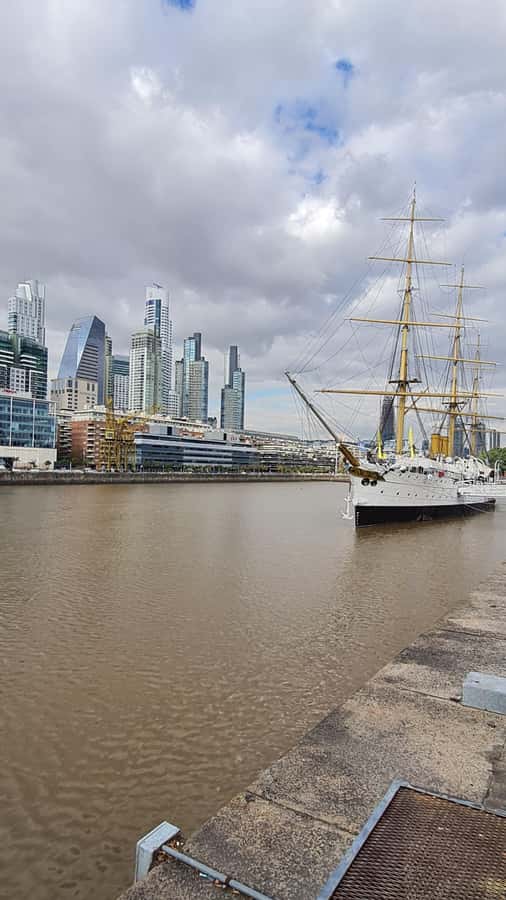
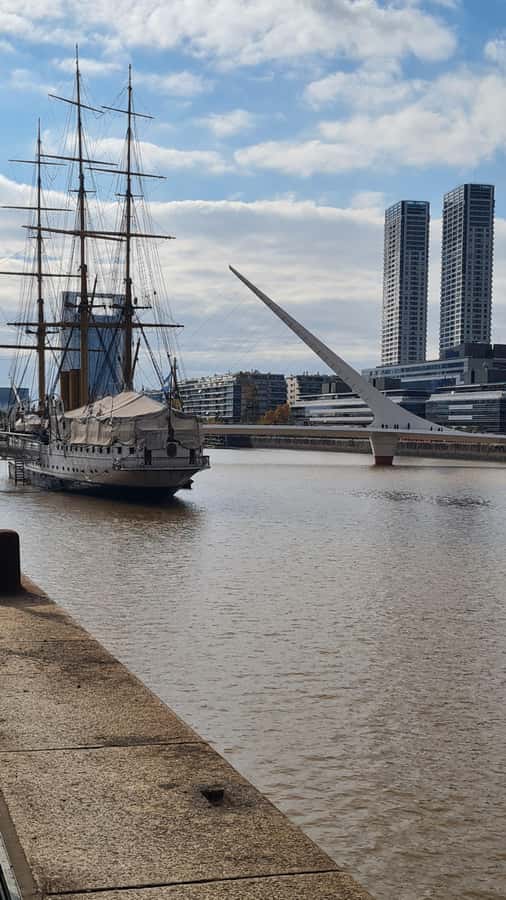
The tour begins at the Buque Museo Fragata A.R.A. Presidente Sarmiento. This historic sailing ship served as a training vessel for generations of midshipmen in the Argentine Navy and now operates as a museum.
You will see the ship and hear about its role, but this tour does not plan to take you inside. That distinction matters if you are specifically hoping to explore the vessel’s interior. The ship is an important starting point, but the value here comes from the wider Puerto Madero walk rather than a full museum visit.
The location is practical for orientation. From the frigate, you are immediately in the historic dock area, with the waterfront, old warehouses, and modern buildings close at hand. Your guide Miguel will be waiting at the ship, so look for him at the stated meeting point.
Because the tour is conducted in Spanish, this opening is a good place to judge how comfortably you can follow the guide. The experience is designed around explanation and discussion, not simply walking silently from one photo stop to the next. A basic to strong working knowledge of Spanish will help you get the most from Miguel’s comments.
The Women’s Bridge And Puerto Madero’s Waterfront
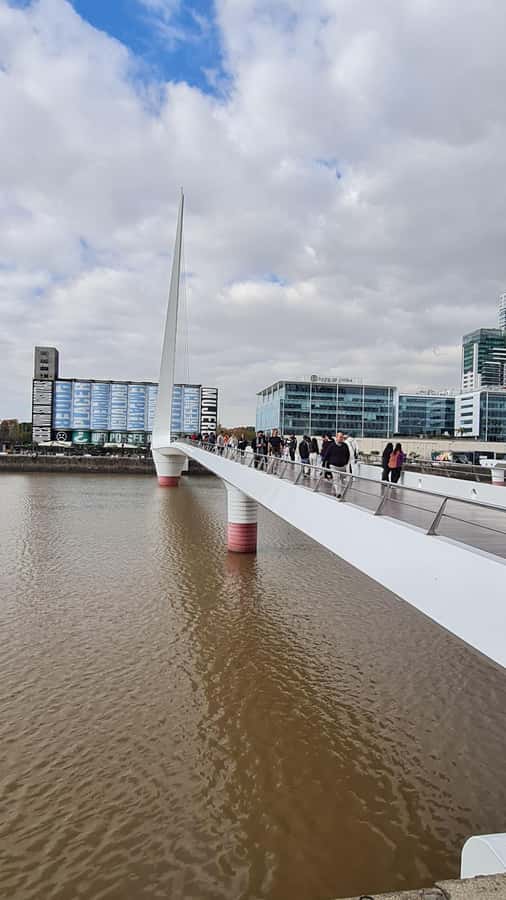
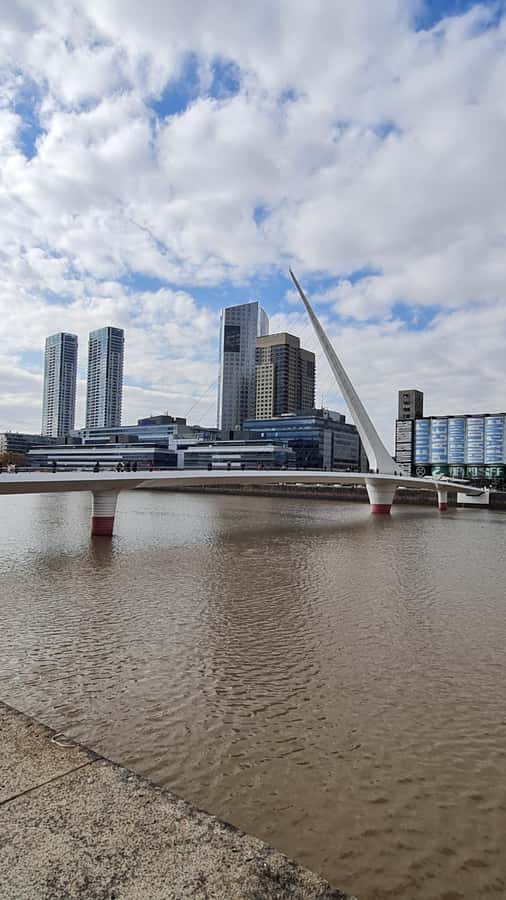
The Puente de la Mujer, or Women’s Bridge, is one of the clearest symbols of Puerto Madero. Its design represents tango culture, making it more than a convenient crossing over the water.
You will have time for photos and a guided explanation before continuing through the dock area. The bridge provides a strong visual marker for the neighborhood, and it also frames the mix of water, old warehouses, and tall modern buildings.
The tour then continues through Puerto Madero itself. This is where you see the old port warehouses made with English bricks. Their present use as restaurants gives the area a refined feel, but the dockside construction and old machinery keep the port’s working past in view.
I like this part because it avoids treating the district as only a place for expensive dining. You get to look at the buildings as pieces of urban history, while the restaurants show how the area functions today. The contrast is easy to grasp in person: old brick walls close to sleek towers and broad waterfront views.
The route also highlights the tallest and most modern buildings in the city. These views are useful for anyone trying to understand Buenos Aires as a changing capital. You are not just seeing attractive buildings. You are seeing how a former industrial zone became a high-profile business, dining, and residential area.
Keep your expectations realistic, though. This is a walking tour with photo stops and explanations, not an interior architecture tour. The plan is to pass by the main landmarks and discuss them rather than enter every site.
One And A Half Hours In The Ecological Reserve
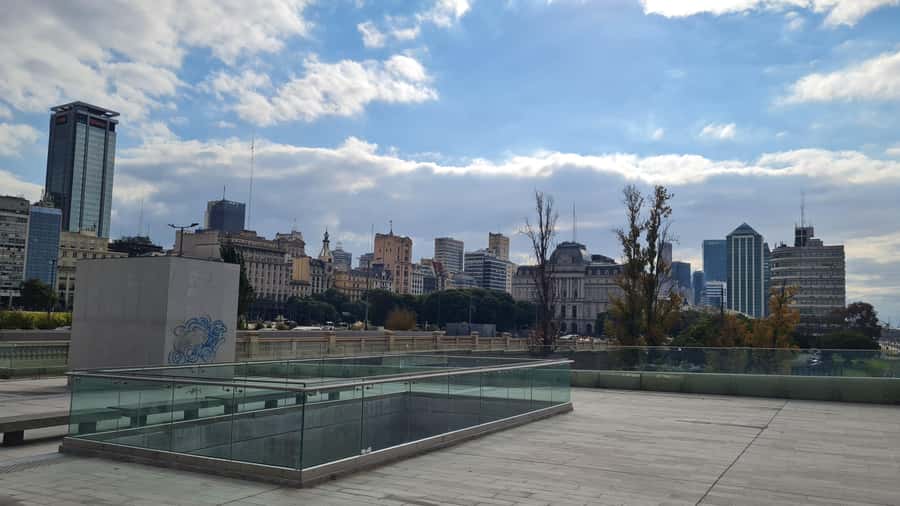
The ecological reserve is the longest part of the experience, with about 90 minutes set aside for a visit and guided walk. That time allows you to move beyond the built-up waterfront and into a quieter area where the city remains visible in the distance.
This section is especially useful if you want more than urban scenery during your Buenos Aires visit. The reserve offers birdwatching and the chance to see various animal species. Exact sightings cannot be promised, but the area gives you a better chance to notice local wildlife than a standard city-center walk.
You will also get striking views back toward Buenos Aires. Tall buildings that seemed dominant from the docks become part of a wider city scene when viewed from the reserve. This is one of the tour’s best shifts in perspective.
Plan for real walking here. The reserve section alone lasts around an hour and a half, so comfortable shoes are essential. Bring water, a hat, and sunscreen. There is a planned 10-minute pause for restroom use during the guided walking tour, but you should not treat that as a substitute for preparing before you begin.
The reserve may be less appealing if you want a fast-paced sightseeing circuit with constant landmarks. Nature walks have a slower rhythm. You may spend time looking for birds, noticing plants, or simply taking in the view rather than moving from one famous object to another.
That slower pace is also the point. The route gives you a break from the traffic, restaurants, and towers of Puerto Madero without sending you far from the city. I would consider the reserve a major reason to choose this tour over a shorter dockside stroll.
Completely different, still leaving from Buenos Aires:
- Buenos Aires: Hop-On Hop-Off City Bus Tour
★ 4.2 · 1,855 reviews - Buenos Aires Hop-On Hop-Off Bus and Exclusive Benefits
★ 4.4 · 1,714 reviews - Buenos Aires: La Boca Guided Walking Tour in English
★ 4.8 · 1,587 reviews - Buenos Aires: La Recoleta Cemetery Guided Tour in English
★ 4.8 · 1,359 reviews
Lola Mora’s Fountain And A Small Art Museum
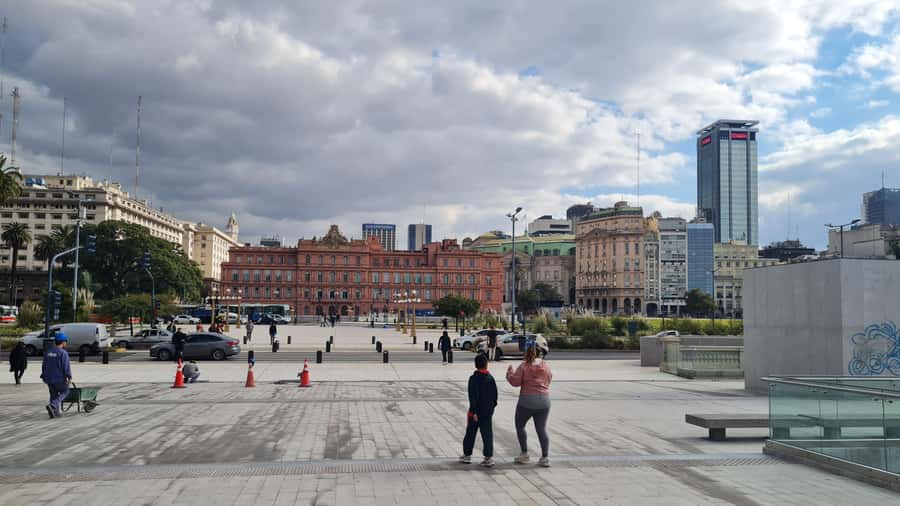
On the way out of the reserve, the route reaches the Fuente de las Nereidas, or Fountain of the Nereids. The fountain was created by Argentine sculptor Lola Mora and provides a strong artistic finish to the outdoor portion of the tour.
You will stop for photos and hear about the work from the guide. Its inclusion adds a distinctly Argentine art connection to a route that has already covered naval history, port redevelopment, tango symbolism, and wildlife.
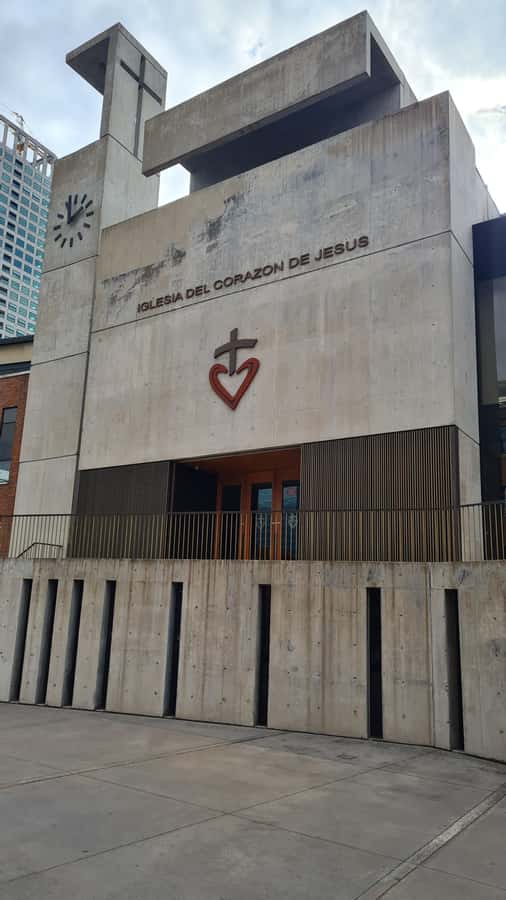
The final stop is Museo de la Cárcova, where the tour includes a visit and guided explanation. The museum is also the finishing point, so you do not need to walk back to the starting location as part of the stated route.
This ending gives the experience a useful change of mood. You begin with a ship and the machinery of a port, walk through modern city streets and natural paths, then finish with sculpture and museum art. It is an unusually varied route for a $20 walking tour.
The available details do not specify how much time you will have for independent museum exploration, so expect the visit to remain part of the guided program. If you want a long, self-directed museum session, you may need to return separately.
What The $20 Price Really Gets You
At $20 per person, this tour offers good value if you want a guided introduction to Puerto Madero rather than simply wandering through it alone. The route lasts 210 minutes, and the advertised package includes a three-hour guided walking tour with a 10-minute restroom pause.
There is a small timing wrinkle: 210 minutes equals three and a half hours, while the description also calls the guided portion three hours. I would plan for roughly three and a half hours from start to finish and avoid booking a tight appointment immediately afterward.
The price covers the guided walking experience. It does not state that entry to the Sarmiento Frigate is included, and the plan specifically says the group does not intend to enter that museum. The visit to Museo de la Cárcova is included in the route, but no additional admission details are provided, so check the booking information if entry costs are important to your budget.
For comparison, a self-guided walk through Puerto Madero costs nothing, but you would need to research the frigate, bridge, warehouses, reserve, fountain, and museum yourself. The tour’s value comes from connecting these separate sights into one clear story.
It is also a useful option for a first visit. Miguel has been praised for his extensive knowledge of Puerto Madero and Buenos Aires, as well as for bringing passion to the work. His approach appears to include discussion, so you are paying not only for directions but also for context and local interpretation.
Who Will Enjoy This Walk Most
I would recommend this experience to adults and older children who enjoy walking, city history, public art, and nature in equal measure. It suits you especially well if you want to see several sides of Buenos Aires in one outing.
It is a good match for:
- People who want a small-group experience rather than a large bus tour
- Spanish-speaking visitors looking for local explanation
- First-time visitors who want an introduction to Puerto Madero
- Walkers who like combining landmarks with birdwatching
- Visitors interested in urban change, port buildings, sculpture, and modern architecture
- Anyone looking for a reasonably priced half-day activity
It is less suitable if you need wheelchair access, since the activity is not suitable for wheelchair users. Children under 10 are also not accepted. The long reserve walk may be tiring if you are not comfortable walking for extended periods.
You should also think about the language. The only listed tour language is Spanish. Since the guide’s knowledge and discussion are central to the experience, you will lose much of the value if you cannot follow Spanish comfortably.
Practical Advice For A Better Experience
Wear shoes you can use for a long walk over changing urban and reserve paths. Puerto Madero may look polished around the docks, but the reserve portion calls for practical footwear rather than fashion shoes.
Bring water, a hat, and sunscreen. The tour specifically recommends all three, and the open reserve section offers less shelter than the restaurant-lined docks. These simple items can make the last 90 minutes far more comfortable.
Arrive at the Sarmiento Frigate with enough time to identify Miguel. He will be waiting at the starting point, but the area includes several waterfront sights, so do not assume you can rush in at the last second and find the group instantly.
Give yourself room in your schedule after the walk. The stated duration is 210 minutes, and the route includes a substantial reserve visit, a fountain stop, and a museum finish. The tour is not a quick one-hour introduction.
The experience offers free cancellation up to 24 hours before the start for a full refund, and you can reserve now while paying later. Those options are useful if your Buenos Aires plans are still shifting.
My Verdict On The Puerto Madero Tour
Book this tour if you want Puerto Madero explained in Spanish, with a route that covers far more than the waterfront restaurants. The mix of the Sarmiento Frigate, Women’s Bridge, English-brick warehouses, modern towers, ecological reserve, Lola Mora’s fountain, and Museo de la Cárcova gives you a broad look at the district for $20.
I would choose it for the excellent variety and for the chance to walk with Miguel, whose knowledge and enthusiasm are central to the experience. I would skip it if you want a short, fully accessible outing, an English-language guide, or a full interior visit to the frigate.
For prepared walkers who can follow Spanish, this is a thoughtful and fairly priced way to see Puerto Madero as more than a stylish waterfront. Bring water, wear good shoes, and allow the full afternoon.
FAQ
Where does the Puerto Madero tour begin?
The tour begins at the Buque Museo Fragata A.R.A. Presidente Sarmiento in Puerto Madero. Guide Miguel will be waiting at the meeting point.
Where does the tour finish?
The tour finishes at Museo de la Cárcova after the guided visit.
How long does the experience last?
The stated duration is 210 minutes. The activity also describes the walk as three hours with a 10-minute restroom pause, so allow about three and a half hours in your schedule.
Is the tour offered in English?
No. The listed tour language is Spanish.
Does the tour enter the Sarmiento Frigate?
The route includes a guided look and pass-by at the Sarmiento Frigate, but the plan does not include entering the ship’s museum.
What should I bring?
Bring comfortable shoes, a hat, sunscreen, and water. These are particularly useful during the 90-minute walk through the ecological reserve.
Is the tour suitable for children and wheelchair users?
The activity is not suitable for children under 10 or for wheelchair users.
Recently added in Buenos Aires
- Buenos Aires: Private City Tour by Car with Hotel or Pickup★ 5.0 · 3 reviews
- Guided tour Boca Juniors Museum & Stadium + Caminito★ 3.3 · 3 reviews
- Buenos Aires: Montserrat, San Telmo, La Boca, and Puerto …★ 5.0 · 3 reviews
- Buenos Aires: MALBA Museo de Arte Latinoamericano Tour★ 4.1 · 3 reviews
- Unique Tigre and Delta Private Day Cruise Navegation★ 5.0 · 3 reviews
- Buenos Aires: Mate Workshop y Otras Yerbas★ 5.0 · 3 reviews
- Tango Show at: MichelAngelo★ 4.5 · 3 reviews
- From Colonialism to Eclecticism, Buenos Aires arquitectonica★ 5.0 · 3 reviews
Buenos Aires Tours, compared.

Buenos Aires: Piazzolla Tango Show with Optional Dinner
Read our review →
Buenos Aires: City Highlights Guided Tour with Transfer
Read our review →
Buenos Aires: La Boca Guided Walking Tour in English
Read our review →
Buenos Aires: La Recoleta Cemetery Guided Tour in English
Read our review →
Buenos Aires: Tango Show at Tango Porteño & Optional Dinner
Read our review →
Buenos Aires: 9-Course Argentine Meat Tasting at Fogón Asado
Read our review →
