Reviewed · BUENOS AIRES TOURS
Buenos Aires for curious people
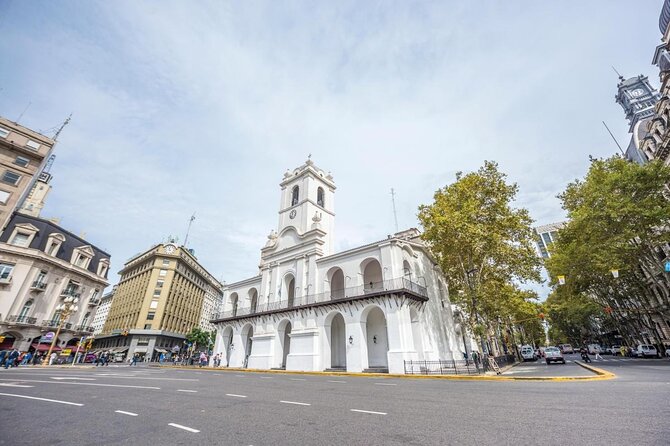
The most interesting thing about Buenos Aires for Curious People is its willingness to leave the postcard route. You see Plaza de Mayo and the Casa Rosada, but the walk also brings you to a former detention center, a Swedish church, a colonial parish, and corners of San Telmo that reward a slower look.
I like the small maximum of eight people, which gives you room to ask questions and hear the guide clearly. I also like the serious historical approach. Guides such as Nicolás and Ignacio connect architecture, politics, food, immigration, and daily life rather than treating each monument as an isolated photo stop.
The main consideration is pace and subject matter. This is a two to three-hour walking tour with some difficult material, including Argentina’s years of state terror. One person found the route less structured than expected, and anyone needing frequent rest should think carefully before booking.
Key points at a glance
- A San Telmo walk with more than the usual sights: See Plaza Dorrego and Mercado San Telmo, then go beyond the standard market circuit.
- History with political context: The route covers the city’s founding, immigration, dictatorship, social issues, economics, and present-day challenges.
- Small-group format: The maximum is eight people, making conversation and questions a central part of the experience.
- Several possible guides: Nicolás, often called Nico, appears frequently in the guide team, alongside Ignacio, Sophia, and Santiago.
- A useful first look at Buenos Aires: The walk ends at the Casa Rosada and helps you understand the city before exploring on your own.
- Good value at $33: You get up to three hours of guided walking and a broad introduction to Buenos Aires without paying for admission tickets along the route.
Why this walk feels different from a standard city tour
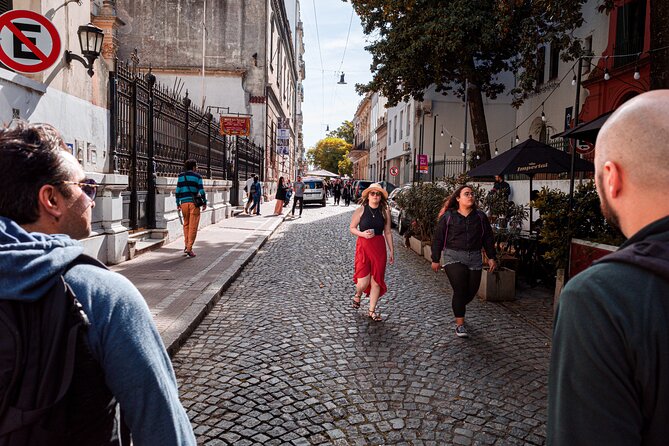
Many Buenos Aires walks concentrate on the big civic sights, give you a few dates, and move on. This experience uses those sights as part of a longer story. The city’s oldest neighborhoods become a way to discuss Spanish rule, immigration, religion, military power, memory, and the political life of modern Argentina.
I especially like that the route does not treat San Telmo as only a market and tango district. You begin near Parque Lezama, visit places tied to the city’s earliest settlement, pass religious and immigrant institutions, and confront the darker chapters of the 20th century before ending near the seat of government.
The guides also bring different strengths. Nicolás is described as a Buenos Aires local whose family has lived in the city for at least three generations, and he works at a history museum. Ignacio is a history professor. Sophia has been praised for her patience and engaging manner, while Santiago is noted for an easygoing attitude. Your guide depends on the date, but the experience is clearly built around explanation and conversation rather than a memorized script.
The tone is academic without needing to be stiff. You may discuss the country’s political conflicts, economic problems, and social questions. That makes this a better choice for someone who wants to understand Argentina than for someone who only wants quick facts and photo opportunities.
Other Buenos Aires days worth putting on the same trip:
- Buenos Aires Hop-On Hop-Off Bus, Free Walking Tours & Discounts
★ 4.5 · 2,218 reviews - Buenos Aires: Piazzolla Tango Show with Optional Dinner
★ 4.4 · 2,122 reviews - Buenos Aires: City Highlights Guided Tour with Transfer
★ 4.7 · 1,946 reviews
Starting at Bar Britanico and Parque Lezama
The listed meeting point is Bar Britanico at Brasil 399, near the old town. The first stop is the bar, with about five minutes allowed, followed by Parque Lezama for roughly 30 minutes. The park is identified as the place where the first fort was established in 1536.
That opening gives the guide a useful way to explain Buenos Aires as a place shaped by repeated attempts at settlement, political change, and expansion. A park can seem like a simple green pause in the city, but here it serves as a starting point for the city’s early story.
The supplied route information calls Parque Lezama the starting point, while the meeting point is Bar Britanico. Plan to follow the confirmed meeting instructions carefully rather than assuming you should go directly to the park. This is a walking tour, so arriving a little early is sensible.
The bar itself is not an admission attraction. Its value is its setting in the old quarter and its role as a clear rendezvous point. If you are staying near central Buenos Aires, the area is close to public transportation.
Swedish church and the city’s immigrant layers
The next stop is Club Sueco Restaurante, connected with the Swedish church established in 1944. You spend about ten minutes here, which is enough for a brief explanation rather than a long visit.
This is one of the route’s better small details. Buenos Aires is often presented through Spanish colonial buildings, Italianate architecture, and tango culture, but immigrant communities shaped the city in many ways. A Swedish institution makes that broader story visible.
Do not expect a major interior tour or a long restaurant stop. The information describes the visit as an outside or brief neighborhood stop, and admission is free. Its purpose is to help you notice how many national and cultural threads meet in Buenos Aires.
Memory Walk and the difficult years of 1976 to 1979
The Memory Walk is the most serious stop on the route. It marks a former clandestine center for detention, torture, and extermination used from 1976 to 1979.
This part of the walk adds a needed counterpoint to the colonial churches and public squares. Argentina’s history is not only about independence, immigration, grand avenues, and political personalities. The recent past still shapes public memory and national discussion.
You spend about 20 minutes here. The subject may be distressing, and the experience is not designed as light sightseeing. I would not book this walk if you want an entirely cheerful afternoon. If you do want a fuller understanding of Argentina, this stop gives the rest of the route moral and political weight.
The guides’ willingness to answer questions is important here. Nicolás and Ignacio are repeatedly praised for explaining complex political subjects in clear English. That matters because the facts can be difficult enough without a guide who rushes or relies on vague language.
Completely different, still leaving from Buenos Aires:
- Buenos Aires: Hop-On Hop-Off City Bus Tour
★ 4.2 · 1,855 reviews - Buenos Aires Hop-On Hop-Off Bus and Exclusive Benefits
★ 4.4 · 1,714 reviews - Buenos Aires: La Boca Guided Walking Tour in English
★ 4.8 · 1,587 reviews - Buenos Aires: La Recoleta Cemetery Guided Tour in English
★ 4.8 · 1,359 reviews
San Pedro González Telmo and Plaza Dorrego
The route continues to the Parish of San Pedro González Telmo, a colonial Catholic church visited for about 15 minutes. The church adds religious and architectural context to the neighborhood, and it helps show how San Telmo developed before becoming a favorite stop for weekend markets and antique shops.
Then comes Plaza Dorrego, the old town’s main square, with about 15 minutes set aside. This is the kind of place where the guide can connect the physical setting with the social life of Buenos Aires. You get the square itself, but also an explanation of why it matters within San Telmo.
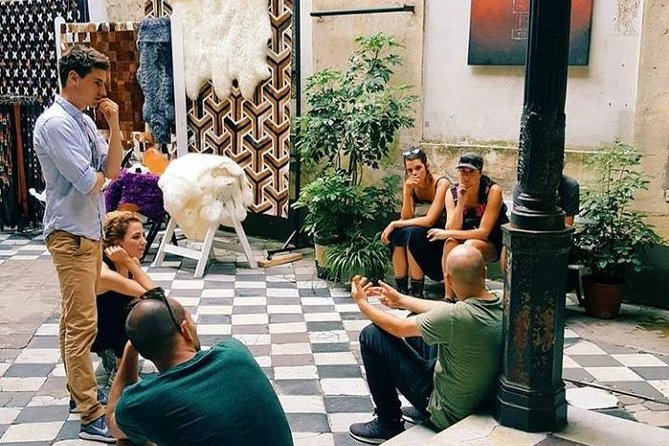
The walk through this part of town is not only a series of buildings. You may hear about historical figures, changing neighborhoods, food, and the people who made Buenos Aires what it is. One strength of the experience is its willingness to answer questions and adjust the discussion to the interests of the group.
That conversational style works best when you arrive curious. It may feel less tightly choreographed than a tour that gives every minute to a single monument. One person found the structure loose, so you should choose this walk for ideas and context rather than a rigid checklist.
Mercado San Telmo and a practical pause
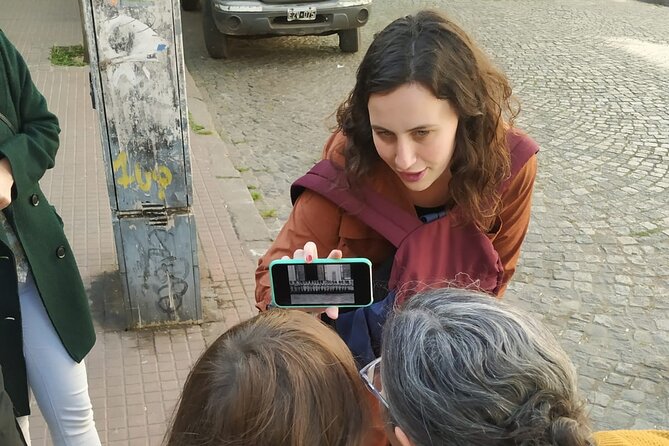
Mercado San Telmo receives about 30 minutes, making it one of the longer stops. The market was built by Italian immigrants, which fits neatly into the tour’s broader story of migration and city life.
The market also gives the walk a change of rhythm. After the more solemn Memory Walk and the architectural explanations, you can see a working public space tied to food and local culture. The guide’s interest in Argentine food is part of the experience, and this is a natural place to ask for suggestions about what to eat during the rest of your stay.
Some guides have included a coffee, snack, and bathroom pause during the walk. The exact break schedule is not guaranteed, but the route has enough flexibility for a practical pause. That is useful on a two to three-hour walk, especially in warm or wet weather.
Keep in mind that the listed admission cost is free at the market and other stops, but food and drinks are not included. Bring some Argentine pesos or a payment method accepted by the market if you want to buy something. The tour price covers the guided experience, not personal purchases.
Puente de la Mujer and the walk toward government
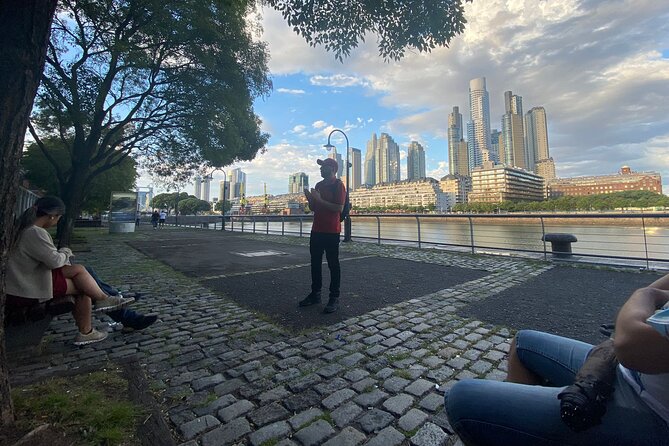
The itinerary then shifts from old San Telmo to Puerto Madero for a 15-minute stop at Puente de la Mujer. The bridge was designed by Spanish architect and structural engineer Santiago Calatrava.
This is a useful contrast. Within the same tour, you move from colonial religious architecture and an immigrant market to a modern bridge associated with contemporary Buenos Aires. The change helps you see that the city is not a preserved old quarter. It is a place where older neighborhoods and newer urban projects sit side by side.
The route information does not spell out the transport between every stop. Since this is sold as a walking tour and lasts two to three hours, expect a substantial amount of walking. You should wear comfortable shoes and be ready for city streets rather than a bus-based sightseeing loop.
The bridge stop is brief, so it is best understood as part of the city story, not as a full architectural tour. You will have time to see it and hear the basic context, but not necessarily time for a long photo session.
Finishing at the Casa Rosada and Plaza de Mayo
The final stop is the Casa Rosada, the president’s office, at Balcarce 78. The listed time is about 25 minutes, and the tour ends here.
The Casa Rosada is one of Buenos Aires’ key political symbols. Ending here gives the earlier discussions of power, protest, government, and national identity a clear focal point. It also leaves you in a central location for continuing your own sightseeing.
Admission to the Casa Rosada is not included. The route information does not promise an interior visit, so you should not book this expecting a guided tour inside the presidential offices. The value is the exterior setting and the explanation provided by your guide.
This ending is practical. From Casa Rosada, you can continue around Plaza de Mayo or use nearby public transportation. If you are just beginning your stay, the guide can also suggest places to visit next. Several accounts describe the guides as willing to answer questions and offer ideas for the rest of your time in Buenos Aires.
What $33 buys you
At $33 per person, the price is reasonable for a two to three-hour small-group walk. The maximum of eight is the key value point. You are not paying only to be led past landmarks. You are paying for access to a guide who can explain why the places matter and respond to your questions.
The route includes no paid admissions, so the price comparison is mainly about the guide’s time, subject coverage, and group size. A cheaper walk might cover the same central squares but offer less political and social context. A more expensive private tour might give you more control over pace, but this experience gives you a close-knit setting without the full cost of a private booking.
The price is especially fair if you care about history, architecture, and present-day Argentina. It is less compelling if your goal is simply to collect photographs of the Casa Rosada and Puente de la Mujer. Those stops are included, but they are part of a larger lesson rather than the whole purpose.
The high rating and 99 percent recommendation figure point to a consistently strong experience, but I would still read the format honestly. The tour depends on the guide’s presentation and on the group’s questions. You may get Nicolás, Ignacio, Sophia, Santiago, or another member of the team, so the exact personality and emphasis can vary.
Who should book this Buenos Aires walk
I would choose this tour if you want:
- A first orientation to Buenos Aires with serious historical context
- A small group where questions are welcome
- San Telmo beyond the market and tango image
- Discussion of Argentine politics, society, and recent history
- A local perspective from guides with strong ties to Buenos Aires
- A walking route that includes overlooked or less obvious sites
It suits solo visitors, couples, families with older children, and friends who enjoy asking questions. It also works well early in a stay, since it ends near major central sights and can help you decide what to explore next.
You should think twice if you have limited walking ability, dislike sensitive historical subjects, or want a tightly timed tour focused only on famous monuments. One account specifically noted that slow walking and repeated stops affected the group, though the tour itself offers breaks and most people can participate.
Service animals are allowed, and the tour is near public transportation. Most people can take part, but good walking shoes remain a sensible choice. The experience requires good weather. If poor weather causes cancellation, you are offered another date or a full refund. You can cancel for a full refund up to 24 hours before the start time, but late cancellations and late changes are not accepted.
My verdict: a strong choice for curious visitors
I would book Buenos Aires for Curious People if I wanted to understand the city rather than simply photograph it. The route covers the familiar Casa Rosada and Plaza de Mayo area, but its best moments come from the less expected stops: Parque Lezama, the Swedish church, the Memory Walk, the colonial parish, and the immigrant-built market.
The $33 price works because the group stays small and the guides bring real subject knowledge, local experience, and patience to difficult questions. Just arrive ready to walk, listen, and think. If that sounds like your kind of afternoon, this is one of the better ways to begin making sense of Buenos Aires.
FAQ
How long does Buenos Aires for Curious People last?
The tour lasts approximately two to three hours.
How many people can join the tour?
The maximum group size is eight people.
Where does the tour start?
The listed meeting point is Bar Britanico, Brasil 399, C1154AAC, Buenos Aires.
Where does the tour end?
The tour ends at the Casa Rosada, Balcarce 78, C1064AAC, Buenos Aires.
Is admission to the stops included?
The listed stops have no admission charge, except that admission to the Casa Rosada is not included.
Is this tour suitable for people who use service animals?
Yes. Service animals are allowed, and the tour is near public transportation. Most people can participate.
What happens if the weather is poor?
The experience requires good weather. If it is canceled because of poor weather, you will be offered a different date or a full refund.
Recently added in Buenos Aires
- Buenos Aires: Private City Tour by Car with Hotel or Pickup★ 5.0 · 3 reviews
- Guided tour Boca Juniors Museum & Stadium + Caminito★ 3.3 · 3 reviews
- Buenos Aires: Montserrat, San Telmo, La Boca, and Puerto …★ 5.0 · 3 reviews
- Unique Tigre and Delta Private Day Cruise Navegation★ 5.0 · 3 reviews
- Buenos Aires: MALBA Museo de Arte Latinoamericano Tour★ 4.1 · 3 reviews
- Tango Show at: MichelAngelo★ 4.5 · 3 reviews
- Buenos Aires: Mate Workshop y Otras Yerbas★ 5.0 · 3 reviews
- From Colonialism to Eclecticism, Buenos Aires arquitectonica★ 5.0 · 3 reviews
Buenos Aires Tours, compared.
Buenos Aires: Piazzolla Tango Show with Optional Dinner
Read our review →
Buenos Aires: City Highlights Guided Tour with Transfer
Read our review →
Buenos Aires: La Boca Guided Walking Tour in English
Read our review →
Buenos Aires: La Recoleta Cemetery Guided Tour in English
Read our review →
Buenos Aires: Tango Show at Tango Porteño & Optional Dinner
Read our review →
Buenos Aires: 9-Course Argentine Meat Tasting at Fogón Asado
Read our review →