
Reviewed · BUENOS AIRES TOURS
Boca tour: Tango, Soccer, Art and Immigration
La Boca is Buenos Aires at its most colorful and outspoken. This 150-minute walk links Italian immigration, tango, soccer, and street art in one compact route, with Caminito and La Bombonera as the big draws.
I like the public-bus ride because it puts La Boca into a real neighborhood setting, not just a tourist bubble. I also like the small-group format and the guides, especially Juliette, who received repeated praise for clear, fun explanations and for making the walk feel safe. The main drawback is that the stadium entry fee and bus fare are extra, and the route is not suitable for wheelchair users.
Key points to know before you book
- La Boca’s story begins at the old port: Learn how Italian immigration and a mix of cultures shaped the neighborhood.
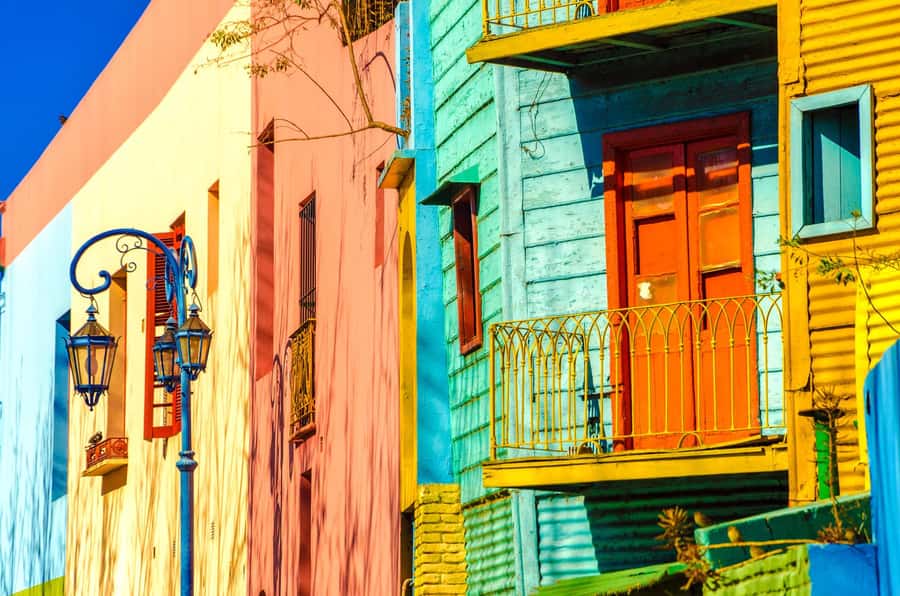
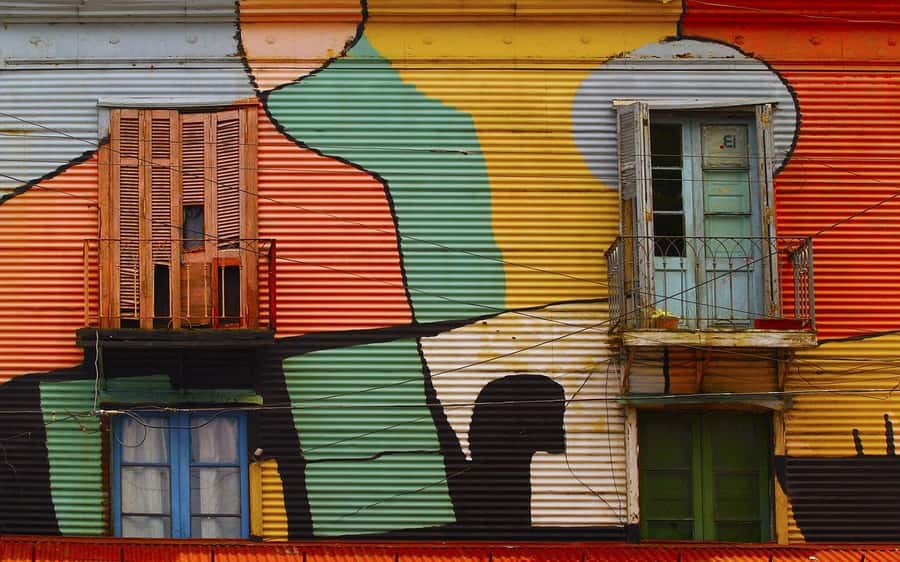
- Caminito is the visual centerpiece: Expect colorful houses, murals, street art, and a busy pedestrian street.
- La Bombonera is a look at Argentine football culture: You visit the stadium area, but admission inside is not included.
- A local guide leads the full route: English, Spanish, and Portuguese are available, with Juliette named in recent bookings.
- The bus ride is part of the experience: Meet at Viajero Hostel and travel together by public bus to La Boca.
- Bring practical gear: Wear comfortable shoes, carry water, and leave smoking for elsewhere.
Why La Boca makes a strong first stop in Buenos Aires
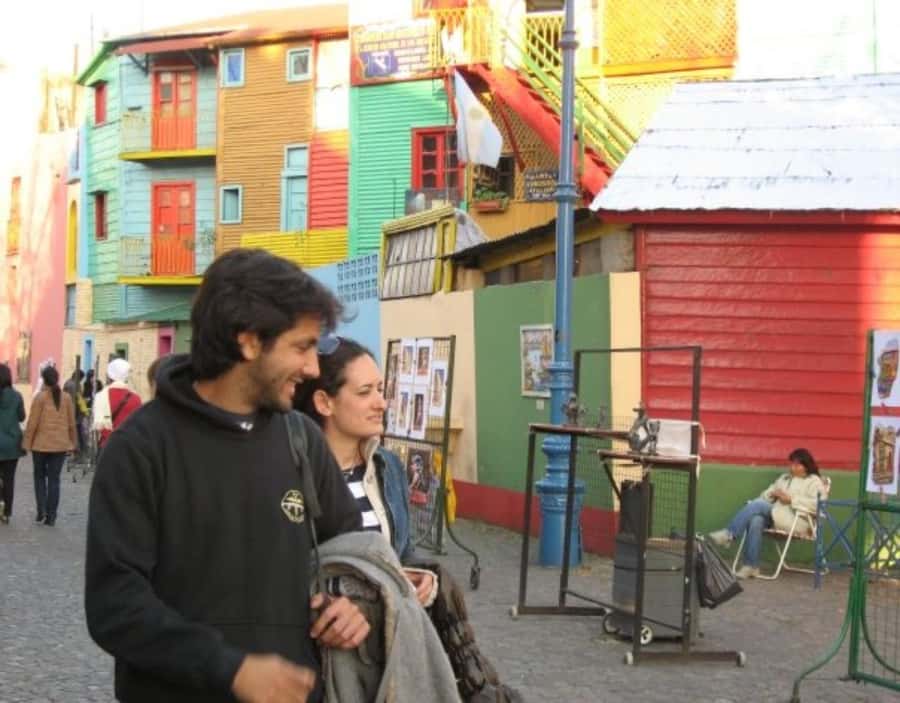
La Boca is not a polished postcard version of the city. Its identity comes from port work, immigration, music, football, painted facades, and working-class life. That mixture gives the neighborhood a very different feel from the grand avenues and formal squares elsewhere in Buenos Aires.
I like this tour because it does not treat La Boca as only a photo stop. The guide connects the colored walls and football murals to the people who shaped the area. You get a clearer sense of why tango grew from a meeting of cultures and why Boca Juniors means far more here than a local sports team.
The walk begins at Venezuela 649, the Viajero Hostel, at 11 am every Tuesday and Friday. From there, you take a public bus to La Boca. Your bus ticket is not included, so carry some way to pay for it. The shared ride also means you begin seeing the city as residents do, rather than being delivered straight to the most photographed street.
The group is described as limited in size, though no exact maximum is given. That matters in La Boca, where narrow pedestrian areas can feel crowded and a large group can make it hard to hear. A smaller party should make it easier to ask questions and stay close to the guide.
more tango nights in Buenos Aires
- Buenos Aires: Piazzolla Tango Show with Optional Dinner
★ 4.4 · 2,122 reviews - Buenos Aires: Tango Show at Tango Porteño & Optional Dinner
★ 4.6 · 981 reviews - Buenos Aires: Madero Tango Show with Optional Dinner
★ 4.3 · 748 reviews
Arriving at the old port
The first substantial part of the walk takes place around La Boca’s old port and the entrance to Caminito. This is a useful starting point because the port explains much of the neighborhood’s character.
Italian immigration is a major theme. The guide explains how newcomers settled in the area, how cultures met, and how the neighborhood developed its own social identity. You are not simply looking at bright paint. You are learning why La Boca looks and feels unlike other parts of Buenos Aires.
The port setting also helps explain the connection with tango. Tango developed from several cultural influences, and La Boca is closely linked with its early identity. The tour presents tango as part of a larger neighborhood story, alongside migration and daily life.
I would pay close attention here rather than rushing toward Caminito. The most useful part of a guided walk is often the context you would miss on your own. Painted walls are easy to photograph. Understanding why those walls, streets, and old buildings matter gives the photos some meaning.
Inside a conventillo
One of the more distinctive stops is a visit to a conventillo, the type of shared housing where many immigrants stayed. This gives the tour a physical link to the immigration story.
The conventillo helps you picture how people from different backgrounds lived close together. It also adds a human scale to the discussion of migration. Instead of hearing only broad facts about Italian arrivals, you see the kind of housing connected with that period.
You should expect a historic building experience rather than a large museum visit. The supplied details do not promise a long interior tour or a collection of formal exhibits. Think of it as one stop within a walking route, with the guide explaining its role in La Boca.
This is also one reason to wear proper shoes. The tour includes a lot of walking, and the route moves through several distinct parts of the neighborhood. Comfortable footwear will help you focus on the guide instead of your feet.
Caminito’s painted streets and murals
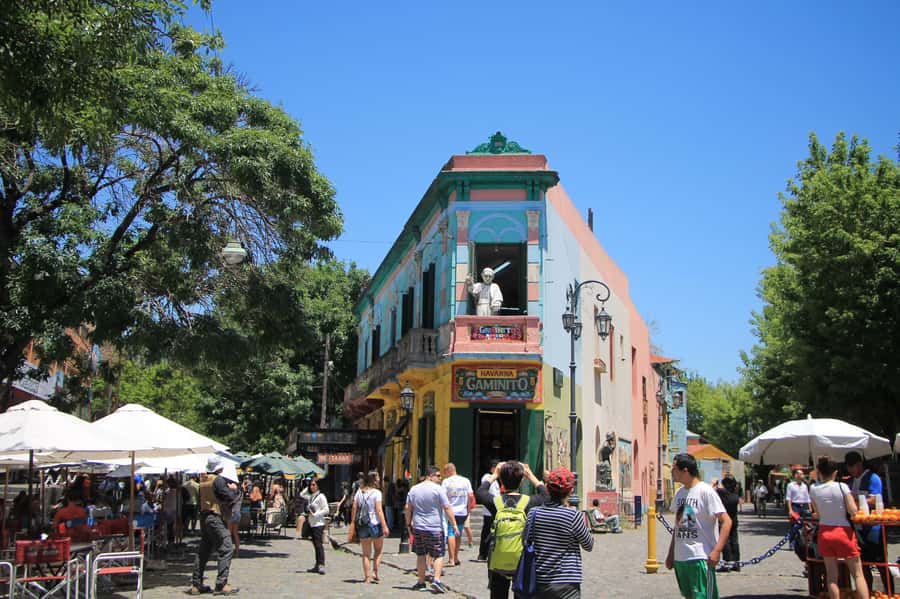
Caminito is the most instantly recognizable part of the route. This pedestrian street is known for colorful houses, murals, and a lively public atmosphere. It is the place where you will likely take the most photos.
The bright colors are not the whole story, though. The guide ties Caminito to the neighborhood’s immigrant roots, tango culture, and artistic identity. You get a better visit when you look beyond the facades and ask how the street became a public symbol of La Boca.
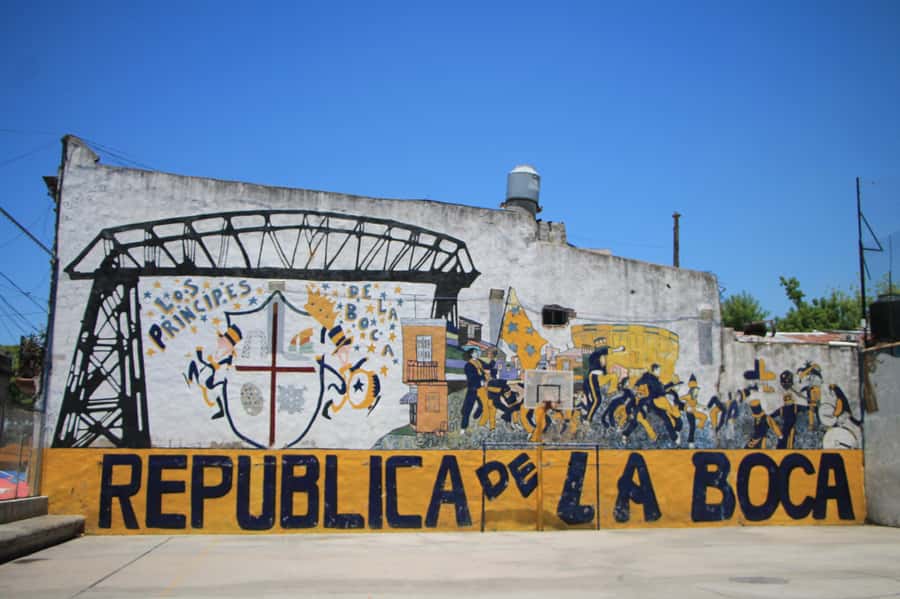
Football art is part of the scene too. Graffiti and murals connect the neighborhood to Boca Juniors, so the visual language shifts between tango, local identity, and football pride. I like that combination because it shows how La Boca expresses itself in public.
Caminito can also be the least relaxed section of the walk. It is famous, colorful, and popular, so you should expect a lively setting rather than a quiet street. Keep your belongings secure, stay with the group, and allow time for photos without losing track of the guide.
Bring a camera, but do not let it take over. The tour lasts only 150 minutes, and the guide’s explanations are a key part of the value. A few well-chosen photos are better than spending the whole stop looking through a screen.
more football matchdays in Buenos Aires
- Buenos Aires: Tickets to Boca Juniors Museum & Stadium
★ 4.5 · 581 reviews - Soccer Match in Buenos Aires with Transfers and Local Guide
★ 5.0 · 103 reviews - Buenos Aires: Boca Juniors and River Plate Football Tour
★ 4.3 · 82 reviews - Buenos Aires: River Plate and Boca Juniors Museum Tour
★ 4.5 · 72 reviews
La Bombonera and the force of Boca football
The route continues to the Boca Juniors stadium, La Bombonera. This is the football heart of the neighborhood and one of Buenos Aires’ best-known sporting landmarks.
The tour gives you the atmosphere around this legendary venue and explains its place in Argentine football culture. Boca Juniors has a powerful local identity, and the stadium helps you understand why football is woven so tightly into La Boca’s public life.
You should be clear about what is included. The walking tour visits the stadium area, but entrance fees to Boca Juniors stadium are not part of the $50 price. If you want an interior museum or stadium visit, you will need to arrange and pay for that separately.
That limitation is not necessarily a problem. A short walking tour cannot cover every part of La Boca, and the outside setting, surrounding graffiti, and football atmosphere are already central to the neighborhood experience. Still, if entering La Bombonera is your main goal, check the stadium admission details before booking.
The stadium stop works best if you are interested in the culture around football, not only in stadium architecture. The tour presents La Bombonera as a neighborhood landmark and a place tied to identity, history, and local pride.
Plaza República de La Boca and the final port stop
The itinerary also includes Plaza República de La Boca, adding another public space to the route. Along with the old port and Caminito, it gives you a broader look at the neighborhood rather than keeping you on one famous street.
The walk finishes near the port, in front of a street with varied food options. Meals and drinks are not included, but this ending is practical. You can stop for food afterward instead of trying to fit a restaurant break into the guided walk.
I would plan to eat after the tour. The activity focuses on walking and interpretation, and the 150-minute schedule does not include meals. Carry water, especially since you will be outside for much of the route.
The final stop also makes it easy to continue exploring on your own, though the provided details do not specify extra sightseeing recommendations. Treat the tour as a focused introduction to La Boca, not as a full-day neighborhood program.
What the $50 price gets you
At $50 per person, the value depends on how much context you want. You are paying for roughly two hours of guided walking, the route from the meeting point to La Boca by public bus, and a local guide speaking English, Spanish, or Portuguese. You also visit the key areas: the port, conventillos, Caminito, Plaza República de La Boca, and La Bombonera.
The cost does not cover transport tickets, food, drinks, or stadium admission. Those extras are easy to overlook, so include them in your budget. The tour is strongest for someone who wants a guided introduction and does not want to work out the neighborhood’s story alone.
I think the price is fair if the guide is your priority. Recent bookings gave Juliette especially strong marks for clear explanations, good energy, and helping the group feel safe. Another guide was praised for making the experience informative and fun, while a French-language comment described the walk as pleasant, interactive, and well accompanied from the meeting point through the bus ride.
The reviews are uniformly positive, but the sample is small, with four ratings. I would treat that as encouraging rather than proof of perfection. The consistent praise points to the guiding, safety, and small-group feel, not to included stadium access or extra services.
Pace, language, and physical demands
The experience lasts 150 minutes, with about two hours described as walking. That makes it manageable for many people, but it is not a seated sightseeing trip. You will move between the port, housing, Caminito, public spaces, and the stadium area.
Comfortable shoes are essential. Water is also important, and the operator specifically advises bringing a bottle. Smoking is not allowed during the activity.
The tour is offered in English, Spanish, and Portuguese. When booking, choose the language that lets you follow historical details and ask questions comfortably. The guide’s ability to explain how immigration, tango, and football connect is a large part of the experience.
The route is not suitable for wheelchair users. It is also listed as unsuitable for people over 95 years old. No other age restriction is given, but anyone with limited mobility should consider the amount of walking and the public-bus transfer before reserving.
Who should book this La Boca walk
I would recommend this tour to first-time visitors who want a readable introduction to La Boca. It is especially useful if you are interested in tango, migration, street art, or football and want those subjects tied together rather than treated as separate sights.
It also suits solo visitors and couples who prefer a guide for a neighborhood that can feel unfamiliar. The small-group format and the positive comments about Juliette’s calm, clear approach are good signs for anyone who values personal guidance.
Football fans should book if they want to understand Boca Juniors’ role in the neighborhood. Just remember that the stadium admission is extra. Tango fans should also find the route worthwhile, though this is a history and neighborhood walk, not a tango performance or dance lesson.
You may want something else if you prefer museums, air-conditioned transport, or a slow restaurant-focused outing. You may also be disappointed if your only goal is to go inside La Bombonera. This tour is about the streets and the stories connecting them.
Booking details that matter
Meet at Viajero Hostel, Venezuela 649, at 11 am on Tuesday or Friday. The activity offers free cancellation up to 24 hours before departure and a reserve-now, pay-later option, which gives you some flexibility while planning Buenos Aires.
The experience advertises a separate entrance for skipping the line, but the provided details do not clearly identify which stop that applies to. Do not assume it guarantees fast access to Boca Juniors stadium, since stadium entry is not included.
Bring comfortable shoes, water, and a camera. Leave smoking materials unused during the tour, and keep enough money aside for the public bus, food, drinks, and any stadium admission you choose to purchase.
Should you book it?
Book this walk if you want La Boca explained through its people, music, painted streets, and football culture. The strongest part is the guide-led connection between the old port, immigrant housing, tango, Caminito, and La Bombonera. Juliette’s repeated praise adds confidence, especially for visitors who want a friendly and reassuring guide.
Skip it if you need wheelchair access, dislike extended walks, or mainly want an included stadium tour. For most able-bodied visitors seeking a focused two-and-a-half-hour introduction to one of Buenos Aires’ most distinctive neighborhoods, $50 is a reasonable price, provided you budget for the extras.
FAQ
Where does the tour meet?
Meet at Viajero Hostel, Venezuela 649, in Buenos Aires.
What time does the tour start?
It starts at 11 am every Tuesday and Friday.
How long does the activity last?
The activity lasts 150 minutes, or two and a half hours.
Is transportation included?
The group takes a public bus to La Boca, but the public bus ticket is not included in the price.
Is the Boca Juniors stadium entrance included?
No. Entrance fees to Boca Juniors stadium are not included.
Which languages are available?
The live guide is available in English, Spanish, and Portuguese.
What places are included in the walking route?
The route includes the old port, conventillos, Caminito, Plaza República de La Boca, Boca Juniors stadium, football graffiti, and street art.
Are meals and drinks included?
No. Meals and drinks are not included, though the tour finishes near a street with different food options.
What should I bring?
Bring comfortable shoes, water, and a camera.
Is the tour suitable for wheelchair users?
No. The activity is not suitable for wheelchair users. It is also listed as unsuitable for people over 95 years old.
Recently added in Buenos Aires
- Buenos Aires: Private City Tour by Car with Hotel or Pickup★ 5.0 · 3 reviews
- Guided tour Boca Juniors Museum & Stadium + Caminito★ 3.3 · 3 reviews
- Buenos Aires: Montserrat, San Telmo, La Boca, and Puerto …★ 5.0 · 3 reviews
- Unique Tigre and Delta Private Day Cruise Navegation★ 5.0 · 3 reviews
- Buenos Aires: MALBA Museo de Arte Latinoamericano Tour★ 4.1 · 3 reviews
- Tango Show at: MichelAngelo★ 4.5 · 3 reviews
- Buenos Aires: Mate Workshop y Otras Yerbas★ 5.0 · 3 reviews
- From Colonialism to Eclecticism, Buenos Aires arquitectonica★ 5.0 · 3 reviews
Buenos Aires Tours, compared.

Buenos Aires: Piazzolla Tango Show with Optional Dinner
Read our review →
Buenos Aires: City Highlights Guided Tour with Transfer
Read our review →
Buenos Aires: La Boca Guided Walking Tour in English
Read our review →
Buenos Aires: La Recoleta Cemetery Guided Tour in English
Read our review →
Buenos Aires: Tango Show at Tango Porteño & Optional Dinner
Read our review →
Buenos Aires: 9-Course Argentine Meat Tasting at Fogón Asado
Read our review →

Buenos Aires: Madero Tango Show with Optional Dinner
Read our review →Browse the lists this tour appears in