
Reviewed · BUENOS AIRES TOURS
Buenos Aires: Mate & paint experience with pastry tasting
Argentina’s most personal drink becomes your souvenir in this warm, hands-on class. You’ll learn why mate matters in Argentine life, taste it with traditional pastries, then paint a wooden cup under Jazmin’s guidance. I like the mix of culture and making, plus the small group of no more than 10. The only catch is that painting can get messy, and the activity is not suitable for wheelchair users.
I especially like that this is not just a tasting. You prepare your own infusion, choose a design, and leave with a mate cup you actually made. Jazmin’s friendly teaching, strong English, and ability to speak French, Italian, and Spanish add real value for international visitors.
Key points at a glance
- Mate becomes more than a drink: Learn its symbolism, preparation, caffeine, and place in Argentine social life.
- Your souvenir is handmade: Paint one wooden mate cup and take it home with its included bombilla.
- Classic pastries are part of the lesson: Try facturas, alfajorcitos de maicena, and biscochitos de grasa.
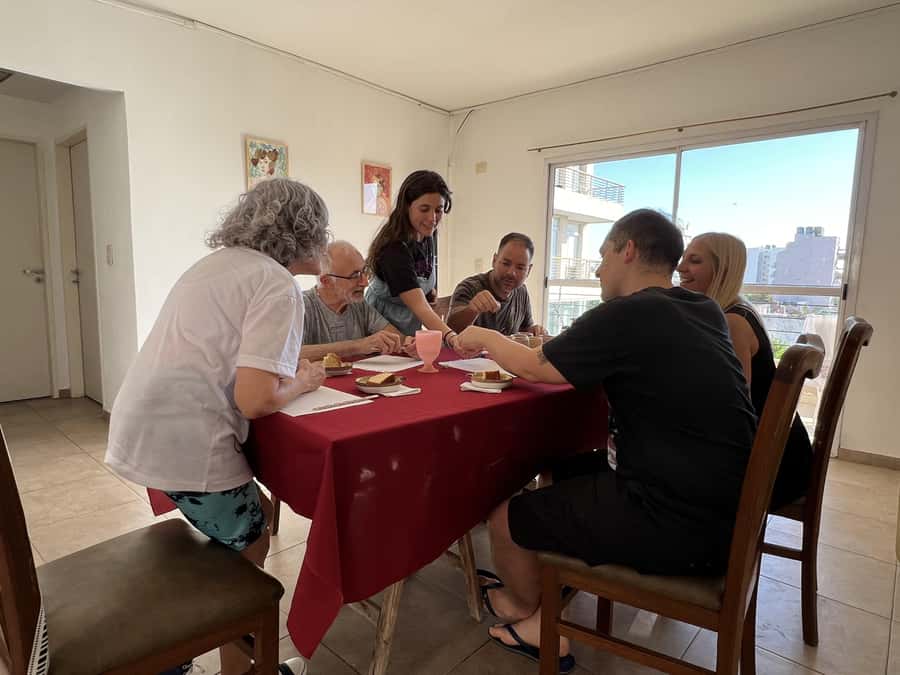
- Jazmin keeps the group personal: The class is limited to 10 people, with time for questions and conversation.
- The setting can change with the weather: Meet near Salta Street and Independencia Avenue, or possibly work picnic-style in Lagos de Palermo.
- Plan for practical limits: Wear clothes that can get dirty, and contact the host ahead of time about food restrictions.
Why this Buenos Aires class feels different
Buenos Aires offers plenty of walking tours, food tastings, and art workshops. This experience links all three ideas in a compact three-hour session. You learn about an everyday Argentine custom, eat a few familiar local treats, and create something that can travel home in your luggage.
The appeal is the balance. A standard mate tasting might leave you with facts and a few sips. A painting class might give you a craft project without much local context. Here, the drink explains the culture, and the painting gives you time to think about what you have learned.
I also like the pace. Three hours is long enough to cover the basics without making the class feel like a full-day commitment. It works well on a rainy afternoon, during your first days in Buenos Aires, or when you want a break from sightseeing on foot.
The experience is led by Jazmin of La Flor Artista. She teaches the class in Spanish, English, French, or Italian. Her role is part instructor, part host, and part local contact. Guests have found her easy to talk with, and she has offered suggestions for other places to visit in Buenos Aires. That personal exchange is a useful bonus, especially if you are still finding your way around the city.
more Buenos Aires days to weigh up
- Buenos Aires: 9-Course Argentine Meat Tasting at Fogón Asado
★ 4.9 · 826 reviews - Buenos Aires: Local Foodie Adventure with Sherpa Food Tours
★ 4.9 · 670 reviews - Buenos Aires: Wine Tasting and Lunch at Bodega Gamboa
★ 4.8 · 177 reviews
Starting near Salta Street and Independencia Avenue
You meet at Bonnie and Clyde bar, on the corner of Salta Street and Independencia Avenue. The atelier is about 50 meters from the meeting point, so you do not need to search for a distant studio after arriving.
The meeting arrangement is simple, but allow enough time to find the corner without rushing. The information provided does not give a full address for the atelier, so pay attention to the meeting instructions and any messages from the host.
If the weather is good, Jazmin may offer the class picnic-style in the Lagos de Palermo area. That gives the activity a different feel, but it also means you should check the location before setting out. If you are traveling alone and you are the only person booked that day, the activity will be held picnic-style in Lagos de Palermo.
That solo arrangement is worth noting. You may get a very personal class rather than a conventional group workshop, but the setting will not necessarily be the indoor atelier. If you prefer a studio setting, check the plan in advance.
Learning what mate means in Argentina
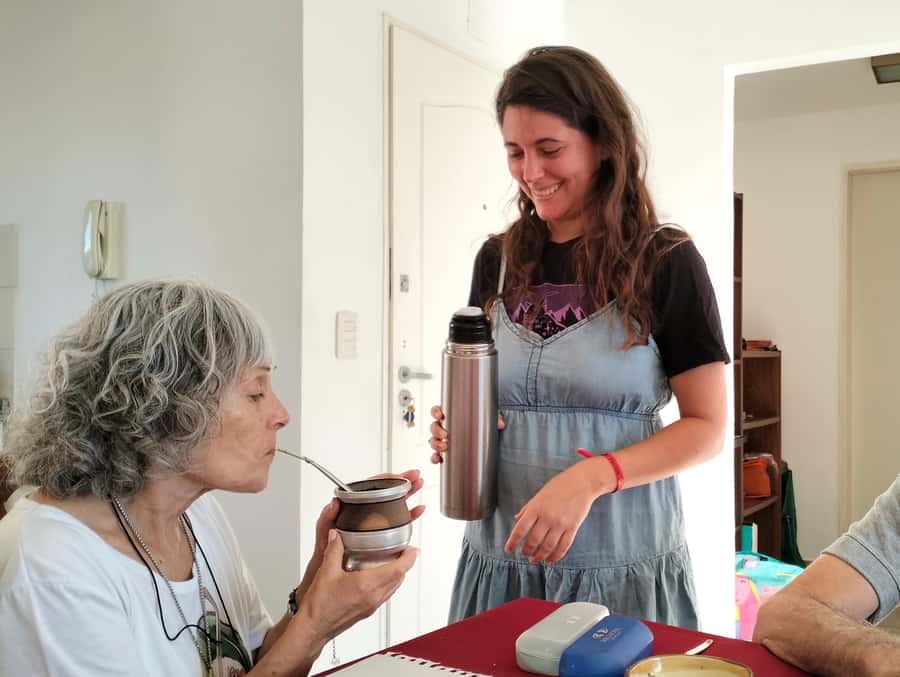
The class begins with a short explanation of mate culture and its curiosities. Mate is a hot drink made with yerba mate, an infusion similar to tea and naturally high in caffeine. The point is not only to identify the flavor. You learn why people drink it, what it represents, and how it is shared.
For a first-time drinker, this introduction matters. Mate can feel unfamiliar because it is prepared and served differently from coffee or tea. The bombilla, the metal straw used with the mate cup, is part of the basic setup, and the order of preparation affects the experience.
Jazmin explains how to make your own mate infusion, then serves mate during the painting session. That repeated tasting helps you get used to it instead of treating it as one quick sample.
The social side is also important. You learn about the custom of sharing mate, a practice that gives the drink meaning beyond caffeine. The class presents mate as part of daily Argentine culture, not as an exotic product placed on a tasting table.
You do not have to drink mate if you do not want to. Coffee, tea, and mate cocido, which is yerba mate prepared as a tea, are also available. That makes the class easier for people who are curious but unsure about the traditional drink, or who simply want a familiar option while painting.
Tasting facturas and other Argentine pastries
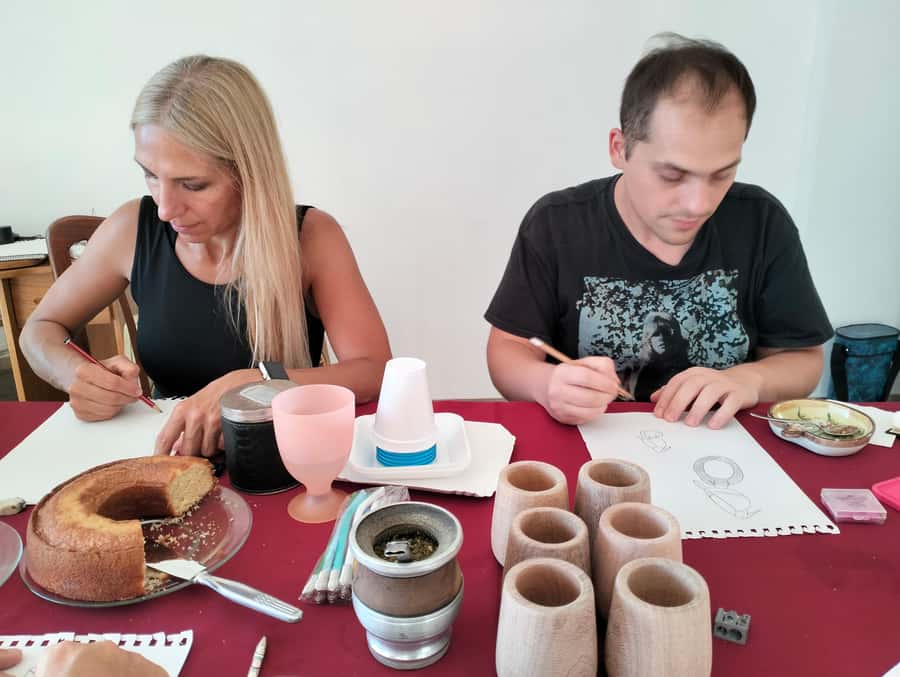
The food portion includes a variety of traditional pastries. You can expect facturas, alfajorcitos de maicena, and biscochitos de grasa.
Facturas is a broad Argentine term for bakery pastries. The exact selection can vary, but the tasting gives you a chance to try several common styles rather than one single sweet. Alfajorcitos de maicena are small cornstarch cookie sandwiches, while biscochitos de grasa are savory, crisp biscuits made with fat.
This combination is useful because it is not all sugar. You get sweet pastries alongside a more savory snack, with mate, coffee, or tea to balance the food. The treats are served while you paint, so the tasting becomes part of the relaxed rhythm of the class.
Food restrictions require advance notice. Contact Jazmin by email or WhatsApp so she can arrange something special. Do not wait until you arrive, since the host needs time to plan an alternative.
Completely different, still leaving from Buenos Aires:
- Buenos Aires Hop-On Hop-Off Bus, Free Walking Tours & Discounts
★ 4.5 · 2,218 reviews - Buenos Aires: Piazzolla Tango Show with Optional Dinner
★ 4.4 · 2,122 reviews - Buenos Aires: City Highlights Guided Tour with Transfer
★ 4.7 · 1,946 reviews - Buenos Aires: Hop-On Hop-Off City Bus Tour
★ 4.2 · 1,855 reviews
Choosing a design for your wooden mate cup
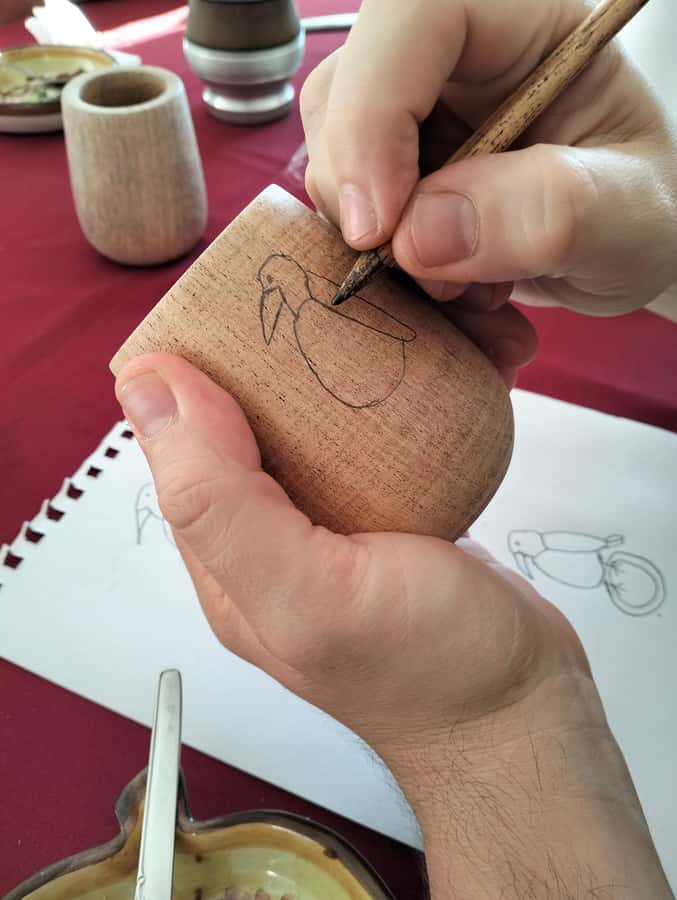
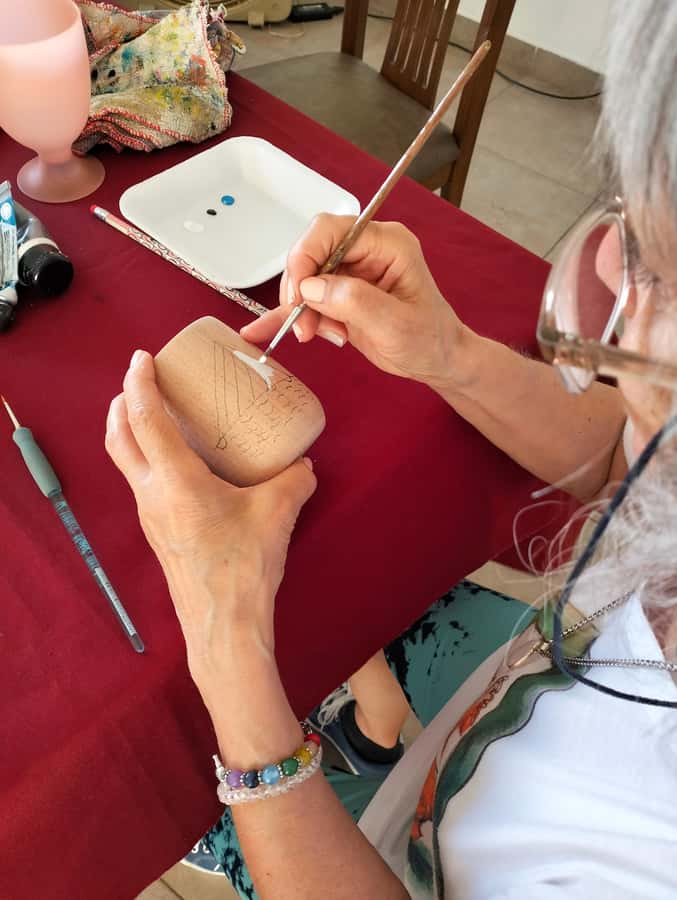
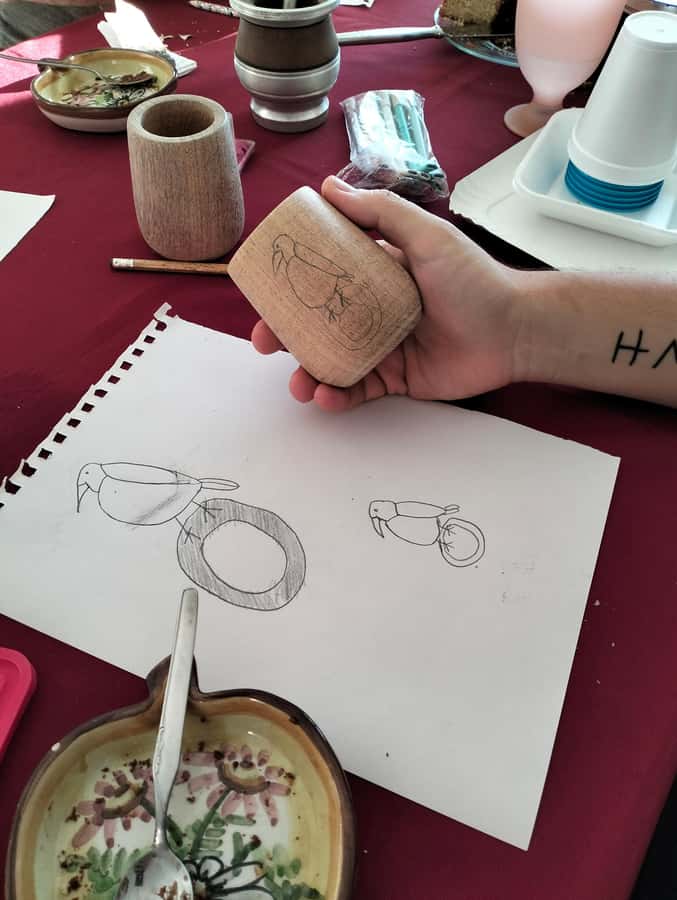
Once the cultural introduction and tasting are underway, you choose what to paint. Jazmin provides design options, but you can also create your own idea.
That choice makes the activity work for different kinds of artists. If you want a clear starting point, use one of the suggested designs. If you already have a color scheme or pattern in mind, you have room to make the cup your own.
Each participant receives one wooden mate cup. You also receive the materials needed for the project: pencils, paper, acrylic paints, brushes, jars, and napkins. You do not need previous painting experience. Jazmin guides you through the process, so the class is designed for beginners rather than trained artists.
I would still treat this as a creative workshop, not a professional ceramics or fine-art course. Your cup will be handmade, and small irregularities are part of the result. That is also the charm. You are making a personal travel keepsake, not buying a factory-perfect object.
Wear clothes that can get dirty. Acrylic paint is part of the activity, and the host specifically advises clothing you do not mind marking. This is a small detail, but it can save you from spending the rest of the day worrying about a shirt or jacket.
Painting while mate circulates
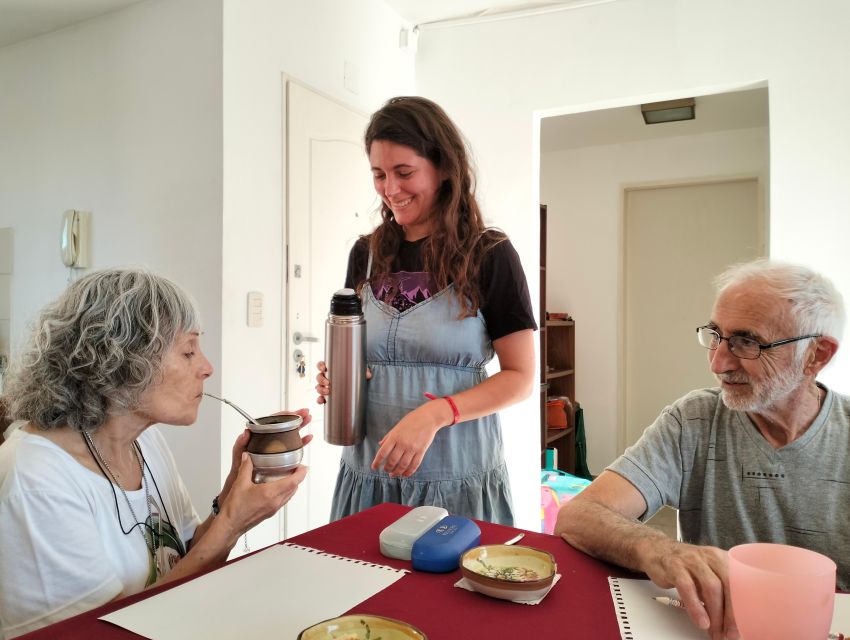
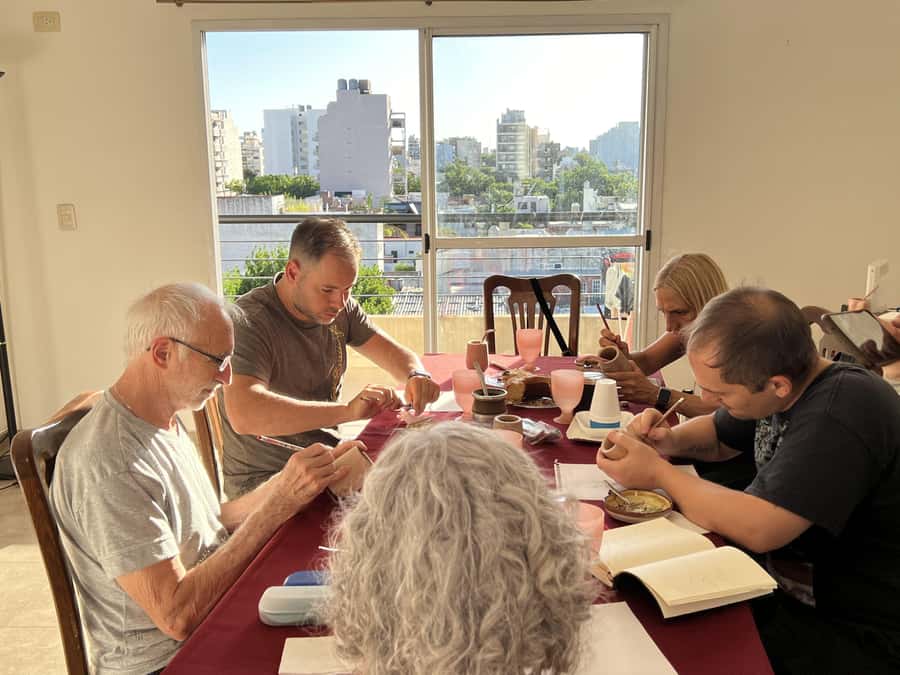
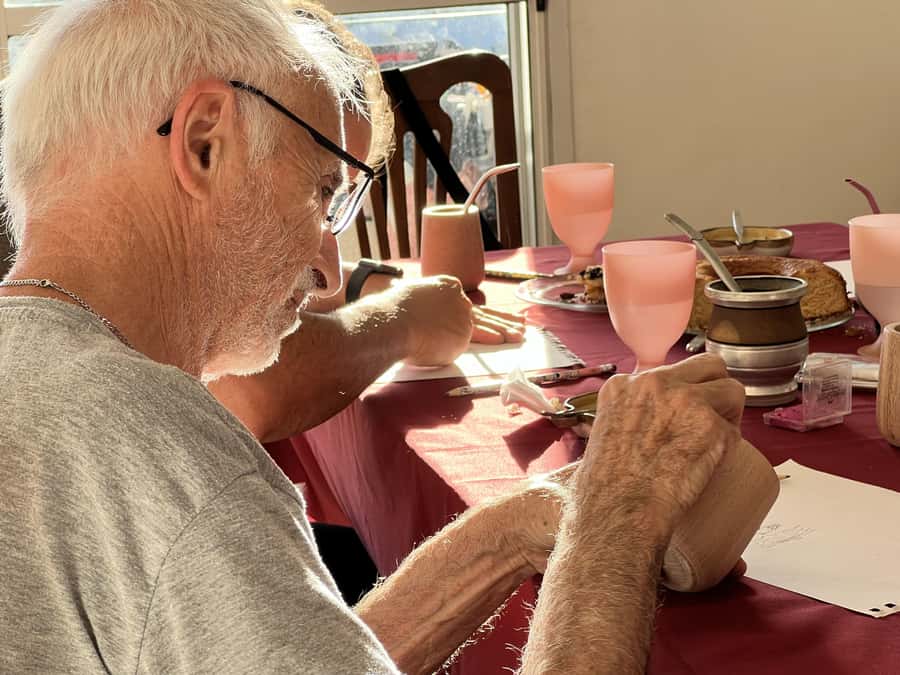
The painting is not rushed into a short final segment. Jazmin serves mate while you work, explains the preparation, and helps you use the acrylics.
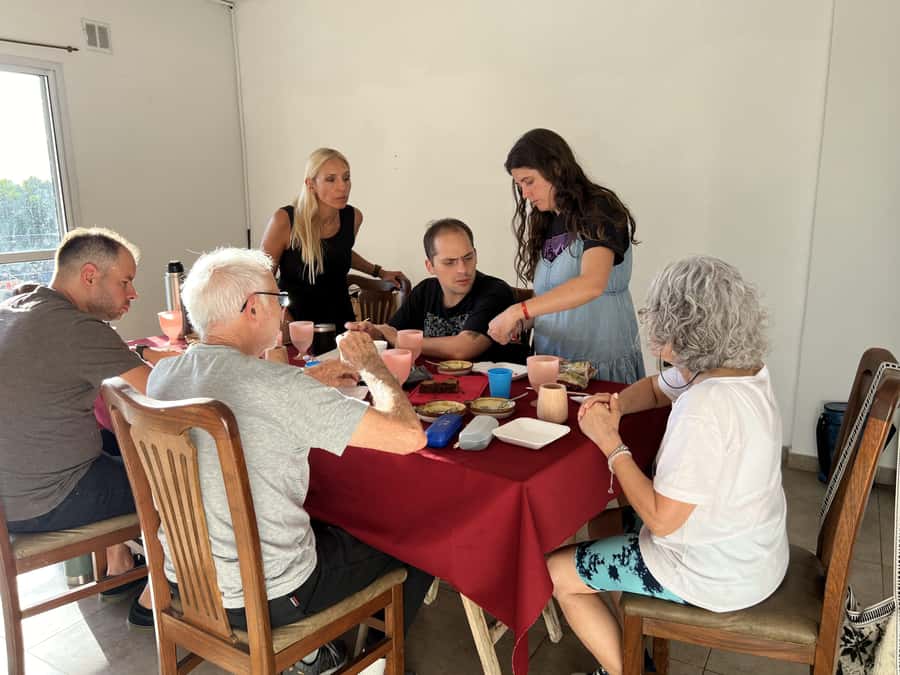
That shared table time is one of the best parts of the format. You can ask questions as they come up, compare design ideas, and continue learning about Argentina without sitting through a long lecture. The relaxed setting also suits families and solo participants.
Families have used the class with children ranging from 6 to 14, and the painting gives younger participants something concrete to do. Still, children will need supervision around drinks, brushes, and paint. The activity is not described as a dedicated children’s program, so parents should decide if a three-hour class suits their group.
Solo visitors can also fit in easily. If you are alone, the host may hold the class as a Palermo picnic. That can make the experience feel more like a personal meeting than a formal workshop. It also makes it especially important to confirm the location and weather plan.
Jazmin’s own artwork may be on display after class. The information provided indicates that some participants have seen her work and purchased a watercolor. Buying additional art is not part of the listed activity, so consider it an optional possibility rather than part of what you are paying for.
Taking home a useful souvenir
At the end, you take your painted mate cup with you. The included bombilla completes the basic set, and you can choose a bombilla to go with your cup.
That makes the souvenir more useful than a generic key ring. You have learned how to prepare mate, tasted it in context, and decorated the object used for the ritual. Back home, the cup can remind you of the class and the wider Argentine custom.
You should handle the finished piece with care when packing it. The experience provides the cup and materials, but no special luggage packaging is specified. If you have a tightly packed suitcase, leave some room for the wooden mate and bombilla.
The final object will reflect your own design choices. If you want a polished, uniform souvenir, a shop-bought mate may suit you better. If you value a keepsake tied to a particular afternoon in Buenos Aires, the painted cup has a clear advantage.
Is $62 a good value?
At $62 per person, this is not the cheapest way to taste mate or pastries in Buenos Aires. You are paying for a three-hour hosted activity that combines instruction, food, drinks, art materials, a wooden mate cup, and a bombilla.
The value improves if you would otherwise book separate activities. A mate introduction, a pastry tasting, and a beginner art workshop could easily take more planning and more time. Here, the three parts support one another, and the souvenir is included rather than sold as an extra.
The small group also matters. With a maximum of 10 people, Jazmin has a better chance to answer questions and help with painting. If the class is held with only one participant, the format becomes even more personal, though the picnic setting may not suit everyone.
I would see the price as fair for visitors who want an activity rather than a quick food stop. It is less compelling if you only want to try mate for five minutes, or if you are mainly shopping for an inexpensive souvenir.
Free cancellation is available up to 24 hours before the activity, and you can reserve now and pay later. Those options help if your Buenos Aires schedule is still changing. Check the available start times when booking, since the duration is fixed at three hours but the start time is not listed here.
Who will enjoy this most
I recommend this class to first-time visitors who want a clearer introduction to Argentine culture. It is also a good choice for anyone who prefers making something to simply looking at sights.
It suits:
- Solo visitors who want a friendly local encounter
- Couples looking for a shared activity
- Families with children who enjoy drawing and painting
- Food fans curious about facturas and other bakery treats
- People who have never tasted mate
- Visitors who want a small, personal class in English or another supported language
It may not suit you if you dislike caffeine, do not enjoy group activities, or want a highly structured art lesson with advanced instruction. You can choose coffee or tea instead of mate, but the drink is central to the class.
It is also not suitable for wheelchair users. The supplied information does not describe the atelier’s accessibility, so mobility needs should be discussed before booking.
Six practical tips before you go
First, tell Jazmin about dietary restrictions by email or WhatsApp before the day of the class. The pastry selection can be adjusted if she has notice.
Second, wear older clothes. You will be using acrylic paint, and the goal is to create freely rather than protect a fashionable outfit.
Third, confirm the meeting arrangement. Start at Bonnie and Clyde bar near Salta and Independencia, but the class may move to Lagos de Palermo for good weather or a solo booking.
Fourth, keep an open mind about mate. The flavor and preparation may be new, but you can begin with a small taste and switch to coffee, tea, or mate cocido.
Fifth, leave space in your luggage. Your painted wooden mate and bombilla are included, and the finished item may need careful packing.
Sixth, plan this as a three-hour event. The food, explanation, painting, and conversation are all part of the experience, so it is not a quick drop-in class.
Should you book the mate and paint experience?
Book it if you want to understand mate through conversation, tasting, and practice, then carry home a souvenir you made yourself. The combination is especially useful for first-time visitors, solo participants, families, and anyone who likes local food with a creative activity.
I would skip it if you want a low-cost tasting, a serious art course, or a fully accessible venue. The $62 price is easiest to justify when you value the small group, multilingual instruction, pastries, materials, and finished mate set.
For most visitors, this is a thoughtful way to spend an afternoon in Buenos Aires. You leave with more than a painted cup. You leave knowing how mate is prepared, why it is shared, and how a few ordinary pastries fit into the local daily rhythm.
FAQ
How long does the mate and paint experience last?
The activity lasts three hours.
How much does the experience cost?
The price is $62 per person.
What is included in the activity?
You receive a brief explanation of mate culture, mate tasting, one wooden mate cup to paint, one bombilla, all drawing and painting materials, traditional pastries, and coffee, tea, or mate cocido.
Which pastries will I taste?
The pastry selection includes a variety of facturas, alfajorcitos de maicena, and biscochitos de grasa.
Where is the meeting point?
Meet at Bonnie and Clyde bar on the corner of Salta Street and Independencia Avenue. The atelier is about 50 meters away.
What languages are available?
The instructor can lead the activity in Spanish, English, French, or Italian.
Recently added in Buenos Aires
- Buenos Aires: Private City Tour by Car with Hotel or Pickup★ 5.0 · 3 reviews
- Guided tour Boca Juniors Museum & Stadium + Caminito★ 3.3 · 3 reviews
- Buenos Aires: Montserrat, San Telmo, La Boca, and Puerto …★ 5.0 · 3 reviews
- Unique Tigre and Delta Private Day Cruise Navegation★ 5.0 · 3 reviews
- Buenos Aires: MALBA Museo de Arte Latinoamericano Tour★ 4.1 · 3 reviews
- Tango Show at: MichelAngelo★ 4.5 · 3 reviews
- Buenos Aires: Mate Workshop y Otras Yerbas★ 5.0 · 3 reviews
- From Colonialism to Eclecticism, Buenos Aires arquitectonica★ 5.0 · 3 reviews
Buenos Aires Tours, compared.

Buenos Aires: Piazzolla Tango Show with Optional Dinner
Read our review →
Buenos Aires: City Highlights Guided Tour with Transfer
Read our review →
Buenos Aires: La Boca Guided Walking Tour in English
Read our review →
Buenos Aires: La Recoleta Cemetery Guided Tour in English
Read our review →
Buenos Aires: Tango Show at Tango Porteño & Optional Dinner
Read our review →
Buenos Aires: 9-Course Argentine Meat Tasting at Fogón Asado
Read our review →

Buenos Aires: Madero Tango Show with Optional Dinner
Read our review →Browse the lists this tour appears in