
Reviewed · BUENOS AIRES TOURS
Buenos Aires: Montserrat, San Telmo, La Boca, and Puerto …
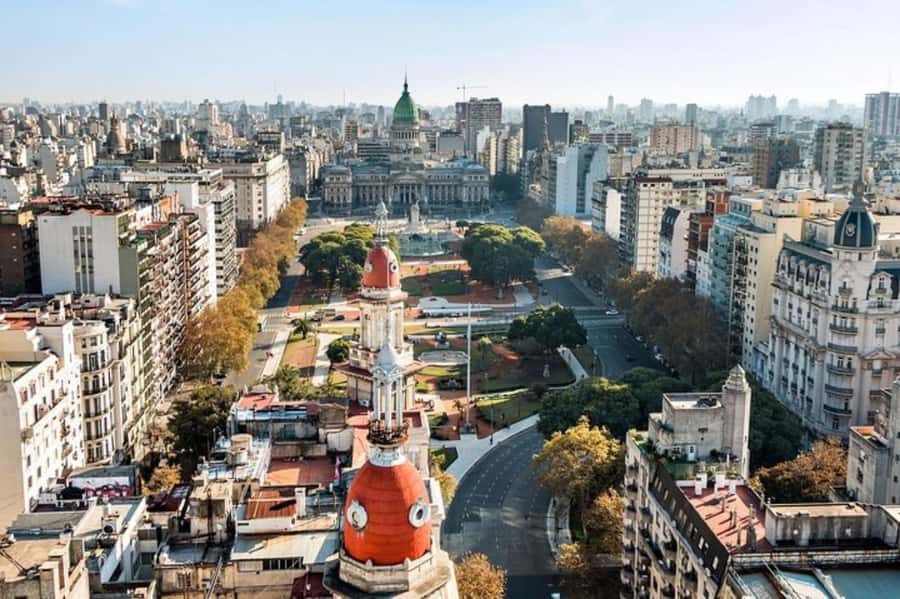
Buenos Aires reveals its character block by block on this four-hour tour, from the political heart at Plaza de Mayo to the colorful streets of La Boca and the sleek waterfront of Puerto Madero. You’ll see old bookstores, churches, pharmacies, markets, football landmarks, and a modern bridge in one compact outing.
I like the mix of four very different neighborhoods, and I like the way the walk connects famous sights with smaller details such as the city’s narrowest house, Mafalda’s statue, and the old San Telmo market. The main consideration is pace: with about an hour in each neighborhood, you’ll get a useful introduction rather than a slow, in-depth visit.
- Plaza de Mayo and Avenida de Mayo: Begin among Buenos Aires’ key civic buildings, including the Casa Rosada, Cabildo, and Metropolitan Cathedral.
- Old Buenos Aires details: Look for the oldest bookstore, church, pharmacy, and the city’s first two-story building.
- San Telmo’s local character: Walk past Mafalda, Plaza Dorrego, Ezeiza’s house, the French Passage, and the 1897 market.
- La Boca football and tango: See the Boca Juniors Stadium and the colorful Caminito open-air museum.
- Puerto Madero’s sharp contrast: Finish beside Puente de la Mujer, with historic ships and modern towers nearby.
A Four-Hour Cross-Section of Buenos Aires
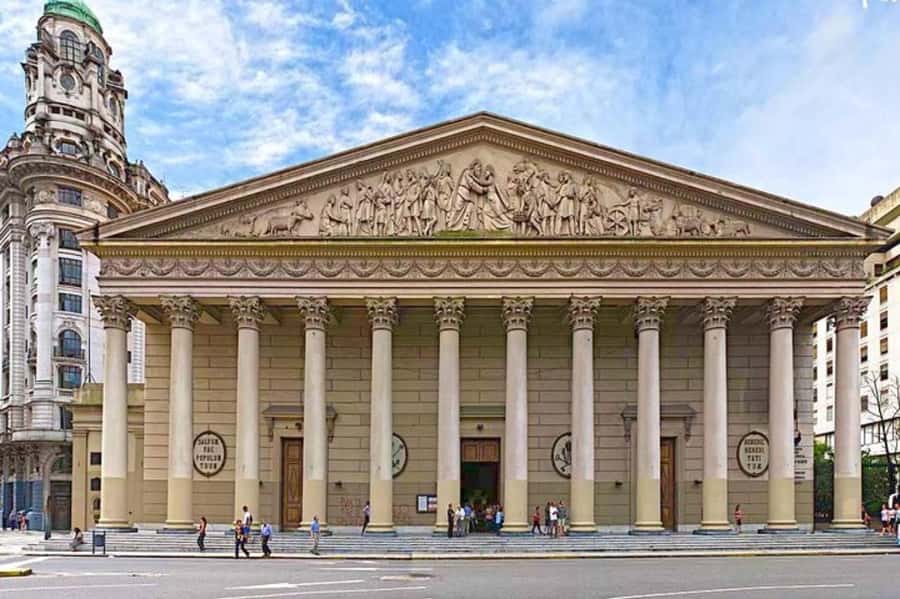
This tour works best as a first look at Buenos Aires. It does not try to cover every museum or give you hours inside one attraction. Instead, it links four major districts and shows how the city changes from one street to the next.
You begin at the Metropolitan Cathedral in Montserrat. From there, the tour moves through Montserrat and San Telmo on foot, with short transfers of about 10 minutes to La Boca and Puerto Madero. Each neighborhood receives roughly an hour, and the tour finishes at Puente de la Mujer.
That structure gives you a clear sense of place. Montserrat supplies government buildings and colonial-era landmarks. San Telmo brings old streets, antiques, food, and local characters. La Boca adds football, tango, and painted buildings. Puerto Madero closes the tour with a modern waterfront and a very different mood.
At $100 per person, this is not a budget walking tour. The value depends on what you want from four hours. If you want a guide to explain the city while handling the route between distant districts, the price may make sense. If you prefer long independent visits, meals, or museum time, you may find the schedule too compressed for the cost.
Starting at the Metropolitan Cathedral and Plaza de Mayo
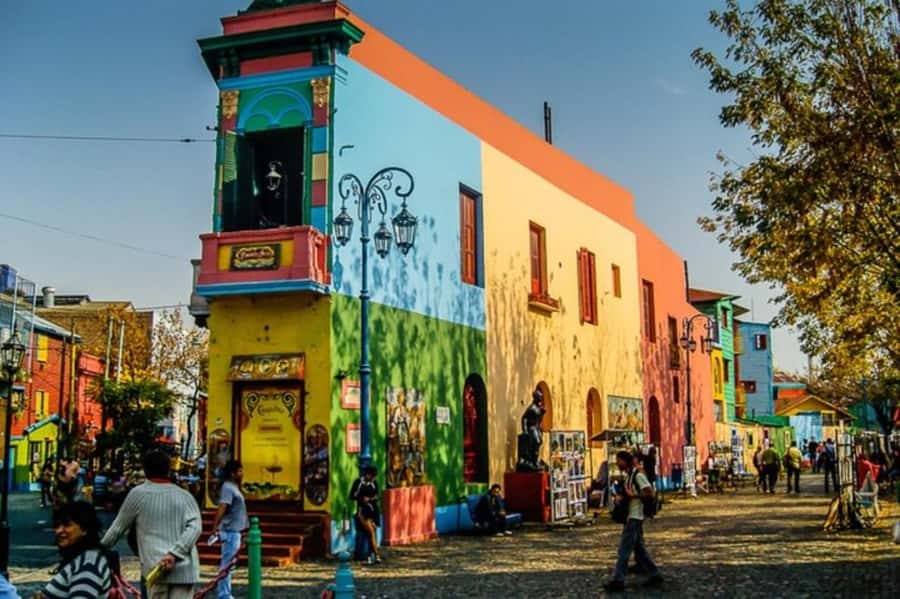
The meeting point at the Metropolitan Cathedral puts you directly in the oldest civic center of the city. Plaza de Mayo is Buenos Aires’ main public square and a natural place to begin understanding the capital.
Around the plaza, you’ll see the Casa Rosada, the executive office with its famous pink exterior. The Cabildo recalls the colonial government, while the Metropolitan Cathedral remains one of the area’s key religious landmarks. Several ministries, including Economy and Defense, also help explain why this square has long been tied to national power.
A guide is useful here because the buildings are close together but represent different periods and institutions. Rather than simply taking photographs, you can connect the square to the political structure of Argentina.
The opening section also introduces Avenida de Mayo. This was Buenos Aires’ first boulevard and South America’s first avenue. It links the National Congress with the Casa Rosada, creating a direct visual and political axis across the city.
Café Tortoni lies along the avenue and is described as the oldest café in Argentina and South America. A stop there depends on availability, so you should not book this tour assuming you’ll sit inside or receive a full café visit. Still, seeing the building and hearing about its place in Buenos Aires’ café culture adds useful context.
more san telmo and la boca walks
- Buenos Aires: La Boca Guided Walking Tour in English
★ 4.8 · 1,587 reviews - Buenos Aires: Navigation from Pto. Madero to La Boca
★ 4.1 · 147 reviews - Buenos Aires: San Telmo and Market Guided Walking Tour
★ 4.8 · 102 reviews
Montserrat’s Oldest Buildings on Calle Defensa
The Montserrat section becomes more intimate as you leave the grand scale of the plaza and walk along historic Calle Defensa. This is where the tour focuses on age and survival rather than famous facades alone.
You’ll hear about the city’s oldest bookstore, church, and pharmacy, along with its first two-story building. These details help you notice how Buenos Aires grew from a colonial settlement into a large capital. They also give the walk a scavenger-hunt quality, since the smaller sites can be easy to miss when you are moving through an active city street.
I especially like this part for visitors who want more than a list of major monuments. The oldest building claims create a reason to pay attention to doorways, shopfronts, and street angles. You may not spend long inside each place, but the guide’s explanation gives the surrounding streets a stronger sense of identity.
The timing is worth keeping in mind. Montserrat receives about an hour, and that hour includes several points of interest. You should expect short stops and commentary rather than a detailed architectural study.
San Telmo, Mafalda, and the 1897 Market
From Montserrat, the walk continues into San Telmo, Buenos Aires’ second oldest neighborhood. Calle Defensa remains the main thread, but the feeling changes as you encounter antique shops, small restaurants, older homes, and the district’s distinctive street life.
One charming stop is the statue of Mafalda, the beloved Argentine comic character. Mafalda is more than a cartoon figure in Buenos Aires. She is a familiar part of the country’s popular culture, and the statue makes an easy photo stop along the route.
You’ll also hear stories tied to sailors, immigrants, enslaved people, and urban legends. These subjects give San Telmo a wider human story. The guide’s job here is not only to point out buildings, but to explain who lived, worked, and passed through this part of the city.
The San Telmo Market dates to 1897. It began as a market for everyday produce and has changed into a lively mix of antique stalls, small restaurants, and traditional fruit and vegetable vendors. This is one of the tour’s more useful stops because it shows how an old public market can keep changing without losing its neighborhood role.
You may want to return later with more time. An hour is enough to see the market and get your bearings, but not enough for a relaxed meal, careful antique shopping, and a full exploration of every aisle. Food and drinks are not included, so any meal here is an extra expense and may shorten your sightseeing time.
Plaza Dorrego and the French Passage
Before reaching San Juan Avenue, the tour visits Plaza Dorrego, the city’s second oldest square. The plaza gives San Telmo a broad gathering place after the narrower feel of Calle Defensa.
Nearby, Ezeiza’s house and the French Passage provide more atmospheric architecture. The French Passage is particularly well suited to photographs, with details that reward a slower look. It is also near places where you can stop for a meal, although food is outside the tour price.
This section is a good example of the tour’s balance. You receive enough background to understand why San Telmo matters, but the schedule keeps moving. If your main goal is shopping, eating, or photography, note the location of these spots and return on your own after the guided walk.
Completely different, still leaving from Buenos Aires:
- Buenos Aires Hop-On Hop-Off Bus, Free Walking Tours & Discounts
★ 4.5 · 2,218 reviews - Buenos Aires: Piazzolla Tango Show with Optional Dinner
★ 4.4 · 2,122 reviews - Buenos Aires: City Highlights Guided Tour with Transfer
★ 4.7 · 1,946 reviews - Buenos Aires: Hop-On Hop-Off City Bus Tour
★ 4.2 · 1,855 reviews
La Boca, Boca Juniors, and Caminito
A short transfer of about 10 minutes takes you to La Boca. This neighborhood is best known for Boca Juniors, one of Argentina’s most famous football clubs, and for the club’s iconic stadium.
Football is not treated as a side note here. The stadium gives you a look at a major part of Buenos Aires culture, where club identity reaches far beyond the sport itself. The tour does not list an inside stadium visit, so you should expect to see and discuss the landmark rather than assume entry to the stands or museum.
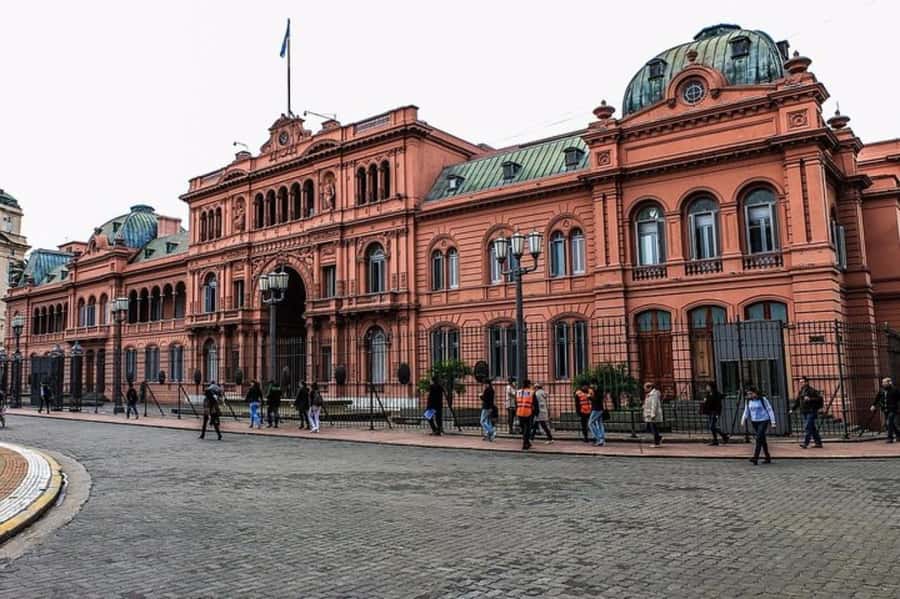
Caminito is La Boca’s colorful open-air museum and the most visually striking section of the route. Painted buildings, souvenir shops, and tango performances give the street a strong theatrical quality. You may see dancers in traditional restaurants, and you’ll have opportunities to browse for distinctive souvenirs.
La Boca is also presented as the birthplace of tango. That makes this stop valuable even if you are not a football fan. You get two different ways into the neighborhood: the emotional world of Boca Juniors and the performance culture of tango.
There is a practical caution here. Caminito is a major sightseeing area, and the tour gives you about an hour. That is enough for photographs, a walk, and an introduction, but not a full meal, tango show, stadium tour, and extensive shopping. Keep personal spending in check, since souvenirs, food, and drinks are not included.
Puerto Madero and Puente de la Mujer
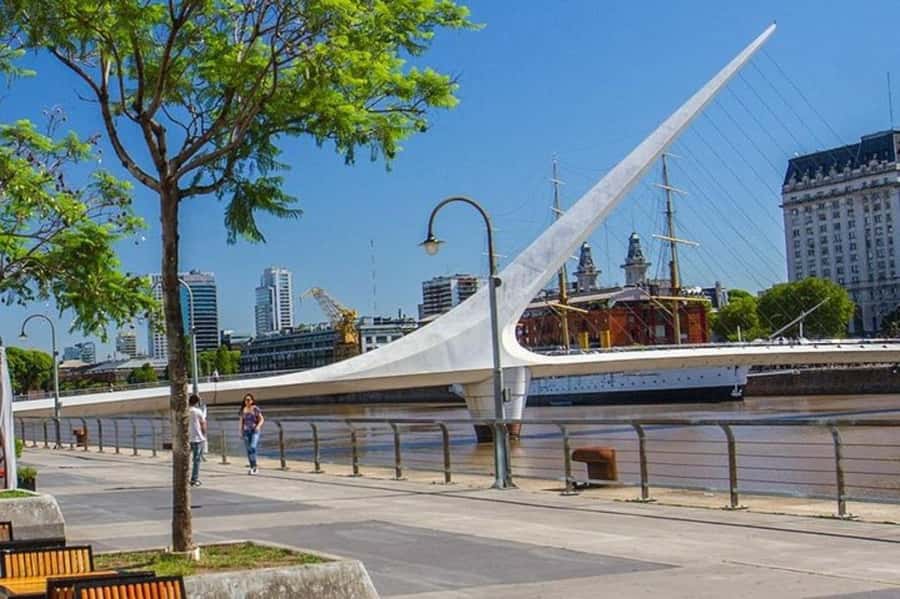
After La Boca, another 10-minute transfer brings you to Puerto Madero. The district began as an ambitious port project and later became a modern part of the city, with tall buildings, restaurants, bars, and a riverside promenade.
The change is striking. Earlier stops focus on old streets, colonial buildings, market halls, and working-class traditions. Puerto Madero feels newer and more polished, with a skyline that has reshaped the edge of central Buenos Aires.
The tour finishes at Puente de la Mujer, designed by Santiago Calatrava. The pedestrian bridge’s sweeping form makes it one of the city’s most recognizable modern structures and a natural final photo stop.
You’ll also see two historic naval vessels in Puerto Madero: the frigate Sarmiento and the corvette Uruguay. Both offer a reminder that the district’s modern appearance sits beside older maritime history. The supplied tour details do not promise entry to either ship, so plan on seeing them as part of the waterfront route unless your guide says otherwise.
Ending at Puente de la Mujer is convenient for anyone who wants to continue exploring Puerto Madero afterward. You can stay for the promenade, restaurants, or bars, but those costs are your own.
What the Guide Adds to the Walk
The quality of a neighborhood tour depends heavily on the guide, and the named guide connected with the experience is Alejandra, also referred to as Ale. The available feedback gives special emphasis to her friendly manner, clear information, and ability to explain Buenos Aires culture without overwhelming the group.
That matters on a route with so many quick transitions. A guide can turn the oldest pharmacy from a passing facade into a clue about the city’s development. The same applies to Mafalda, the sailors’ stories, the market, the football club, and Puerto Madero’s ships.
Sebastian is also identified as helping coordinate the experience and making sure the tour ran smoothly. That suggests attention to the practical side of the day, which is useful when a route combines walking with two short transfers.
The tour is offered in English, Spanish, and Portuguese. You should select the language that lets you ask questions easily, since the value lies in the stories and context rather than simply moving from landmark to landmark.
Walking, Weather, and Pace
Wear comfortable shoes. The tour includes substantial walking through several neighborhoods, even though the exact distance is not provided. Streets, market floors, and sightseeing stops require you to remain on your feet for much of the four hours.
Check the weather before you go and dress for the forecast. The route includes outdoor plazas, streets, Caminito, and the Puerto Madero waterfront, so conditions can affect comfort. There is no promise of a long indoor break.
The tour is not suitable for wheelchair users. That is an important limitation because the route combines historic streets, market areas, and multiple neighborhood changes. If accessibility is a deciding factor, you should choose another experience.
The four-hour length is both a strength and a limit. It is long enough to introduce the city’s central historic districts and two major modern or cultural areas. It is short enough to fit into a busy Buenos Aires schedule, but you will need to accept a brisk pace and limited free time.
Who Will Get the Most From This Tour
I would choose this experience if you are visiting Buenos Aires for the first time and want a broad introduction before exploring individual districts on your own. It is also useful if your time in the city is limited and you want to connect Plaza de Mayo, San Telmo, La Boca, and Puerto Madero in one outing.
It suits people who enjoy stories about ordinary city life as much as major monuments. The oldest pharmacy, smallest house, Mafalda statue, market stalls, football club, and historic ships create a wider picture than a standard central-city walk.
Football fans will appreciate the Boca Juniors focus. Architecture fans will enjoy the contrast between the Cabildo, Avenida de Mayo, old San Telmo buildings, and Calatrava’s Puente de la Mujer. Food lovers may like the market and restaurant districts, but meals are not part of the tour and the schedule does not allow for a long food crawl.
I would be more cautious if you want museum interiors, a full stadium visit, an extended tango performance, or several hours in one neighborhood. The experience is a sampler, not a specialist tour.
Is the $100 Price Worth It?
At $100 per person, the cost is easiest to justify if you value a guide, a planned route, and transport between neighborhoods. Covering four districts independently would take more route planning, and you might miss small details that are easy to overlook.
The price includes the guided tour and the listed sightseeing stops, but not meals, drinks, or personal purchases. Café Tortoni is subject to availability, and no specific museum or stadium entry is promised. You should read the experience as a guided city orientation, not as an admission package.
A useful way to judge the cost is to ask what you would do afterward. If you plan to return to San Telmo Market, Caminito, or Puerto Madero on your own, the tour can help you decide where to spend more time later. If you only want quick photographs and no commentary, an independent route will cost less.
Free cancellation up to 24 hours before the start and the option to reserve now and pay later reduce some planning risk. Starting times vary, so you’ll need to check availability for your date.
Should You Book It?
Book this tour if you want one guided route through Buenos Aires’ oldest and most contrasting districts, with a friendly guide such as Alejandra explaining the people, buildings, and traditions behind the sights.
The strongest reasons to go are the range of neighborhoods, the small historical details in Montserrat and San Telmo, the Boca Juniors and Caminito combination, and the final shift to Puerto Madero. The main drawbacks are the $100 price, the brisk one-hour stops, possible unavailability of Café Tortoni, and the lack of included food or admission promises.
For a first day in Buenos Aires, it can serve as a useful map of the city. For a slower, more specialized experience, choose a focused tour of San Telmo, La Boca, football, or architecture instead.
FAQ
How long does the Buenos Aires neighborhood tour last?
The tour lasts four hours.
Where does the tour start?
It starts at the Catedral Metropolitana de Buenos Aires.
Where does the tour finish?
The tour finishes at Puente de la Mujer in Puerto Madero.
Which neighborhoods are included?
The route includes Montserrat, San Telmo, La Boca, and Puerto Madero.
What languages are available?
The live guide is available in English, Spanish, and Portuguese.
Is Café Tortoni guaranteed to be open for a visit?
No. A visit to Café Tortoni depends on availability.
Are meals and drinks included?
No. Meals, drinks, and personal expenditures are not included.
Is the tour suitable for wheelchair users?
No. The experience is listed as not suitable for wheelchair users.
Can I cancel for a full refund?
Yes. You can cancel up to 24 hours in advance for a full refund.
Recently added in Buenos Aires
- Buenos Aires: Private City Tour by Car with Hotel or Pickup★ 5.0 · 3 reviews
- Guided tour Boca Juniors Museum & Stadium + Caminito★ 3.3 · 3 reviews
- Unique Tigre and Delta Private Day Cruise Navegation★ 5.0 · 3 reviews
- Buenos Aires: MALBA Museo de Arte Latinoamericano Tour★ 4.1 · 3 reviews
- Tango Show at: MichelAngelo★ 4.5 · 3 reviews
- Buenos Aires: Mate Workshop y Otras Yerbas★ 5.0 · 3 reviews
- From Colonialism to Eclecticism, Buenos Aires arquitectonica★ 5.0 · 3 reviews
- BA: Wine tour with 5 tasting stops in the heart of Palermo★ 3.9 · 3 reviews
Buenos Aires Tours, compared.

Buenos Aires: Piazzolla Tango Show with Optional Dinner
Read our review →
Buenos Aires: City Highlights Guided Tour with Transfer
Read our review →
Buenos Aires: La Boca Guided Walking Tour in English
Read our review →
Buenos Aires: La Recoleta Cemetery Guided Tour in English
Read our review →
Buenos Aires: Tango Show at Tango Porteño & Optional Dinner
Read our review →
Buenos Aires: 9-Course Argentine Meat Tasting at Fogón Asado
Read our review →

Buenos Aires: Madero Tango Show with Optional Dinner
Read our review →Browse the lists this tour appears in