
Reviewed · BUENOS AIRES TOURS
Buenos Aires in One Day Private Walking Tour
Buenos Aires reveals itself best at street level, and this tour gives you a long, serious look at the city rather than a quick ride past its landmarks. In one day, you move from elegant Retiro and Recoleta to colonial San Telmo, political Plaza de Mayo, and modern Puerto Madero, with the city’s architecture and politics explained as you go.
I like the private format, since your guide can shape the pace and answer questions without a bus group in the way. I also like the cemetery visit, where stories about Eva Perón, General San Martín, and other famous Argentines turn ornate tombs into a readable chapter of the country’s past.
The main drawback is simple: this is a lot of walking. Some people loved guides such as Carlos, Clemencia, Soledad, and Eilat for their history and local insight, while a few found the day too long or felt the second guide used later in the tour was less fluent in English. You should also budget for lunch, coffee, and one taxi.
Key points to know before booking
- Seven hours on your feet is possible: The advertised duration is about six hours, but some tours have run closer to seven.
- Recoleta Cemetery is the centerpiece: Allow about 45 minutes for Evita Perón’s grave, grand mausoleums, and stories of Argentina’s leading figures.
- The tour connects very different Buenos Aires neighborhoods: Retiro, Recoleta, Palermo, downtown, San Telmo, and Puerto Madero each show a different side of the city.
- One taxi ride is required: The fare is not included and is estimated at about $5 to $7.
- Lunch and coffee are not included: The break is built into the day, but you pay for what you order.
- La Boca is optional: A 45-minute extension and taxi visit can be arranged at extra cost, if time and energy allow.
A full day that explains Buenos Aires on foot
At $199 per person, this is not a cheap orientation walk. It is a private, six-hour city lesson, and the value depends on what you want from Buenos Aires.
If you want a few postcard stops and plenty of spare time, this will feel too long. If you want to understand why the city looks French in one block, British in the next, and unmistakably Argentine after that, the price makes more sense. You are paying for a guide, not for a string of admission tickets. Most stops are outside, with the cemetery entrance included.
The day begins at 10 a.m. outside the corner door of Florida Garden at Florida 899, near Paraguay Street. Look for the small BA Walking Tours sign. Your guide may be Carlos, Clemencia, Soledad, Eilat, or another member of the local team, so arrive ready for a walking day rather than a vehicle tour.
More Walking Tours in Buenos Aires
- Buenos Aires Hop-On Hop-Off Bus, Free Walking Tours & Discounts
★ 4.5 · 2,218 reviews - Buenos Aires: La Boca Guided Walking Tour in English
★ 4.8 · 1,587 reviews - Nazis in Buenos Aires: a historical walking tour
★ 4.9 · 193 reviews
Florida Street and the British side of central Buenos Aires
The first steps take you along Calle Florida, one of the city’s best-known pedestrian streets. Your guide uses the buildings and street layout to explain how Buenos Aires grew from a colonial port into a wealthy capital.
The route then reaches Retiro and Plaza San Martín. This is an excellent early stop because one square brings together several themes that return throughout the day: military power, immigration, money, and European influence.
You will hear about the area’s former bastion, bullring, and slave market. The subject is not glossed over, and that matters. Buenos Aires is often sold through its cafés, tango, and grand avenues, but its past also includes forced labor and colonial inequality.
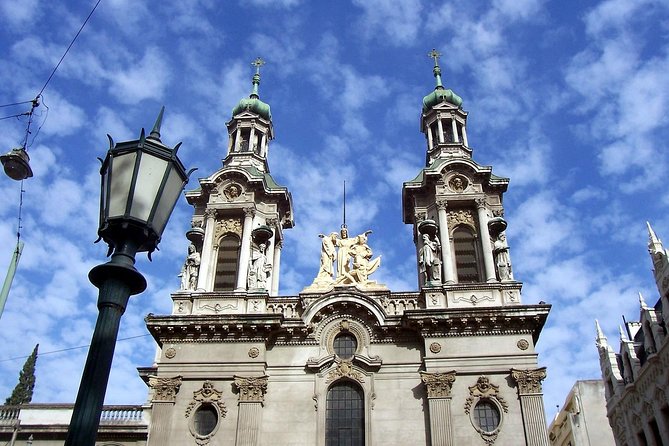
Look for the Paz Palace, an elaborate belle époque mansion; the Kavanagh Building, an important piece of Buenos Aires architecture; and the Santísimo Sacramento Church. The British Clock Tower and nearby railway stations provide a chance to discuss England’s role in Argentina, including trade, railways, and the city’s older commercial power.
The General San Martín Monument brings the morning back to nation-building. San Martín helped lead the struggle for independence across southern South America, and his presence appears again later at the cathedral and cemetery.
Avenida Alvear, palaces, and the Paris of the South
From Retiro, the walk continues toward Avenida Alvear and Barrio Norte. This is the polished Buenos Aires of palaces, embassies, luxury hotels, and broad avenues.
I find this section useful because it explains the nickname Paris of the South without reducing the city to a European copy. French and Italian influence appears in the buildings, while Catholic, Jewish, and other immigrant communities shaped the social life behind those façades.
The route includes Arroyo Street and its galleries, the Palacio Ortiz-Basualdo, Alzaga-Unzué Manor, the Vatican embassy, Duhau Mansion, Hume Mansion, and Alvear Palace. Several buildings now serve diplomatic, hotel, or institutional purposes, so you may not enter them. Their value here is in the details outside: proportions, ornament, façades, and the story of the people who built them.
This is also where a strong guide earns the fee. Anyone can point at a palace. A good guide explains the cattle wealth, immigration, religious communities, and political ambition that paid for it.
Recoleta Cemetery and the stories behind the marble
Recoleta is one of the day’s major stops, and the cemetery deserves its own time. Admission is included, and the planned visit lasts about 45 minutes.
The cemetery is famous for its elaborate mausoleums and for the tomb of Eva Perón. Evita’s grave is the obvious draw, but the best part of the visit is the wider set of stories around the cemetery. Your guide can connect prominent families, military leaders, politicians, artists, and national myths through the monuments.
General San Martín’s guarded tomb in the Metropolitan Cathedral is important, but Recoleta gives you a different view of how Argentina remembers its public figures. Here, wealth, status, family names, and political memory are carved into stone.
The surrounding neighborhood includes Nuestra Señora del Pilar Church, the Buenos Aires Exhibition Center, Palais de Glace, and the Buenos Aires Design Center. Palais de Glace also offers a link to tango and the city’s cultural development.
The cemetery is a highlight, but it can also be the point where the day starts to feel long. One person found that too much time was spent there, even while praising the guide’s expertise. If you prefer a brisk overview, tell your guide early. If you like stories and architecture, this is likely to be the strongest section.
Completely different, still leaving from Buenos Aires:
- Buenos Aires: Piazzolla Tango Show with Optional Dinner
★ 4.4 · 2,122 reviews - Buenos Aires: City Highlights Guided Tour with Transfer
★ 4.7 · 1,946 reviews - Buenos Aires: Hop-On Hop-Off City Bus Tour
★ 4.2 · 1,855 reviews - Buenos Aires Hop-On Hop-Off Bus and Exclusive Benefits
★ 4.4 · 1,714 reviews
Palermo and the city beyond the monuments
The route continues through Palermo, Buenos Aires’ largest and most populated neighborhood. The stated stops include the National Gallery of Art, Peynot’s Grand Monument, the Floralis Monument, Eva Perón’s monument, and the National Library building.
This section shifts the focus from old palaces and famous graves to the way Buenos Aires lives now. You get a taste of a large residential and cultural district instead of seeing only the historic center.
The Floralis Monument, a giant metal flower, is one of the city’s recognizable modern landmarks. The monuments connected with France and Eva Perón offer more chances to discuss Argentina’s national identity and its international ties.
Because this is still a walking tour, the Palermo portion is more about street orientation and explanation than lengthy interior visits. That is useful if you want to understand the city’s layout. It may disappoint you if your priority is entering museums or spending time inside every building.
Downtown, Plaza de Mayo, and Argentina’s political center
The central-city section brings together Florida Street, Galerías Pacífico, the Centro Naval, Teatro Colón, the Obelisk, and the financial district.
Galerías Pacífico is worth a look even if you do not shop. The building began as offices for the Pacific British Railway and later became a grand shopping center with notable murals. It is a clear example of how Buenos Aires repeatedly repurposes grand commercial architecture.
Teatro Colón represents the city’s cultural ambitions, while the Obelisk is the unmistakable symbol of downtown. Your guide also explains the national anthem connection involving Mariquita Sánchez and the way ranchers, military leaders, banks, and foreign investment shaped Argentina’s economy.
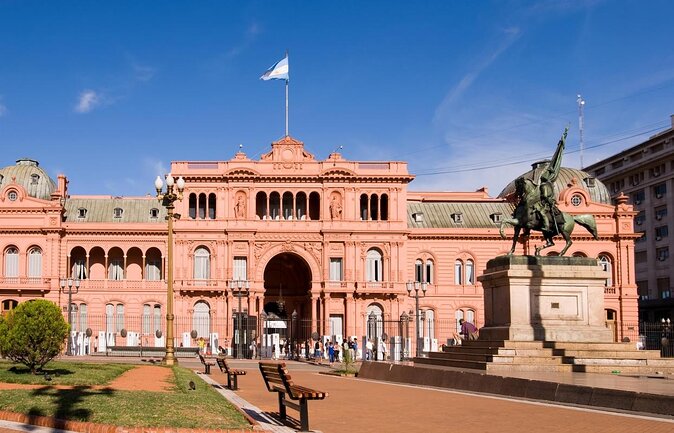
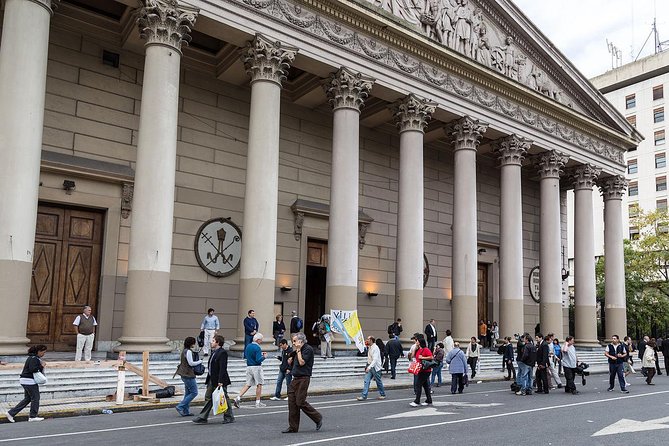
Plaza de Mayo is the political heart of the day. Here you see Casa Rosada, the presidential office; the Cabildo, or old city hall; the Metropolitan Cathedral; the May Pyramid; and the area associated with the Mothers of the Disappeared.
This is where the tour’s historical range becomes especially valuable. Colonial rule, independence, presidential power, military coups, dictatorship, public protest, and modern Argentina all meet in one square. The cathedral also contains the guarded tomb of General San Martín, and it is linked to Pope Francis, who worked there before becoming pope.
Casa Rosada is viewed from outside during the listed visit, with about 10 minutes set aside for it. The same is true for many downtown buildings. Do not book this tour expecting a series of interior admissions.
San Telmo, slavery, invasion, and old Buenos Aires
San Telmo is the most atmospheric part of the route for many people. It is described as Buenos Aires’ oldest neighborhood, with colonial houses, old churches, narrow streets, and surviving traces of the early city.
The tour covers far more than Plaza Dorrego. You will hear about the Cabildo, the National Bank, the cathedral, the Government House, and the Manzana de las Luces, once an early center of education and intellectual life.
Calle Defensa helps explain the British invasions of 1806 and 1807. The street’s name recalls the defense of the young city, while the broader story shows how British influence remained part of Argentine commerce and culture even after the attacks.
The route also includes the smallest house in the city, connected with a freed slave. This is a small site with a large purpose: it gives your guide a way to explain slavery in Buenos Aires, a subject easy to miss when the city’s story is told only through independence heroes and elegant architecture.
You may pass the oldest preserved shop, church, and house, along with Saint Dominic Convent, Viceroy Liniers’ House, the old city limit on Chile Street, the Minimal House, Carlos Calvo Market, Belén Church, and Plaza Dorrego.
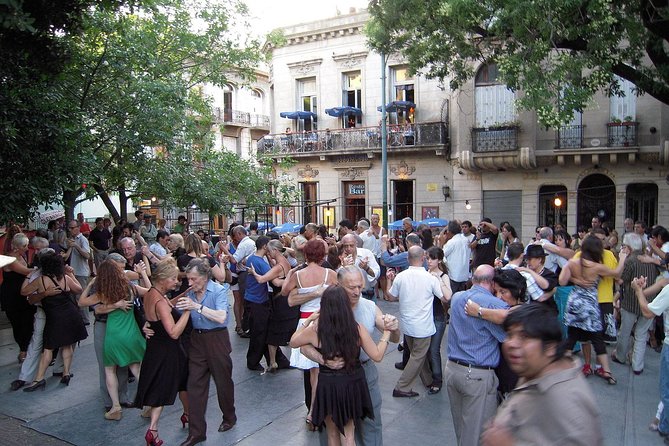
Plaza Dorrego is the natural finish for the historic walking route. It is the center of the San Telmo antiques market and has cafés and antique shops nearby. If you end here, you can keep exploring on your own, sit down for a drink, or make your way back by taxi.
Puerto Madero and the city’s newer edge
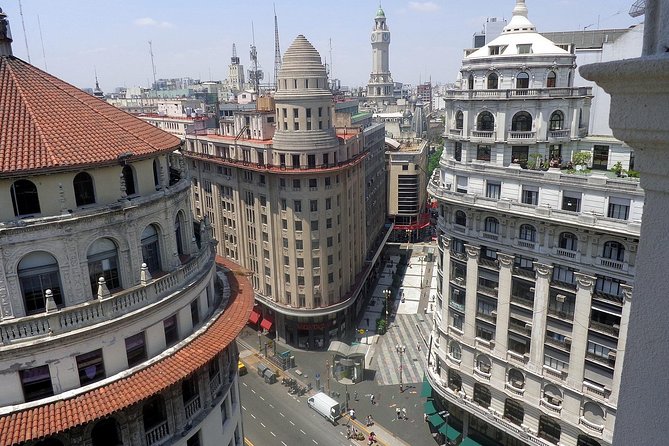
Puerto Madero provides a sharp contrast with San Telmo. The neighborhood was built by extending Buenos Aires across old British dockyards and onto land beyond the original coast.
The stop is short, about 15 minutes, but it gives you a useful final comparison. San Telmo shows old streets and colonial layers. Puerto Madero shows redevelopment, modern urban planning, and the city’s effort to reuse former port land.
Because the tour covers such a wide area, a taxi is needed between at least some attractions. The fare is not included and is estimated at $5 to $7. That cost is modest beside the tour price, but you should carry enough local currency or have a working payment option.
What the private format changes
A private tour gives you more control than a large group outing. You can ask about architecture, politics, tango, immigration, or daily life as questions come up. Guides such as Carlos and Clemencia were singled out for clear explanations and friendly help, while Soledad and Eilat were also praised for making the city easier to understand.
There is one point to clarify before you start. Some days use more than one guide, particularly around the lunch break or during the move to Recoleta. One morning guide was praised for fluent English, while a later guide was considered less fluent by one participant. This is not necessarily a problem, but if guide continuity matters to you, ask how the handoff will work.
The walking pace can also vary. Some people covered the route in around seven hours. You may want to tell your guide if you need a slower pace, a shorter cemetery visit, or fewer side explanations.
Lunch, weather, and practical comfort
Coffee and lunch are built into the day, but you pay for both. The break is helpful because six hours outside is demanding, yet it also means the exact finish can shift depending on how long you stop.
The tour operates rain or shine. Wear shoes suited to pavement, bring water, and plan for changing weather. A moderate level of fitness is required, and there is no hotel pickup or drop-off.
Children eight and under are free when accompanied by a paying adult. The activity is private, so only your group participates, but that does not turn the route into a short or easy walk.
The stated end point is Plaza Dorrego, although the tour description also says the day concludes near a major restaurant district. Confirm the final drop-off point with the operator before setting dinner plans. Do not assume you will return to Florida Garden or your hotel.
Should you book this Buenos Aires walking tour?
Book it if you have one full day, want context rather than quick photographs, and are comfortable walking for six hours or more. It is especially useful at the start of a Buenos Aires stay, since the route helps you understand where the major neighborhoods sit and which areas you may want to revisit.
The strongest reasons to choose it are the private guide, the range of neighborhoods, and the time spent explaining architecture, politics, immigration, slavery, and national figures. The cemetery visit is a major plus, especially if your guide is as strong there as Carlos was for some participants.
Skip it if you want museum interiors, a relaxed pace, or a short list of headline sights. The $199 price is fair only if you value extended personal commentary and a citywide orientation. For an active visitor who wants Buenos Aires to make sense, this can be a very useful first day. Just plan for the taxi, the meal costs, the long distance, and a finish in San Telmo rather than back where you began.
FAQ
Where does the Buenos Aires walking tour start?
The tour starts at 10 a.m. outside the corner door of Florida Garden at Florida 899, on the corner with Paraguay Street. Look for a small BA Walking Tours sign.
Where does the tour end?
The stated end point is Plaza Dorrego in San Telmo, at Humberto 1º 400. It is close to cafés, antique shops, and the San Telmo Antiques Market.
How long does the tour last?
The advertised duration is about six hours. Some tours have lasted close to seven hours, depending on walking pace, stops, and timing.
Is this a private tour?
Yes. Only your group participates in the private activity.
Is transportation included?
No. Hotel pickup, hotel drop-off, and transportation during the tour are not included. You must take one taxi between attractions, with an estimated cost of $5 to $7.
Are meals included?
No. The tour includes a coffee and lunch break, but you pay for your own food and drinks.
Is admission to Recoleta Cemetery included?
Yes. Cemetery admission is included. Other listed stops are generally viewed from outside and have no separate admission charge.
Can I visit La Boca?
La Boca is an optional extension. The walk can be extended by about 45 minutes, with a taxi ride to the old port neighborhood, but this is not included in the main tour.
More 1-Day Tours in Buenos Aires
- Gaucho Day Trip from Buenos Aires: Santa Susana Ranch
★ 4.0 · 272 reviews - Gaucho Experience: A Day Trip to Don Silvano Ranch
★ 4.0 · 148 reviews - Colonia del Sacramento: Small-Group Day Trip
★ 4.5 · 48 reviews - Iguazu Falls Private Day Trip from Buenos Aires with Airfare
★ 4.5 · 35 reviews
Recently added in Buenos Aires
- Buenos Aires: Private City Tour by Car with Hotel or Pickup★ 5.0 · 3 reviews
- Guided tour Boca Juniors Museum & Stadium + Caminito★ 3.3 · 3 reviews
- Buenos Aires: Montserrat, San Telmo, La Boca, and Puerto …★ 5.0 · 3 reviews
- Buenos Aires: MALBA Museo de Arte Latinoamericano Tour★ 4.1 · 3 reviews
- Unique Tigre and Delta Private Day Cruise Navegation★ 5.0 · 3 reviews
- Tango Show at: MichelAngelo★ 4.5 · 3 reviews
- Buenos Aires: Mate Workshop y Otras Yerbas★ 5.0 · 3 reviews
- From Colonialism to Eclecticism, Buenos Aires arquitectonica★ 5.0 · 3 reviews
Buenos Aires Tours, compared.

Buenos Aires: Piazzolla Tango Show with Optional Dinner
Read our review →
Buenos Aires: City Highlights Guided Tour with Transfer
Read our review →
Buenos Aires: La Boca Guided Walking Tour in English
Read our review →
Buenos Aires: La Recoleta Cemetery Guided Tour in English
Read our review →
Buenos Aires: Tango Show at Tango Porteño & Optional Dinner
Read our review →
Buenos Aires: 9-Course Argentine Meat Tasting at Fogón Asado
Read our review →

Buenos Aires: Madero Tango Show with Optional Dinner
Read our review →Browse the lists this tour appears in