
Reviewed · BUENOS AIRES TOURS
Buenos Aires: Historic District Private Guided Walking Tour
Buenos Aires tells its story in a few city blocks. On this private two-hour walk, you move from Café Tortoni to Plaza de Mayo, the Cabildo, Casa Rosada, and the Metropolitan Cathedral, with Argentina’s independence and political past explained along the way. I like the focused route and the chance to ask your own questions.
I also like that the cathedral and Cabildo entrances are included, and that the tour is offered as a private group rather than a large shared outing. The main caution is the meeting point: a communication problem once left a guest waiting at Café Tortoni after a last-minute location change, so reliable internet access and close attention to messages matter.
Key points at a glance
- Café Tortoni sets the scene: Begin outside one of Buenos Aires’ best-known cafés and hear about the notable figures who used it as a meeting place.
- Plaza de Mayo anchors the walk: Visit the square linked with the founding of Buenos Aires in 1580 and the country’s major political events.
- Casa Rosada brings the story into the present: See the presidential office from the outside while your guide explains its role in Argentine public life.
- The Cabildo offers a colonial counterpoint: Enter the former town council building and connect the city’s colonial government with its later independence story.
- The Metropolitan Cathedral is unusually neoclassical: Its design differs from the church façades many people expect to see in South America.
- A private format keeps the pace flexible: You can ask questions, linger over a building, and hear explanations in English, Portuguese, or Samoan.
Starting outside Café Tortoni
Café Tortoni is a useful meeting point because it gives the walk an immediate sense of place. You do not begin at an anonymous street corner. You meet outside one of Buenos Aires’ iconic cafés, a location tied to famous personalities and the city’s café culture.
The experience begins on foot, so wear shoes that can handle two hours of pavement. The route is short enough for most people who are comfortable walking through a central city district, and the tour is listed as wheelchair accessible. Still, a private walking tour works best when you are prepared for regular movement between outdoor squares and public buildings.
Your guide sets the tone early. Several guides are named in the published feedback, including Juan Manuel Sanchez and Juan Miguel, and Juan Manuel Sanchez received particular praise for clear English, strong explanations, and his willingness to answer questions. The available languages are English, Portuguese, and Samoan, so select carefully when booking.
The private format is important here. Buenos Aires history can easily become a string of dates and names, but a one-to-one or small private conversation gives you room to stop and ask what a building means, not just when it was built. You can also ask for clarification if Argentina’s political story feels unfamiliar.
More Historical Tours in Buenos Aires
- Nazis in Buenos Aires: a historical walking tour
★ 4.9 · 193 reviews - San Telmo: Historical Guided Tour with Street Food & Drinks
★ 5.0 · 87 reviews - Buenos Aires: La Boca Art and History Walking Tour
★ 4.8 · 55 reviews
Plaza de Mayo and the founding of Buenos Aires
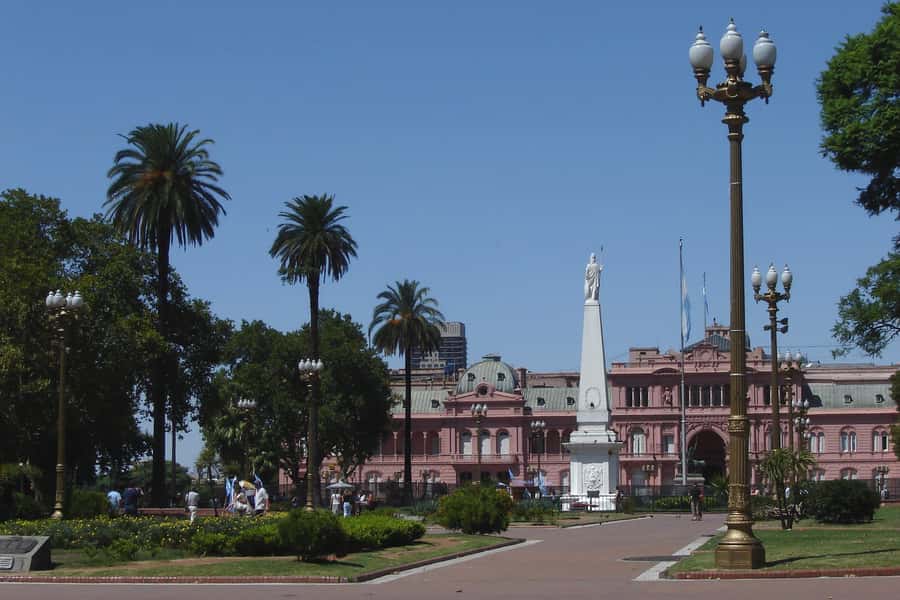
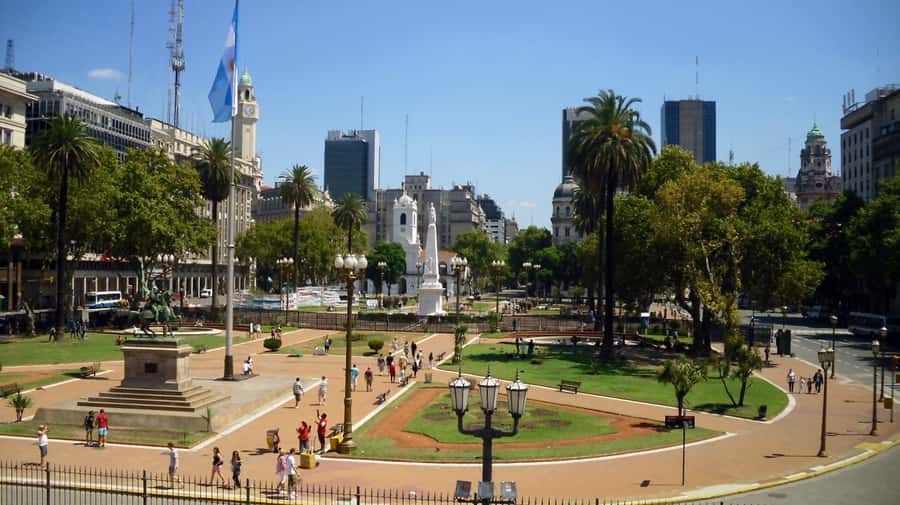
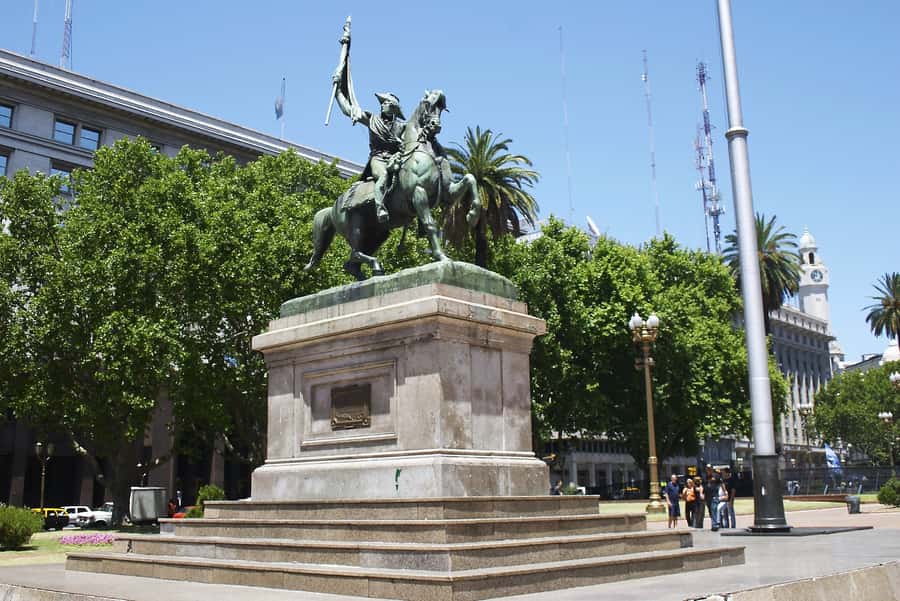
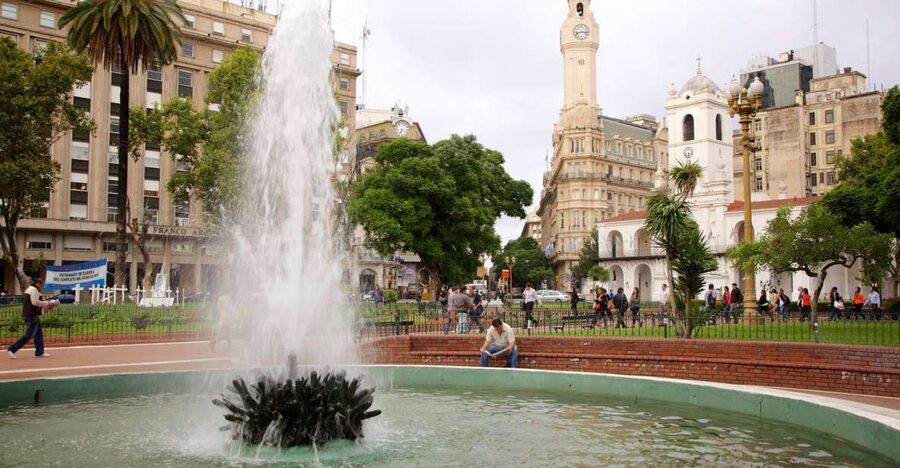
The walk then reaches Plaza de Mayo, the central public square where Buenos Aires was founded in 1580. This is the tour’s main stage. It links the city’s colonial beginnings with Argentina’s independence, government, and public traditions.
I like the way this stop gives the rest of the route a clear purpose. You are not simply ticking off grand buildings. You are looking at the square that helps explain why the surrounding institutions matter.
The square is also a good place to hear the broad outline of Argentine history. The guide discusses independence and national traditions, then connects those subjects to the buildings around you. The exact balance depends on the guide and your questions, but the experience is designed to explain the basic political and historical story in plain terms.
The panoramic city views mentioned for this neighborhood should be treated as part of the wider setting rather than a dedicated rooftop or observation stop. The named stops focus on civic buildings and plazas. If views matter to you, ask your guide where the best sightlines occur at the start of the walk.
Casa Rosada and Argentina’s seat of power
From Plaza de Mayo, you see Casa Rosada, the building that houses the Argentine president’s office. The supplied description calls it Casa Robada, but Casa Rosada is the familiar name for the presidential building, and that is the landmark you should expect to see.
This is primarily an exterior viewing stop. The experience does not promise an interior visit to the presidential offices, so you should book it for the explanation and setting rather than access inside Casa Rosada.
That limitation is not a problem for me. The value comes from standing in the square and seeing the presidential building in its civic context. Your guide can explain how the office fits into Argentina’s political life and how the square has been used for public gatherings and national moments.
Because this is a private tour, you can ask for more background if you want to understand Argentina beyond the usual independence dates. You can also keep the conversation brief and save time for the architecture if that suits you better.
Entering the Cabildo’s colonial rooms
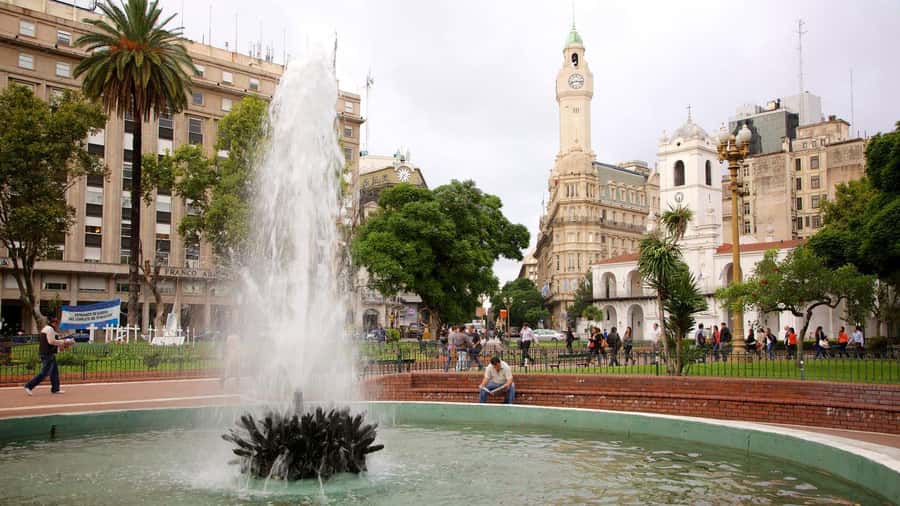
The Cabildo adds a different layer to the route. During the colonial period, this building served as the seat of the town council. Its role helps you picture Buenos Aires before the modern presidency, subway, and broad civic avenues took shape.
The included entrance makes this stop more useful than a quick exterior photograph. You can enter the historic building and connect its rooms and structure with the way the city was governed under colonial rule.
I especially like the contrast between the Cabildo and Casa Rosada. One represents an earlier town council system. The other points to the modern national government. Seeing both in one compact walk gives you a simple visual framework for the changes Argentina went through.
The Cabildo is also where a guide can add value. Without context, an old government building can blur into the next. With a clear explanation, you understand why this particular structure belongs in the story of Buenos Aires and Argentine independence.
The tour includes admission, and the experience advertises skip-the-ticket-line access. That is helpful on a busy day, though the total amount of time inside can vary. A two-hour tour must balance the Cabildo, cathedral, square, and explanations, so this is not a long museum visit.
More Walking Tours in Buenos Aires
- Buenos Aires Hop-On Hop-Off Bus, Free Walking Tours & Discounts
★ 4.5 · 2,218 reviews - Buenos Aires: La Boca Guided Walking Tour in English
★ 4.8 · 1,587 reviews - Buenos Aires: Personalized 2 to 8-Hour Private Walking Tour
★ 4.7 · 149 reviews - Buenos Aires: San Telmo and Market Guided Walking Tour
★ 4.8 · 102 reviews
The Metropolitan Cathedral’s unexpected design
The Metropolitan Cathedral is one of the most distinctive stops because of its unusual neoclassical architecture. Instead of the strongly curved or heavily decorated church front many people expect, its exterior has a formal classical character.
The cathedral visit is included, so you get more than a passing look from Plaza de Mayo. Your guide can point out the building’s design and explain its place in Buenos Aires’ religious and civic center.
This stop works well after the Cabildo. The Cabildo shows colonial administration, while the cathedral brings in religion, public identity, and architecture. You do not need specialist knowledge to enjoy the contrast. Look at the façade first, then let the guide explain what makes it unusual.
As with the Cabildo, the visit is part of a tightly timed walk. If you want a long, quiet look at every architectural detail, two hours may feel brisk. If you want a clear introduction to the building and its setting, the timing is more suitable.
The Plaza de Mayo subway station
Near the cathedral, you see the Plaza de Mayo subway station, associated with the beginning of Buenos Aires’ subway system. It is a small but revealing detail in the route because it shifts the story from colonial buildings and national government to modern city transport.
This stop shows how much history is packed into the area. Within a short walk, you move from the founding of Buenos Aires to colonial administration, the presidency, the cathedral, and the origins of the subway.
You should not expect a separate underground tour or an extended ride. The station is presented as a point of interest near the cathedral. Its value is in seeing how modern infrastructure sits beside the city’s oldest civic institutions.
That compact progression is one of the tour’s strengths. You get a basic timeline without crossing half the city. For a first visit, this can help you understand central Buenos Aires before exploring other districts on your own.
What the private format is worth at $52
At $52 per person, this is not the cheapest way to walk around Plaza de Mayo. You can see much of the area independently. The price makes more sense if you want a guide to connect the buildings, explain Argentina’s independence, and answer questions in real time.
The included entrances to the Metropolitan Cathedral and Cabildo improve the value. So does the private-group format. If two or three people share the booking, the cost buys a more personal explanation than a large group tour usually provides.
I would be less enthusiastic about the price if you only want photographs from outside. Casa Rosada and Plaza de Mayo are easy to view without a paid tour, and the route itself covers a compact area. The tour earns its fee through interpretation, access, and convenience, not distance walked.
The two-hour length is another value point. You can fit it into a morning or afternoon without giving up most of your day. It is a good orientation walk early in a Buenos Aires stay, especially if you want the central district explained before returning on your own.
Guides, language, and the meeting-point warning
The strongest guide feedback centers on clear explanations, friendliness, and history. Juan Manuel Sanchez is specifically praised for understandable English, impressive historical knowledge, and a personable manner. Another account describes Juan Miguel as professional and helpful in explaining the basic parts of Argentine history while visiting central institutions and squares.
Those details suggest that the guide is the main reason to book. The buildings are fixed, but the quality of the walk depends on how well the guide turns them into a connected story. You should bring questions, especially if you want more than a standard overview.
The available guide languages are English, Portuguese, and Samoan. Confirm your preferred language when reserving, particularly if you are booking for a mixed-language private group.
Pay close attention to meeting instructions. The stated meeting point is outside Café Tortoni, but one serious complaint involved a guide not appearing there after the meeting location reportedly changed by email. The guest had no practical WhatsApp access and could not complete the required phone verification because of roaming limits.
This is an avoidable risk. Bring internet access, as requested in the practical information, and check your email shortly before departure. If the operator provides a phone or messaging contact, make sure you can use it. I would also arrive early enough to identify the café entrance and the guide without rushing.
The cancellation policy allows a full refund when you cancel at least 24 hours ahead. You can also reserve and pay later, which helps if your plans are still shifting. Neither policy solves a missed meeting point on the day, so communication remains the key practical issue.
Who will enjoy this two-hour walk
I would choose this tour for a first-time visitor who wants a readable introduction to central Buenos Aires. It suits anyone who prefers asking questions instead of reading plaques, and it works well for a private family group or friends who want to set their own conversational pace.
It is also a good match for people interested in Argentina’s political beginnings, colonial government, public traditions, and civic architecture. The route gives those subjects priority rather than focusing on food, nightlife, shopping, or neighborhood street art.
You may want a different experience if you prefer a long museum visit, a food tour, or a broad tour covering several Buenos Aires neighborhoods. This walk stays centered on the Historic District and its main institutions.
The tour is wheelchair accessible, but the information provided does not describe pavement conditions, interior access details, or restroom arrangements. If you use a wheelchair, contact the operator before booking to confirm the current route and building access.
What to bring and how to plan the day
Wear comfortable shoes. Two hours on foot can feel longer on hard city surfaces, even when the route itself is not extensive.
Bring internet access and keep your booking messages available. This is especially important because the meeting point has been a source of confusion for at least one booking. A phone that cannot receive texts or use messaging apps could leave you with few options if instructions change.
The tour does not include hotel pickup or drop-off. Plan your own way to Café Tortoni and allow time to reach the meeting point. The exact start times depend on availability, so check the schedule before building the rest of your day around it.
Because the tour is private, you can use the two hours efficiently. Ask the guide to spend more time on the Cabildo, cathedral architecture, or independence if one subject matters most to you. The route is short enough that focused questions should make a real difference.
Should you book the Historic District walk?
Book it if you want a compact, private introduction to the civic heart of Buenos Aires, with a guide explaining how Plaza de Mayo, Casa Rosada, the Cabildo, the cathedral, and the subway station fit together. The included entrances and strong guide feedback, especially for Juan Manuel Sanchez, support the $52 price when shared by a small group.
Skip it if you are happy to see the square and façades independently or want a tour built around food, tango, or a wider area. Before paying, make sure your phone and internet access will work on the day, and check any updated meeting instructions. With that precaution, this is a focused way to get your bearings and understand the city’s central story.
FAQ
How long is the Buenos Aires Historic District walking tour?
The tour lasts two hours.
Where does the tour meet?
The meeting point is outside Café Tortoni.
What sights are included on the route?
The walk includes Plaza de Mayo, Casa Rosada, the Cabildo, the Metropolitan Cathedral, and the Plaza de Mayo subway station.
Are entrance fees included?
Yes. Admission to the Metropolitan Cathedral and the Cabildo is included.
Is the tour private?
Yes. It is offered for a private group.
Which languages are available?
The live guide languages are English, Portuguese, and Samoan.
Is hotel pickup included?
No. Hotel pickup and drop-off are not included, so you need to reach Café Tortoni independently.
Recently added in Buenos Aires
- Buenos Aires: Private City Tour by Car with Hotel or Pickup★ 5.0 · 3 reviews
- Guided tour Boca Juniors Museum & Stadium + Caminito★ 3.3 · 3 reviews
- Buenos Aires: Montserrat, San Telmo, La Boca, and Puerto …★ 5.0 · 3 reviews
- Unique Tigre and Delta Private Day Cruise Navegation★ 5.0 · 3 reviews
- Buenos Aires: MALBA Museo de Arte Latinoamericano Tour★ 4.1 · 3 reviews
- Tango Show at: MichelAngelo★ 4.5 · 3 reviews
- Buenos Aires: Mate Workshop y Otras Yerbas★ 5.0 · 3 reviews
- From Colonialism to Eclecticism, Buenos Aires arquitectonica★ 5.0 · 3 reviews
Buenos Aires Tours, compared.

Buenos Aires: Piazzolla Tango Show with Optional Dinner
Read our review →
Buenos Aires: City Highlights Guided Tour with Transfer
Read our review →
Buenos Aires: La Boca Guided Walking Tour in English
Read our review →
Buenos Aires: La Recoleta Cemetery Guided Tour in English
Read our review →
Buenos Aires: Tango Show at Tango Porteño & Optional Dinner
Read our review →
Buenos Aires: 9-Course Argentine Meat Tasting at Fogón Asado
Read our review →

Buenos Aires: Madero Tango Show with Optional Dinner
Read our review →Browse the lists this tour appears in