
Reviewed · BUENOS AIRES TOURS
Bike Tour: Buenos Aires to the North
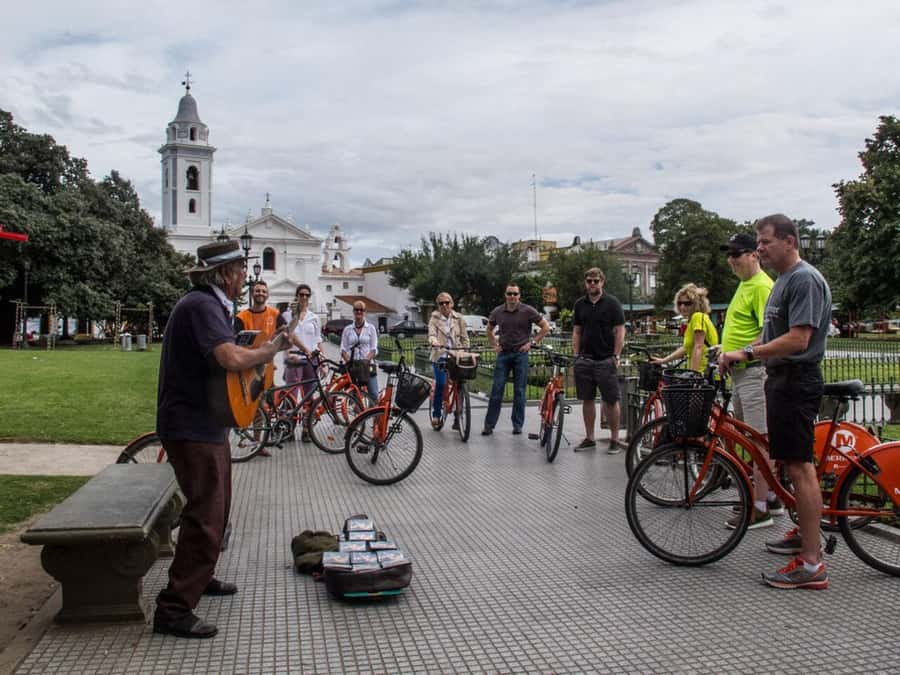
Buenos Aires reveals itself especially well from a bicycle. This northbound route links the old streets of San Telmo with Puerto Madero, Recoleta, and Palermo, so you get changing scenery instead of one long ride through the same type of neighborhood. I like the small group of six or fewer, and I like the e-bike, which makes a broad city route manageable without turning it into a fitness test. The one drawback is simple: the 210-minute tour includes many sights, but some are quick roadside stops rather than full visits.
I also like the human touch. Guides including Chan, Nan, Flore, Ikki, and Barbie have been praised for clear explanations, friendly service, and helping with bike problems. Bring sunscreen and water, since snacks are not included and one hot-weather outing left a rider wishing for a café stop.
Key points to know before you ride
- San Telmo starting point: Meet at La Bicicleta Naranja, Pasaje Giuffra 370, close to the historic heart of Buenos Aires.
- A broad northbound route: See Puerto Madero, Retiro, Recoleta, Palermo, and several major cultural landmarks in one outing.
- Electric bikes included: The e-bike helps you cover more ground while keeping the pace comfortable.
- Small groups matter: With no more than six participants, it is easier to hear the guide and ask questions.
- The greenest section is Palermo: Rosedal and the Bosques de Palermo provide a welcome break from city streets.
- Plan for sun: Bring a hat, sunscreen, and a passport or ID card. A copy is accepted.
Why this route gives you a useful first look at Buenos Aires
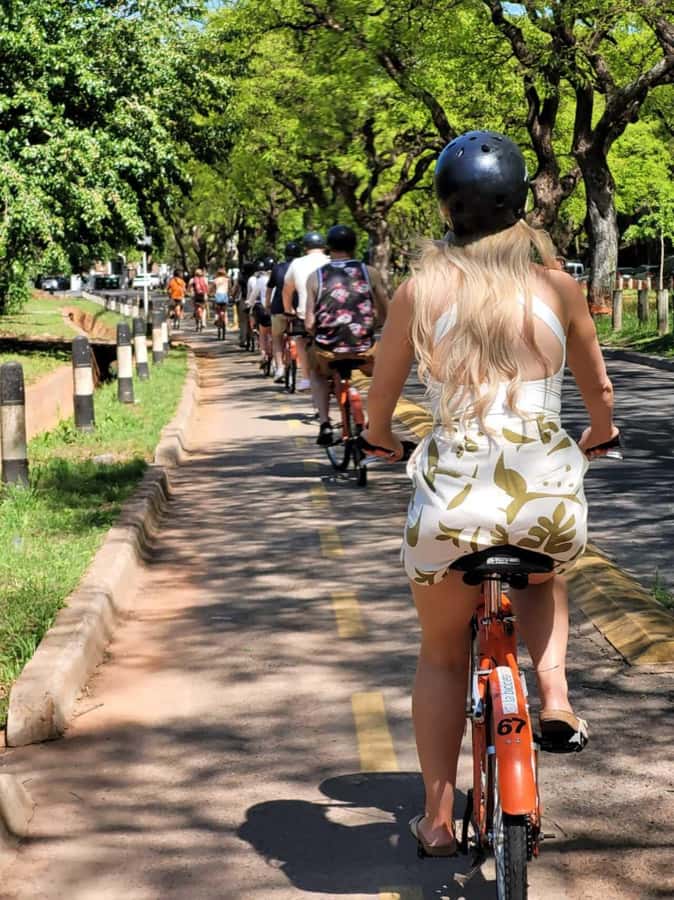
This is not a short neighborhood spin. It is a three-and-a-half-hour ride across several parts of the city, moving from colonial-era San Telmo to the sleek waterfront, grand central avenues, elegant Recoleta, and leafy Palermo.
That variety is the main reason I find the route appealing. You can see how Buenos Aires changes block by block: old urban texture near the starting point, large civic spaces around Retiro, polished residences in Palermo Chico, and broad parkland near Rosedal. A car can show you the same sights, but a bicycle gives you more time to notice the transitions.
The e-bike is important here. You still pedal, but the electric assistance takes the strain out of a long city route. That makes the tour a good choice if you want to cover a lot of ground without spending the rest of the day recovering. You should still be comfortable riding for several hours, since this is an active sightseeing experience rather than a hop-on, hop-off outing.
The small-group format is another strength. A maximum of six people gives the guide room to explain a building, answer a question, or help adjust a bike. The guide team includes English and Spanish speakers, with Chan, Nan, Flore, Ikki, and Barbie among the named guides associated with the experience. Clear storytelling and practical help are recurring strengths, and Barbie was also praised for solving a bike problem calmly.
More Bike Tours in Buenos Aires
- Buenos Aires: North or South Buenos Aires Bike Tour
★ 4.7 · 719 reviews - Buenos Aires: Full Day Bike Tour with Lunch
★ 4.9 · 152 reviews - Buenos Aires Bike Tour: North Districts, Recoleta and Palermo
★ 4.5 · 91 reviews
Starting in San Telmo at La Bicicleta Naranja
The meeting point is La Bicicleta Naranja at Pasaje Giuffra 370 in San Telmo. This location makes sense for the route, since San Telmo gives you a strong introduction to Buenos Aires before you head north.
The tour does not list an extended stop in San Telmo, so think of the neighborhood as your launch point rather than a dedicated walking visit. Arrive ready to ride, with your identification, sun protection, and a little energy for the first section.
Your guide provides the e-bike, helmet, and a water bottle. The bilingual format is useful for couples or small groups with different language preferences, and the limited group size should make the opening safety instructions easier to follow.
Puerto Madero: old port, new Buenos Aires
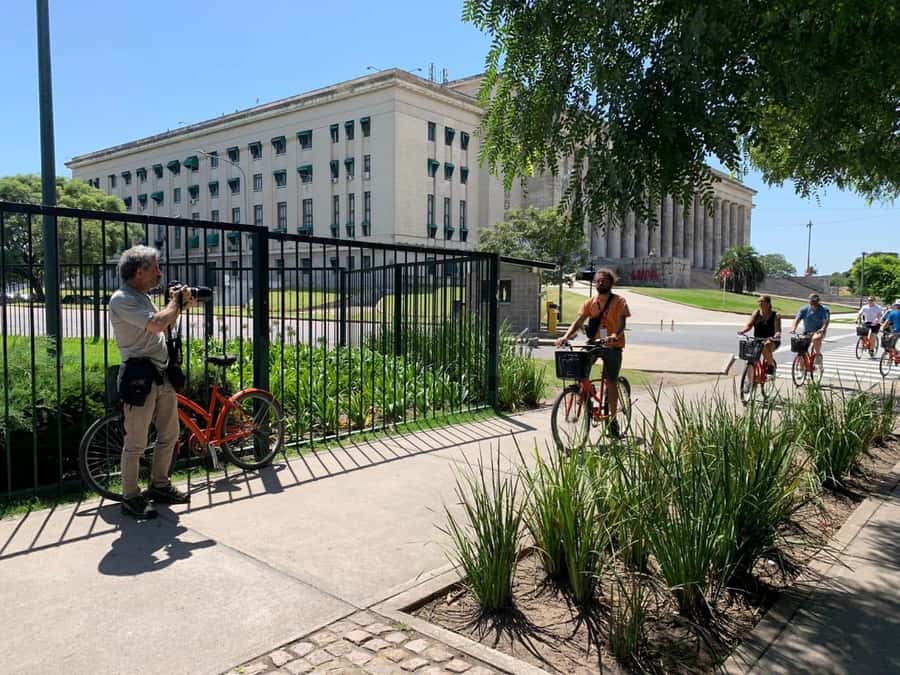
The first major stop is Puerto Madero, reached by bicycle in about 10 minutes. This former port district presents a sharp contrast with San Telmo. Its identity comes from the waterfront, modern development, and the city’s connection to the Río de la Plata.
Puerto Madero works well at the beginning because it shows one of Buenos Aires’ newer faces. You are not simply looking at old churches and historic facades. You are also seeing a district shaped by redevelopment and contemporary city life.
The visit is a bike tour stop, not a long port-side break. You will get an overview and hear the guide place the area in the larger story of the city. If you want extended time for photographs or a meal by the water, plan to return on your own later.
Plaza Francia and Recoleta’s polished side
The route continues toward Plaza Francia, in the Recoleta area. This section brings you into one of Buenos Aires’ most refined districts, known for broad spaces, grand buildings, museums, and an unmistakably formal tone.
Recoleta is also where you can connect the city’s cultural life with its public memory. The wider route includes Recoleta Cemetery, the final resting place of Eva Perón, although the listed stops focus more on passing through the area than on a full cemetery visit. If seeing Eva Perón’s grave is a top priority, ask the guide exactly how much time is available there before the ride begins.
That distinction matters. The route gives you a useful overview of Recoleta, but it is not designed as a detailed walking tour of every major site. I like the efficiency, though you should keep your expectations in check if you want long interior visits.
more Buenos Aires days to weigh up
- Buenos Aires in a Day – All Inclusive Bike Tour
★ 5.0 · 89 reviews - Buenos Aires Bike Tour: San Telmo and La Boca Districts
★ 4.5 · 74 reviews - Private Off the Beaten Path: Hidden Urban Art Bike Tour
★ 5.0 · 62 reviews - La Boca and City Center Bike Tour
★ 5.0 · 54 reviews
Plaza General San Martín and Retiro’s grand scale
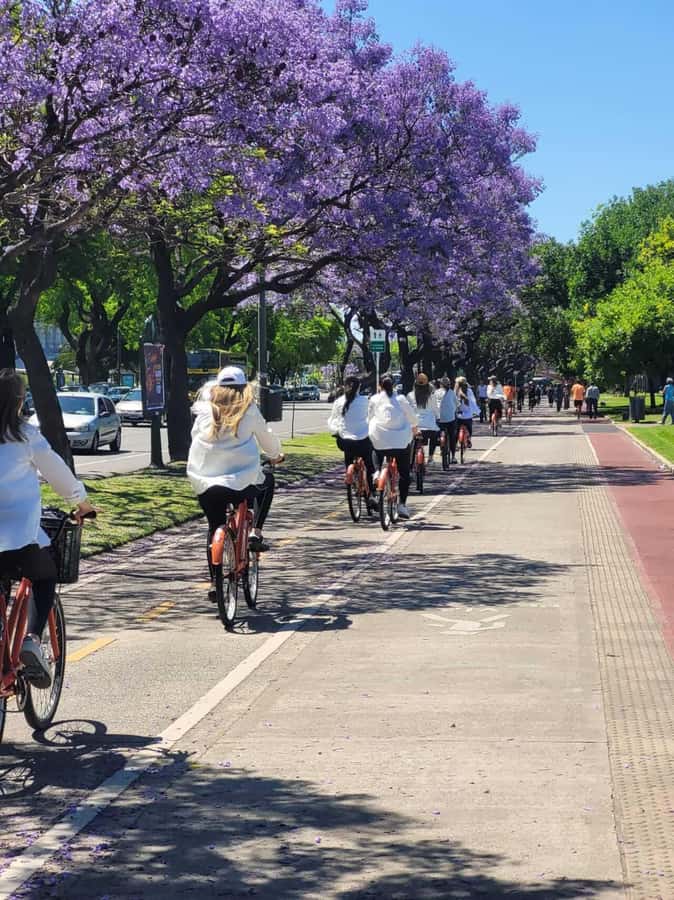
Plaza General San Martín is another important city space, reached after about 10 minutes of riding from the previous section. The plaza helps explain Buenos Aires as a city of formal avenues, monuments, parks, and civic buildings.
This is the sort of stop where the guide adds real value. A monument or square can look impressive without telling you much on its own. Historical context helps you understand why the space matters and how it fits into Argentina’s national story.
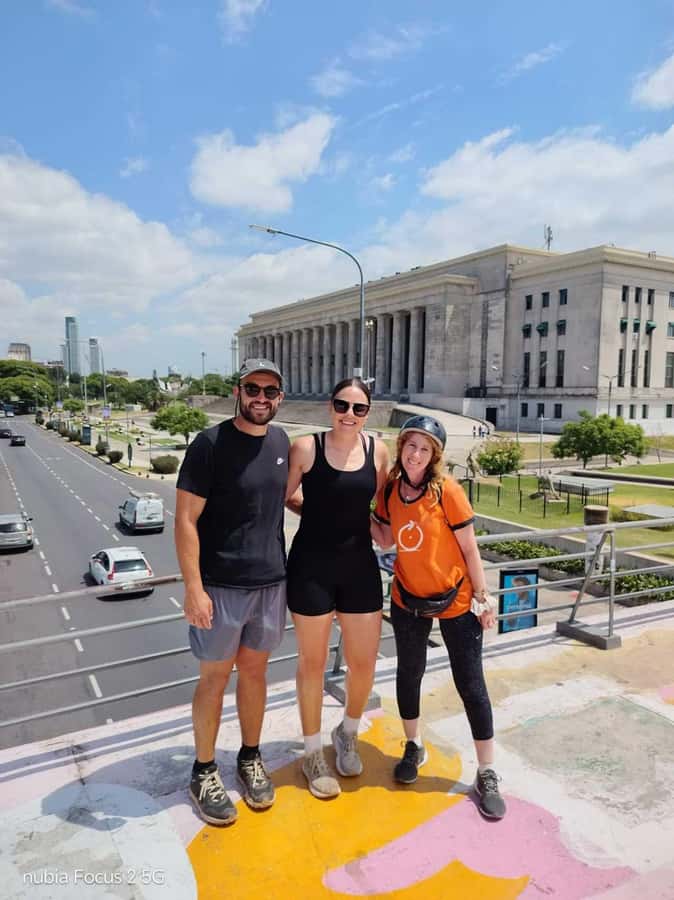
The route then passes through Retiro and toward the Law School of the University of Buenos Aires. The changing scale is part of the appeal. You move from a public square to imposing institutional architecture, with the bicycle allowing you to connect these sights without repeated vehicle transfers.
The Law School and the French Embassy
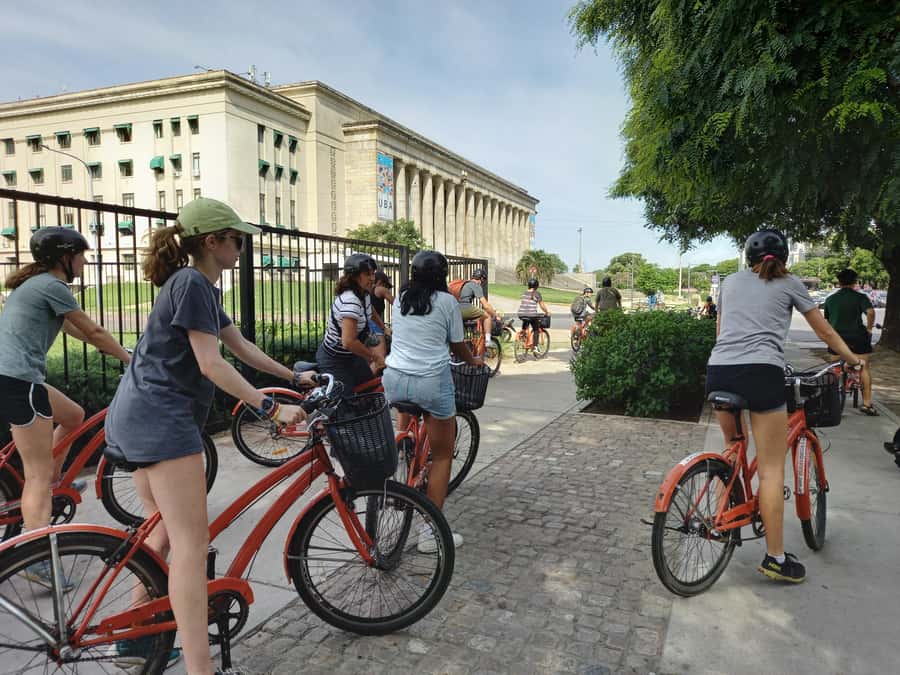
The Facultad de Derecho, or Law School, is one of the route’s most memorable architectural sights. Its large, formal design gives the stop a powerful visual presence, even if you only see it from outside.
The nearby Embassy of France adds another layer of international character. Buenos Aires has long been associated with European architectural influence, and this part of the ride makes that connection easy to see without turning the tour into a lecture.
I would treat both stops as exterior viewing points. The supplied schedule identifies them as bike tour stops rather than admission visits, so you are paying for the route, guiding, and context, not entry into these buildings.
Floralis Genérica and the city’s modern symbol
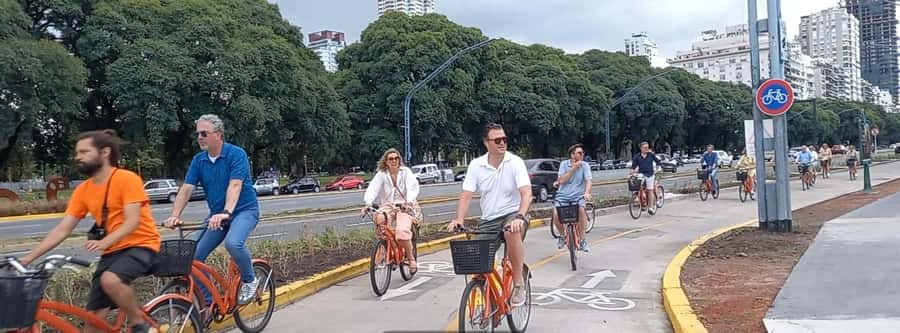
Floralis Genérica is one of the most recognizable works on the route. The giant metal flower opens and closes according to the time of day, making it more than a fixed monument. It is a playful modern marker in a city otherwise filled with older stone buildings and formal public architecture.
The listed stop lasts about 10 minutes. That is enough for photographs and a short explanation, but not an extended visit. Your guide can help connect the sculpture with the modern side of Buenos Aires, while the open setting gives you a clear view of its shape.
This is one of the points where an e-bike tour earns its keep. You can reach the sculpture as part of a larger route, rather than spending a large part of your day traveling to it separately.
Rosedal and the Bosques de Palermo
The tour’s most relaxing stretch comes in Palermo, especially around the Bosques de Palermo and Paseo El Rosedal. After the traffic, avenues, and monumental buildings of central Buenos Aires, the trees and gardens change the pace.
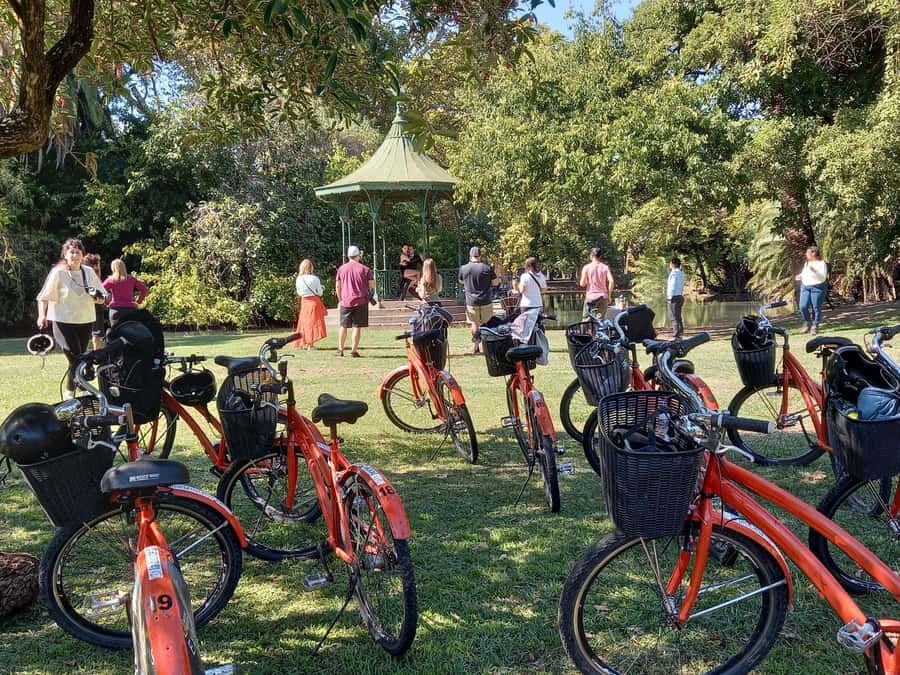
Rosedal is scheduled for about 20 minutes, making it one of the longer stops. You can expect time to pause, take photographs, and listen without feeling rushed from one landmark to the next. The garden is a good reminder that Buenos Aires is not only about architecture and grand civic spaces.
The park section also makes the experience easier on a hot day. You should still wear sunscreen and a hat, but greenery and open park paths generally feel less demanding than a long run of dense urban streets. Bring the supplied water bottle, since snacks are not part of the package and there is no promised café break.
One rider specifically wished for a refreshment stop during a very hot outing. That is useful advice. Eat before you arrive, carry a small snack if you need one, and do not assume the tour pauses for a drink beyond the included water.
Palermo Chico and the city’s grand residences
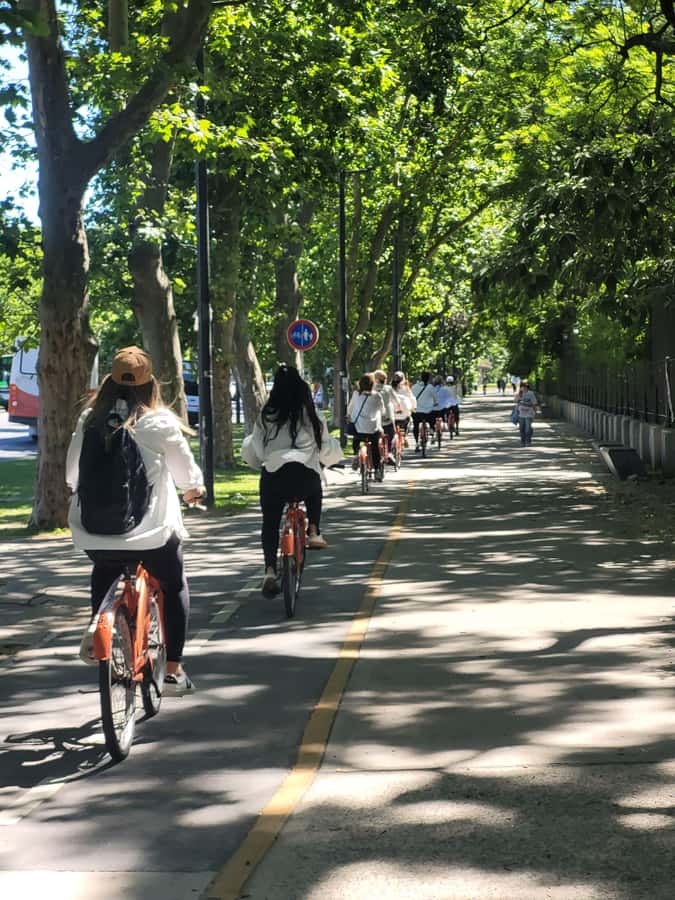
As you continue through Palermo, the route passes Palermo Chico, an area known for magnificent residences and a more private, residential feel. This is a quieter kind of sightseeing. Instead of one famous monument, you are looking at the relationship between homes, streets, greenery, and urban planning.
I find this type of stop valuable because it shows how Buenos Aires works as a lived-in city. The grand residences are not isolated museum pieces. They form part of a neighborhood with its own tone and character.
The route also passes the National Library and the National Museum of Fine Arts. These institutions give the ride a strong cultural finish, even though the schedule does not include interior admission. You will gain more from the guide’s explanation and the exterior architecture than from expecting a museum visit during the ride.
The National Library, San Martín Institute, and Fine Arts Museum
The Biblioteca Nacional Mariano Moreno is a striking cultural landmark. Its unusual structure and elevated form make it easy to recognize, and the stop provides a chance to discuss Argentina’s literary and intellectual life.
Nearby, the Instituto Nacional Sanmartiniano connects the route with José de San Martín, one of the central figures in South American independence. This adds political and national context to a ride that might otherwise seem focused mainly on buildings and parks.
The Museo Nacional de Bellas Artes rounds out the cultural section. It is one of the city’s key art institutions, but remember that this tour does not include museum entry. If you want time with the collection, set aside another visit. The bicycle route is better for seeing how several major institutions fit together geographically.
Pilar Church and the Malvinas memorial
The route also takes in Pilar Church and the Cenotaph honoring those who died in the Malvinas conflict. These stops bring two different forms of memory into the experience.
Pilar Church represents the religious side of Buenos Aires and its older civic traditions. The Cenotaph is more recent and more solemn, tied to Argentina’s continuing remembrance of the Malvinas conflict.
These are meaningful stops, but the tour’s timing means the guide must keep the explanations focused. If you enjoy learning how a city remembers its past, listen closely and ask questions. The small group makes that easier than it would be on a large coach outing.
What the guide adds to the ride
A bicycle route can become a list of names unless someone explains what you are seeing. Here, the guide is central to the experience.
Chan and Nan have been singled out for friendly, clear presentations, while Flore is noted for explaining the areas along the route. Ikki led a safe outing with several worthwhile stops, and Barbie helped resolve a bike difficulty while mixing history with present-day information.
Those details tell you what to look for from the guide: not just directions, but a readable story about Buenos Aires. The city has enough monuments and neighborhoods to overwhelm you. Good commentary helps you link them together.
Because the group is limited to six, you can also raise practical questions as you ride. Ask about a building, a neighborhood, or where to return later. The exact balance of riding and commentary can vary by guide, weather, and group pace, but the format allows for conversation.
Is $48 a fair price for 210 minutes?
At $48 per person, this is not the cheapest way to see Buenos Aires, but the value is reasonable if you want a guided route that covers several districts in one outing.
The price includes the e-bike, helmet, water bottle, and bilingual guide. You are also paying for the convenience of linking San Telmo, Puerto Madero, Retiro, Recoleta, and Palermo without organizing separate transport. With a maximum of six participants, the cost buys a more personal format than a standard large-group city tour.
The value is strongest for a first or second day in Buenos Aires. You get an orientation to several key areas and can mark places for later visits. The value is weaker if you want long museum visits, leisurely meals, or a deep look inside each landmark. This is a moving overview with selected pauses, not a full-day cultural program.
Free cancellation up to 24 hours before departure and the option to reserve now and pay later also reduce the risk of committing too early. Check the available start times when booking, since the duration is fixed at 210 minutes but the departure schedule can vary.
Who should book the North Bike Tour?
I would choose this tour if you want to see a lot of Buenos Aires in a short period and like the idea of learning as you ride. It suits active sightseers, first-time visitors, couples, and small groups who prefer direct contact with a guide.
It is also a good fit if you are interested in architecture, public art, parks, and city neighborhoods rather than only checking off indoor attractions. Floralis Genérica, Rosedal, Puerto Madero, the Law School, and Palermo Chico give the route plenty of visual variety.
I would think twice if you dislike cycling, need frequent food breaks, or want extended time inside museums and historic sites. The ride is manageable with electric assistance, but it remains a three-and-a-half-hour bicycle activity. Hot weather can make the lack of a scheduled café stop more noticeable.
Should you book it?
Book this tour if you want an efficient, friendly introduction to the north side of Buenos Aires, with a small group and an e-bike doing much of the hard work. The strongest reasons are the route’s variety, the personal guide format, and the chance to connect major sights that are spread across several neighborhoods.
Skip it if your priority is a slow, indoor-focused day or a dedicated visit to Recoleta Cemetery and the Fine Arts Museum. For most active visitors, though, $48 is a fair price for 210 minutes of guided sightseeing, especially early in a Buenos Aires stay when you want to get your bearings and decide where to return.
FAQ
Where does the bike tour start and finish?
The tour starts and returns at La Bicicleta Naranja, Pasaje Giuffra 370, in San Telmo.
How long does the tour last?
The tour lasts 210 minutes, or three and a half hours.
What is included in the price?
The price includes an e-bike, helmet, water bottle, and a bilingual guide in English and Spanish.
How many people are in the group?
The group is limited to six participants.
Are snacks included?
No. Snacks are not included, so you should eat beforehand or bring something suitable for the ride.
What should I bring?
Bring a sun hat, sunscreen, and a passport or ID card. A copy of your passport or identification is accepted.
Recently added in Buenos Aires
- Buenos Aires: Private City Tour by Car with Hotel or Pickup★ 5.0 · 3 reviews
- Guided tour Boca Juniors Museum & Stadium + Caminito★ 3.3 · 3 reviews
- Buenos Aires: Montserrat, San Telmo, La Boca, and Puerto …★ 5.0 · 3 reviews
- Unique Tigre and Delta Private Day Cruise Navegation★ 5.0 · 3 reviews
- Buenos Aires: MALBA Museo de Arte Latinoamericano Tour★ 4.1 · 3 reviews
- Tango Show at: MichelAngelo★ 4.5 · 3 reviews
- Buenos Aires: Mate Workshop y Otras Yerbas★ 5.0 · 3 reviews
- From Colonialism to Eclecticism, Buenos Aires arquitectonica★ 5.0 · 3 reviews
Buenos Aires Tours, compared.

Buenos Aires: Piazzolla Tango Show with Optional Dinner
Read our review →
Buenos Aires: City Highlights Guided Tour with Transfer
Read our review →
Buenos Aires: La Boca Guided Walking Tour in English
Read our review →
Buenos Aires: La Recoleta Cemetery Guided Tour in English
Read our review →
Buenos Aires: Tango Show at Tango Porteño & Optional Dinner
Read our review →
Buenos Aires: 9-Course Argentine Meat Tasting at Fogón Asado
Read our review →

Buenos Aires: Madero Tango Show with Optional Dinner
Read our review →Browse the lists this tour appears in