Reviewed · BUENOS AIRES TOURS
Palermo: Graffiti and Street Art Guided Tour in English
Palermo’s street art is more than colorful paint on old walls. It reflects Argentina’s politics, football passions, military rule, protest movements, and modern creative culture. This two-hour English walking tour helps you read the neighborhood instead of simply passing through it.
I like the way the tour connects today’s murals with events reaching back to the 1920s. I also like the price: at $13 per person, you get a guided look at art and local history that would be easy to miss on your own. The main consideration is that the route can feel busy when the group is large, and two hours gives you a strong introduction rather than an exhaustive survey of Palermo’s art.
Key points to know before you book
- Political roots: Learn how graffiti once served as political endorsement, propaganda, and election messaging.
- The aerosol turning point: Hear how spray paint, arriving in Argentina in 1969, made public messages faster to produce.
- A famous photo stop: See the Trump Wall graffiti at Madison Avenue Bar.
- Palermo’s changing streets: Walk through one of Buenos Aires’s most eclectic neighborhoods, including the Palermo Soho area.
- Guides with personality: Guides such as Juan, Vito, Victor, Ailen, Aylen, Elina, and others bring humor, art knowledge, and local stories.
- Simple logistics: Meet at Plaza Serrano, also called Plaza Cortázar, and finish at Plaza Inmigrantes de Armenia.
Starting at Plaza Serrano, Palermo’s social crossroads
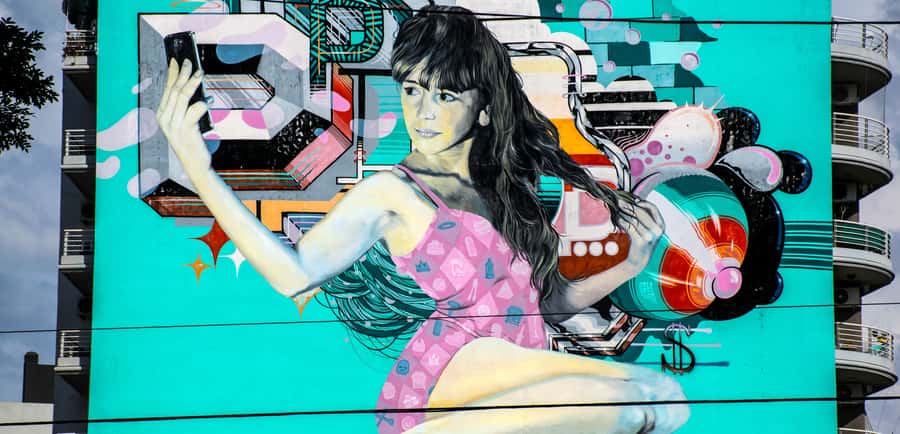
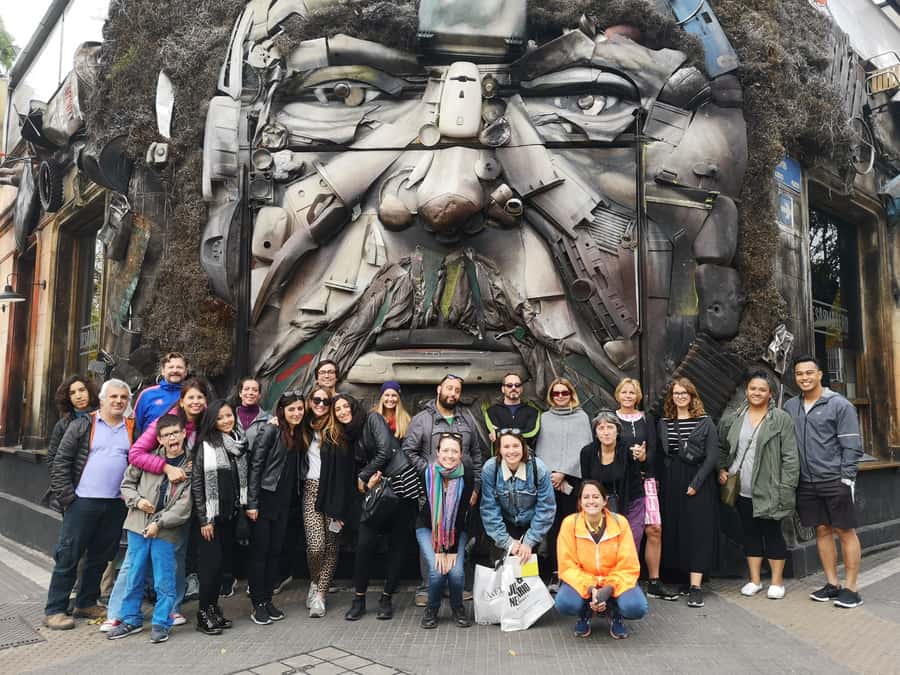
The tour begins at Plaza Serrano, also known as Plaza Cortázar, at the corner of Jorge Luis Borges and Honduras Streets. Look for the guide in an orange shirt beside the large PALERMO sign. This is a useful meeting point because it is easy to identify in the middle of Palermo’s café, bar, and shopping district.
I like starting here because you get your bearings in a lively part of the neighborhood before setting off. The plaza also gives the guide a natural place to explain how Palermo became one of Buenos Aires’s best-known areas for restaurants, nightlife, design shops, and wall art.
Do not expect a quiet museum-style introduction. This is a street tour, so the setting is part of the lesson. You will be standing outdoors, listening beside busy streets, and moving from wall to wall. Wear comfortable shoes and keep your phone ready, since the art is seen in passing rather than displayed in a fixed gallery.
The guide wears an orange shirt, which matters more than it may sound. Plaza Serrano can be crowded, and the clear meeting-point marker makes the first few minutes easier. If you arrive early, stay near the PALERMO sign rather than wandering through the surrounding streets.
more Buenos Aires days to weigh up
- Private Street Art Tour in Buenos Aires
★ 4.9 · 7 reviews
From 1920s politics to public messages
The most useful part of the experience is its historical frame. Instead of presenting graffiti as a recent trend, the guide takes you back to the 1920s, when political movements were gaining force in Argentina and writing in public spaces could signal support for a party or cause.
That context changes how you look at a wall. A painted slogan is not always just decoration. It may have worked as political endorsement, campaign material, or propaganda aimed at people moving through the city.
I appreciate this approach because it gives you a way to interpret art after the tour ends. You begin to ask who made the image, who it was meant to reach, and what kind of public statement it may have carried. The point is not to turn every mural into a political puzzle, but to show that Argentina’s streets have long been used for public argument.
The discussion also brings in the social conflict of the 1970s. As Argentinians became more involved in protest, public writing and visual messages took on added force. The tour explains this period through the changing role of graffiti, rather than attempting to cover all of Argentine political history in two hours.
That limitation is worth keeping in mind. You will receive a clear introduction to the connection between art and politics, but the tour is not a full history course on Argentina. If you want detailed coverage of every political movement or military government, you will need another source as well.
Why spray paint changed the streets in 1969
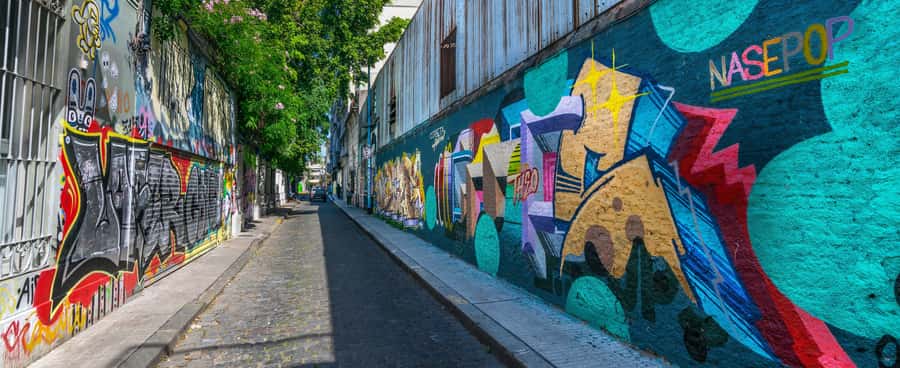
A key point in the tour is the arrival of aerosol paint in 1969. Before that, writing or painting in public took more time. Spray paint allowed messages to be put up much faster, which affected how urban movements worked during the 1970s.
This is a small technical detail with a large effect. Faster paint meant less time exposed in the street and more freedom to produce short, direct public messages. The material helped change the pace of political expression and later shaped the broader graffiti culture.
I like lessons such as this because they connect tools with social change. You are not only looking at a finished mural. You are learning why a certain material mattered and how it helped public art develop under a different military government.
The guide also explains how Argentinians became increasingly involved in protest and how street art grew alongside social conflict. The subject can be serious, but the experience is not presented as a heavy lecture. The strongest guides balance difficult history with humor and plain explanations.
Several guides have been especially praised for this style. Juan is known for mixing historical facts with personal stories and humor. Vito brings strong interest in artists, politics, sport, and Argentine culture. Victor is described as energetic and easy to follow, while Ailen and Aylen are noted for their enthusiasm and art knowledge. Elina has also led the tour in an entertaining, well-informed way.
Your guide will shape the tone, but the activity is built around the same broad themes.
Reading Palermo’s walls instead of just photographing them
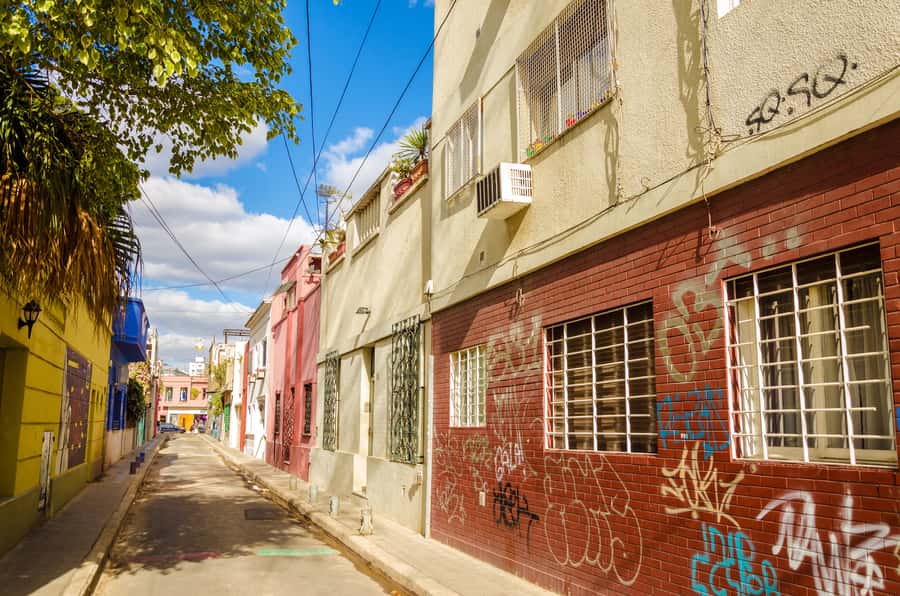
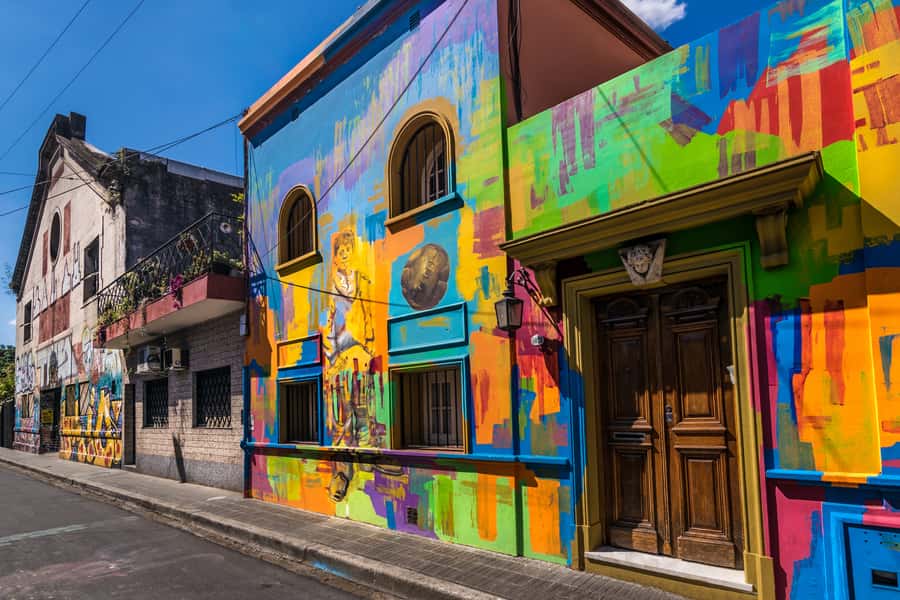
Palermo offers a good setting for this walk because the art appears alongside ordinary neighborhood life. You move through streets associated with Palermo Soho and see murals, graffiti, and painted walls in the places where people live, work, eat, and meet friends.
The art covers a broad range of subjects. You might find football murals, butterfly designs, large-scale images, political references, and work in different styles. One useful part of the tour is learning to recognize artists and visual approaches, so you can notice them again elsewhere in Buenos Aires.
The football material is especially helpful for understanding local identity. Argentine football is not treated as a side note. It appears as a major part of public culture, and the guide uses sports-related murals to explain how national pride and neighborhood loyalties show up on city walls.
You will have plenty of chances to take pictures, but photography is not the whole point. I would listen to the explanation first, then take photographs after the group has moved aside. A painted wall can look impressive on a phone, but the story behind it is what makes the stop worth remembering.
The route also teaches you to notice the difference between a mural made with permission and graffiti placed without it. That distinction helps explain why some work is treated as art while other marks are labeled vandalism. It is one of the more useful practical ideas for anyone who plans to keep exploring Buenos Aires on foot.
Street art changes. Paint fades, buildings are renovated, and new work can cover older pieces. That means the exact walls you see may change over time. The tour’s lasting value is not only the individual images, but the method of looking that the guide gives you.
more guided days in Buenos Aires
- Buenos Aires: City Highlights Guided Tour with Transfer
★ 4.7 · 1,946 reviews - Buenos Aires: La Boca Guided Walking Tour in English
★ 4.8 · 1,587 reviews - Buenos Aires: La Recoleta Cemetery Guided Tour in English
★ 4.8 · 1,359 reviews - Buenos Aires: Teatro Colon Guided Tour
★ 4.3 · 571 reviews
The Trump Wall at Madison Avenue Bar
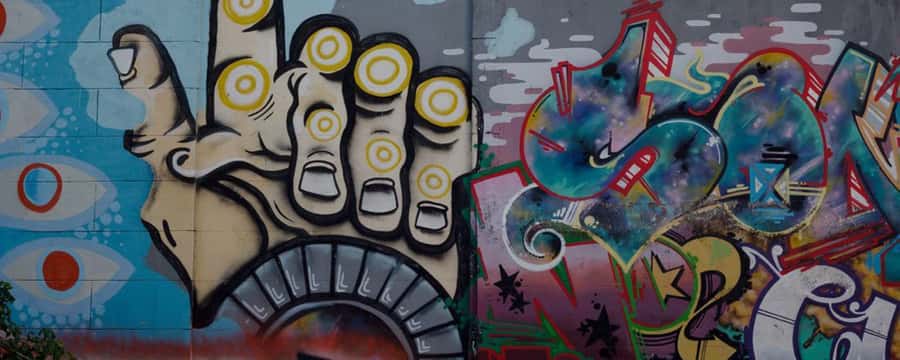
One of the named highlights is the Trump Wall at Madison Avenue Bar. It gives you a clear photo opportunity and a modern political reference within the route.
This stop also shows how Palermo’s art scene mixes public commentary with commercial and social spaces. The wall is connected to a bar rather than a traditional gallery, which fits the character of the tour. Street art here is part of the neighborhood’s daily fabric.
I would not book the experience solely for this one wall. Its appeal depends on your interest in political imagery and photography, while the wider tour offers more lasting context. The Trump Wall is best understood as one memorable stop in a route that covers several styles and periods.
A two-hour pace that works for most visitors
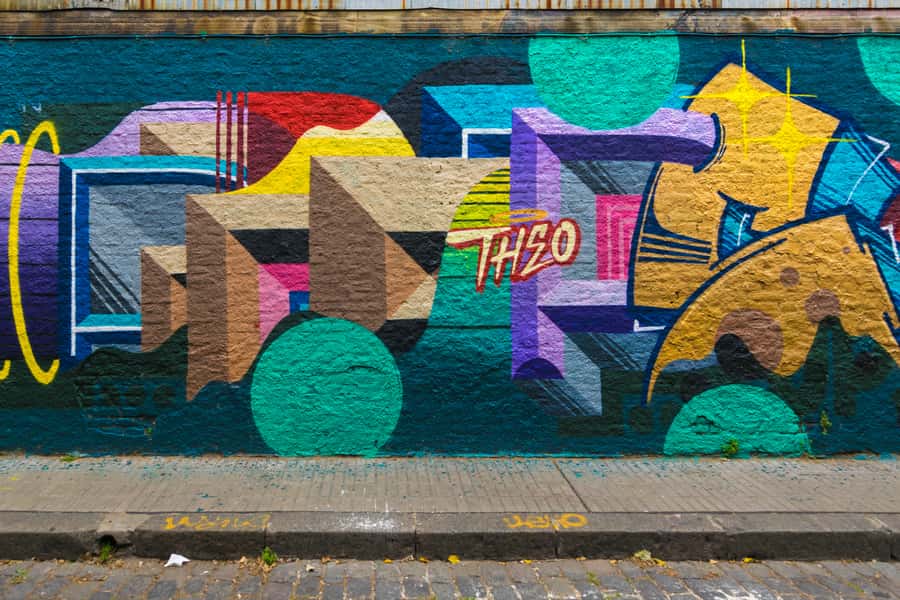
The tour lasts two hours, which is a sensible length for a walking introduction. You get enough time to cover the political background, see a range of art, and ask questions without committing half a day to one neighborhood.
The pace appears designed to keep the group moving. You will not spend a long time at every wall, so the guide needs to explain the important details clearly. This is where the praised guides make a difference. Juan, Vito, Victor, and the other listed guides are repeatedly described as funny, warm, passionate, and easy to follow.
Group size can vary. A larger group has been handled well, with the guide keeping people together and speaking loudly enough for everyone to hear. Still, a big group may make photography and close viewing less relaxed. If you prefer a private, slow examination of each artwork, this public walking tour may not match your style.
The tour finishes at Plaza Inmigrantes de Armenia. That gives you a practical endpoint in Palermo rather than returning you to the starting plaza. You can continue exploring the neighborhood afterward, but hotel pickup and drop-off are not included, so plan your own way to and from the route.
What the $13 price really buys you
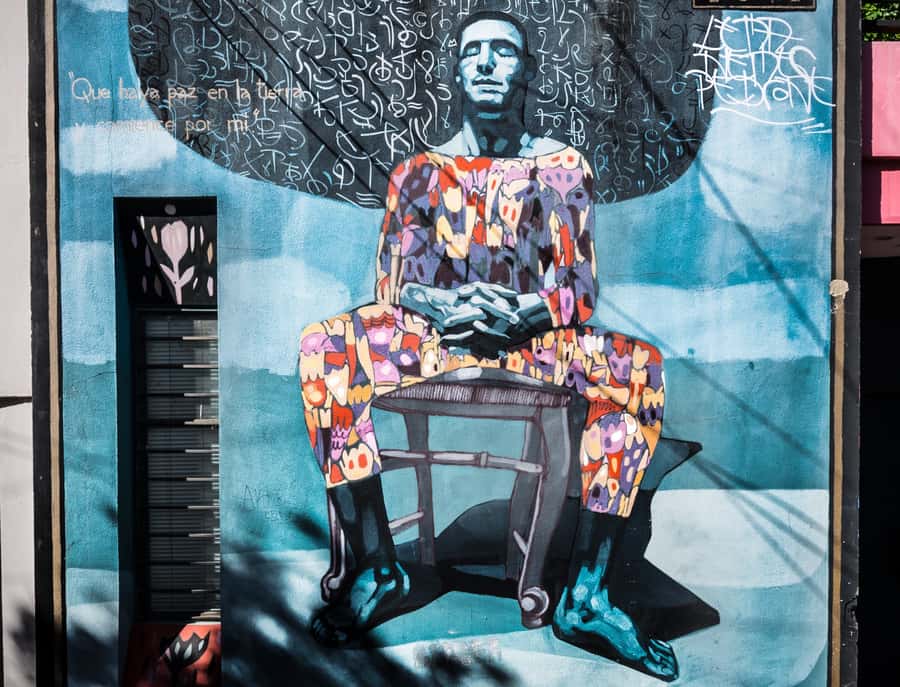
At $13, this is strong value if you are interested in Buenos Aires beyond its major landmarks. The fee covers a live English-speaking guide for two hours, and the useful part is not simply locating murals. It is learning how politics, protest, materials, football, and local identity shaped what you see.
You could walk around Palermo and find colorful walls without paying anything. The risk is missing the context, the artist connections, and the reason certain images matter. This tour earns its price by turning a casual stroll into an organized lesson with a clear beginning and end.
The price is also low enough to fit easily into a longer Buenos Aires stay. I would pair it with a free afternoon in Palermo, rather than treating it as the only activity in the neighborhood. You can arrive early, explore around Plaza Serrano, take the tour, and continue toward the shops, cafés, and streets near the finishing plaza.
Food and drinks are not included. That is not a serious drawback in Palermo, where you can arrange your own break before or after the walk, but you should not expect refreshments as part of the booking.
Rain, accessibility, and practical planning
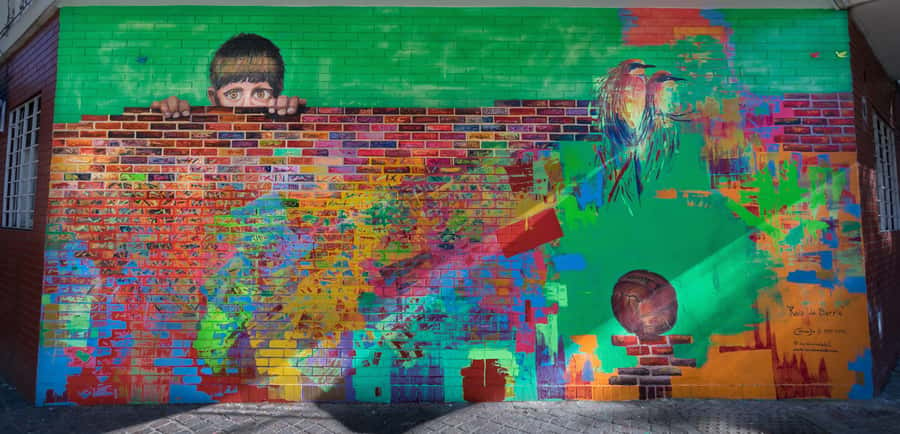
The tour operates even when it rains. Bring suitable clothing and shoes if the forecast looks poor, since the experience remains outdoors and the art is viewed from the streets.
The activity is listed as wheelchair accessible. Since the tour is a walking route through an urban neighborhood, you may still want to confirm the details for your needs when booking, but the activity itself is presented as accessible.
Free cancellation is available up to 24 hours before the start for a full refund. You can also reserve now and pay later, which helps if your Buenos Aires plans are still changing. Check the available starting times when you choose your date.
The language is English, with a live guide rather than an audio recording. That matters if you want to ask about a particular mural, artist, political reference, or neighborhood detail as you go.
Who will enjoy this Palermo walk most
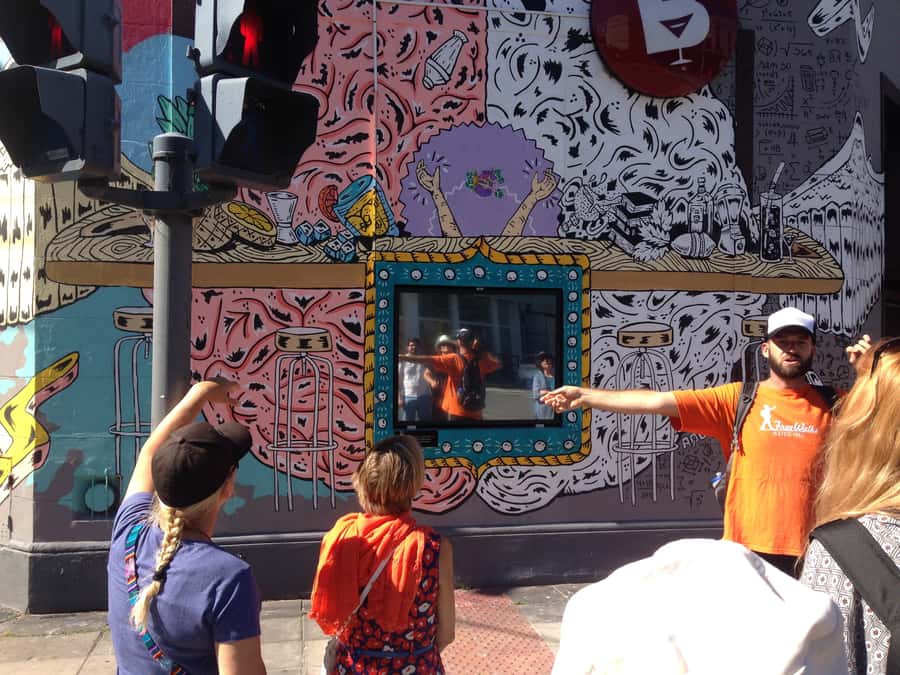
I would recommend the tour to you if you like seeing cities through local art. It suits first-time visitors who want a more personal introduction to Buenos Aires, as well as returning visitors who have already seen the classic sights.
It is especially useful for:
- First-time visitors who want a gentle introduction to Palermo
- People interested in political art and protest movements
- Football fans curious about Argentina’s public culture
- Photographers looking for colorful urban walls
- Visitors who prefer walking and conversation to indoor museums
- Anyone who wants a short, low-cost activity between other plans
Families and mixed-age groups can also find it approachable because the guides keep the subject lively. The material includes serious political history, but the tone can include humor, personal stories, and questions from the group.
I would hesitate only if you dislike walking, need a very quiet setting, or want a specialist-level survey of contemporary art. The tour gives you a well-organized introduction, not a private gallery visit or an academic seminar.
Should you book the Palermo graffiti tour?
Book it if you want to understand why Buenos Aires’s street art matters, not just where to find colorful walls. The combination of Palermo’s urban setting, political background, football imagery, the Trump Wall, and lively English-speaking guides makes this one of the better-value ways to spend two hours in the neighborhood.
I especially like it for an early or middle day in Buenos Aires, when you can use the historical and visual clues later as you explore other parts of the city. At $13, the risk is small, and the main tradeoff is the possibility of a larger group and a route that moves at a steady pace.
Skip it if you want a completely self-guided walk or a long, detailed study of individual artists. For most people who enjoy street culture, local stories, and a bit of political context, I would book the tour and keep the rest of the afternoon open in Palermo.
FAQ
Where does the Palermo street art tour begin?
The tour begins at Plaza Serrano, also called Plaza Cortázar, at the corner of Jorge Luis Borges and Honduras Streets in Palermo.
How do I identify the guide?
Look for a guide wearing an orange T-shirt near the large PALERMO sign.
Where does the tour finish?
The walking tour finishes at Plaza Inmigrantes de Armenia.
How long does the experience last?
The guided walking tour lasts two hours.
What language is the tour in?
The tour is conducted in English by a live guide.
Is the tour wheelchair accessible?
Yes. The activity is listed as wheelchair accessible.
Does the tour operate in rainy weather?
Yes. The tour still takes place when it rains.
What is included in the price?
The price includes the two-hour guided walking tour. Hotel pickup and drop-off, food, and drinks are not included.
Recently added in Buenos Aires
- Buenos Aires: Private City Tour by Car with Hotel or Pickup★ 5.0 · 3 reviews
- Guided tour Boca Juniors Museum & Stadium + Caminito★ 3.3 · 3 reviews
- Buenos Aires: Montserrat, San Telmo, La Boca, and Puerto …★ 5.0 · 3 reviews
- Buenos Aires: MALBA Museo de Arte Latinoamericano Tour★ 4.1 · 3 reviews
- Unique Tigre and Delta Private Day Cruise Navegation★ 5.0 · 3 reviews
- Tango Show at: MichelAngelo★ 4.5 · 3 reviews
- Buenos Aires: Mate Workshop y Otras Yerbas★ 5.0 · 3 reviews
- From Colonialism to Eclecticism, Buenos Aires arquitectonica★ 5.0 · 3 reviews
Buenos Aires Tours, compared.
Buenos Aires: Piazzolla Tango Show with Optional Dinner
Read our review →
Buenos Aires: City Highlights Guided Tour with Transfer
Read our review →
Buenos Aires: La Boca Guided Walking Tour in English
Read our review →
Buenos Aires: La Recoleta Cemetery Guided Tour in English
Read our review →
Buenos Aires: Tango Show at Tango Porteño & Optional Dinner
Read our review →
Buenos Aires: 9-Course Argentine Meat Tasting at Fogón Asado
Read our review →