
Reviewed · BUENOS AIRES TOURS
Nazis in Buenos Aires: a historical walking tour
Buenos Aires carries a difficult postwar story: Nazi war criminals came to Argentina, but the reasons, the government’s role, and the limits of what officials knew remain disputed. This walking tour tackles that argument at the actual city sites tied to it, from a famous theater to the former Israeli embassy.
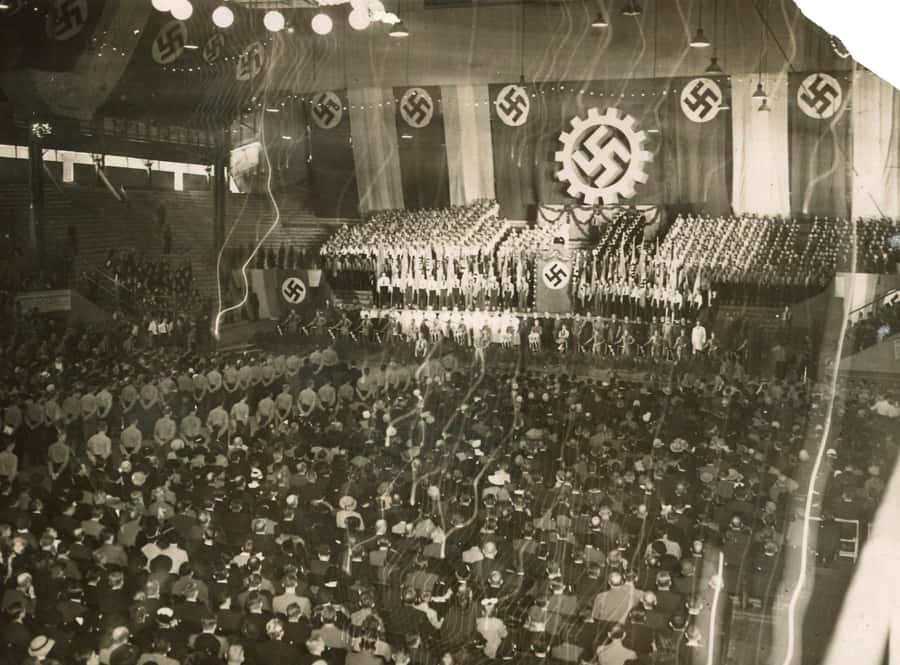
I like two things right away. Max teaches history at the University of Buenos Aires, and he builds the story carefully instead of reducing it to a simple good-versus-evil tale. I also like the use of photographs and other visual material at each stop, which gives you something concrete to look at while the past is explained.
The main consideration is the subject itself. This is not a light sightseeing stroll, and the two-and-a-half-hour walk includes terrorism, genocide, antisemitism, and political controversy. You should also be comfortable walking through central Buenos Aires and bring water and sensible shoes.
Key points to know before booking
- Adolf Eichmann’s Buenos Aires connection: Learn the spy-like story of how the Nazi war criminal was identified and captured, including the place where he reportedly sat for coffee.
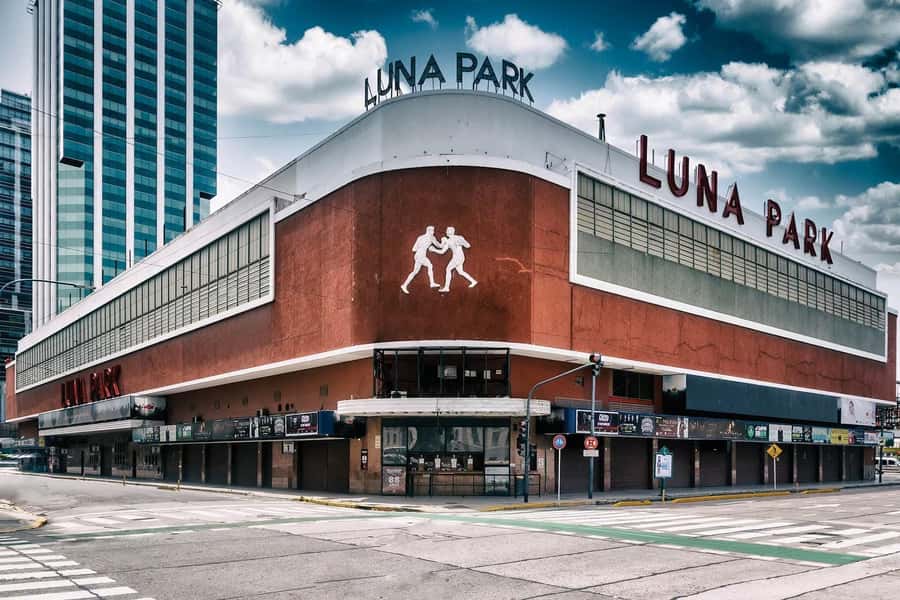
- Luna Park’s 15,000-seat political history: See the still-operating stadium connected with a major Nazi meeting.
- The former Israeli embassy memorial: Finish at the site of the worst terrorist attack in Latin America’s history.
- A history teacher as your guide: Max leads the English tour with source-based explanations, images, and room for questions.
- Three central Buenos Aires districts: The route links Microcentro, Retiro, and Recoleta, turning ordinary streets into historical evidence.
- A serious, discussion-based walk: Best for adults and older children with at least a basic grasp of World War II and the Holocaust.
What this Buenos Aires history walk is really about
The title may suggest a hunt for sensational Nazi stories. The actual focus is more useful: how Argentina connected to Europe after 1945, how Nazi fugitives reached the country, what the government may have known or encouraged, and how these questions fit into the presidency of Juan Domingo Perón.
You will also learn about Buenos Aires’ Jewish community, described as the second largest in the Americas. That matters because the tour does not treat the Nazi presence as an isolated tale of European fugitives. It places the story alongside the lives, fears, politics, and institutions of the people affected by it.
The walk is guided in English by Max, a history teacher from the University of Buenos Aires. His approach is central to the experience. He explains what is supported by evidence, separates fact from argument, and acknowledges uncertainty when the historical record does not offer a firm answer.
That is especially important here. The question of Argentina as a refuge for Nazi war criminals has been debated for decades. A guide who presents every point as settled fact would make the subject less trustworthy, not more. Max’s style, based on the available information, is to set the scene first and then add detail at each location.
You do not need to be a Holocaust scholar. Still, I would read a short overview of World War II and the Holocaust before you go. That basic preparation will help you follow the names, political shifts, and postwar events without spending the walk catching up on background.
More Historical Tours in Buenos Aires
- San Telmo: Historical Guided Tour with Street Food & Drinks
★ 5.0 · 87 reviews - Buenos Aires: La Boca Art and History Walking Tour
★ 4.8 · 55 reviews - Recoleta Cemetery – Small Group Tour of History & Secrets
★ 5.0 · 53 reviews
Starting near Juana Azurduy and Palacio Libertad
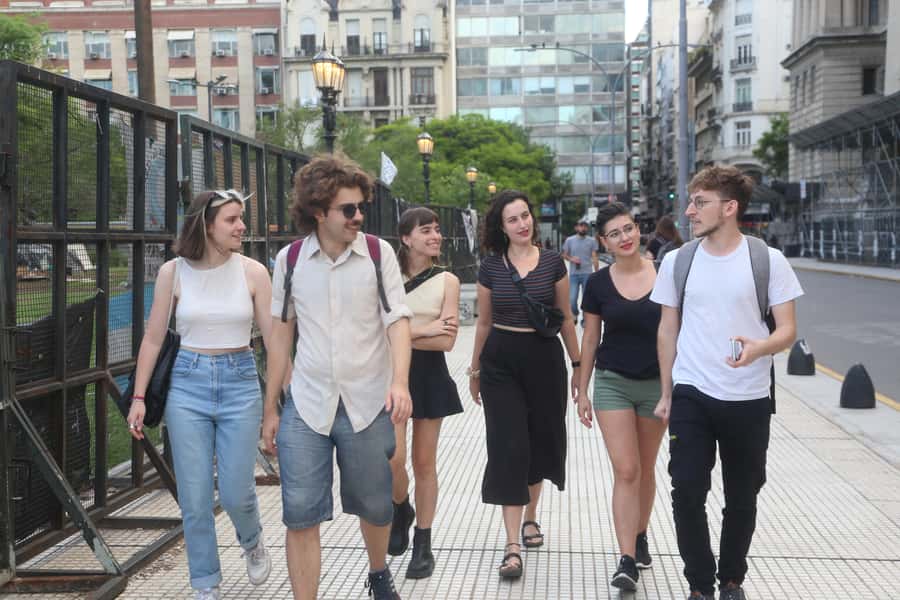
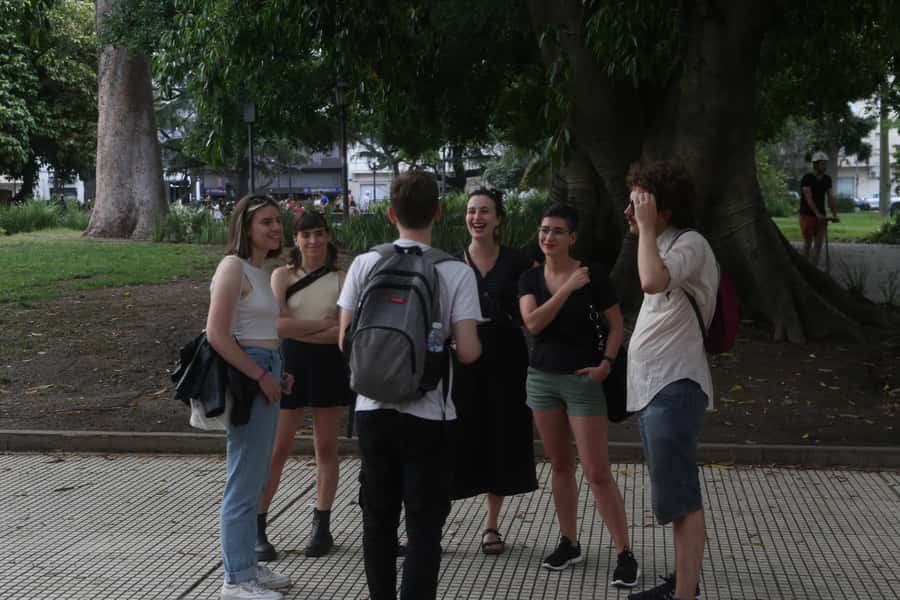
The tour begins a few meters from the Monument to Juana Azurduy, near the benches facing Palacio Libertad, formerly known as the CCK. Max wears a black cap, which makes the meeting point easier to identify in a busy part of the city.
This opening location puts you in the middle of Buenos Aires rather than at a museum devoted only to Nazism. That choice sets the tone. You are not being led through a sealed exhibit with labels already written for you. You are starting in the city and learning how international events became part of Argentine public life.
Max reportedly spends time laying out the political and historical setting before moving from place to place. That is a smart choice for this subject. Without context about Argentina before and after the war, the later discussion of immigration, Perón, and government policy can sound like a collection of disconnected claims.
The start is also convenient for combining with other central Buenos Aires sights. Just remember that this is a proper walking tour, not a short talk with a few nearby stops.
Luna Park and the 15,000-seat Nazi meeting
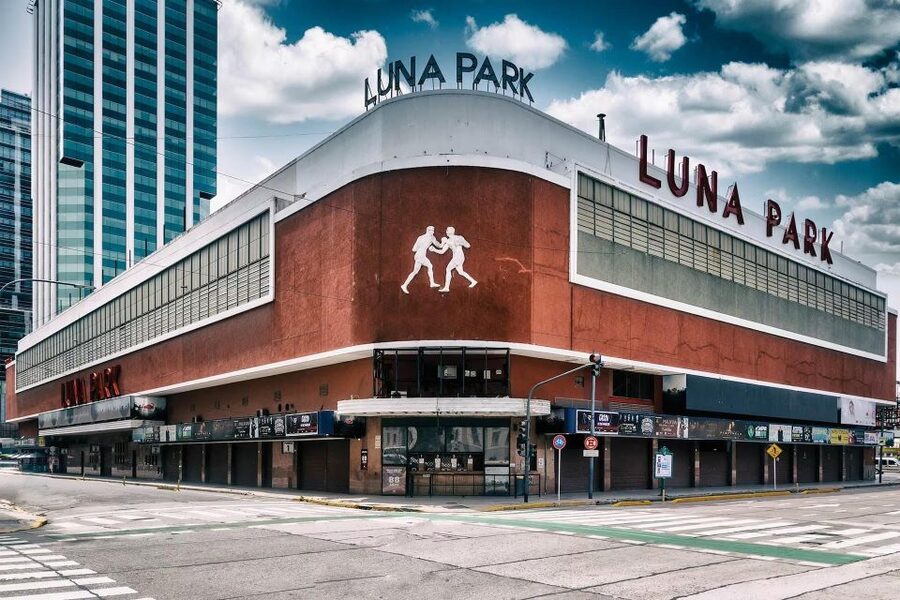
The first major stop is Luna Park, a still-operational stadium with seating for 15,000 people. The attraction here is not simply the building itself. It is the scale of the Nazi meeting associated with the venue.
A stadium changes how you understand a political gathering. A small private meeting and a mass event communicate very different things about public visibility, organization, and the reach of an ideology. Standing outside a working venue that hosted such a gathering gives the discussion a direct physical setting.
You should not assume this means you will enter the stadium. Entry to Luna Park is not included, so the stop is an exterior historical visit unless separate access is available. That is a minor limitation, but the building remains a useful backdrop for Max’s explanation.
The stop also helps the tour avoid a narrow focus on fugitives after the war. It points toward the earlier political presence of Nazi ideas in Argentina and raises questions about who could gather openly, who supported such activity, and how much of it was visible to the wider public.
ABC Restaurant and the Eichmann story
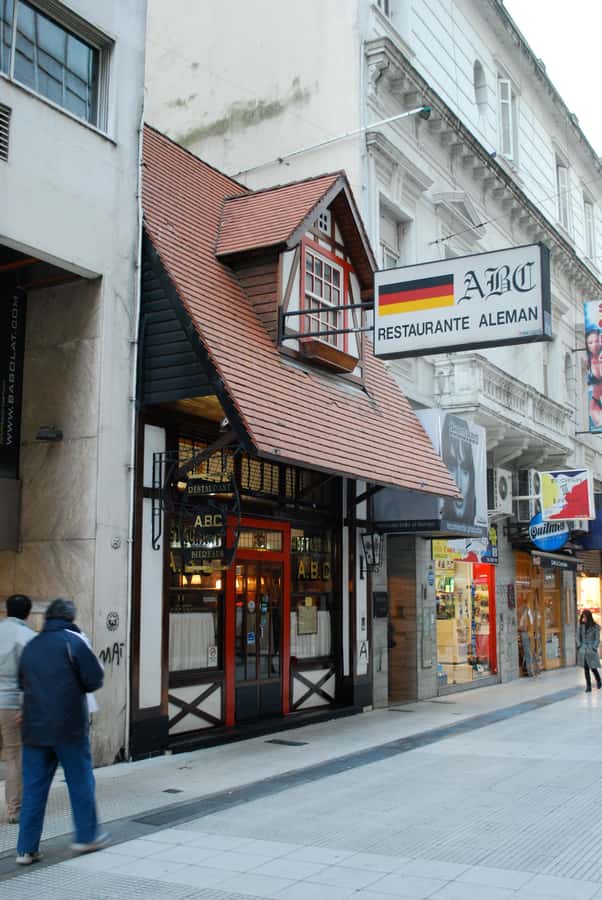
Next comes ABC Restaurant, where the tour connects the city’s everyday commercial life with the story of Adolf Eichmann. You will hear about the place where he sat for a cup of coffee and about the identification and capture operation that brought him to justice.
This is one of the route’s most memorable ideas because it turns a famous name into a street-level story. Eichmann is often discussed in terms of courts, intelligence agencies, and historical books. Here, the focus includes the ordinary places associated with his life in Buenos Aires.
The spy-like nature of the story gives this section a strong narrative pull, but the best value comes from the factual questions behind it. How was he identified? What information proved useful? How did the operation unfold? Max uses the stop to connect those details to Argentina’s postwar setting.
ABC Restaurant is listed as a 20-minute visit. The tour does not promise a meal, and food is not included. Think of it as a location-based history lesson, not a restaurant stop.
More Walking Tours in Buenos Aires
- Buenos Aires Hop-On Hop-Off Bus, Free Walking Tours & Discounts
★ 4.5 · 2,218 reviews - Buenos Aires: La Boca Guided Walking Tour in English
★ 4.8 · 1,587 reviews - Buenos Aires: Personalized 2 to 8-Hour Private Walking Tour
★ 4.7 · 149 reviews - Buenos Aires: San Telmo and Market Guided Walking Tour
★ 4.8 · 102 reviews
The National Arms Museum and the postwar setting
The Museo de Armas de La Nación Tte. Gral. Pablo Riccheri is another 20-minute stop. The supplied details do not specify an included museum admission, so you should treat this as part of the walking route rather than assume a ticketed interior visit.
Its presence broadens the conversation beyond individual fugitives. Military institutions, weapons, international alliances, and state power all form part of the wider postwar setting. A stop here can help you see how the tour links the Nazi story to Argentina’s political and institutional history.
This is also where Max’s teaching style matters. The subject can quickly become a list of villains and dramatic episodes. A strong guide has to explain systems, decisions, and competing interpretations as well as names. The feedback on the experience repeatedly points to clear explanations, visual aids, and answers to questions, which are valuable at a stop that may otherwise seem less immediately obvious than Luna Park or the embassy memorial.
If your main goal is only to hear about Nazi fugitives on the run, this section may feel more political than expected. That is not a flaw, but it is worth knowing before you book. The tour is about Argentina’s relationship with the era, not only about escape stories.
Palacio San Martín and Argentina’s international politics
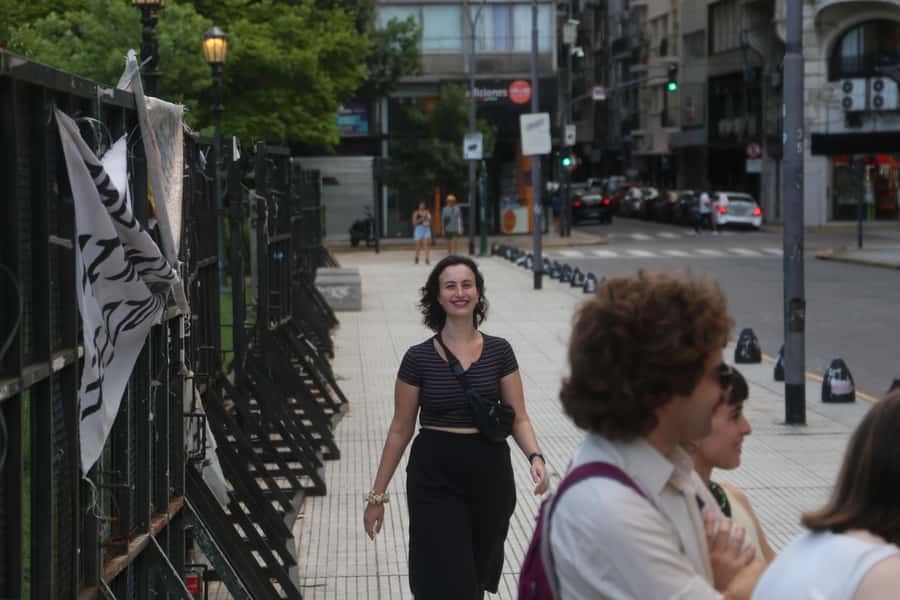
At Palacio San Martín, the route turns toward diplomacy and national decision-making. The stop lasts about 20 minutes and helps bring foreign policy into the discussion.
This is a useful point in the walk because the central question is not merely how people arrived in Argentina. You are also considering whether their migration was known, tolerated, or promoted by parts of the Argentine government. Those are different claims, and the distinction matters.
The palace provides a fitting setting for examining how governments manage international pressure and domestic politics. It also creates space to discuss Juan Domingo Perón, one of the most important political figures in twentieth-century Argentina. The tour presents debates about Perón’s presidency rather than offering a single easy verdict.
That political background is one of the experience’s strengths, but it can also be the part some people find less satisfying. One piece of feedback wished for more time on Nazis on the run and less on the political situation. If you want only the escape narrative, keep that preference in mind. If you want to understand why Argentina became part of the story, this broader focus pays off.
The Italian Circle and the city’s European links
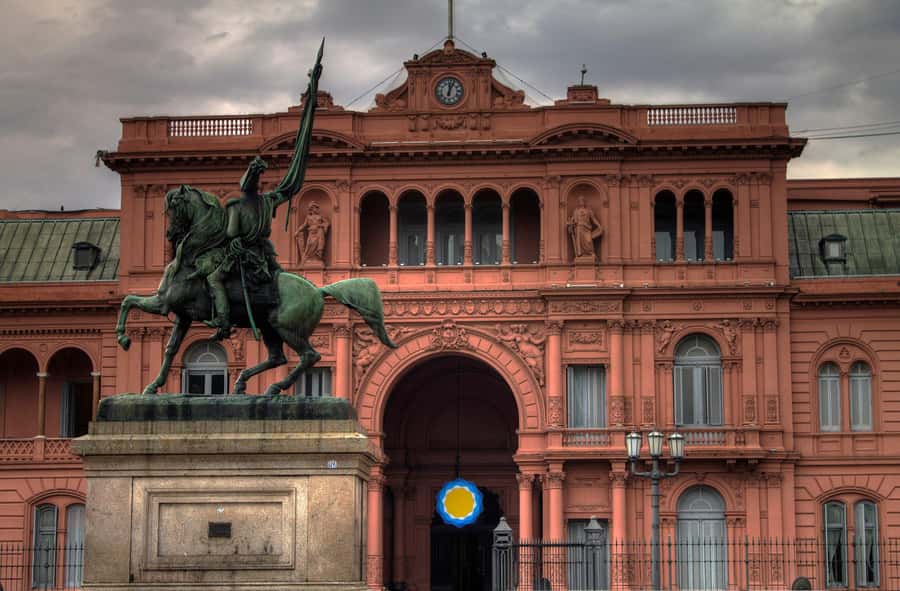
The Italian Circle of Buenos Aires is another 20-minute stop. From the information provided, this location contributes to the European political and social context of the route, connecting the city’s immigrant communities and institutions with the larger story of wartime and postwar Argentina.
You should expect Max to use the stop as a place for explanation, images, and discussion rather than as a conventional attraction with a long interior visit. The route’s value lies in the connections he draws between places that may look unrelated at first glance.
This is a good example of why the walk works best when you pay attention to the sequence. Luna Park shows the scale of a Nazi gathering. ABC brings the story down to an individual and a coffee. The museum and palace widen the frame to institutions and politics. The Italian Circle adds another piece to the city’s European identity.
Taken one at a time, some stops may seem modest. Taken together, they form an argument about how ideology, immigration, diplomacy, and memory overlap in Buenos Aires.
Finishing at the former Israeli embassy
The walk ends at Plaza Embajada de Israel, the memorial site of the former Israeli embassy. This is the emotional and moral weight of the route. The location marks the site of the worst terrorist attack in Latin America’s history.
The ending shifts the tour from postwar fugitives to the later consequences of antisemitism, political violence, and unresolved memory. It also links the twentieth-century history discussed along the way to issues that still feel painfully current.
Expect the final section to be serious. This is not a place for a quick photograph and a cheerful sign-off. The memorial gives the earlier history a present-day frame, reminding you that the subject is not sealed in 1945 or confined to Europe.
There is a small logistical inconsistency in the supplied details: the route says it finishes at Plaza Embajada de Israel, while the meeting information also says the activity ends back at the meeting point. Confirm the final location when you book, especially if you have a timed reservation afterward.
Why the $25 price offers good value
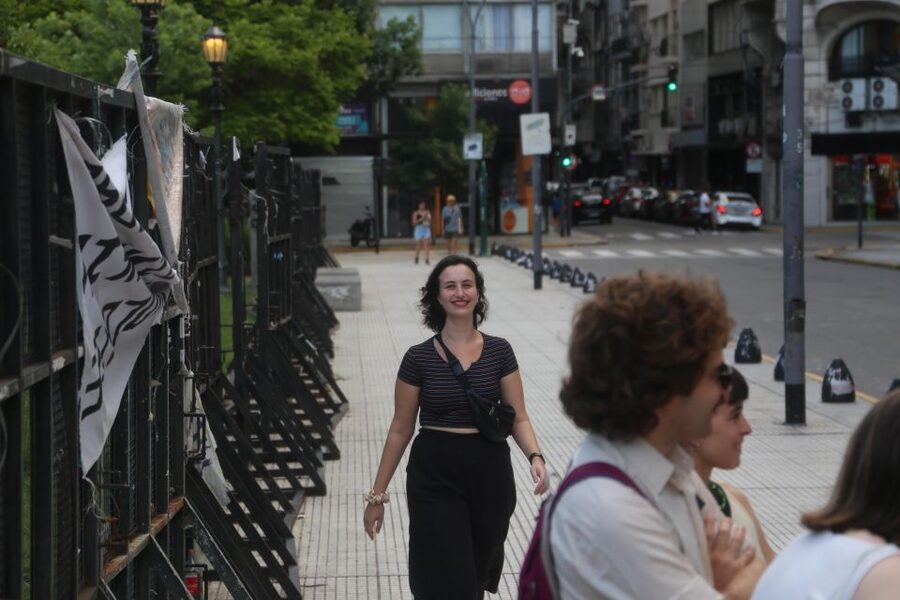
At $25 per person, this is inexpensive for a 2.5-hour guided walk in central Buenos Aires. You are paying for a specialist subject, an English-speaking guide, and a route built around several locations rather than a generic city loop.
The value is strongest if you enjoy history told through evidence and place. Max brings photographs and graphics to support the explanation, and the tour allows questions about Nazism, Judaism, the war, and Argentine history. That makes the experience feel closer to a street-level seminar than a simple walk-and-point outing.
No attraction admissions are included. The listed exclusions mention entry to Casa Rosada, Libertad Synagogue, and Luna Park Stadium, so do not build your budget around going inside those sites as part of the $25 fee. The activity is primarily a guided walking experience.
You should also account for the time. The description calls it two and a half hours, although the included-services wording refers to a two-hour walking tour. In practice, plan your schedule around the longer figure, since there are several stops and a 10-minute restroom break.
Who will get the most from this tour
I would choose this experience if you want a serious look at Buenos Aires beyond the usual plazas, grand avenues, and café stops. It suits history students, readers of twentieth-century European history, and curious visitors who want to understand Argentina’s politics rather than collect only famous landmarks.
It is also a good choice if you prefer a guide who welcomes questions and admits when the evidence is uncertain. The strongest feature here is not a single dramatic location. It is the careful delivery of a complicated subject.
The tour is not suitable for children under 10, and it is not suitable for wheelchair users. Comfortable shoes and water are practical essentials. The route crosses Recoleta, Retiro, and Microcentro, so you should be ready for a sustained city walk rather than a seated lecture.
Older children and teenagers may enjoy it if they already have some background. A 14-year-old has found the material accessible with Max’s help, but the content remains mature and often disturbing.
How to prepare for the walk
A little preparation will make the two and a half hours much easier to follow. Review the basic outline of the Holocaust, World War II, the postwar flight of Nazi war criminals, and Perón’s place in Argentine politics.
You do not need to memorize names. Just arrive ready to ask sensible questions about evidence, government responsibility, and the difference between a documented event and a long-running historical claim.
Wear shoes you can walk in for several hours. Carry water, and use the planned restroom pause. Since some stops may be viewed from outside and admissions are not included, the guide’s explanation is the main event.
The tour is offered in English. Free cancellation is available up to 24 hours before the start, and you can reserve now and pay later, which is useful if your Buenos Aires schedule is still shifting.
Should you book it?
Book this tour if you want a thoughtful, place-based history lesson and are willing to spend 2.5 hours with difficult material. Max’s strongest qualities are his careful research, fluent English, patient answers, and ability to explain Argentina’s political background without flattening it into a slogan.
Skip it if you want a quick sightseeing loop, a purely architectural walk, or a narrow account focused only on Nazi fugitives. One stop may feel less dramatic than another, and the route’s political discussion is a major part of the experience.
For a modest $25, I find the tour particularly worthwhile for first-time visitors who want to understand how Buenos Aires fits into the wider story of World War II, the Holocaust, Perón, Jewish life, and political violence. Go with an open mind, comfortable shoes, and a willingness to sit with uncomfortable questions.
FAQ
How long does the tour last?
The advertised duration is 2.5 hours. The included-services information also refers to a two-hour walking tour, so plan for the longer time.
What language is the tour offered in?
The live tour guide leads the experience in English.
Where does the tour begin?
It begins a few meters from the Monument to Juana Azurduy, near the benches facing Palacio Libertad, formerly known as the CCK. Max wears a black cap.
Where does the tour finish?
The route information gives Plaza Embajada de Israel as the finishing point. The meeting information also says the activity ends back at the meeting point, so confirm the final location when booking.
Are entrance tickets included?
No. Entry to Casa Rosada, Libertad Synagogue, and Luna Park Stadium is not included. The experience is primarily a guided walking tour.
Is the tour suitable for children or wheelchair users?
It is not suitable for children under 10 or for wheelchair users. Comfortable shoes and water are recommended.
Recently added in Buenos Aires
- Buenos Aires: Private City Tour by Car with Hotel or Pickup★ 5.0 · 3 reviews
- Guided tour Boca Juniors Museum & Stadium + Caminito★ 3.3 · 3 reviews
- Buenos Aires: Montserrat, San Telmo, La Boca, and Puerto …★ 5.0 · 3 reviews
- Buenos Aires: MALBA Museo de Arte Latinoamericano Tour★ 4.1 · 3 reviews
- Unique Tigre and Delta Private Day Cruise Navegation★ 5.0 · 3 reviews
- Tango Show at: MichelAngelo★ 4.5 · 3 reviews
- Buenos Aires: Mate Workshop y Otras Yerbas★ 5.0 · 3 reviews
- From Colonialism to Eclecticism, Buenos Aires arquitectonica★ 5.0 · 3 reviews
Buenos Aires Tours, compared.
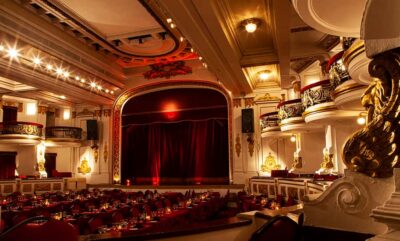
Buenos Aires: Piazzolla Tango Show with Optional Dinner
Read our review →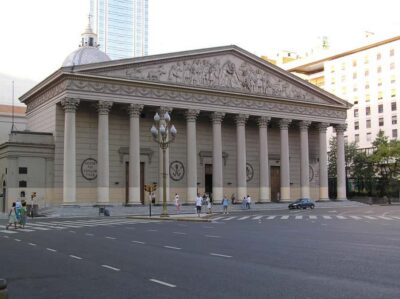
Buenos Aires: City Highlights Guided Tour with Transfer
Read our review →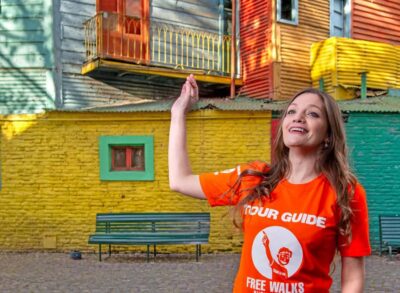
Buenos Aires: La Boca Guided Walking Tour in English
Read our review →
Buenos Aires: La Recoleta Cemetery Guided Tour in English
Read our review →
Buenos Aires: Tango Show at Tango Porteño & Optional Dinner
Read our review →
Buenos Aires: 9-Course Argentine Meat Tasting at Fogón Asado
Read our review →
Buenos Aires: Madero Tango Show with Optional Dinner
Read our review →Browse the lists this tour appears in