
Reviewed · BUENOS AIRES TOURS
Private Off the Beaten Path: Hidden Urban Art Bike Tour
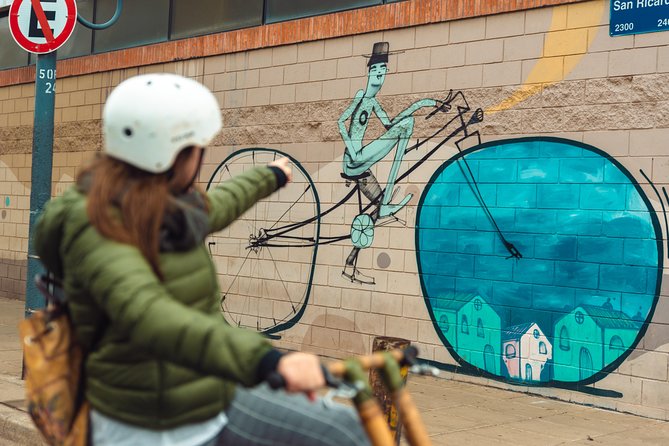
Buenos Aires reveals a different face when you pedal south from San Telmo. This four-hour private ride trades the usual postcard sights for painted factory walls, political stencils, mosaics, soccer references, and working-class streets in La Boca and Barracas. I especially like the chance to see Pasaje Lanín and Alfredo Segatori’s enormous mural, two places easy to miss on a standard city tour.
I also like the way the art becomes a doorway into Argentine life. Your guide may be talking about a stencil one minute, then explaining local politics, religion, football, neighborhood identity, or the work of artists such as Pum Pum, Mart, Pol Corona, and Martin Ron. The other big plus is the private format: only your group rides, so you can stop for questions, photos, and a mate break without being pushed along.
The catch is simple: you need to feel comfortable riding in an urban setting, including non-tourist neighborhoods and city traffic. The bicycles reportedly do their job but may show some wear, so riders seeking polished equipment or a gentle sightseeing ride should think twice. E-bikes are available for an extra fee.
Key Points at a Glance
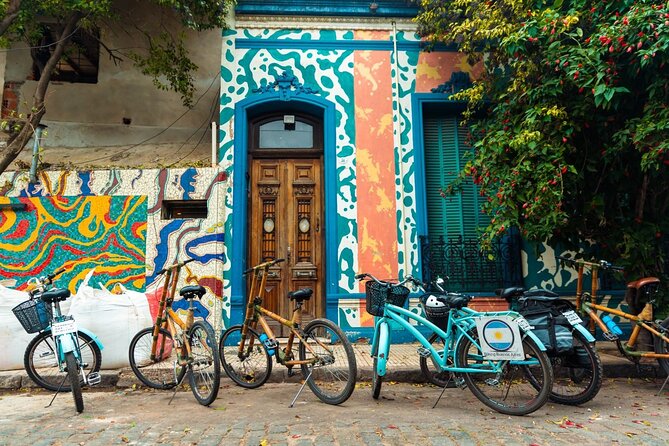
- A southbound art route: Ride from old San Telmo into La Boca and Barracas, seeing parts of Buenos Aires that many visitors skip.
- Eight or so stops: Expect regular breaks to walk, take photos, discuss the art, and sample yerba mate, coffee, or tea.
- Pasaje Lanín and Barracas murals: See colorful mosaics and Alfredo Segatori’s three-building mural, described as the world’s largest in the tour material and as Argentina’s longest in the detailed route.
- More than graffiti: The art opens conversations about politics, sport, religion, community life, and Argentine culture.
- Private and flexible: Your group rides alone with an English or Spanish-speaking guide, with past guides including Raymond and Daniel.
- Good value for active explorers: The $115 price includes the bicycle, helmet, water, snacks, guide, and drink stop, but an e-bike costs extra.
Why This Ride Shows a More Useful Buenos Aires
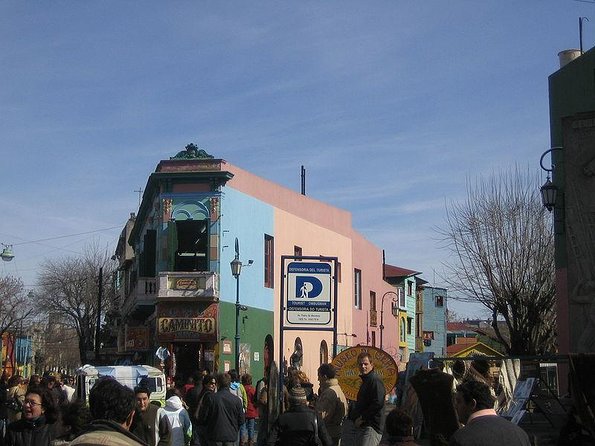
Many first visits to Buenos Aires focus on grand avenues, historic squares, tango venues, and the colorful tourist lanes of Caminito. Those places have their place, but this ride adds the city’s working edge. You pedal through streets where murals are part of daily life rather than a backdrop arranged for sightseeing.
The route also gives you a useful sense of distance. In a car or taxi, La Boca and Barracas can feel like separate stops. On a bicycle, the changes happen gradually. San Telmo gives way to south-side neighborhoods, painted walls appear beside ordinary buildings, and the city’s social and artistic layers become easier to read.
The tour provider presents its work as a way to build a cultural bridge between visitors and local people. That idea matters here because the experience is less about collecting famous sights and more about learning how public art speaks for a neighborhood. Your guide explains who created the work, what it may refer to, and how street art can reflect community life.
The experience has earned a 4.9 out of 5 rating from 62 ratings, with 97 percent of customers recommending it. That is a strong record, and the most consistent praise centers on the unusual route, the guides, the sense of safety, and the amount of local context. Still, your enjoyment will depend heavily on your guide and your comfort on a bike.
More Bike Tours in Buenos Aires
- Buenos Aires: North or South Buenos Aires Bike Tour
★ 4.7 · 719 reviews - Buenos Aires: Full Day Bike Tour with Lunch
★ 4.9 · 152 reviews - Buenos Aires Bike Tour: North Districts, Recoleta and Palermo
★ 4.5 · 91 reviews
Starting in San Telmo With a Bike Orientation
You meet at Balcarce 1016 in San Telmo in the early afternoon. San Telmo is one of Buenos Aires’s oldest neighborhoods, so the starting point fits the tour’s purpose: you begin among familiar historic streets before heading toward less visited parts of the city.
The opening orientation covers the bicycle, helmet, route, and basic urban riding advice. Take this part seriously. You will be riding through a city, not along a sealed recreational path, and the tour specifically requires a moderate level of physical fitness and comfort with urban cycling.
The ride includes bottled water and snacks. An additional stop provides coffee or yerba mate, the herbal drink that is central to Argentine social life. That small pause helps break up the four-hour outing and gives you time to ask questions without trying to talk while riding.
The group is private, which is a real advantage. If your party includes mixed cycling abilities, you can discuss the pace with your guide. It also means the questions can follow your interests. You might spend longer on a political mural, ask about football culture, or move along quickly if you are more interested in design than stencil work.
Pasaje Lanín: A Street Turned Into Art
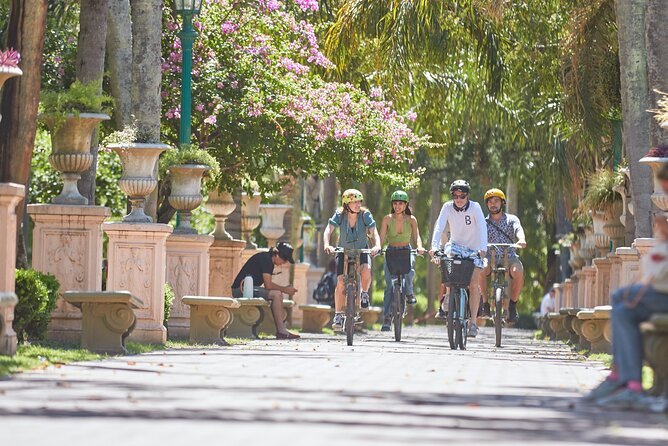
One of the first major stops is Calle Lanín in Barracas. The street was once described as gray and neglected, then transformed through the work of artist Marino Santa Maria. Its colorful facades and detailed mosaics helped turn it into a site of cultural interest recognized by UNESCO.
This is a good example of why the tour is more than a mural checklist. Pasaje Lanín is not simply a wall covered in paint. It is a whole street shaped by art, where the buildings themselves form part of the experience. You leave the bicycle to walk, look closely, and take photos.
Allow yourself time to notice the small details. Large murals are easy to admire from a distance, but mosaics reward a slower look. The street also helps explain the difference between commissioned public art and spontaneous graffiti. Your guide can put the work into a local setting instead of treating every painted surface as the same kind of art.
The stop is listed at about 15 minutes, so the formal visit may be brief. Since the tour is private, you can ask your guide if there is room for a little more time, though the full route still has to stay within roughly four hours.
Alfredo Segatori’s Three-Building Mural
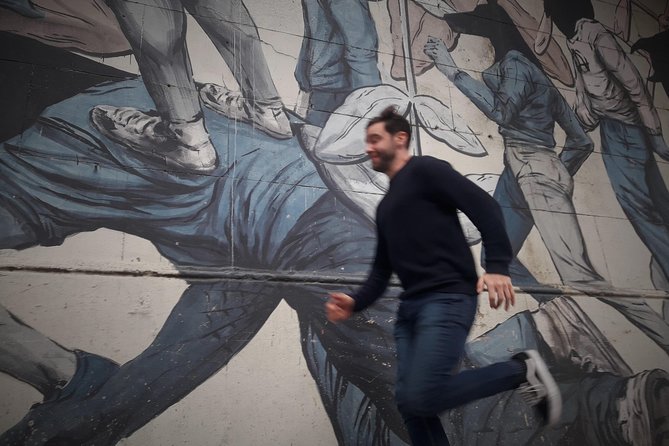
The next Barracas stop features El Regreso de Quinquela, created by Alfredo Segatori, also known as Pelado. The mural covers three buildings and is presented as the world’s largest street mural in the general tour description. The route details describe it as once the longest mural by a single person and now the longest in Argentina.
That wording points to a useful caution: records for giant murals can change, and the title may depend on how a mural is measured. Either way, the scale is the point. This is not a small tag or a single painted wall. You are looking at a work designed to be read across several buildings.
Segatori’s mural also connects to the artistic identity of the southern neighborhoods. Instead of seeing art in a gallery, you see it integrated into the street and tied to local figures and memory. The guide’s explanation is important here, since scale alone does not tell you why the work matters.
The stop lasts about 10 minutes. That is enough for an introduction and photographs, but not a long art lecture. If you are especially interested in mural technique or the artist’s background, bring questions and use the private format to get more from the pause.
more Buenos Aires days to weigh up
- Buenos Aires in a Day – All Inclusive Bike Tour
★ 5.0 · 89 reviews - Buenos Aires Bike Tour: San Telmo and La Boca Districts
★ 4.5 · 74 reviews - La Boca and City Center Bike Tour
★ 5.0 · 54 reviews - Cultural Experience by Bike around Palermo and Recoleta Max 6 ppl
★ 5.0 · 44 reviews
La Boca Beyond the Tourist Strip
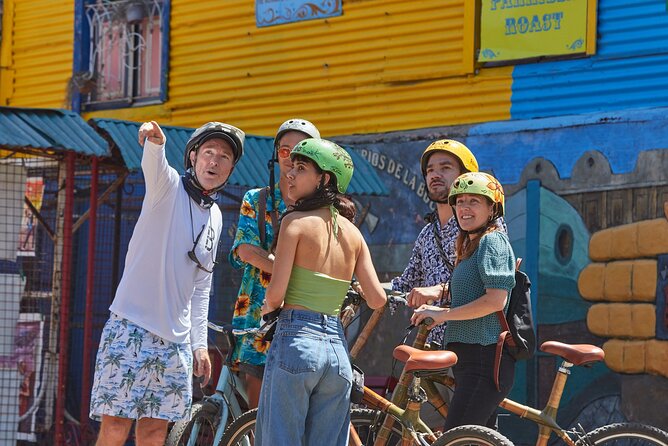
La Boca is famous for Boca Juniors football club, brightly painted buildings, Italian roots, and the Caminito area. The tour includes Caminito, but its purpose is not to leave you there with the standard crowd and photo stops. You also ride around the original neighborhood and look for murals connected to the COLOR BA festival and other local art projects.
This distinction matters. Caminito is one of the most visited places in Buenos Aires, so it is not truly off the tourist track. The value comes from combining it with nearby streets and the less polished parts of La Boca. You get the recognizable color, then move beyond the best-known lane.
The route includes a Stealth Stencil stop, a playful look at a smaller and more covert form of street art. You also sample a local drink that became a favorite across Argentina, identified in the tour details as yerba mate. The drink stop adds a social element to the ride and gives you a chance to watch the neighborhood rather than simply pass through it.
La Boca can feel rougher and less controlled than the central sightseeing areas. That is part of the point, but it also explains the requirement for urban riding confidence. Several people who took the route felt safe with their guide, yet you should still listen closely to riding instructions and stay with the group.
The listed time for Caminito is about 90 minutes, followed by roughly 45 minutes around La Boca. That makes this the largest portion of the outing. You can expect plenty of time for photos, walking, conversation, and several art stops rather than nonstop cycling.
The Artists and Collectives Along the Way
The tour introduces work by groups such as Red Sudakas and Triangulo Dorado, along with artists including Pum Pum, Mart, Pol Corona, Martin Ron, and Alfredo Segatori. You will also see a collaborative mural linked to the Styles Street Art Convention.
The range is one of the route’s strongest features. You are not looking at one repeated style for four hours. The art can be decorative, political, humorous, community-focused, sports-related, or tied to local identity. Some pieces may be large and polished, while others are smaller and more direct.
This variety gives the guide plenty to work with. A particularly strong guide can use one mural to explain a neighborhood, then connect another piece to Argentine politics or football. Daniel, one guide associated with the experience, has been praised for explaining the working-class districts and for having local connections. Raymond has also been singled out for making the ride personal and for offering useful suggestions for the rest of a Buenos Aires stay.
Guide quality is worth considering because the art is not always self-explanatory. A new guide may still know the subject well, but the experience will be best when the explanations feel clear and connected to the places around you.
Design District Stops and Local Collectives
The route also reaches contemporary design sites, including the Metropolitan Design Center and Cooperativa Vieytes. These stops broaden the tour beyond street murals.
The Metropolitan Design Center represents the city’s interest in design, creative work, and new ideas. The Cooperativa Vieytes occupies a former ice cream factory and carries a symbolic mural. That setting gives you another look at how old industrial spaces can support new community and artistic uses.
Not every stop will appeal equally to every rider. If you want only large outdoor murals, the design center and cooperative may feel like a change of pace. I see that change as useful because it shows that Buenos Aires art is not confined to painted walls. It also gives your legs a break from the bicycle and makes the route feel more like a cultural tour than an athletic outing.
The tour makes about eight stops overall. You will frequently get off the bike, walk around, drink something, and take photos. That helps keep the physical effort manageable, although four hours in an urban setting is still a real half-day activity.
Safety, Fitness, and Bicycle Quality
You do not need to be a competitive cyclist, but you should have a moderate fitness level and feel at ease riding in city conditions. The route includes backstreets and larger thoroughfares, and the tour specifically ventures into areas away from the normal visitor circuit.
A helmet and bicycle are included. E-bikes can be added for an extra fee, which may be worth considering if you are concerned about stamina or want to save energy for the stops. The available information does not specify the exact additional charge, so check that cost before booking.
One rider felt the bikes needed more maintenance but said they worked fine. That is the fairest way to read the equipment situation. Expect functional rather than luxurious bikes. If your comfort depends on a very smooth or recently serviced bicycle, ask about the current fleet before you commit.
The private format helps with safety because the guide can keep an eye on one group instead of managing a large crowd. Still, no city bicycle tour is completely passive. Wear clothes suited to the weather, since the tour operates in all weather conditions, and follow the guide’s instructions around traffic.
Is $115 a Fair Price?
At $115 per person, this is not a bargain sightseeing ride. It is priced as a private cultural experience, and the value depends on how much you want personal attention and local interpretation.
The fee includes the bicycle, helmet, local taxes, an English or Spanish-speaking guide, bottled water, snacks, and a coffee or yerba mate stop. You also get a four-hour route covering several southern neighborhoods, rather than paying for separate transport between them.
I think the price makes the most sense for couples, families, or friends who want a private introduction to a side of Buenos Aires they might not reach alone. It is also useful early in your stay, since a strong guide can suggest places to eat and things to do afterward. Some past guests used the ride as one of their first activities for exactly that reason.
The value is weaker if you are mainly looking for a cheap way to see Caminito. You could visit the famous area independently for less. You are paying here for the route design, the art knowledge, the cycling access, the local connections, and the chance to ask questions throughout the afternoon.
Who Should Book This Tour?
I would choose this tour if you enjoy public art, local neighborhoods, photography, and learning how a city works beyond its famous monuments. It suits active couples, families with older children who can ride confidently, and solo visitors who like the flexibility of a private guide.
It is especially good for a return visit to Buenos Aires, when you have already seen the central sights and want something less familiar. It also works well on your first day or two if you want a broad sense of the city and practical suggestions for the rest of your stay.
I would skip it if you dislike city cycling, want a fully polished tourist route, or have limited mobility that makes getting on and off a bicycle difficult. The tour is not built around luxury vehicles, formal galleries, or a predictable sightseeing loop.
Service animals are allowed, and the meeting point is near public transportation. The tour ends back at Balcarce 1016 in San Telmo, so you do not need to arrange a separate ride from the final stop.
Should You Book the Hidden Urban Art Bike Tour?
Book it if you want Buenos Aires through its walls, side streets, football culture, design spaces, and neighborhood stories. The best parts are the private pacing, the unusual route through La Boca and Barracas, Pasaje Lanín, the huge Segatori mural, and guides such as Daniel or Raymond who can connect the art to daily life.
Before paying, be honest about your cycling ability and ask about the e-bike surcharge if needed. Also accept that the bicycles may be basic and that the weather will not cancel the outing. For an active visitor who wants more than the standard Caminito stop, this is one of the more distinctive ways to spend half a day in Buenos Aires.
FAQ
How long does the bike tour last?
The tour lasts approximately four hours, including cycling, walking breaks, art stops, and the coffee or yerba mate stop.
Where does the tour begin?
It begins at Balcarce 1016 in San Telmo, Buenos Aires.
Where does the tour end?
The activity ends back at the San Telmo meeting point.
Is the tour private?
Yes. Only your group participates in the activity.
What neighborhoods does the route visit?
The route begins in San Telmo and continues through La Boca and Barracas, including Caminito, Calle Lanín, and other nearby streets.
Is an electric bicycle included?
No. A standard bicycle is included, while an e-bike is available for an extra fee.
What is included in the price?
The price includes local taxes, bicycle use, a helmet, an English or Spanish-speaking guide, bottled water, snacks, and a coffee or tea mate stop.
What happens if it rains?
The tour operates in all weather conditions, so you should dress appropriately for the forecast.
Recently added in Buenos Aires
- Buenos Aires: Private City Tour by Car with Hotel or Pickup★ 5.0 · 3 reviews
- Guided tour Boca Juniors Museum & Stadium + Caminito★ 3.3 · 3 reviews
- Buenos Aires: Montserrat, San Telmo, La Boca, and Puerto …★ 5.0 · 3 reviews
- Buenos Aires: MALBA Museo de Arte Latinoamericano Tour★ 4.1 · 3 reviews
- Unique Tigre and Delta Private Day Cruise Navegation★ 5.0 · 3 reviews
- Tango Show at: MichelAngelo★ 4.5 · 3 reviews
- Buenos Aires: Mate Workshop y Otras Yerbas★ 5.0 · 3 reviews
- From Colonialism to Eclecticism, Buenos Aires arquitectonica★ 5.0 · 3 reviews
Buenos Aires Tours, compared.
Buenos Aires: Piazzolla Tango Show with Optional Dinner
Read our review →
Buenos Aires: City Highlights Guided Tour with Transfer
Read our review →
Buenos Aires: La Boca Guided Walking Tour in English
Read our review →
Buenos Aires: La Recoleta Cemetery Guided Tour in English
Read our review →
Buenos Aires: Tango Show at Tango Porteño & Optional Dinner
Read our review →
Buenos Aires: 9-Course Argentine Meat Tasting at Fogón Asado
Read our review →
Buenos Aires: Madero Tango Show with Optional Dinner
Read our review →Browse the lists this tour appears in