
Reviewed · BARILOCHE TOURS
Bariloche: German Immigration and History Walking Tour
The most striking part of this Bariloche walking tour is its clear look at the town’s three waves of German immigration, including the postwar arrival of Nazi fugitives. You visit the school where Erich Priebke was found by American journalist Sam Donaldson and see the house where Priebke lived before his extradition in 1994.
I like the way the walk connects buildings to people instead of treating history as a list of dates. I also like the pacing: short stops, photos, stories, and steady movement through central Bariloche. Guides such as Diego are praised for fluent English, strong storytelling, and careful answers.
The main consideration is the route. It covers about 1 kilometer, but parts are uphill, and a bilingual tour may leave less time for questions than a single-language walk.
Key points to know before you book
- Three immigration waves: Learn how German arrivals changed from early settlers to later postwar migrants and Nazi fugitives.
- Erich Priebke’s Bariloche story: See the German School and the house linked to Priebke’s life in town.
- A useful central route: Start at the Civic Center and walk through several important public and cultural sites.
- Fact versus local legend: The final discussion tackles claims about German activity in Patagonia without treating every rumor as fact.
- Strong bilingual guiding: The tour is offered in English and Spanish, with Diego often leading.
- Short but not flat: The distance is manageable, though some streets rise uphill.
Why this short walk tells a larger Bariloche story
Bariloche is often sold through chocolate, lake views, ski trips, and mountain outings. Those are good reasons to come, but they do not explain why parts of the city look and feel so different from other Argentine towns.
This tour gives you that missing context. In 90 minutes, you look at public buildings, clubs, schools, squares, and private homes through the story of German migration. The subject is not simply German architecture. It is also about identity, ambition, political escape, memory, and the awkward gap between a town’s respectable public image and the people it once sheltered.
I find the format especially useful early in a stay. Once you understand the origins of the civic buildings and German neighborhood, you can look at Bariloche with a sharper eye. A building is no longer just a picturesque façade. It becomes part of a story about how the town wanted to present itself.
The walk begins at the Bariloche Civic Center square, beside the door of the tourist information office. That is a practical meeting point, easy to locate in the center, and a sensible place to start because the Civic Center itself helps introduce Bariloche’s European-influenced public image.
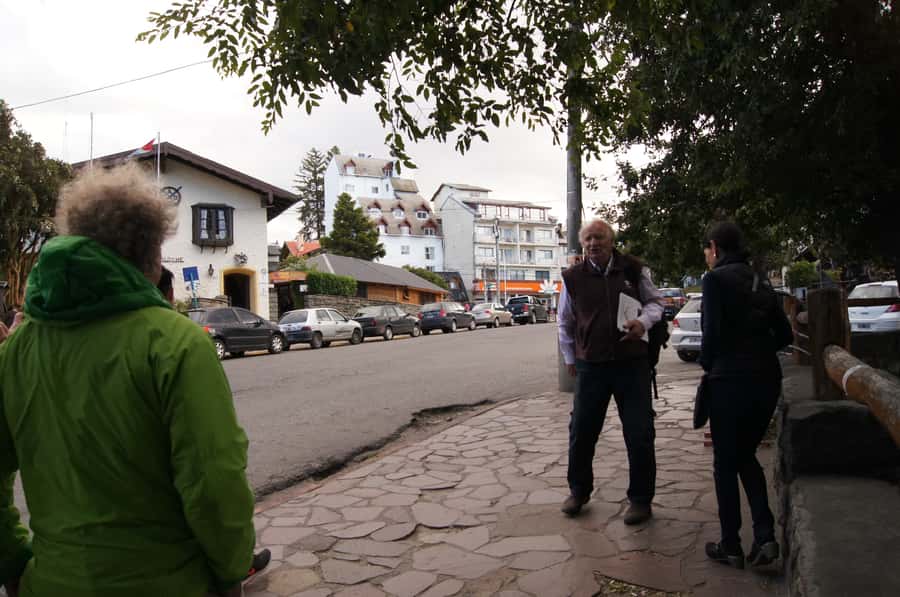
The group then covers roughly 1 kilometer on foot. You are not being driven from one remote site to another, so the distance matters: the streets themselves become part of the lesson. The route links the major stops in a way that lets you see how the German presence fits into the town rather than existing as a separate museum display.
more Bariloche days to weigh up
- Indigenous People of Patagonia History Tour
★ 5.0 · 8 reviews - Maria Fumaça – Wines and History
★ 4.0 · 242 reviews - Nazis in Buenos Aires: a historical walking tour
★ 4.9 · 193 reviews
The Civic Center and the town’s public face
The Civic Center is one of the tour’s important opening points. Here, the guide sets up the story of Bariloche’s founding and explains why German influence became so visible in the city.
This beginning is valuable because it places immigration in a civic setting. You are not starting with a sensational tale about escaped Nazis. You first get the broader story of settlement, institutions, and town building. That order matters.
A good guide can show how a community’s identity develops through schools, clubs, public offices, and architecture. The tour appears to use old photographs alongside present-day views, helping you compare Bariloche then and now. That visual aid is a simple but effective touch. It gives shape to changes that can otherwise feel abstract.
I would pay attention here to the difference between cultural influence and political affiliation. German customs, language, architecture, and clubs do not automatically mean Nazi support. One of the tour’s strengths is that it separates ordinary immigration from the later, darker chapter.
The Andean Club and National Park administration
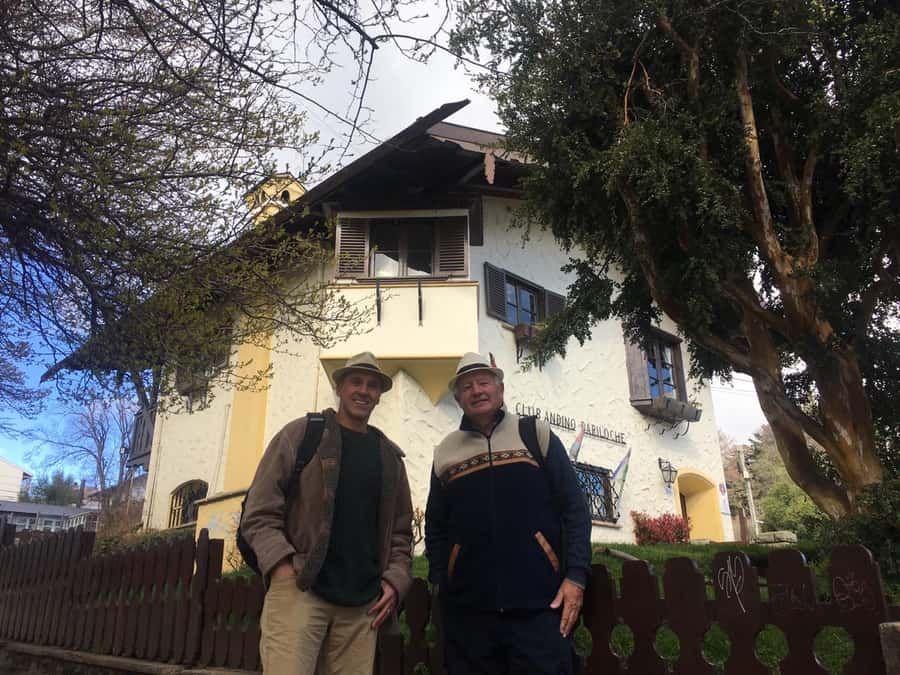
The route continues to the Bariloche Andean Club and the administration of Nahuel Huapi National Park. These stops broaden the story beyond houses and families.
The Andean Club represents the outdoor culture that has long shaped Bariloche. The national park administration points to the official development of the area and the way institutions helped give the town a distinct regional character. Together, the sites show how European models and local geography became linked in Bariloche’s growth.
I like this section because it keeps the tour from becoming a single-topic hunt for Nazi connections. You learn about German influence in the setting of mountaineering, parks, public administration, and the creation of a destination town.
The guide’s job here is to connect the places without overloading you with names. Diego receives repeated praise for giving enough information to make the sites meaningful while keeping the group moving. That balance is important on a 90-minute walk. Too little explanation would leave you with a pretty stroll. Too much would turn every street corner into a lecture.
The three waves of German immigration
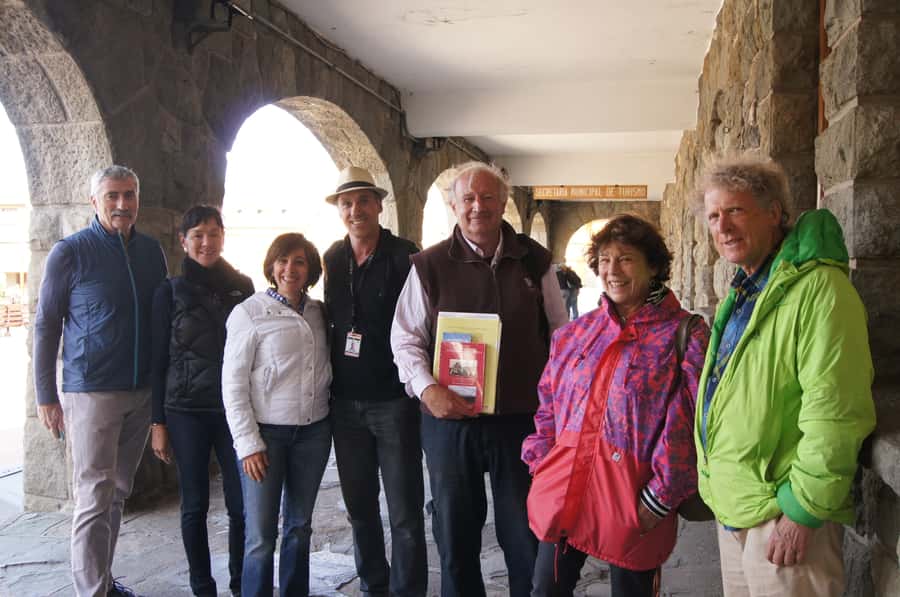
The central idea of the tour is the division into three main waves of German immigration. The exact balance of time can depend on the group and the guide, but this structure gives the walk its shape.
The first wave covers earlier German arrivals, including the people who helped establish a German presence in Argentina and Bariloche. The point is to show that German connections existed long before the Second World War. Schools, social networks, institutions, and cultural habits grew through these earlier arrivals.
The second wave adds another layer to the story. It helps you see that immigration was not one single event, nor did every German-speaking newcomer share the same politics or purpose. Families, professionals, settlers, and people seeking a new life all belong to a wider history than the most famous criminal cases.
The third wave is the most controversial and likely the section that draws many people to book. It concerns the Nazi presence after the war, including officials and supporters who escaped to Argentina. The tour explains how that later arrival affected Bariloche’s reputation and fed stories about secret German activity in Patagonia.
I appreciate the three-part structure because it prevents a common mistake: assuming that every German building or German-speaking resident was connected to Nazism. The tour puts the Nazi period in its proper place, as one part of a longer and more ordinary immigration story.
At the same time, this is not a tour that softens the darker material. The postwar arrivals are addressed directly, including the presence of officers who had escaped after the war. The tone described by the experience is educational and careful, not sensational for its own sake.
more walking tours in Bariloche
- Buenos Aires Hop-On Hop-Off Bus, Free Walking Tours & Discounts
★ 4.5 · 2,218 reviews - Buenos Aires: La Boca Guided Walking Tour in English
★ 4.8 · 1,587 reviews - Buenos Aires: Personalized 2 to 8-Hour Private Walking Tour
★ 4.7 · 149 reviews - La Docta Free Walking Tour “Córdoba La Antigua”.
★ 4.7 · 104 reviews
The German School and the Erich Priebke case
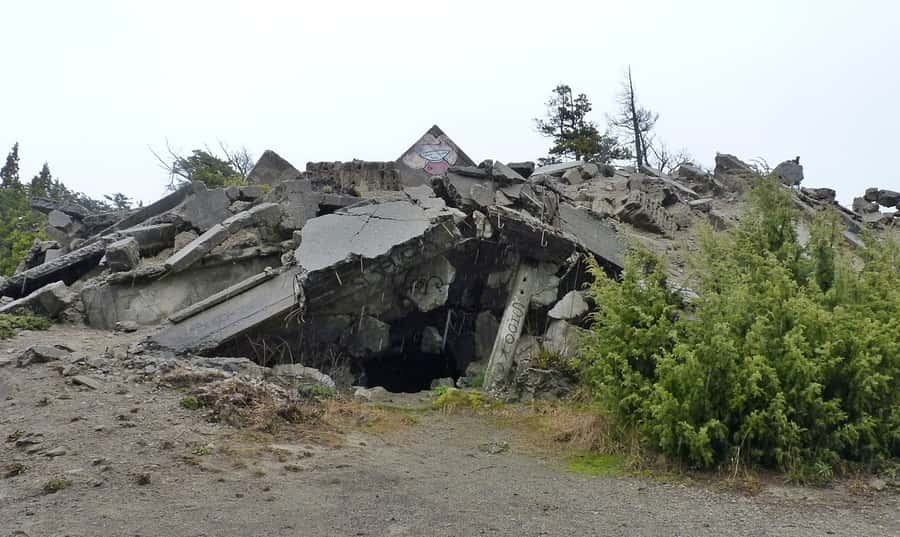
The German School is one of the most memorable stops. It is where Erich Priebke was intercepted by Sam Donaldson, the American journalist whose discovery brought Priebke’s presence in Bariloche to international attention.
This moment gives the tour a strong human and physical anchor. Instead of hearing only that a Nazi fugitive lived in Patagonia, you stand at a real institution connected to the event. That makes the story easier to understand and harder to dismiss as a distant rumor.
The tour also takes you to the house where Priebke lived before he was extradited in 1994. Seeing the house does not turn the subject into a spectacle. It shows how an ordinary-looking place can sit inside a very serious historical account.
I value the way these stops fit into the larger route. Priebke’s story is not presented as the whole history of Bariloche’s German community. It arrives after the earlier waves have been explained, so you can understand both the significance and the limits of the case.
This part may feel uncomfortable, and that is appropriate. You are dealing with war crimes, concealment, and the failure of justice to reach some people for decades. The guide’s tone matters greatly here. The strongest descriptions of Diego focus on his care, clarity, and ability to explain difficult material without losing the group’s attention.
Belgrano Square and German-style homes
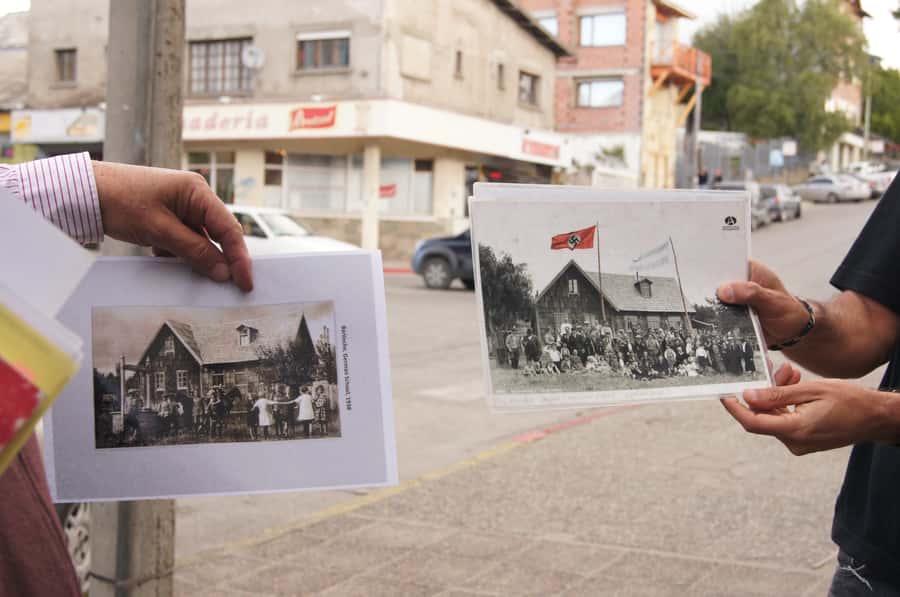
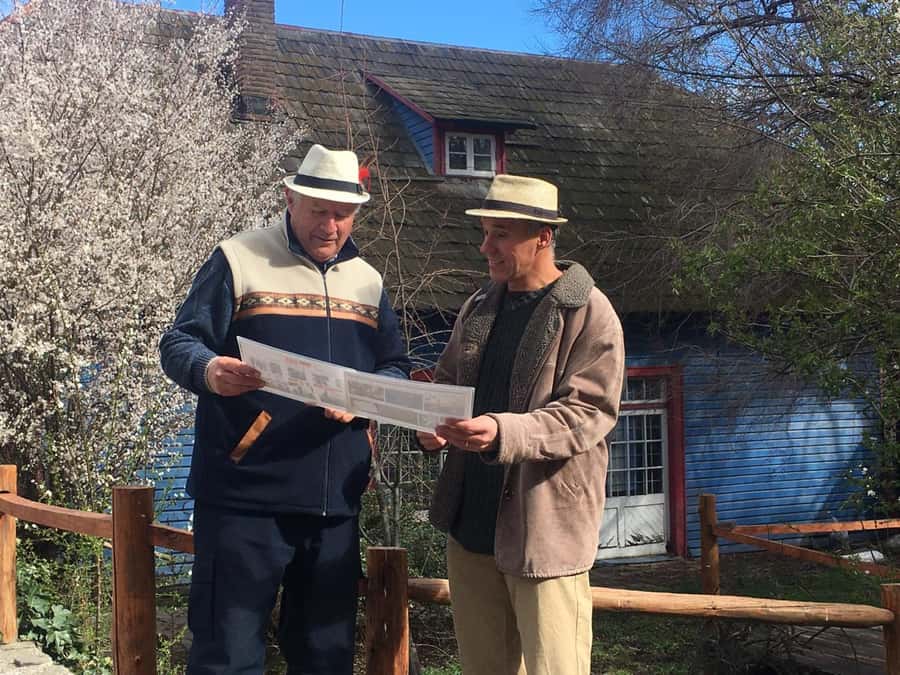
The walk also reaches Belgrano Square and several homes with German origins. These stops let you read the town through its buildings.
The homes are useful because architecture often survives when memories become vague. Roof shapes, façades, and building styles can suggest the cultural background of the people who shaped a neighborhood, but they do not tell the whole story by themselves. The guide supplies the missing context.
This is a good place to keep your expectations realistic. You are not visiting a preserved German village or a formal collection of historic interiors. You are walking through a living part of central Bariloche and looking at selected buildings from the street.
That makes the experience more authentic, but also less polished than a museum tour. You may find yourself pausing on ordinary sidewalks while traffic and city noise continue around you. For me, that is part of the appeal. The history is still attached to working streets, schools, squares, and private houses.
The old photographs add value here. Comparing earlier images with what you see today helps reveal which parts of Bariloche’s visual identity endured and which changed. It also keeps the tour from relying only on verbal description.
Sorting history from Patagonia’s biggest myths
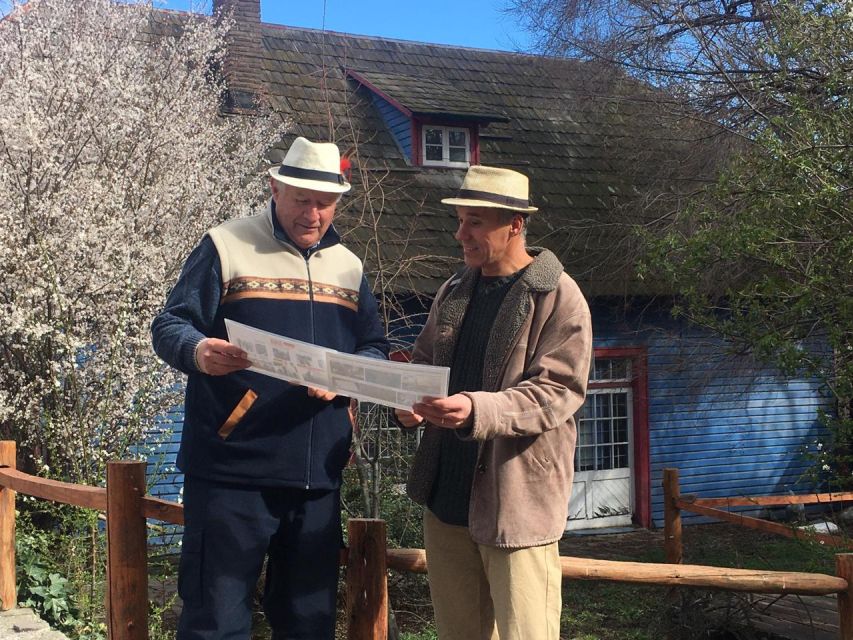
The final part discusses theories about German activity in Patagonia. This is where the tour earns its title rather than simply recounting a few well-known names.
Patagonia has long attracted stories about hidden Nazi communities, secret bases, and organized postwar networks. Some claims may have a basis in documented events, while others grow through repetition, exaggeration, or confusion between separate people and places.
The tour’s stated aim is to examine reality and myths surrounding the German presence. That distinction is important. You should expect discussion and interpretation, not a promise that every dramatic theory will be confirmed.
I like ending with this question because it asks you to think about how history is made. A real fugitive living in Bariloche can become the seed of a much larger legend. A German school or club can be misread as evidence of a hidden political network. The guide helps you separate what is established from what remains speculation.
This closing conversation may be especially rewarding if you already know the basic story of Nazi fugitives in South America. It gives you a way to test popular claims against the local setting. If you know little about the subject, it still provides a useful warning: dramatic stories are not always the same as documented history.
What the guide adds to the 90 minutes
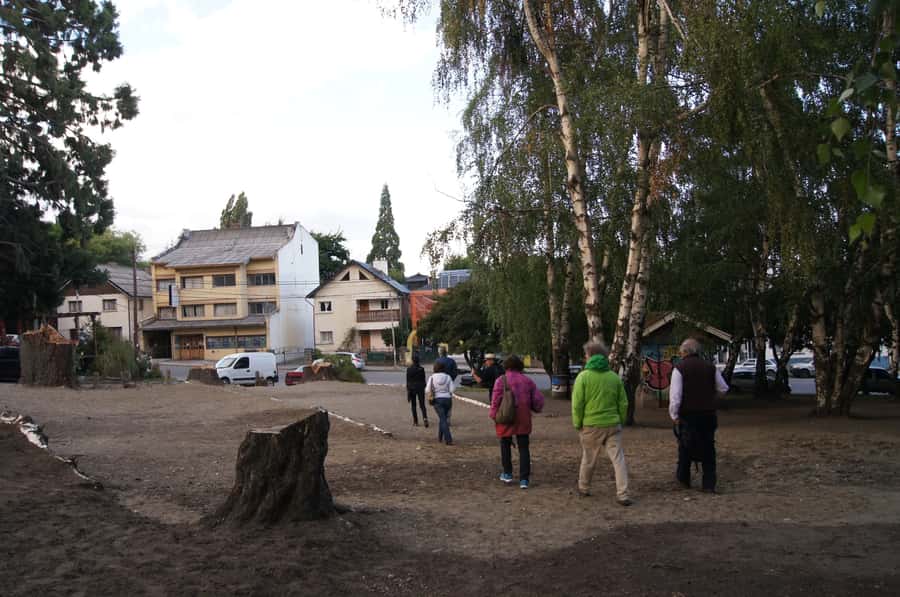
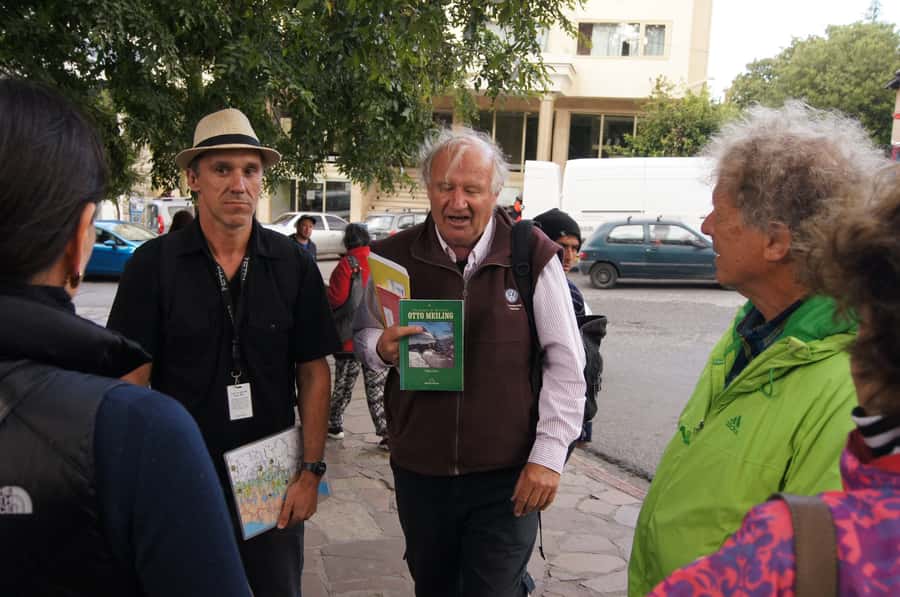
The strongest part of this experience is the guide-led storytelling. Diego is the name most often associated with the walk, and the available feedback consistently describes him as an excellent English speaker, an engaging presenter, and a careful historian. One particularly effective technique is leaving a question or unfinished point before moving to the next stop, then resolving it as the walk continues.
That style suits the route. You hear a piece of the story, walk several blocks, and receive the next piece in a new setting. The changes of location help keep the material lively without resorting to gimmicks.
The tour is bilingual in English and Spanish. This makes it accessible to mixed-language groups, but there is a tradeoff. A guide explaining each point in both languages may have less time for extended questions. One past experience also noted that an English booking became bilingual, which reduced question time even though the guide remained strong.
If you want to ask many detailed questions, tell the guide early or stay briefly at the end if time allows. The general pattern is a moving, well-paced lesson rather than a long seminar at every stop.
Group size can vary. A larger group may make it harder to hear or ask questions, though Diego has been praised for keeping people included even when attendance is higher than usual. If you arrive late, contact with the guide may be possible, since one guide shared his location with a delayed participant. Still, I would aim to be at the Civic Center meeting point on time.
Walking conditions, language, and practical comfort
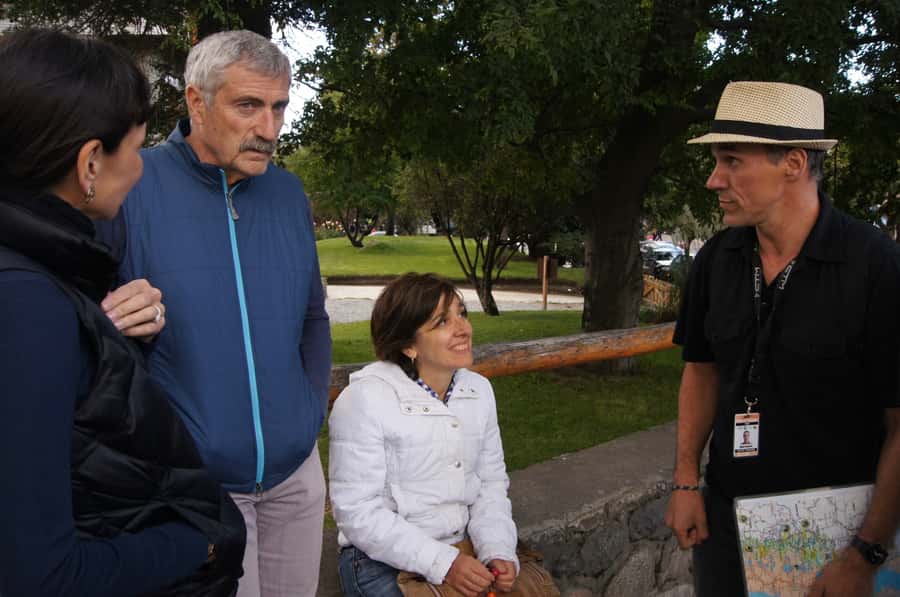
The route is short by city-walking standards, but do not read 1 kilometer as completely effortless. Parts of the area are uphill, and one person specifically noted the incline. Wear shoes with a firm sole and expect a few pauses rather than a flat promenade.
The walk lasts 90 minutes. That is long enough to build a useful picture of Bariloche, but short enough to fit between outdoor activities, a meal, or an afternoon in town. I would not book it as a replacement for a full city tour. It has a focused subject and uses the city center as an open-air classroom.
English and Spanish are the available languages. The guide quality matters more than the language label here, since a bilingual explanation can affect timing. If your priority is a single-language experience with lots of questions, confirm how the session will be conducted when you book.
The meeting point is the Civic Center square, by the tourist information office door. The tour includes the guide and walking tour itself. There is no transport component, so you need to make your own way to the square.
You can cancel up to 24 hours before the start for a full refund, and the reserve-now, pay-later option keeps your plans flexible. Those terms are useful in Bariloche, where weather and outdoor plans can change quickly.
Is $41 a fair price?
At $41 per person, this is not the cheapest way to spend 90 minutes in Bariloche. You are paying for a specialized subject, a live bilingual guide, and a carefully linked route rather than admission to a major attraction.
I think the price is fair if you care about local history, architecture, migration, or the Nazi-era chapter of South American history. The tour gives you context you would be unlikely to gather from simply walking past the Civic Center, school, square, and houses on your own.
The value is less clear if you want general sightseeing or scenic views. This is not a lake cruise, a mountain trip, or a broad introduction to every part of town. It is a focused history walk, and its worth depends on your interest in the subject.
I would also judge the price against the guide. Diego’s ability to answer questions, use old photographs, and keep the story connected is a major part of what you are buying. If the session is bilingual, some of that value is balanced by less time for discussion, but the route still gives you a strong introduction to a complicated subject.
Who should book this Bariloche history walk?
I would recommend it to you if you enjoy:
- European immigration history in South America
- The relationship between architecture and local identity
- Second World War history and postwar escape networks
- Tours built around stories rather than monuments alone
- Short walks that help you understand a city before exploring it independently
It is also a good fit between Bariloche’s outdoor outings. One afternoon can easily be spent hiking, boating, skiing, or touring the surrounding area. This walk gives you a quieter change of pace and explains the town you keep returning to.
Families with older children may find the format useful if they are comfortable with serious wartime material. The tour is educational, but the Priebke story and Nazi-era discussion are not light entertainment.
I would hesitate if hills are difficult for you, if you dislike bilingual guiding, or if your main goal is scenery. The route is central and manageable, but its reward comes from listening closely and thinking about what the buildings and stories mean.
Should you book it?
Book this tour if you want to understand why Bariloche has such a strong German imprint and how that story became entangled with Nazi fugitives and local myth. The three-wave framework, German School, Priebke house, and final fact-versus-fiction discussion give the 90 minutes a clear purpose.
Skip it if you are looking only for views or a broad orientation walk. For history-minded visitors, though, this is one of the more useful ways to spend a short block of time in central Bariloche, especially when Diego is leading and you are ready to listen, walk uphill in places, and ask questions as you go.
FAQ
Where does the German Immigration and History Walking Tour start?
It starts in Bariloche Civic Center square, beside the door of the tourist information office.
How long is the tour?
The walking tour lasts 90 minutes.
How far do you walk?
The route covers approximately 1 kilometer.
Which languages are available?
The tour is offered in English and Spanish with a live guide.
What places are included on the route?
The route includes the Civic Center, the Bariloche Andean Club, the Nahuel Huapi National Park administration, the German School, Belgrano Square, and the house where Erich Priebke lived.
Does the tour discuss Erich Priebke?
Yes. It explains how Priebke was discovered by American journalist Sam Donaldson, includes the German School where he was intercepted, and visits the house where he lived before his extradition in 1994.
Can I cancel the booking?
You can cancel up to 24 hours in advance for a full refund. A reserve-now, pay-later option is also available.
Recently added in Bariloche
- Bariloche: Tour to Circuito Chico + Optional: Arrayanes★ 4.2 · 3 reviews
- Bariloche: Sailing tour on Nahuel Huapi Lake★ 5.0 · 3 reviews
- Bariloche: Circuito Chico and Cerro Catedral★ 5.0 · 3 reviews
- Bariloche: Cerro Tronador and Ventisquero Negro Tour★ 4.3 · 4 reviews
- Bariloche: Puerto Blest and Cascada de los Cántaros (Waterfall of the Cantaros)★ 3.1 · 5 reviews
- Crossing to Puerto Blest and Cascada de los Cántaros★ 4.4 · 5 reviews
- Bariloche: Cerro Catedral guided tour★ 4.6 · 5 reviews
- Bariloche “Small Circuit” with Chairlift Campanario Hill★ 5.0 · 5 reviews
Bariloche Tours, compared.
Bariloche: 7 Lakes & San Martin de Los Andes Road Trip
Read our review →
Bariloche: Circuito Chico with optional Cerro Catedral
Read our review →
Bariloche Small Circuit: Mt Campanario and Llao Llao Peninsula
Read our review →
From Bariloche: San Martín de los Andes by The 7 Lakes Route
Read our review →
Browse the lists this tour appears in