
Reviewed · BARILOCHE TOURS
San Martin de los Andes by Seven Lakes Road from Bariloche
The best part of this day trip is the route itself: a long sweep through Nahuel Huapi and Lanín national parks, with mountain roads, clear lakes, river valleys, and photo stops all the way to San Martín de los Andes. You see far more than you could by staying around Bariloche, without arranging a rental car.
I like the excellent range of scenery, from the shores of Nahuel Huapi Lake to the smaller Seven Lakes. I also like the three hours in San Martín, enough time for lunch, a walk, and a look at its wood-built shops. The catch is simple: this is a very long day in a coach, and the vehicle, guide language, and return timing can affect the experience.
Key points at a glance
- A full-day scenic loop: Expect roughly 9 to 10 hours, though some departures have run 11 or 12 hours.
- Several useful photo stops: Mirador del Limay, Lago Correntoso, Lago Espejo, Lago Falkner, and other viewpoints break up the drive.
- Villa La Angostura pause: Stretch your legs, buy a snack, and see one of the area’s prettiest small towns.
- Three hours in San Martín: Shop for local crafts, browse outdoor stores, and buy lunch beside Lago Lácar.
- Guide quality can be excellent: Guides named Cinthia, Fabián, Matías, Natalio, Patricia, and Vivienne have been praised for clear explanations and friendly service.
- Check the language option carefully: Several bookings paid extra for English but received mostly Spanish commentary.
The Seven Lakes Road is the real star
From Bariloche, the coach heads toward the southern shore of Nahuel Huapi Lake. The drive begins with broad water views and mountain scenery, then follows roads beside the Limay River and through the wooded country around the lake’s Huemul arm.
Your guide provides commentary on local history, natural resources, plants, and wildlife. The quality of that commentary matters because the journey is not just a string of scenic stops. You are crossing two protected areas and seeing how the road links Argentina’s lake towns, forest, rivers, and mountain passes.
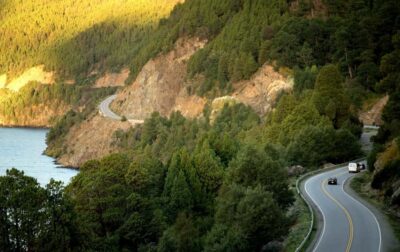
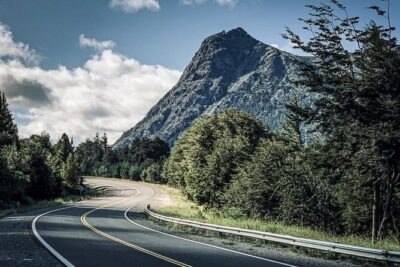
The scenery does most of the work, though. You can expect a changing mix of open viewpoints, dense woodland, steep slopes, and long lake views. Weather controls how much you see. On a clear day, the route can be spectacular. In rain, wind, snow, or low cloud, the trip remains worthwhile as a road journey, but some of the famous views may disappear.
This is a visual tour rather than a hiking excursion. You leave the coach at selected viewpoints, take photos, stretch, and get back on. If you want long walks beside the lakes, a rental car or a multi-day route will serve you better.
more seven lakes drives
- Bariloche: 7 Lakes & San Martin de Los Andes Road Trip
★ 4.5 · 624 reviews - From Bariloche: San Martín de los Andes by The 7 Lakes Route
★ 4.0 · 130 reviews - Road of the Seven Lakes from San Martin de los Andes
★ 4.5 · 32 reviews
Mirador del Limay and the first stretch from Bariloche
The itinerary includes a scenic drive along Nahuel Huapi’s southern shore, with views toward the Limay River and a stop at Mirador del Limay. This is a useful early break because the first part of the trip involves sitting in the vehicle while the road carries you away from Bariloche.
The Limay area has a different feel from the forested lake country. The river and open rock formations give you a wider view, and the stop helps you notice the change in terrain. Your guide may point out features of the river valley and explain how water shapes the region.
The route also passes Las Flores and Puerto Manzano on the Huemul arm of Nahuel Huapi. These names may mean little on a map, but together they show how varied the lake shore is. You are not simply driving to a town. You are following a chain of bays, forests, rivers, and mountain roads.
Bring your camera, but also bring patience. The coach may pause at viewpoints for photos, yet you will not have unlimited time at every stop. Keep your belongings ready and listen for instructions about when to return to the vehicle.
Villa La Angostura gives the day a human scale
Villa La Angostura is one of the most pleasant breaks on the outward route. After the longer opening drive, you get a chance to walk around, buy a snack, smell the cool mountain air, and stretch your legs before the Seven Lakes section begins.
The town is known for its attractive mountain style, with wooden buildings and a small-town feel. It is a good place to see how local architecture fits the forest setting. You might browse a shop, take a short walk, or simply use the pause to reset before the next stretch of road.
Food stops are part of the practical rhythm of the day, but I would not depend on them for lunch. The tour information recommends bringing your own lunch, even though you can buy snacks along the route. That is sensible advice. A long scenic drive is much easier when you have water and food ready instead of waiting for the next stop.
Some schedules include another stop in Villa La Angostura on the return. That may be welcome if you need a break, but it can also push the day well beyond the expected finish. If you have evening plans in Bariloche, leave plenty of room.
What makes each of the Seven Lakes memorable
The road continues past a series of lakes whose names become familiar as the day unfolds. The exact order and stopping time can vary, but the main route includes Machónico, Falkner, Correntoso, Escondido, Espejo, and Villarino, along with views connected to Nahuel Huapi and Lácar.
Lago Correntoso is one of the more useful named stops on the itinerary. Its broad water and mountain setting make it a strong photo point, and the pause gives you a close look at one of the route’s signature lakes rather than just a passing glimpse from the bus.
Lago Espejo earns its name from the reflective quality of its water when conditions are calm. Wind and clouds can change the view quickly, so do not expect every lake to look the same as the postcard version. That unpredictability is part of Patagonia, not a flaw in the route.
Lago Falkner gives you another classic mountain-water scene and a chance to compare the shapes and colors of the different lakes. Lago Escondido, true to its name, feels more enclosed by the surrounding forest. Smaller details such as tree cover, shoreline shape, and the angle of the mountains make each stop slightly different.
Lago Villarino and Lago Machónico add further viewpoints before the road reaches the final destination at Lago Lácar. The route is valuable because no single lake has to carry the whole day. If cloud hides one view, another stop may be clearer.
The guide’s explanations can make these pauses more meaningful. Fabián has been praised for explaining the lakes, natural setting, and plants. Cinthia has been singled out for taking personal care with passengers, while Matías has translated for an English-speaking passenger in a mostly Spanish group. Natalio has also been praised for moving between English, Spanish, and Portuguese and for giving lunch advice.
Those names show what a good departure can offer, but they do not guarantee who will lead your coach. The language and guide experience can vary by date.
Completely different, still leaving from Bariloche:
- Bariloche: Circuito Chico with optional Cerro Catedral
★ 4.5 · 316 reviews - Bariloche: German Immigration and History Walking Tour
★ 4.8 · 169 reviews - San Martín de los Andes por 7 Lagos
★ 4.4 · 155 reviews - Circuito Chico
★ 4.5 · 146 reviews
San Martín de los Andes and three hours beside Lago Lácar
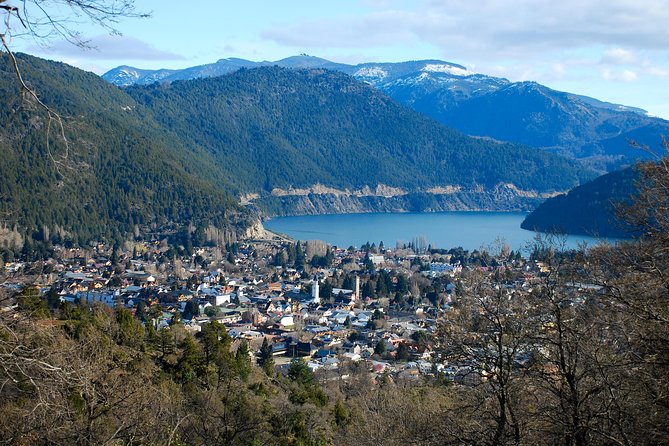
San Martín de los Andes is the destination and the main town visit. Set beside Lago Lácar, it has a tidy mountain-town character, with wooden buildings, small shops, outdoor equipment stores, restaurants, and cafes.
You have about three hours here, which is enough for a relaxed lunch and a walk through the center. You can browse local arts and handicrafts, look at shops selling expedition gear, or sit down for a glass of wine with your meal. Food and drinks are not included, so plan to pay separately.
I like this part of the trip because it prevents the day from becoming a pure window-viewing exercise. You get time to walk at your own pace and experience a town rather than only seeing it from a coach. It also gives you a practical taste of San Martín if you are deciding whether to return for a longer stay.
The three-hour stop has one drawback: it can feel long if your main reason for booking is the lakes. Some people would prefer a shorter lunch and an earlier return to Bariloche. Others will appreciate the unhurried pace, especially after hours on the road.
A useful plan is to decide in advance how you want to use the time. Have lunch first if you are concerned about restaurant timing, then walk the central streets. If shopping is your priority, save time for the craft stores and outdoor shops. Do not count on a long independent outing away from the center, since the coach departure time is fixed.
The return route adds new scenery, but also more hours
The return journey is not simply a replay of the outward drive. The route passes through Paso Córdoba at about 3,940 feet, or 1,200 meters, then continues by the Valle Encantado, the Anfiteatro rock formation, and the meeting point of the Limay and Traful rivers.
Valle Encantado, or Enchanted Valley, is known for unusual rock shapes and open mountain views. The Anfiteatro is a natural rock amphitheater, another reminder that the return route has its own visual interest. Seeing the meeting of the rivers adds a final water feature to a day already built around lakes.
Still, this is where the length becomes real. The listed duration is about 9 to 10 hours, but some departures have taken more than 11 hours, and one account described a 12-hour day. Stops, traffic, passenger drop-offs, weather, and vehicle problems can all affect the return.
The drop-off order has also caused frustration. Some passengers have been left in the town center first, while the coach travels to outlying areas before returning to remaining passengers downtown. That can make the final hour feel unnecessarily slow after an already full day.
If you have a restaurant booking, bus connection, or evening flight, do not schedule it tightly. The safest approach is to treat this as an all-day commitment with an uncertain finish in the early evening.
Coach comfort deserves serious attention
The vehicle is air-conditioned and the group size is capped at 20 people, which is smaller than a large sightseeing bus. That can help the day feel more personal, especially when the guide checks that everyone understands the stops.
But comfort has not been consistent. Some departures have used small, cramped buses, and the back row has been a particular problem. Limited window space, poor legroom, reclining seats in front, and weak views can make the scenery harder to enjoy. One vehicle had ineffective air conditioning and open windows that allowed dust inside. Another had faulty speakers, making commentary hard to hear for several hours.
These are not minor points on a 360-kilometer round trip. Your seat affects both comfort and the main reason for booking: looking out at the lakes. If you can choose a seat, avoid the very back. Confirm the meeting details and language option before departure, and tell the guide early if the temperature or sound system is making the ride difficult.
The positive side is that several guides have helped make imperfect transport more manageable. Friendly, clear commentary and good music can lift a long drive. Still, a strong guide cannot fully fix a cramped seat or a broken speaker.
English guiding is the biggest booking caution
The tour may offer an English or Portuguese guide option for an added fee. In practice, language service has not always been reliable. Some English-speaking passengers received excellent bilingual help from guides such as Cinthia, Matías, Natalio, Patricia, or Vivienne. Others paid extra and found that the tour was almost entirely in Spanish.
That difference is important. If you mainly want the scenery, you may still enjoy the trip with limited commentary. One passenger chose the Spanish option for that reason and prepared by downloading background information in advance, since mobile service can be limited along the route.
If understanding the regional history, plants, geography, and stop instructions is central to your day, confirm the language arrangement carefully. A bilingual guide can make a major difference, particularly when you need to know where to meet the coach or how long you have at a stop.
Do not assume that paying an English supplement guarantees fluent English for the entire journey. The guide may translate personally, or the group may operate mostly in Spanish with occasional explanations in English. That does not make every departure poor, but it is the most important uncertainty to consider before paying more.
Is $79 a fair price?
At $79 per person, the tour offers transport, a local guide, hotel pickup, hotel drop-off, and a full day on a route that is difficult to cover efficiently without your own vehicle. For a person with only a few days in Bariloche, that is a reasonable price for access to San Martín and the Seven Lakes Road in one outing.
The value is strongest if you are traveling alone, do not want to drive, or do not have time to spend several days in the region. You can sit back, photograph the views, and let someone else manage the long route.
The value is weaker if you strongly prefer spacious transport, precise timing, or full control over every stop. A rental car may offer more comfort and freedom for a couple or small group, though fuel, driving, navigation, and parking become your responsibility.
Food and drinks are extra. Bring lunch, snacks, and water so you are not forced into a rushed purchase. Also remember that a lower advertised price may not include an English-language supplement, so check the final total before booking.
Who should book this day trip?
I would recommend it to a first-time visitor who wants a broad look at the region and accepts a long day in a vehicle. It is also a good fit for anyone without a rental car, for solo visitors, and for people who want a simple hotel pickup and return.
Families can appreciate the easy logistics, though younger children may find the long drive tiring. Couples who enjoy scenery and a leisurely town stop should have a good day if the weather is favorable.
I would hesitate if you dislike coaches, need guaranteed English commentary, have back problems, or must return to Bariloche at a precise hour. I would also think twice if you have already explored the Seven Lakes Road independently, since the main appeal is seeing a lot of scenery efficiently rather than taking part in a special activity.
The tour earns its overall rating of 4.4 from 101 ratings because the route and scenery are genuinely strong. The weak spots are not the lakes. They are the variable buses, language arrangements, and timing.
Final verdict: book for the route, not for perfect logistics
Book this tour if you want the Seven Lakes Road and San Martín de los Andes in one day, and you can accept a potentially 10 to 12-hour outing. The views, Villa La Angostura stop, Lago Lácar town visit, and return through Valle Encantado make it a worthwhile use of a spare day in Bariloche.
Before paying, confirm the guide language, carry your own lunch, dress for changing weather, and avoid sitting in the back if seat choice is possible. Leave your evening open. If those conditions suit you, this is a practical and scenic way to see more of northern Patagonia without driving yourself.
FAQ
How long does the San Martín de los Andes tour take?
The planned duration is approximately 9 to 10 hours, with hotel pickup at about 8:00 am and return in the early evening. Some departures have lasted 11 or 12 hours, so you should allow extra time.
Is hotel pickup and drop-off included?
Yes. Hotel pickup and drop-off in Bariloche are included in the tour.
What is included in the $79 price?
The price includes a local guide, hotel pickup and drop-off, and transportation in an air-conditioned vehicle. Food and drinks are not included.
How much free time do I get in San Martín de los Andes?
You get about three hours to explore San Martín de los Andes, shop, walk through town, and buy lunch or drinks.
Should I bring lunch?
Yes. Snacks can be purchased during the day, but bringing your own lunch is recommended. You can also buy lunch at a restaurant or cafe in San Martín at your own expense.
Is an English-speaking guide guaranteed?
The tour may offer English or Portuguese guide options, but English service has not been consistent on every departure. Confirm the language arrangement before booking if commentary is important to you.
What happens if the weather is poor?
The experience requires good weather. If it is canceled because of poor conditions, you will be offered another date or a full refund. You can also cancel for a full refund if you do so at least 24 hours before the scheduled start time.
Recently added in Bariloche
- Bariloche: Tour to Circuito Chico + Optional: Arrayanes★ 4.2 · 3 reviews
- Bariloche: Sailing tour on Nahuel Huapi Lake★ 5.0 · 3 reviews
- Bariloche: Circuito Chico and Cerro Catedral★ 5.0 · 3 reviews
- Bariloche: Cerro Tronador and Ventisquero Negro Tour★ 4.3 · 4 reviews
- Bariloche: Puerto Blest and Cascada de los Cántaros (Waterfall of the Cantaros)★ 3.1 · 5 reviews
- Crossing to Puerto Blest and Cascada de los Cántaros★ 4.4 · 5 reviews
- Bariloche: Cerro Catedral guided tour★ 4.6 · 5 reviews
- Bariloche “Small Circuit” with Chairlift Campanario Hill★ 5.0 · 5 reviews
Bariloche Tours, compared.
Bariloche: 7 Lakes & San Martin de Los Andes Road Trip
Read our review →
Bariloche: Circuito Chico with optional Cerro Catedral
Read our review →
Bariloche: German Immigration and History Walking Tour
Read our review →
Bariloche Small Circuit: Mt Campanario and Llao Llao Peninsula
Read our review →
From Bariloche: San Martín de los Andes by The 7 Lakes Route
Read our review →Browse the lists this tour appears in