
Reviewed · EL CALAFATE TOURS
Rafting experience on the Rio de las Vueltas in Patagonia
The best part of this rafting trip comes in two very different acts: first, you float beneath Cerro Fitz Roy and its sharp satellite needles, then the Río de las Vueltas tightens into a canyon packed with Class III and III+ rapids. You get Patagonia scenery and real paddling action in one three-hour outing.
I like the full cold-water equipment, which includes a neoprene suit, thermal shirt, jacket, boots, mittens, helmet, and life jacket. I also like the guides’ easygoing style, clear safety instructions, and habit of sending photos and videos after the trip. The main consideration is fitness: this is not a sightseeing cruise, and the strict health rules exclude many people.
Key points at a glance
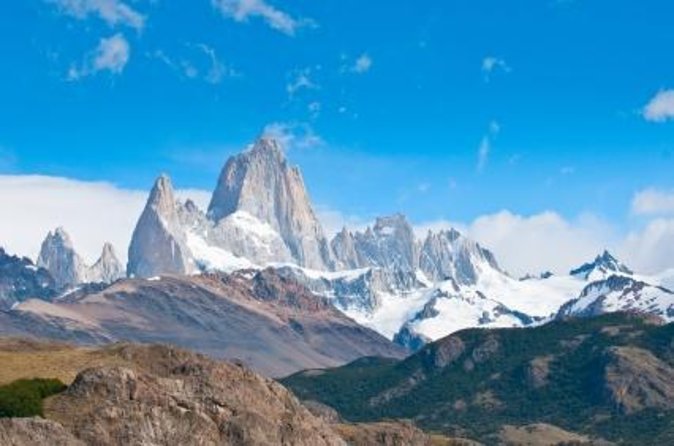
- Six calm kilometers first: Use the quiet opening stretch to learn paddle strokes and safety skills while looking toward Fitz Roy.
- Ten kilometers of rapids: After the Portage rapid, the river delivers Class III to III+ action through a canyon.
- Warm gear is included: Your kit covers the main cold-water needs, from neoprene boots and mittens to a thermal shirt and waterproof jacket.
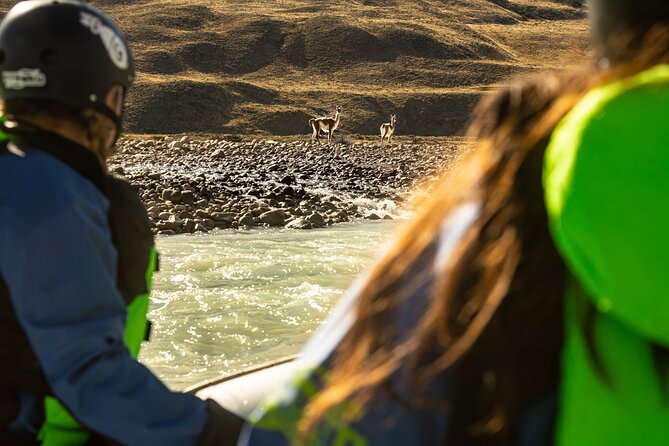
- Wildlife is part of the river view: Keep watch for guanacos and condors, along with native plants and birds.
- Small maximum group: The activity allows up to 16 people, which helps keep the safety talk and river instructions manageable.
- Simple finish: Return to the base for changing, hot drinks, mate, and snacks before ending at the El Chaltén meeting point.
Why the Río de las Vueltas makes a fine rafting setting
The Río de las Vueltas begins at Lago del Desierto, fed by glacial water, and runs toward Lake Viedma. Near El Chaltén, the river offers something many rafting trips do not: a long, quiet approach with major mountain views before the rapids begin.
That balance matters. You do not spend the whole outing fighting the current, and you do not spend the whole time sitting still. The first six kilometers let you get used to the raft, paddle commands, and feel of the river. Later, the canyon section gives you the speed and teamwork that make rafting worth the effort.
The setting also changes as you go. Early on, you may look across Andean forest and open steppe toward Fitz Roy and its satellite peaks. Farther along, the river enters a canyon, and the mood shifts from broad views to concentrated action.
I would choose this trip if you want an active way to see Patagonia without committing to a full-day expedition. It has enough scenery for people who love mountain views and enough whitewater for a genuine thrill.
Other El Calafate days worth putting on the same trip:
- El Calafate: Perito Moreno Glacier & Optional Boat Cruise
★ 4.7 · 2,586 reviews - From El Calafate: Full-Day Tour to El Chaltén
★ 4.4 · 926 reviews - El Calafate: Perito Moreno Glacier Trekking Tour and Cruise
★ 4.8 · 805 reviews
From San Martín 872 to the riverbank
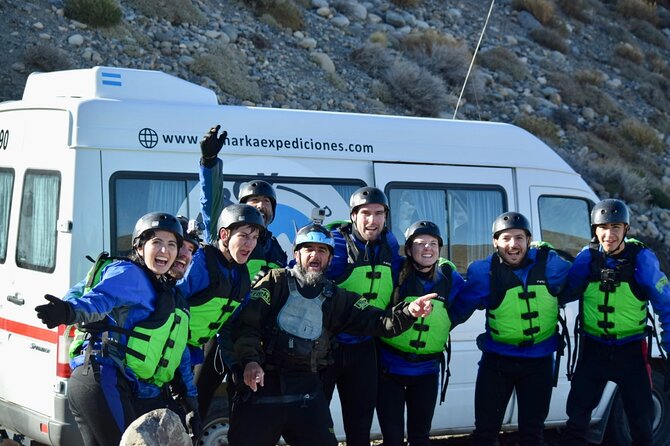
The outing begins at the Comarka Rafting dome at San Martín 872 in El Chaltén. Guides receive you there and hand over the technical kit before you leave town.
Getting dressed takes a little patience. The gear list is generous: neoprene suit, thermal shirt, jacket, life jacket, helmet, boots, mittens, and a simple paddle. That is important in Patagonia, where glacial water can make a short swim uncomfortable very quickly.
Once everyone is ready, you ride in a van for about five minutes to the river entrance. The short transfer keeps the logistics easy, and transportation back to El Chaltén is included at the end.
At the river, the guides give the technical and safety briefing. Pay close attention here. This is when you learn how to hold and use the paddle, respond to instructions, and handle the basic safety moves needed in a raft.
The clear briefing makes the trip suitable for a first rafting experience, but do not confuse beginner-friendly instruction with a gentle ride from start to finish. The river still reaches Class III and III+ difficulty later in the route.
Six quiet kilometers beneath Fitz Roy
The opening section covers roughly six kilometers of calm, winding water. This is the part that lets you settle into the raft without rushing.
Use it to practice the strokes and safety techniques from the briefing. You will also begin to understand how much the raft depends on everyone paddling together. Even on calm water, the guides need the group to listen and respond as one unit.
The views are the real reward here. The route gives you a river-level look toward Cerro Fitz Roy and its satellite needles. From the water, the mountain setting feels different from a trail viewpoint. You are moving through the valley rather than simply facing a wall of peaks.
The route also passes Andean forest and steppe. That mix gives the first part more variety than a single mountain panorama. Keep your attention on the river, but scan the banks and sky when the water is quiet. Guanacos have been seen along the route, and condors may circle overhead.
This calm stretch is also useful for deciding how much effort you want to give later. You will have time to test the paddle, find a comfortable rhythm, and ask questions before the river gets busy.
Fitz Roy, Cerro Torre, and the wider Patagonian setting
The listed route highlights Cerro Fitz Roy, Cerro Torre, and Patagonia itself. Fitz Roy is the clearest focal point during the early river section, with the mountain and its nearby needles forming the most striking view from the raft.
Cerro Torre adds another major name to the setting. The information for the outing does not provide a precise stop duration or a separate landing at either peak, so think of these as scenic points connected to the river route rather than formal walking stops.
That distinction is useful when you plan your day. This is not a mountain tour with time to hike to viewpoints, and it is not built around getting out at several landmarks. The river is the activity. The peaks, forest, steppe, and wildlife provide the changing backdrop as you paddle.
I like this format because it gives you a different angle on El Chaltén. You are not repeating a standard trail view. You are seeing the area from moving water, with the raft itself shaping the pace of the visit.
Completely different, still leaving from El Calafate:
- From El Calafate: Torres del Paine Full Day Tour
★ 4.6 · 434 reviews - El Calafate: Glaciers Gourmet Experience – Full Day Cruise
★ 4.8 · 285 reviews - El Calafate: All Glaciers Boat Trip
★ 4.5 · 263 reviews - El Chalten Complete Experience Full Day Tour from El Calafate
★ 4.5 · 219 reviews
The Portage rapid signals the change
The river changes after the calm opening section. The initial rapid is called Portage, and it marks the shift into the more active part of the trip.
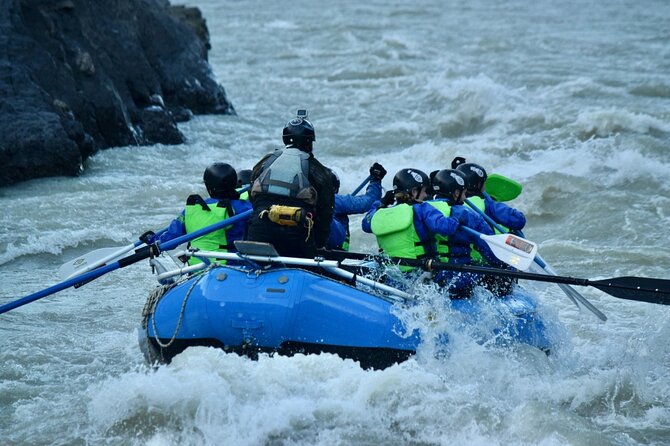
After Portage, you face around 10 kilometers of Class III to III+ rapids. In practical terms, this is the section that demands stronger attention, coordinated paddling, and trust in the guide’s commands.
The ratings tell you that the river is not just a series of mild bumps. You should expect quick water, sharper movement, and a more physical ride. The exact feel can change with river conditions, and the activity requires good weather, so the final experience depends partly on the day.
A support or recovery team follows the raft downstream, according to the trip details provided by participants. That adds a useful layer of reassurance, but it does not remove the need to listen and paddle properly. You are still part of the crew.
The guide’s role is especially important here. The best parts of the experience depend on short, clear instructions and a calm response when the raft moves fast. The guides are described as skilled, professional, funny, and able to explain both the river and the surrounding flora and fauna without turning the trip into a lecture.
What the Class III and III+ section feels like
The second half is where you get the adrenaline promised by the trip. You are no longer mainly looking out at the peaks. You are watching the water, following commands, and helping the raft move through the canyon.
That can be tiring. The activity description calls for a strong physical fitness level, and the rapid section lasts for about 10 kilometers. You do not need to be an expert paddler, but you should be ready to work with the group for a sustained period.
This is also why the calm first section is valuable. You have already practiced the basic techniques before the hard part begins. First-time rafters can get a proper introduction without being thrown immediately into the most demanding water.
The trip has a maximum of 16 people. Group size can affect how personal a rafting outing feels, but a limit of 16 keeps it from becoming a huge river procession. It also gives the guides a better chance to keep an eye on the raft and manage instructions.
The river canyon makes the rapids feel more focused. Open views give way to rock walls and faster water, creating a clear contrast with the first part of the route. If you want only calm sightseeing, this section may be too much. If you want a real adventure with a manageable introduction, it is the reason to book.
Cold-water equipment and comfort after the ride
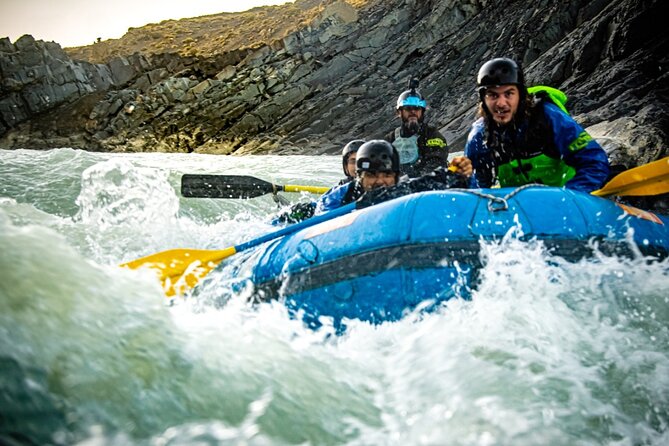
The included gear is one of the strongest practical features. You receive:
- Neoprene suit
- Thermal shirt
- Jacket
- Life jacket
- Helmet
- Neoprene boots
- Mittens
- Simple paddle
You should still dress with the activity in mind and follow the provider’s instructions, but the supplied kit covers the key protection needed for a glacial river. It also means you do not need to arrive with a personal rafting wardrobe.
After the descent, a van takes you back to the Comarka base. You can change there and recover with tea, coffee, mate, and snacks. That small finish matters more than it might sound. After several kilometers of rapids, a hot drink and something to eat help turn a cold, active outing into a comfortable afternoon.
Photos and videos are also provided after the trip. The guides’ GoPro footage can be a welcome extra, since keeping a camera safe during Class III water is not easy. Treat this as a useful memory of the day rather than the main reason to book.
Is $120 a fair price?
At $120 per person, this is not the cheapest way to spend three hours in El Chaltén. Still, the price includes the major practical pieces: technical equipment, the short transfer to the river, transportation back to town, guide support, snacks, and drinks.
The value improves if you are comparing it with putting together a similar outing yourself. You would need suitable cold-water gear, paddles, safety equipment, transport, river instruction, and trained guides. Here, those pieces are handled in one booking.
You are also paying for access to a view that is hard to reproduce on foot. The river route combines Fitz Roy scenery, wildlife possibilities, forest, steppe, and a long whitewater section. That is a good mix for an active half-day.
The trip is best value for someone who wants both adventure and scenery. If you only want to see Fitz Roy, a hiking route may suit you better. If you want to raft but dislike cold conditions or physical effort, the equipment will not change the basic nature of the activity.
Demand may also affect your planning. This outing is booked around 47 days ahead on average, so I would not leave it until the last moment if rafting is important to your El Chaltén plans.
Who should book, and who should skip it
You should consider this trip if you are at least 16, under 66, physically fit, and comfortable taking part in an active outdoor outing. It suits first-time rafters because the calm opening gives you time to learn the basics, while the later rapids provide a serious sense of adventure.
It also works well for people who want a social activity. You paddle as a team, share the safety instructions, and spend the day with a small group rather than moving alone through the valley.
The restrictions are strict. The trip is not suitable for anyone with respiratory conditions that cause breathing disability, including COPD, asthma, or emphysema. It also excludes people with central or peripheral cardiovascular disease, impaired heart or vascular capacity, stents, pacemakers, or other prostheses.
People with obesity, epilepsy, or physical or mental disabilities that affect attention, walking, or coordination cannot participate. Children under 16 and people over 65 are also excluded.
These rules may feel limiting, but they fit the demands of cold water and Class III rapids. If you have any health concern, check directly with Comarka Rafting before paying.
The tour requires good weather. If conditions force a cancellation, you receive a different date or a full refund. You can also cancel for a full refund up to 24 hours before the start time. Changes or cancellations inside that window are not accepted.
Should you book the Río de las Vueltas rafting trip?
I would book this if you want a compact, well-supported adventure that gives you both mountain views and proper whitewater. The combination of six calm kilometers, a dramatic Fitz Roy setting, and 10 kilometers of Class III to III+ rapids is unusually well balanced.
The strongest reasons to choose it are the warm gear, clear instruction, small maximum group, recovery support, and relaxed finish with drinks and snacks. The guide team also adds value through local explanations, humor, and photos and videos after the ride.
Skip it if your priority is a quiet river float, a flexible family activity, or a sightseeing tour without physical demands. For the right person, though, this is one of the more memorable ways to experience Patagonia around El Chaltén.
FAQ
Where does the rafting experience begin?
It begins at the Comarka Rafting dome at San Martín 872 in El Chaltén, Santa Cruz, Argentina.
How long does the activity last?
The rafting experience lasts approximately three hours.
How far is the river entrance from El Chaltén?
The van ride from the base to the river entrance takes about five minutes.
What river will I raft?
You will raft the Río de las Vueltas, a glacial river that begins at Lago del Desierto and flows into Lake Viedma.
What level are the rapids?
The route includes Class III to III+ rapids after the initial Portage rapid. The first six kilometers are calm and winding.
Is rafting equipment included?
Yes. The equipment includes a neoprene suit, thermal shirt, jacket, life jacket, helmet, neoprene boots, mittens, and a simple paddle.
Is food or drink included?
Yes. After the rafting descent, you receive snacks along with tea, coffee, mate, and biscuits.
How many people can join the activity?
The maximum group size is 16 people.
Can I cancel for a refund?
You can cancel at least 24 hours before the start time for a full refund. Cancellations made less than 24 hours before the start time are not refunded.
Recently added in El Calafate
- Perito Moreno Full Day Minitrekking with Transfer & Walkways★ 5.0 · 3 reviews
- El Calafate: Spegazzini and Upsala Glaciers Boat Tour★ 3.7 · 3 reviews
- Estancia Cristina Discovery Adventure in El Calafate★ 5.0 · 3 reviews
- El Calafate: Minitrekking in the Perito Moreno Glacier★ 5.0 · 3 reviews
- El Calafate: Kayak and Hike La Leona River Tour★ 5.0 · 4 reviews
- El Calafate: Glacier Cruise & Trekking at Estancia Cristina★ 3.5 · 5 reviews
- El Calafate: Perito Moreno Glacier & Nautical Safari★ 4.4 · 5 reviews
- El Calafate: “Perito Moreno Glacier with the Tour – Blue Safari”.★ 5.0 · 7 reviews
El Calafate Tours, compared.
El Calafate: Perito Moreno Glacier & Optional Boat Cruise
Read our review →
El Calafate: Perito Moreno Glacier Trekking Tour and Cruise
Read our review →
From El Calafate: Torres del Paine Full Day Tour
Read our review →
El Calafate: Glaciers Gourmet Experience – Full Day Cruise
Read our review →
El Chalten Complete Experience Full Day Tour from El Calafate
Read our review →
Browse the lists this tour appears in