
Reviewed · SALTA TOURS
From Salta: Day Trip to Quebrada de Humahuaca
The big draw here is the Quebrada de Humahuaca, a long Andean valley where red, yellow, orange, and pale rock bands frame small towns with strong regional character. You visit Purmamarca and Seven Colors Hill, then continue through Maimará, Tilcara, Uquía, and Humahuaca before returning to Salta.
I like the number of major sights covered for $39, and I like the chance to see unusual cultural details such as Uquía’s church paintings of angels carrying guns. The main drawback is the scale of the day: 810 minutes means about 13.5 hours, with much of that time spent on a bus. A few people also had trouble hearing the guide through the vehicle’s speaker.
Key things to know before booking
- Seven Colors Hill begins the scenic payoff: Purmamarca gives you one of the clearest views of the area’s famous striped rock.
- The day covers several separate towns: Maimará, Tilcara, Uquía, and Humahuaca each offer a different look at the Quebrada.
- Tilcara adds archaeological interest: Admission to El Pucará de Tilcara is not included, so bring extra money if that site is part of your plan.
- The bus is both the bargain and the compromise: You get a wide-ranging route at a low price, but you may spend roughly nine hours seated.
- English and Spanish are offered: Confirm your language at booking and pay attention to pickup messages, since one past booking was placed on the Spanish departure by mistake.
- Start early and pack carefully: Hotel pickup runs from 6:30 to 7:15 AM, and you need a passport or ID card.
Why the Quebrada de Humahuaca is worth a full day
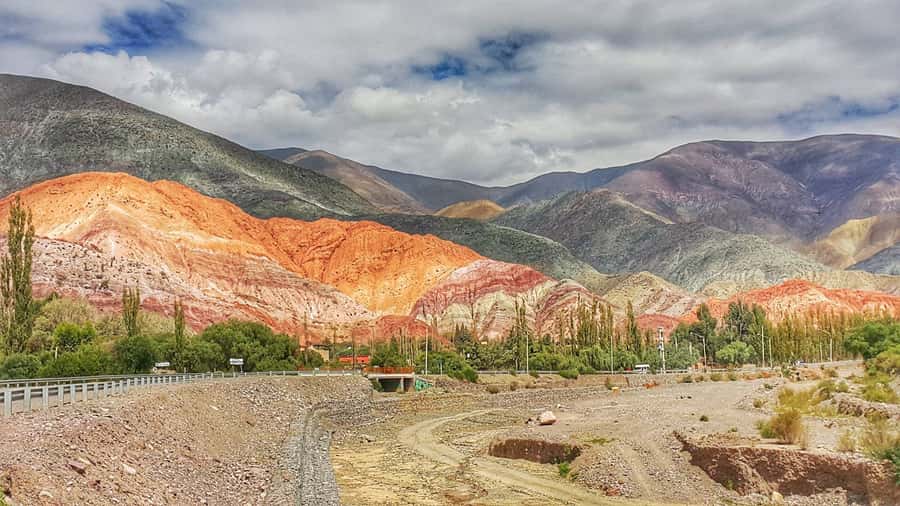
The Quebrada de Humahuaca is not a single viewpoint. It is a long corridor of mountains, villages, churches, markets, and historic routes. That is why this trip takes so long. You are not simply driving to one attraction, taking a photo, and turning around.
The scenery changes as the bus moves north from Salta. At points, the mountains show strong bands of red, ochre, orange, and soft gray. At others, the colors are less dramatic than the promotional photographs suggest. Light, weather, and the exact viewpoint matter a great deal.
I would choose this tour if you have only one spare day from Salta and want a broad introduction to the valley. You will see more places than you could manage easily by arranging individual transport, and the price is modest for a full-day route.
The tradeoff is clear. This is a coverage-first excursion, not a slow, small-group outing. You will get a useful overview, but your time in each town may feel short, and the bus ride can dominate the day.
more Salta days to weigh up
- From Salta: Full-Day Trip to Salinas Grandes and Purmamarca
★ 4.6 · 914 reviews - From Salta: Cafayate Day Trip with Wine Tasting
★ 4.4 · 226 reviews - One Day Tour of Cachi and Calchaquí Valleys from Salta
★ 4.0 · 102 reviews
An early start from central Salta
You meet at the local partner’s office near Plaza 9 de Julio, Salta’s central square. If you select pickup, the vehicle comes to a centrally located hotel within eight blocks of the square, usually between 6:30 and 7:15 AM.
Be ready 15 minutes before your assigned time. A large bus may not be able to reach your hotel, in which case you will be contacted and given another meeting point. That is not a major problem, but it is worth checking your phone and email before bed.
The transport is a bus or minivan, depending on group size. The smaller vehicle may feel easier for a long day, but the exact format is not promised. Since the group size is not specified, you should plan for a shared outing rather than a private guide.
The early departure is useful. It gives the route enough time to include the major towns and viewpoints, but it also means the day starts before breakfast for many people. Food and drinks are not included, so carry something for the morning and budget for meals along the way.
Purmamarca and the Seven Colors Hill
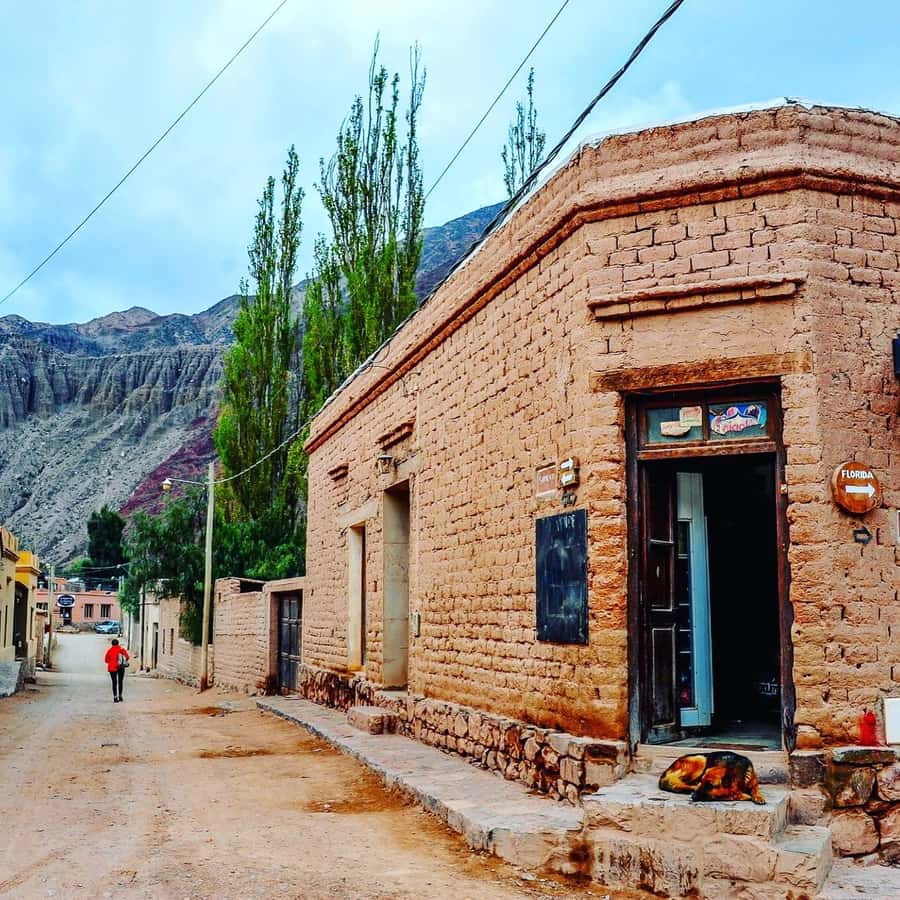
Purmamarca is the first major stop and one of the most photogenic towns on the route. It sits below the Seven Colors Hill, whose bands of different rock create the view that many people associate with the Quebrada.
The town itself is part of the appeal. Its low buildings and Andean setting give you a quick sense of the region’s visual identity. You can expect time to look around, take photographs, and get your first close view of the mountain colors.
Keep your expectations realistic. The hill may look more muted from the actual stop than it does in carefully chosen photographs. One earlier visitor found the colors less intense than expected at the planned viewpoint. That does not make the stop poor, but it does mean the experience depends on sun, visibility, and where the vehicle pauses.
Purmamarca is also one of the places where tour groups may spend time browsing local goods. If shopping is not your priority, keep an eye on the clock. The day has many stops, and every extra half-hour in one town reduces time elsewhere.
Maimará and the Painter’s Palette
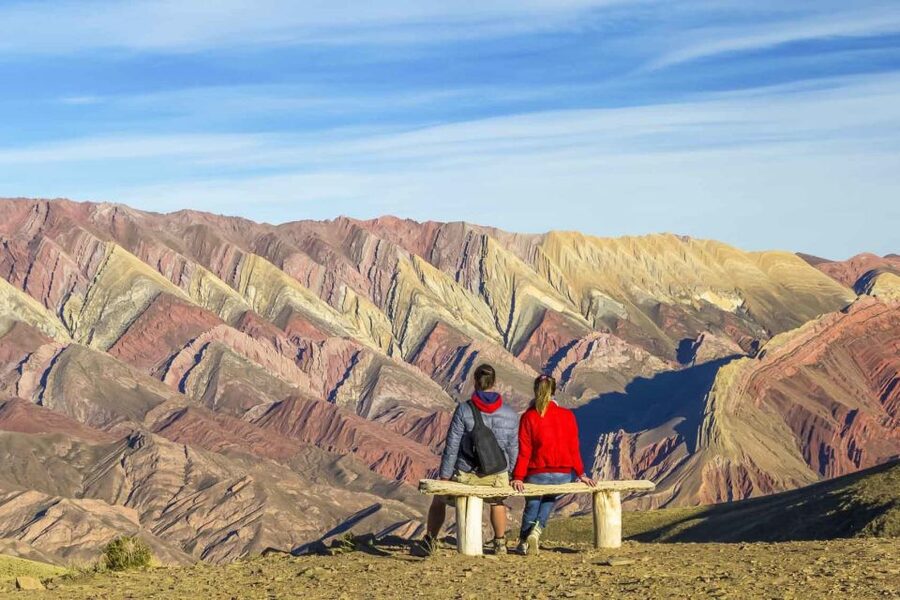
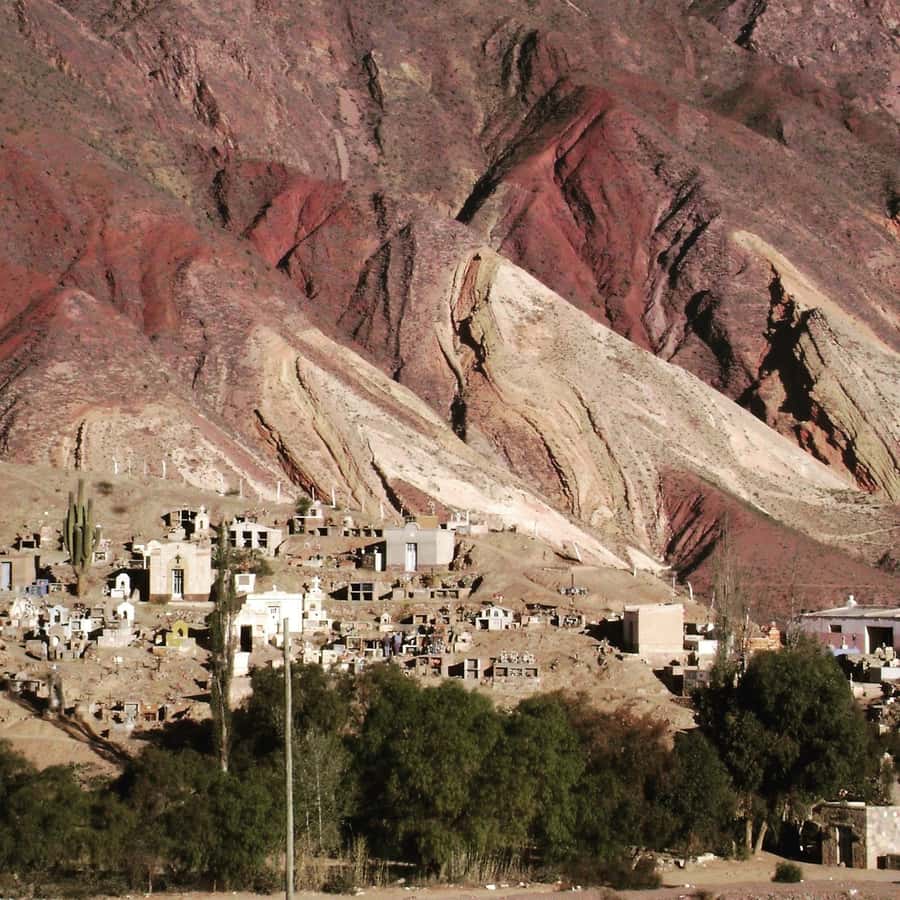
From Purmamarca, the route continues to Maimará, a small village below the formation known as the Painter’s Palette. Here the rock colors shift through red, yellow, orange, and pale tones.
Maimará gives you another angle on the Quebrada’s geology. Instead of seeing one famous hill, you get a broader view of layered formations and a village set beneath them. It is a good place to compare the different colors and shapes you saw at Purmamarca.
This stop also shows why the route is worthwhile for people who enjoy scenery more than formal monuments. Much of the pleasure comes from the changing valley walls outside the towns, viewed through the bus windows between stops.
The limitation is time. You may not have a long period to walk around or seek several viewpoints. This is an introduction to Maimará, not a day devoted to exploring it on foot.
Completely different, still leaving from Salta:
- From Salta: Full-Day Tour to Cafayate with Wine Tasting
★ 4.5 · 478 reviews - From Salta: Salinas Grandes, Purmamarca & Los Colorados Hike
★ 4.3 · 356 reviews - Full-Day Tour Cafayate Calchaqui Valleys with Wine
★ 4.5 · 347 reviews - From Salta: Cafayate, land of wines and imposing ravines
★ 4.4 · 347 reviews
Tilcara: Andean character and optional archaeology
Tilcara is one of the most important stops on the trip. It combines an Andean town atmosphere with mountain scenery and access to El Pucará de Tilcara, an archaeological site whose admission is not included.
If you want the archaeological visit, bring extra cash or another accepted payment method for the entrance fee. The tour information specifically excludes that ticket, so do not assume it is covered by the $39 price.
Tilcara can appeal to two kinds of visitors. You may enjoy its streets, local character, and views even if you skip the paid site. Or you may prefer to use your free time for the Pucará, especially if pre-Columbian archaeology is a major reason you are visiting northern Argentina.
Ask the guide how much time is available before deciding. Past feedback suggests that some stops allow only a short period for independent exploration, while other parts of the day include shopping or workshop visits. If Tilcara is your priority, use your time deliberately rather than waiting until the end of the stop to decide.
Uquía and the gun-toting angels
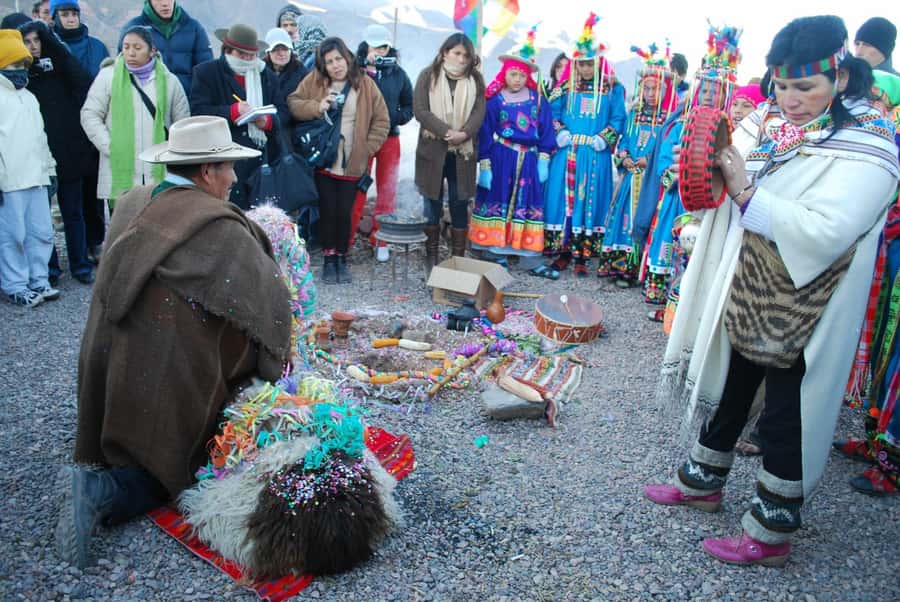
Uquía is smaller and quieter than Tilcara. Its historic church is notable for paintings of angels carrying guns, an unusual example of colonial religious art shaped by local history and military imagery.
This is the kind of detail that gives the day more depth than a sequence of mountain photographs. The church offers a brief look at how European religious traditions took on a distinct form in the Andes.
The visit is likely to be short, so listen carefully for opening information and the guide’s directions. A problem with the vehicle’s speaker was reported on an earlier departure, and that matters most at stops such as Uquía, where the cultural explanation is a central part of the visit.
If the sound system is hard to hear, move closer to the guide when possible or ask for the key points directly. The English or Spanish guide is included, but the value of that service depends on being able to follow the commentary.
The Tropic of Capricorn stop
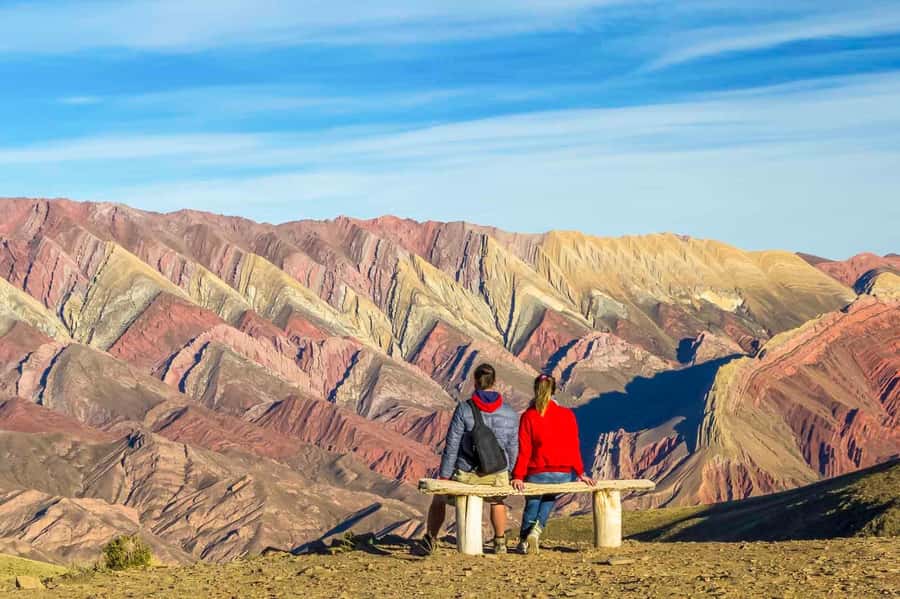
The route pauses at the Tropic of Capricorn, the most southerly latitude where the sun can appear directly overhead at noon. This is a quick geographical marker, but it gives the long drive a memorable point of reference.
The stop is less about a large monument than about standing at a line with a precise place in the world’s geography. It also breaks up the bus ride and gives you another chance to stretch your legs.
Do not expect this to replace time in one of the towns. It is a brief roadside-style stop within a very full schedule. Treat it as a quick photo and geography break, not as a major attraction requiring a long visit.
Humahuaca and the cultural heart of the route
Humahuaca is the northern endpoint and the place that gives the Quebrada its name. It is recognized as part of a UNESCO World Heritage Site, reflecting the valley’s natural setting and cultural importance.
The town has a distinct regional look, with colorful buildings and Andean traditions visible in its streets and public spaces. After hours of rock formations and small villages, Humahuaca gives the route a stronger sense of arrival.
This is also the point where the day’s pace may feel most frustrating. You have traveled a long distance, yet the available time to explore can be limited before the return journey begins. If you value independent wandering, note the places you most want to see before leaving Salta and head there promptly.
Humahuaca is best approached as the final piece of a larger picture. Purmamarca provides the iconic mountain view, Maimará adds more rock color, Tilcara offers town life and archaeology, Uquía supplies the unusual church art, and Humahuaca brings the cultural setting together.
How much time goes to the bus?
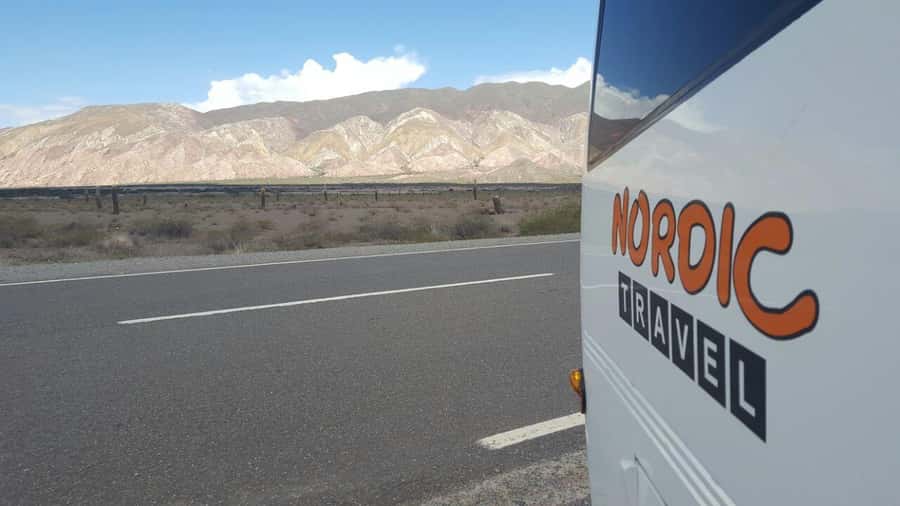
The most important practical question is not what the tour visits. It is how comfortable you are with long transfers.
The scheduled duration is 810 minutes, or 13.5 hours. One past account described roughly 9.5 hours on the bus during a 13.5-hour day. That leaves several hours for stops, but it also confirms that sitting in transit is a major part of the experience.
For some people, the bus time is a fair exchange for the price and route. You can cover a large section of the Quebrada without arranging separate transport, and the scenery outside the window helps make the drive part of the trip.
For others, the day may feel like a basic bus service with commentary rather than a fully guided sightseeing experience. Earlier feedback also described too much time at shopping-oriented stops and too little time with the rock formations. That is useful to know if your main goal is hiking, quiet viewpoints, or time in nature.
Bring water, snacks, sun protection, and something comfortable for a long seated journey. A passport or ID card is required. Since meals are not included, plan to buy food during the day or carry your own.
Guide quality and language planning
The tour includes a live guide in English and Spanish. That is valuable because the region’s history, geography, and religious art are easier to understand with context.
Still, you should confirm the language selection carefully when booking. One earlier booking intended for English was assigned to the Spanish-language group without clear communication. This may not happen to you, but it is a good reason to check your confirmation and provide a phone number or email address you actively monitor.
The guide’s speaking style can shape the day. One past account found the guide friendly and comfortable in English, while another found the nonstop commentary tiring. These are opposite reactions to the same basic service. If you prefer frequent quiet periods, a long spoken tour may not suit you.
The bus speaker is another practical concern. Poor sound quality made it hard for one person to hear the explanations. If the commentary is important to you, sit where you can hear clearly and speak up early if the volume is poor.
Is $39 a good price?
At $39 per person, this is a low-cost way to see several of northern Argentina’s best-known sights from Salta. Transport and a Spanish- or English-speaking guide are included, and hotel or meeting-point pickup and drop-off are available if you choose that option.
The price is strongest for a first visit with limited time. You avoid having to coordinate the long route yourself, and you receive transport between places that are spread across the valley.
The price does not cover food, drinks, or admission to El Pucará de Tilcara. Those are modest additions compared with the tour cost, but they still belong in your budget.
You are also paying with your time and comfort. A smaller private trip would likely offer more control over stops, but this option is built around a shared vehicle and a fixed schedule. If you want maximum scenery for minimum cost, it is attractive. If you want long walks, flexible photo stops, or a quiet ride, the bargain may feel less generous.
Who should book this day trip?
I would recommend it to you if:
- You have one day available from Salta and want to see the main Quebrada towns.
- You value a low price more than a small group.
- You are comfortable with a 13.5-hour schedule.
- You want an English or Spanish guide to explain the setting.
- You enjoy combining geology, local towns, religious art, and geography.
I would be more cautious if:
- You dislike long bus rides.
- You want substantial time in each village.
- Your priority is hiking or quiet natural viewpoints.
- You are sensitive to loud or continuous commentary.
- You want a private, flexible schedule.
The experience is not a relaxed day in the mountains. It is a broad introduction that trades comfort and free time for range.
Practical details before you go
Choose the pickup option if you are staying within eight blocks of Plaza 9 de Julio and want to avoid walking to the office. Be ready early, keep your phone available, and watch for a message if the vehicle cannot reach your hotel.
Confirm that your booking shows the language you want. Bring your passport or ID card, food or money for meals, water, and a phone number or email address that the operator can reach.
The tour allows free cancellation up to 24 hours before departure, and you can reserve now and pay later. Those terms help if your Salta plans are still changing, but they do not change the basic nature of the day: long, fixed, and packed with stops.
Should you book it?
Book this trip if you want the widest possible first look at the Quebrada for $39 and accept a great deal of bus time. Purmamarca, the Seven Colors Hill, Maimará, Tilcara, Uquía, the Tropic of Capricorn, and Humahuaca make a strong route on paper and give you a useful sense of northern Argentina.
Skip it in favor of a smaller or more flexible option if you care more about time outdoors than ticking off several towns. The scenery is the star, but you may spend less time beside it than you expect. For a budget-minded first visit, I would consider it good value, provided you board prepared for a very long day and confirm the guide language in advance.
FAQ
How long does the tour last?
The tour lasts 810 minutes, which is about 13.5 hours.
Where does the tour start?
You meet at the local partner’s office near Plaza 9 de Julio in Salta. Pickup and drop-off options may also be available.
Is hotel pickup included?
Hotel pickup is included only if you select that option. It is available for centrally located accommodation within eight blocks of the 9th of July central square.
What time does hotel pickup take place?
Hotel pickup is scheduled between 6:30 and 7:15 AM. You should be ready 15 minutes before the activity starts.
Which languages are available?
The live guide is available in English and Spanish.
Is food included?
No. Food and drinks are not included in the tour price.
Is admission to El Pucará de Tilcara included?
No. The admission ticket to El Pucará de Tilcara is not included.
What should I bring?
Bring your passport or ID card. You should also provide an email address or phone number that can reach you when you book.
Recently added in Salta
- From Salta: Cafayate, Salinas Grandes, & Hornocal Tour★ 4.7 · 3 reviews
- From Salta: 3-Day Cafayate, Cachi, and Humahuaca Guided Trip★ 4.7 · 3 reviews
- Salta en un Bocado – Cultural Tour & Empanada Tasting★ 5.0 · 3 reviews
- From Salta: Cafayate, Cachi, & Hornocal 3-Day Tour★ 4.0 · 3 reviews
- Salta: Tour to the Salinas Grandes and Purmamarca★ 3.7 · 3 reviews
- From Salta: Cachi and Salinas Grandes 2-Day Guided Trip★ 4.1 · 3 reviews
- From Salta: Full-Day Tours of Cachi and Salinas Grandes★ 4.5 · 3 reviews
- Salta or Jujuy: Iruya and Salinas Grandes 2-Day Tour★ 4.3 · 3 reviews
Salta Tours, compared.
From Salta: Full-Day Trip to Salinas Grandes and Purmamarca
Read our review →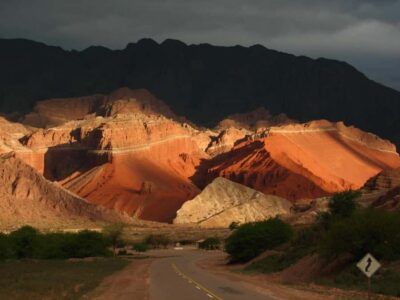
From Salta: Full-Day Tour to Cafayate with Wine Tasting
Read our review →
From Salta: Salinas Grandes, Purmamarca & Los Colorados Hike
Read our review →
From Salta: Cafayate, land of wines and imposing ravines
Read our review →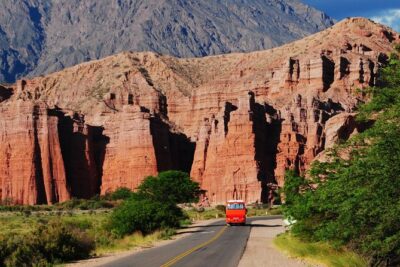
Full-Day Tour Cafayate Calchaqui Valleys with Wine
Read our review →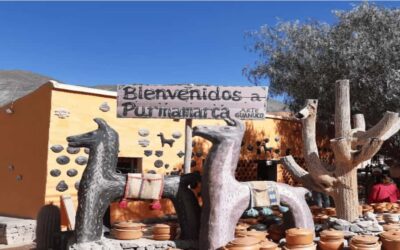
From Salta: Serranías del Hornocal & Hill of 14 Colors Tour
Read our review →
From Salta: Cachi and Los Cardones National Park Tour
Read our review →
From Salta: Cafayate Day Trip with Wine Tasting
Read our review →Browse the lists this tour appears in