
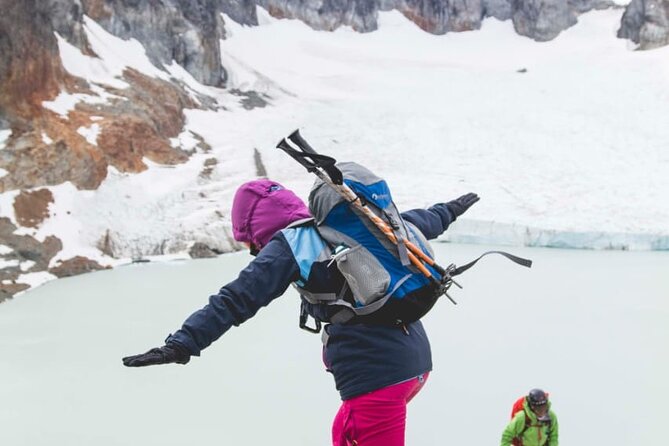
Reviewed · USHUAIA TOURS
Full Day Reduced Tour to the Ojo del Albino Glacier in Argentina
The best part of this Ushuaia outing is the change in scenery under your boots. In less than an hour from town, you move from the Carbajal Valley and its broad wetlands into lenga forest, peat bogs, snowy peaks, and the green waters of Laguna Esmeralda, colored by sediment from the Ojo del Albino Glacier.
I like the big mountain views of Cerro Cinco Hermanos, Monte Olivia, and Sierra Alvear. I also like that the price includes transportation, lunch, poles, crampons, and a helmet, which saves you from arranging several pieces yourself. The catch is serious: this is a demanding trek, and timing or group fitness can affect how far you get. Some departures have taken about 20 people despite expectations of a small private group.
Key points before you book
- The trail begins just 15 kilometers from Ushuaia, with quick access to Carbajal, Tierra Mayor, and Lobos valleys.
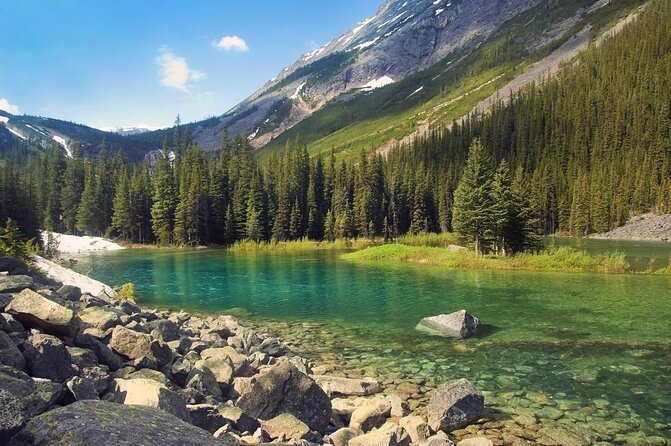
- Laguna Esmeralda arrives after about 4.5 kilometers, passing lenga forest, peat bogs, and high mountain terrain.
- Ojo del Albino Glacier requires strong fitness, with a steep climb beyond the lagoon.
- Manuel and Emi have received especially warm praise for setting a good pace, helping with foot placement, and explaining the route.
- The tour is advertised at seven to eight hours, but one departure was changed at the last minute to 12 hours, so confirm the timing before you go.
- Clothing is not included, although technical equipment such as crampons, poles, and a helmet is provided.
From Ushuaia to the Carbajal Valley
The meeting point is the End of the World Sign at Maupu, at the corner of Pres. Julio Argentino Roca, with departure scheduled for 7:30 a.m. From there, private transportation takes you roughly 15 minutes toward the trail area.
That short ride gives you an excellent first look at the country around Ushuaia. The Carbajal Valley contains one of the region’s largest wetlands and is framed by important peaks. It is not just a transfer through town. The road quickly opens into a broad, rugged setting that explains why Ushuaia is such a strong base for mountain outings.
As you continue along Route 3, you get views of Cerro Cinco Hermanos and Monte Olivia. Monte Olivia is one of the area’s unmistakable peaks, and Cerro Cinco Hermanos has a distinctive profile that makes it easy to pick out from the road.
The next area is the Lobos Valley, known as the original location of Ushuaia’s first dog sleds. That detail gives the start of the trip a useful local connection. Before modern sightseeing and organized trekking, winter transport here depended on dogs, snow, and a very different kind of endurance.
Private transport is a real advantage at this point. You do not have to coordinate a public bus or find your own way to the trailhead. Still, allow some patience at the start. One departure arrived about 20 minutes late, and another had a long delay tied to a last-minute change in the expected duration.
more full-day trips from Ushuaia
- Full Day Tour of Cabo San Pablo and Estancia Pirinaica
★ 5.0 · 93 reviews - Full-Day Gable Island Eco-Adventure in the Beagle Channel
★ 5.0 · 55 reviews - Ushuaia: Martillo Island and Walk Among Penguins Full-Day Tour
★ 4.5 · 43 reviews
Tierra Mayor and the Sierra Alvear view
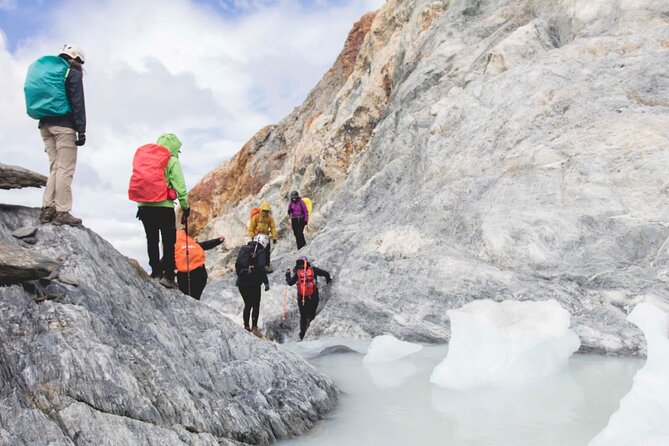
The first planned stop is in Tierra Mayor Valley, an important wetland with a panoramic point facing the Sierra Alvear. You get about 15 minutes here, enough for photographs and a quick look around.
This is a good early pause because it puts the day’s physical challenge in context. The Sierra Alvear is one of the area’s main mountain groups, with several prominent peaks visible from the valley. The stop is short, but the view is broad and useful for understanding the terrain you will later enter on foot.
The wetland also helps explain the ground conditions on the trail. Water does not drain quickly in these valleys, and sections of peat bog can be soft or uneven. Your pace may feel comfortable on the forest floor, then slow down when the surface turns wet or spongy.
The tour includes poles, but you will still need to pay attention to every step. The poles are helpful on muddy ground and during the descent, especially when the trail becomes slick.
The 4.5-kilometer walk to Laguna Esmeralda
The main walk begins in a lenga forest. Lenga is native to this part of Argentina, and the trees give the lower section of the route a sheltered, wooded feel.
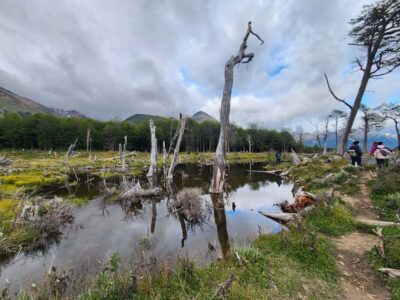
As you continue, the forest alternates with peat bogs. This change keeps the walk interesting, but it also means the trail is not a simple, smooth woodland path. You may encounter damp ground, uneven footing, and sections where good balance matters more than speed.
After about 4.5 kilometers, you reach Laguna Esmeralda, one of the most visited natural sights near Ushuaia. The lagoon’s greenish color comes from sediment associated with Ojo del Albino Glacier. Snowy peaks and forest surround the water, creating the main scenic reward of the first part of the trek.
For many people, Laguna Esmeralda is already a satisfying destination. You get a strong mountain view without needing to complete the harder climb toward the glacier. But this tour is designed to continue higher, so the lagoon is a halfway point rather than the final goal.
The route reaches an average height of about 600 meters above sea level. That is not an extreme altitude in the usual sense, but the combination of wet ground, distance, steep sections, and a tight schedule can make the day strenuous.
The steep climb toward Ojo del Albino Glacier
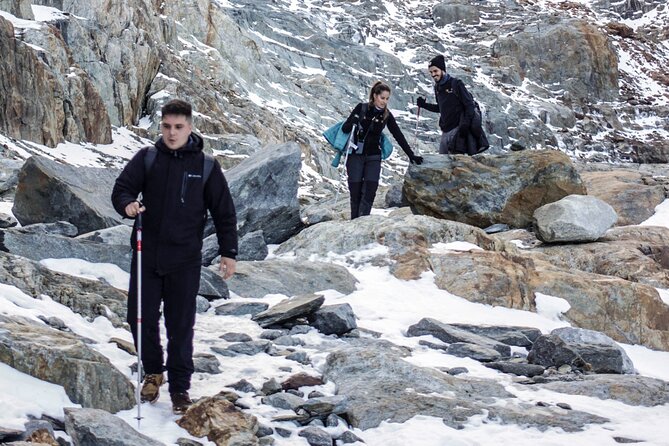
Beyond the lagoon, the route becomes much more demanding. The climb is steep, and this is where the difference between a pleasant hike and a full mountain trek becomes clear.
You need a moderate to good level of physical fitness for the experience as described. One fit participant still found the climb hard enough to struggle for breath. That does not mean the route is unsuitable for every active person, but you should be comfortable walking for several hours and climbing steep ground without frequent long rests.
The supplied equipment helps. Crampons can give you traction, poles support your balance, and a helmet is included. These items are useful, but they do not remove the physical work. Equipment makes difficult ground safer. It does not make the climb easy.
Pacing is important. Guides Manuel and Emi have been praised for adjusting walking speed, pointing out where to place your feet, and keeping the group moving at a manageable rhythm. That kind of guidance matters on uneven mountain terrain. It is also worth asking at the start how often the group expects to stop.
A major concern is the effect of group size. The experience is described as private, yet one departure had around 20 people with three guides. The group walked together, with guides at the front, middle, and rear. That arrangement provides some supervision, but it is not the same as a flexible small-group outing.
If several people have different fitness levels, the schedule can become rigid. One participant who needed to slow down received support from a guide, but the rest of the group kept moving. Another departure did not reach the glacier because one member of the group could not manage the full route.
You should treat reaching Ojo del Albino Glacier as the intended aim, not an absolute guarantee. Weather, time, group ability, and trail conditions can all affect the final distance.
Completely different, still leaving from Ushuaia:
- Ushuaia: National Park & Train of the End of the World Tour
★ 4.5 · 811 reviews - Ushuaia: Penguin Watching Tour by Catamaran
★ 4.5 · 439 reviews - Ushuaia: Catamaran Sailing to Penguin Island
★ 4.4 · 436 reviews - Ushuaia: Beagle Channel & Sea Wolves Island Catamaran Cruise
★ 4.6 · 433 reviews
How much time do you get at the top?
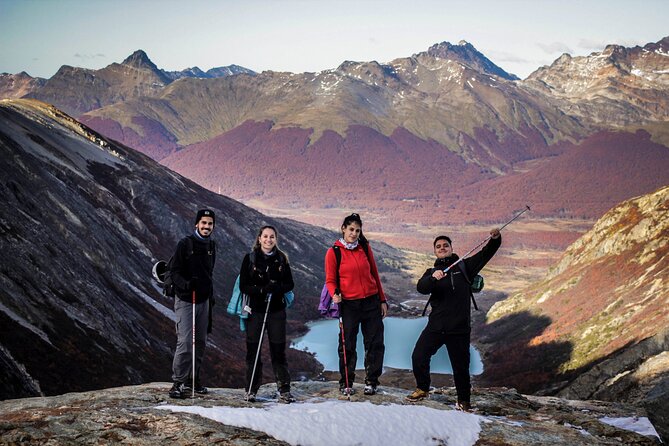
The timing is one of the tour’s most important practical details. The advertised duration is about seven to eight hours, beginning at 7:30 a.m. Yet one booking was changed the night before to a 12-hour outing. That created a serious problem for a person traveling from a cruise ship, who had limited time in port.
This is especially important if you have a cruise departure, a flight, or another fixed appointment. Confirm the total duration and pickup arrangements directly before the morning of the tour. Do not assume that the shorter advertised schedule will apply to every departure.
On one fast-moving outing, the group reached Laguna Esmeralda in about 60 to 70 minutes, with only two very brief pauses. After the lagoon, there was one short stop for water and a restroom break before the steep climb. At the high point, the group had roughly 20 to 30 minutes to eat, rest, and take photographs.
That is not much time for a major mountain outing. You may need to choose between lunch, pictures, and simply catching your breath. If you prefer to linger and photograph changing light on the peaks, this schedule could feel rushed.
The return included only one short water stop after the descent before the group continued to the endpoint. A fast pace can be useful if you need to finish within a tight window, but it can also reduce the pleasure of being in the mountains.
Lunch, equipment, and what you must bring
Lunch is included, which is helpful on a long morning outside. The food has been described as a small, basic sandwich, with sweets and tea adding a more pleasant touch.
I would treat lunch as practical fuel rather than a full meal. The tour information does not specify the exact menu or quantity, so if you usually eat heavily during strenuous activity, clarify what is supplied before departure.
The included equipment is a strong part of the package:
- Trekking poles
- Crampons
- Helmet
- Private transportation
- Lunch
Your outfit is not included. That means you are responsible for arriving in suitable clothing for a wet, cold, and changeable mountain outing. The supplied information does not give a specific clothing list, so ask the provider what they expect you to bring.
Do not confuse included technical gear with a fully outfitted excursion. You still need to take personal responsibility for clothing and comfort. The trail crosses forest, bog, and high mountain ground, so being poorly dressed could make an already hard day much less enjoyable.
The guide can make or break the day
The strongest praise has gone to the guides’ care on the trail. Manuel has been called a star for giving clear instructions about foot placement and adjusting the walking speed. Emi has also been praised for knowing the area well and keeping a good pace.
Those details are more valuable than broad promises. On a route with peat bogs, steep ground, and changing surfaces, clear instructions help you avoid careless slips. A guide who watches the group can also spot when someone needs assistance.
The problem is not usually the attitude of the guides. Even the more critical experiences describe the guides as friendly, professional, and supportive. The harder issue is the structure around them: late communication, transportation delays, changing duration, and a group size that may not match your expectations.
Before setting out, ask three direct questions:
- How many people are booked today?
- Is the expected duration seven to eight hours or closer to 12?
- Is the plan to reach Ojo del Albino Glacier, or is Laguna Esmeralda the practical endpoint?
Clear answers will help you decide if the tour fits your day and your fitness.
Is $210 a fair price?
At $210 per person, this is not a budget walk to Laguna Esmeralda. The price makes more sense if you value private transport, a guide, lunch, and technical equipment in one package.
Crampons, poles, and a helmet are particularly useful if you do not already have them. Transport from Ushuaia also removes the hassle of arranging the trailhead connection. For someone seeking a guided high-country outing rather than a simple self-guided lagoon walk, the package can be reasonable.
The value drops if you expect a truly private experience, generous rest stops, or a guaranteed glacier finish. A large group moving at one pace can limit the personal attention that normally justifies a private-tour price.
The fact that this experience is often booked about 56 days ahead suggests that planning early is wise. It also means you should not wait until the last minute if your dates are fixed. At the same time, early booking makes it even more important to confirm the actual duration and group arrangement close to departure.
Who should book this Ushuaia trek?
I would recommend it to an active visitor who wants more than a viewpoint and is ready for a physically demanding day. You should enjoy long walks, steep climbs, uneven surfaces, and a schedule that may keep moving.
It is a good match if you want to see several different settings in one outing: roadside mountain views, wetlands, lenga forest, peat bogs, Laguna Esmeralda, and the higher route toward Ojo del Albino Glacier.
I would be cautious if you have limited hiking experience, need frequent long breaks, or have a strict cruise schedule. The outing may also disappoint you if the glacier itself is the one non-negotiable goal. Group ability and weather can prevent the full route, and the day may not allow much extra time.
Free cancellation is available up to 24 hours before the start time for a full refund. Changes made inside that window are not accepted, and poor weather can lead to a new date or full refund. The operator can also cancel if the minimum number of participants is not reached, with a different date or experience offered.
Should you book the Ojo del Albino Glacier tour?
Book it if your priority is dramatic scenery and a serious mountain walk, and you can handle some uncertainty about pace and timing. The route near Ushuaia is genuinely impressive, and the strongest guide feedback points to a well-led outing when the group and schedule work properly.
Think twice if you are paying mainly for a private, leisurely experience or if you must return at a precise hour. Before paying, confirm the group size, the real duration, and the conditions for reaching the glacier.
For the right person, this can be a memorable day in Tierra del Fuego. Just arrive fit, prepared with your own suitable clothing, and realistic about the difference between a planned glacier trek and a guaranteed glacier finish.
FAQ
Where does the tour start?
It starts at the End of the World Sign at Maupu, Pres. Julio Argentino Roca y, in Ushuaia, Tierra del Fuego, Argentina.
What time does the tour begin?
The scheduled start time is 7:30 a.m.
How long does the experience last?
The stated duration is approximately seven to eight hours. One departure was changed at the last minute to 12 hours, so confirm the expected duration before going.
What is included in the price?
The price includes lunch, private transportation, trekking poles, crampons, and a helmet.
Is clothing included?
No. The tour information lists outfit or clothing as not included.
How fit do I need to be?
You should have at least a moderate level of physical fitness. The climb beyond Laguna Esmeralda is steep and demanding.
What happens if the weather is poor?
If bad weather causes the tour to be canceled, you will be offered another date or a full refund.
Recently added in Ushuaia
- Ushuaia: Tour: Beagle Channel Navigation★ 4.7 · 3 reviews
- USHUAIA: LANDSCAPES AND DELIGHTS – CITY TOUR★ 4.5 · 3 reviews
- Full Day Trip to Tierra del Fuego National Park★ 4.2 · 3 reviews
- Private Experience “Tierra del Fuego” National Park★ 4.7 · 3 reviews
- Trekking Esmeralda Lagoon★ 4.8 · 3 reviews
- Emerald Lagoon Helicopter seeing★ 5.0 · 3 reviews
- From Ushuaia: Private Fagnano Lake 4WD Tour★ 5.0 · 4 reviews
- Tierra del Fuego National Park★ 4.5 · 4 reviews
Ushuaia Tours, compared.
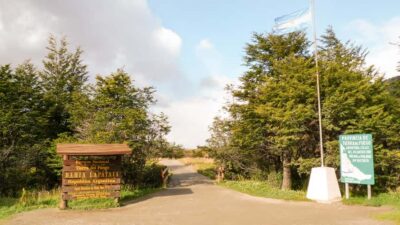
Ushuaia: National Park & Train of the End of the World Tour
Read our review →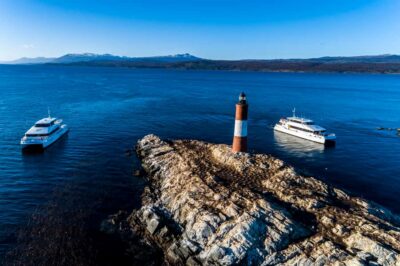
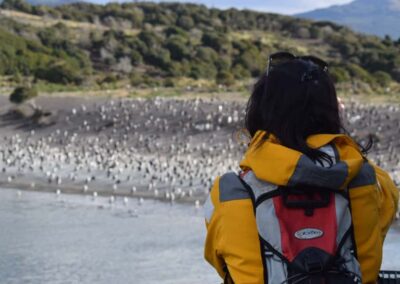
Ushuaia: Beagle Channel & Sea Wolves Island Catamaran Cruise
Read our review →
National Park and Train Trip End of the World Guided Tour
Read our review →
From Ushuaia: Tierra del Fuego Emerald Lagoon Trekking Tour
Read our review →
Ushuaia: National Park, Train, and Beagle Channel Navigation
Read our review →Browse the lists this tour appears in