
Reviewed · SALTA TOURS
Quebrada de Humahuaca and Purmamarca
The main reason to take this tour is simple: it puts the boldest scenery and oldest settlements around Salta into one long, carefully packed day. Seven Colors Hill, the red-and-gold cliffs around Maimará, and the broad Quebrada de Humahuaca all deliver the visual punch, while Tilcara, Uquía, and Humahuaca add indigenous and colonial culture.
I like two things especially. First, round-trip hotel transport removes the hassle of finding your way north on Route 9. Second, the route mixes major sights with smaller stops, including the Tropic of Capricorn sundial and Uquía’s 17th-century paintings. The drawback is the schedule: 12 hours is a serious day, and shared transport can stretch it longer if pickups, drop-offs, or other tour groups run late.
Key things to know before you book
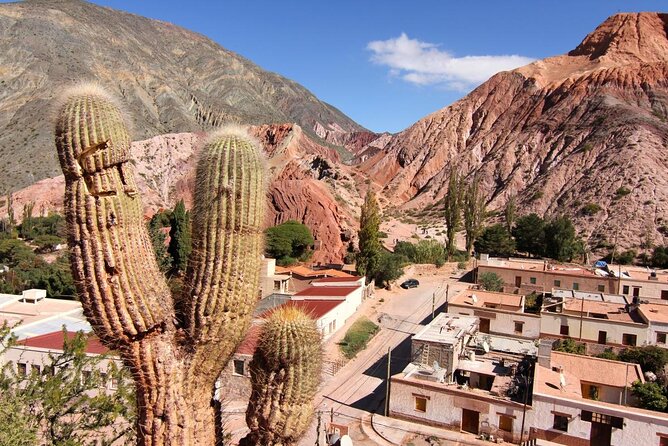
- Purmamarca gives you the first big view: You’ll see the cacti-roofed church, local crafts, and Cerro de los Siete Colores in one compact stop.
- The route covers three major towns: Tilcara, Humahuaca, and San Salvador de Jujuy each offer a different look at northern Argentina.
- The day is scenic but tightly timed: Most stops last 20 to 60 minutes, with about two hours in Humahuaca.
- Lunch is not included: You’ll pay for food and drinks yourself, and you can bring your own provisions.
- The English service needs checking: Some guides, including Abel, Pamela, Maria, Freddy, and Eva, have been praised for clear English, but mixed-language groups can mean shorter English explanations.
- The price is $86 per person: That is fair for a full day with transport and a professional guide, but less attractive if you want slow walks or long meals.
Why the Quebrada de Humahuaca makes such a strong day trip
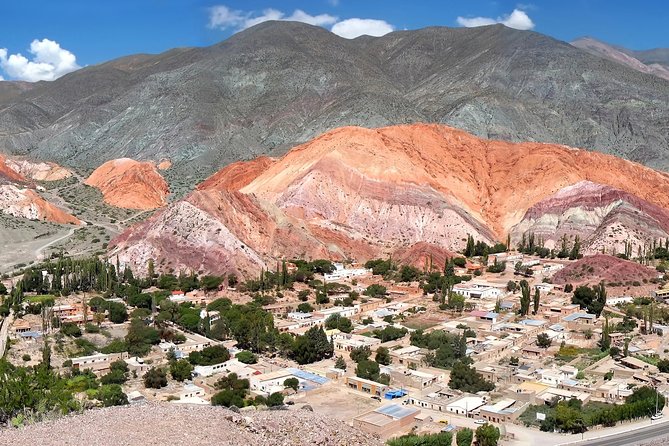
The Quebrada de Humahuaca is a 155-kilometer mountain valley and ravine in Jujuy Province. The Río Grande runs through it during the summer, and the route has served as an Incan caravan road, a colonial trade corridor, and a setting connected with Argentina’s War of Independence.
That history matters because the valley is not just a series of pretty rock walls. The road links villages where indigenous traditions, Catholic churches, craft markets, pre-Incan ruins, and Spanish colonial buildings sit close together. You get a useful introduction to northern Argentina without having to plan several separate transfers.
The scenery changes as you travel. You’ll see dry, striped hills, open valley views, cacti, and, on the return, more subtropical vegetation along Route 9. The guide’s commentary can make a large difference here. Strong guides such as Abel, Pamela, Gaucho Mike, Maria, Freddy, Hasan, Jessie, and Eva have been singled out for energy, warmth, and clear explanations, though the exact guide is not guaranteed.
Other Salta days worth putting on the same trip:
- From Salta: Full-Day Trip to Salinas Grandes and Purmamarca
★ 4.6 · 914 reviews - From Salta: Full-Day Tour to Cafayate with Wine Tasting
★ 4.5 · 478 reviews - From Salta: Salinas Grandes, Purmamarca & Los Colorados Hike
★ 4.3 · 356 reviews
The long morning drive from Salta
Pickup begins early, with the stated start time at 7 a.m. Hotel pickup is included at most Salta hotels, but allow patience at the start. This is a shared service, and the vehicle may collect several people before leaving the city.
The drive to Humahuaca can take about two and a half hours, depending on stops and road conditions. That is a lot of sitting before the main northern sights, but it is also when the valley gradually unfolds. Bring a jacket or sweater, sunscreen, water, and comfortable shoes. You may bring your own food and drinks, which is useful if you prefer a quick snack instead of waiting for lunch.
Vehicle size can vary. The tour is advertised with an air-conditioned coach and a maximum group size of 30, while some departures have used a smaller van. A minibus can feel more personal, but a full vehicle makes the day less flexible. One past breakdown also caused a long delay, so I would not schedule an important evening activity immediately after the return.
Purmamarca and Cerro de los Siete Colores
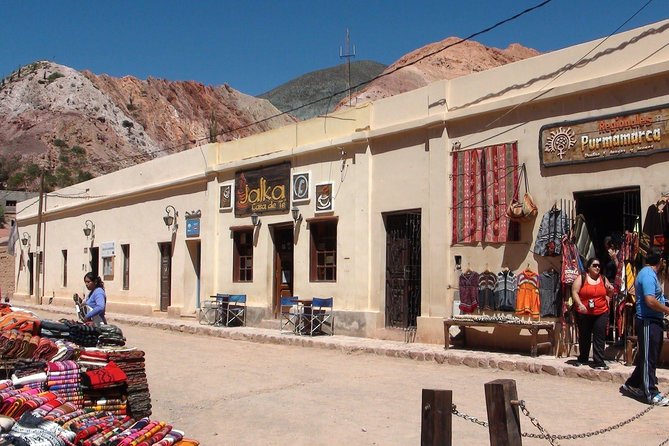
Purmamarca is one of the day’s most appealing stops because the village and the scenery are close together. You’ll walk past the local church, whose roof is covered with organ-pipe cacti, then browse a craft market selling items such as jewelry and wool rugs.
The star is Cerro de los Siete Colores, a large formation striped in creamy shades, green, and deep plum. The colors are strongest when the light is good, and the hill gives you the kind of first photograph that explains why this route is so popular.
The scheduled time here is roughly one hour in the village, plus about 20 minutes at the hill. That is enough to look around and shop, but not enough for a leisurely wander. Be alert during the photo stop, since one account describes stopping near the road rather than at a broad, dedicated viewpoint. If you want a quiet village experience, Purmamarca may feel rushed.
There is also a practical warning about the route. Some shared departures have entered Purmamarca more than once to collect or deliver other passengers, cutting into the planned visit. Ask at the start of the day how your group will handle pickups, especially if a fixed sightseeing schedule matters to you.
Tilcara and the Pucará ruins
Tilcara offers the strongest archaeological stop. On the way into town, you’ll pause at a viewpoint for pre-Incan ruins, then climb toward the Pucará de Tilcara, a hilltop settlement with broad views over the Quebrada.
The ruins help explain how people lived and defended themselves in this dry valley before the Spanish period. The town square and archaeological museum add more context, though the time allotted is about one hour. You’ll get a useful introduction, not a slow archaeological visit.
The entrance fee to the Tilcara ruins is not included. This is easy to overlook because the main tour price covers transport and guiding, but you should carry extra money if you want to enter. One past assessment also referred to the botanical garden connected with the site, so confirm locally which areas are open and what the current admission covers.
I would rate Tilcara as one of the places most likely to make you wish for more time. If you prefer ruins, museums, and a slower look at one town, a dedicated Tilcara day trip will serve you better. If you want broad coverage, this short visit works well.
Completely different, still leaving from Salta:
- Full-Day Tour Cafayate Calchaqui Valleys with Wine
★ 4.5 · 347 reviews - From Salta: Cafayate, land of wines and imposing ravines
★ 4.4 · 347 reviews - From Salta: Serranías del Hornocal & Hill of 14 Colors Tour
★ 4.4 · 339 reviews - From Salta: Cachi and Los Cardones National Park Tour
★ 4.5 · 285 reviews
Huacalera, the Tropic of Capricorn, and La Pollera de la Coya
At Huacalera, the tour crosses the Tropic of Capricorn. A sundial marks the point, and you’ll have a short stop to take photographs.
The nearby La Pollera de la Coya hill adds another splash of color. Its folds and stripes resemble a traditional skirt, and the formation is a good example of how local names often turn geology into something easy to remember.
This is a brief roadside stop, usually about 30 minutes. Treat it as a chance to stretch your legs and take pictures rather than a full cultural visit. The value is in the variety: after the village streets and archaeological ruins, you get a quick geographic marker and a different type of rock formation.
Uquía and the Cuzco School paintings
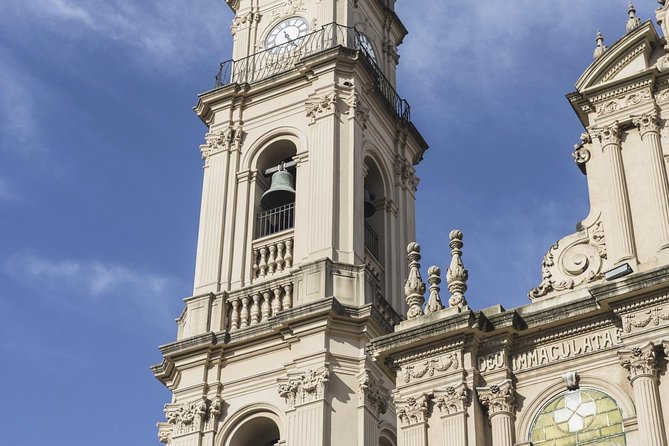
Uquía is a small but worthwhile stop. Its church contains paintings from the 1600s made by indigenous students of the Cuzco School, a Catholic artistic tradition founded in Peru.
The paintings show the cultural blending that shaped the region. They are not simply European religious works placed in Argentina. Indigenous artists adapted imported religious forms, creating an art tradition that reflects both colonial influence and local hands.
The visit lasts about 30 minutes, so you won’t have time for an extended study of every work. Still, this stop adds depth to a day otherwise dominated by rock formations and photographs. I would pay close attention to the guide here, since a few well-chosen details can turn a short church visit into one of the day’s more memorable moments.
Humahuaca, the midday centerpiece
Humahuaca is the northernmost major stop and the most densely populated town in the valley. Its white colonial buildings and cobblestoned streets give you a stronger sense of an established settlement than the smaller villages earlier in the day.
You’ll walk toward the Monument of Independence, built in 1950, and climb steps for views toward the Río Grande valley. The local cathedral contains more Cuzco School paintings. Together, the monument, church, and town streets make Humahuaca the cultural center of the excursion.
You have about two hours here, including lunch. That is the most generous town visit of the day, but it still goes quickly. Lunch is at your own expense, and the guide may recommend a local restaurant. I would ask for several choices rather than automatically following the group, since past meals have received mixed feedback, including one serious complaint about undercooked chicken.
The town is also where shared tour arrangements can create the biggest delays. Some departures combine different excursions in one vehicle. If another group has a longer program, you might wait while its members visit additional sites. One especially frustrating departure reportedly turned a planned 12-hour day into roughly 15 hours, with more than four hours spent waiting in Humahuaca. This does not appear to happen on every departure, but it is the most important risk to understand before booking.
Painter’s Palette and the return through Jujuy
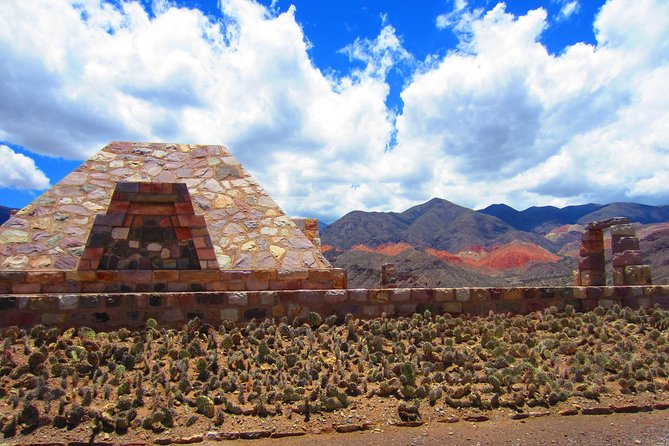
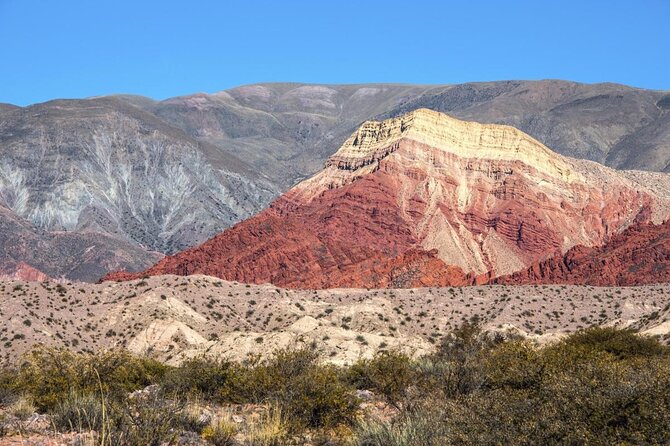
After lunch, the road turns south toward Maimará and La Paleta del Pintor, or Painter’s Palette. The formation rises in triangular, striped sections of rose, green, and ocher, framing the town below.
This stop is different from Seven Colors Hill. Purmamarca gives you a prominent hill beside a compact village, while Painter’s Palette works as a wider scene, with the colored ridges forming a backdrop to Maimará. The return route is timed so that the light can work well on the formations, though the exact photo opportunity depends on traffic and the guide’s stopping points.
The tour then continues to San Salvador de Jujuy. You’ll see the city’s cathedral, Flag’s Hall in French Baroque style, and the Government House. Flag’s Hall is particularly tied to Argentine national history, giving the final urban stop a different focus from the indigenous villages and pre-Incan sites.
The last stretch follows winding Route 9, with views of local plant life, Santa Laura Pass, the La Cienaga dam, Las Maderas, Campo Alegre, and Vaqueros. The scenery remains attractive, but this part can feel long after a full day of stops. Drop-off may also take extra time as the vehicle returns passengers to different hotels.
Guides, language, and group size
The guide can shape the day as much as the scenery. Several guides have received strong praise for friendliness and care, including Abel, Pamela, Maria, Freddy, Hasan, Jessie, and Eva. One guide arranged seating beside her for the only English-speaking passenger and helped with ordering lunch, which is exactly the sort of small practical support that makes a mixed-language tour easier.
English quality is not fully consistent. Some departures have had excellent bilingual guides, while others gave English speakers a shorter version after the Spanish explanation. One booking even had a guide who spoke only Spanish, despite an expectation of English service.
If English commentary is important to you, confirm the language with the operator before departure and again at pickup. A mixed-language tour can still work well, but you should know that the guide may need to repeat every explanation in two languages. That can make roadside sights pass before the English version is finished.
The maximum group size is 30, though some departures have been much smaller. A seven-person group or a small van offers a more relaxed feel. A full coach costs less per person but gives you less control over timing.
Is $86 good value?
At $86 per person, the tour offers solid value if you want transport, a guide, and a broad introduction to the Quebrada in one day. Hotel pickup and drop-off are included, as is the air-conditioned vehicle, and the route covers several places that would be difficult to connect independently without your own car.
The price is less compelling if you count the cost of your time. You’ll spend many hours on the road, lunch is extra, and admission to the Tilcara ruins is extra. You are also paying for convenience rather than a slow, personal experience in each town.
I see this as a good first visit for someone based in Salta with limited time. It is also useful if you do not want to manage long-distance buses, changing routes, or navigation in unfamiliar mountain country. If you have several days in the region, spending a night in the Quebrada would give you more time for walks, markets, and evening light.
Who will enjoy this day most
I would choose this tour if you want maximum coverage and strong scenery in a single day. It suits first-time visitors, photographers who want colorful hills, and people interested in the overlap of indigenous, Incan, colonial, and Argentine history.
It is less suitable if you dislike early starts, long vehicle rides, fixed meals, or short visits. Families and most generally mobile visitors can participate, but comfortable shoes matter because the day includes walking on town streets and around archaeological sites.
Bring sunscreen, a sweater or light jacket, water, snacks, and cash for lunch, crafts, and the Tilcara entrance. Comfortable clothing will serve you better than anything formal.
Should you book the Quebrada de Humahuaca tour?
Yes, if you want an efficient overview of northern Argentina and can accept a long, tightly timed day. The scenery is the main reward, but the churches, paintings, ruins, markets, and independence sites keep the trip from becoming a simple drive through the hills.
Book it with realistic expectations. Ask about the guide language, confirm the pickup window, and avoid placing a nonrefundable evening plan after the tour. If you want more time in Purmamarca or Tilcara, choose a slower private trip or an overnight stay instead.
Free cancellation is available up to 24 hours before the local start time. Since the tour requires a minimum number of participants, a cancellation by the operator may lead to another date or a full refund.
FAQ
What is included in the Quebrada de Humahuaca tour?
The tour includes hotel pickup and drop-off, a professional guide, and transport in an air-conditioned vehicle.
Is lunch included?
No. Food and drinks are not included. You may bring your own food and drinks, or buy lunch in Humahuaca at your own expense.
Is admission to the Tilcara ruins included?
No. The entrance fee to the Tilcara ruins is not included in the tour price.
What time does the tour start?
The stated start time is 7 a.m. Pickup is from selected hotels in Salta.
How large is the group?
The maximum group size is 30 people. Some departures may use a smaller van and have fewer participants.
Can I cancel for a full refund?
Yes. You can cancel for a full refund if you do so at least 24 hours before the experience start time. Changes or cancellations made less than 24 hours before departure are not accepted for a refund.
Recently added in Salta
- From Salta: Cafayate, Salinas Grandes, & Hornocal Tour★ 4.7 · 3 reviews
- From Salta: 3-Day Cafayate, Cachi, and Humahuaca Guided Trip★ 4.7 · 3 reviews
- Salta en un Bocado – Cultural Tour & Empanada Tasting★ 5.0 · 3 reviews
- From Salta: Cafayate, Cachi, & Hornocal 3-Day Tour★ 4.0 · 3 reviews
- Salta: Tour to the Salinas Grandes and Purmamarca★ 3.7 · 3 reviews
- From Salta: Cachi and Salinas Grandes 2-Day Guided Trip★ 4.1 · 3 reviews
- From Salta: Full-Day Tours of Cachi and Salinas Grandes★ 4.5 · 3 reviews
- Salta or Jujuy: Iruya and Salinas Grandes 2-Day Tour★ 4.3 · 3 reviews
Salta Tours, compared.
From Salta: Full-Day Trip to Salinas Grandes and Purmamarca
Read our review →
From Salta: Full-Day Tour to Cafayate with Wine Tasting
Read our review →
From Salta: Salinas Grandes, Purmamarca & Los Colorados Hike
Read our review →
From Salta: Cafayate, land of wines and imposing ravines
Read our review →
Full-Day Tour Cafayate Calchaqui Valleys with Wine
Read our review →
From Salta: Serranías del Hornocal & Hill of 14 Colors Tour
Read our review →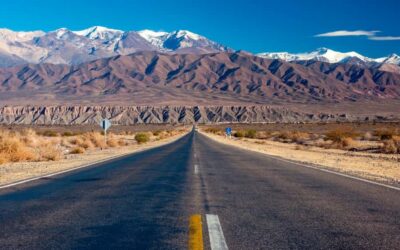
From Salta: Cachi and Los Cardones National Park Tour
Read our review →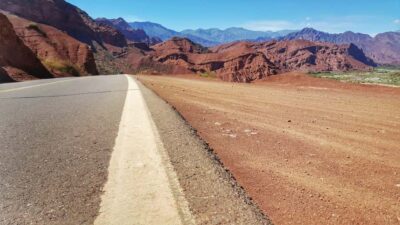
From Salta: Cafayate Day Trip with Wine Tasting
Read our review →Browse the lists this tour appears in