
Reviewed · MENDOZA TOURS
Wonders of the High Andes from Mendoza
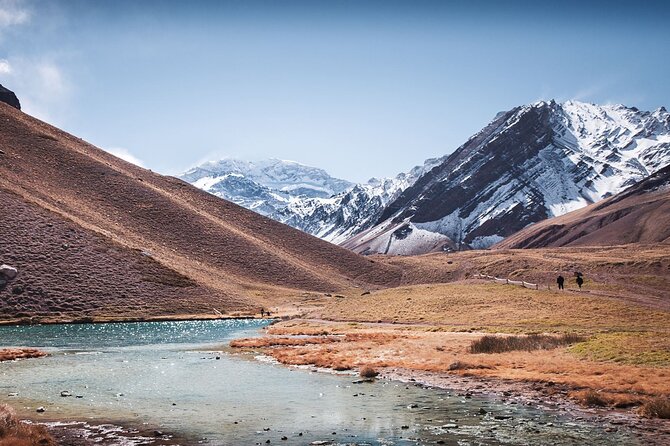
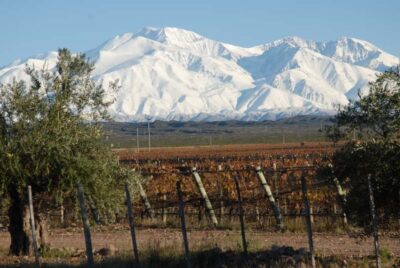
The big draw here is the long climb from Mendoza into the High Andes, where the scenery changes from river valleys and vineyards to bare, sharply folded peaks. In one day, you reach Uspallata, Puente del Inca, the Aconcagua viewpoint, Las Cuevas, and possibly the Cristo Redentor monument near the Chilean border.
I like that you can see this huge stretch of mountain country without renting a car or worrying about Route 7. I also like the variety: a dam, old Andean settlements, railway remnants, a natural stone bridge, Argentina’s highest mountain, and a border monument all appear in one outing.
The catch is the distance. This is roughly a 400-kilometer round trip, much of it spent in a minibus or coach. English guiding can be uneven, and the Cristo Redentor road may close because of snow, weather, or heavy truck traffic.
High Andes highlights at a glance
- Aconcagua viewpoint: Get a clear look at the highest mountain in the Western Hemisphere, listed here at about 6,900 meters.
- Puente del Inca: See a striking natural rock bridge formed around hot springs.
- Potrerillos Dam: Pass an important water and power project along the Mendoza River.
- Las Cuevas at 3,200 meters: Reach a small European-style mountain village near the Chilean border.
- Cristo Redentor at 4,200 meters: Visit the symbolic monument to Argentine-Chilean friendship when the road is open.
- A full day for $67: The fare covers transport, a guide, and selected hotel pickup, but not meals or drinks.
Leaving Mendoza for the Potrerillos Dam
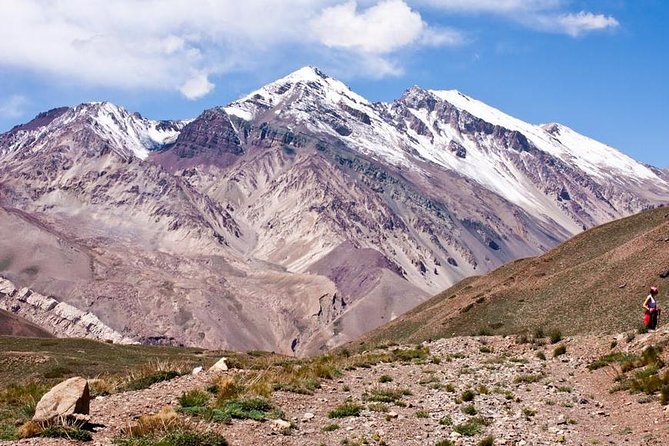
Pickup begins around 7:30 a.m. from selected hotels in Mendoza. The vehicle first follows the Mendoza River toward Uspallata, passing the Cordon del Plata range and Potrerillos Dam.
Potrerillos is more than a quick photo stop viewed through a window. It is a major hydraulic project that generates electricity and sends irrigation water across the region. That water helps explain how Mendoza supports agriculture in an otherwise dry part of Argentina.
The early portion of the route gives you a useful sense of scale. Mendoza feels urban and cultivated. As the vehicle moves west, the built-up areas thin out, the river becomes a guide through the valley, and the mountains take over the view.
Pickup timing deserves attention. The stated start is 7:30 a.m., but hotel collection can take time, and past departures have sometimes run later while the vehicle gathers the rest of the group. Be ready at the confirmed location and allow patience for city pickups.
Other Mendoza days worth putting on the same trip:
- From Mendoza: 3 Wineries, Olive Oil Factory Tour & Tasting
★ 4.6 · 901 reviews - From Mendoza: High Andes Aconcagua Mountain Tour
★ 4.4 · 767 reviews - Mendoza: Half-Day Wine Tour with Tastings
★ 4.3 · 727 reviews
Uspallata and the Andean valley
Uspallata is the first substantial stop, with about an hour to look around. The town sits in a broad valley and provides a gentler introduction to the high country before the road climbs farther toward the border.
The historical interest here comes from the Huarpes, an Indigenous people connected to the area, and from Uspallata’s place near the southern edge of the Inca Empire. Your guide should explain these connections, though the depth of the commentary depends on who leads the group.
This is also a sensible place to use the toilet and buy or organize food if needed. Meals are not included, and the day is long. A full water bottle and a few snacks make the ride easier, particularly because eating options later in the route can be costly or disappointing.
Picheuta, Polvaredas, and Punta de Vacas
After Uspallata, the route continues through several small settlements and roadside points, including Picheuta, Polvaredas, and Punta de Vacas. These stops give you glimpses of the old transport corridor through the Andes.
Puente Picheuta is connected with an older crossing and the area’s military and travel history. Polvaredas is associated with the former railway route, a reminder that this mountain passage once depended on rail as well as roads.
The planned time in this section is about an hour, but the stops are not hiking excursions. You will usually get out, take photographs, listen to an explanation, and return to the vehicle. If you want long walks or quiet time alone with the mountains, this format may feel rushed.
Penitentes and the road into higher country
Los Penitentes is a former or seasonal ski area where you stop for broad views of the surrounding peaks. Entrance fees are not included, and the attraction is mainly the setting and the chance to see how the Andean slopes are used for winter recreation.
The name Penitentes refers to the distinctive ice formations found in high mountain regions, though what you see on the day will depend on the season. In winter, fresh snow can transform the entire route. In warmer months, the mountains show more of their exposed rock and layered colors.
The road itself becomes part of the tour. You are not simply being carried between unrelated sights. The changing rock, sparse vegetation, and folds in the mountains help you understand the Andes as a geological place. If geology interests you, pay attention to the colors and shapes rather than waiting only for the famous viewpoints.
Completely different, still leaving from Mendoza:
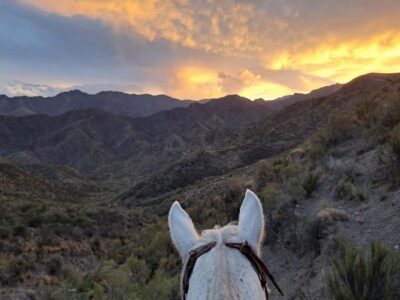
- Mendoza: Sunset Horse Back Riding in the Mountains and BBQ
★ 4.9 · 515 reviews - Andes Day Trip from Mendoza Including Aconcagua, Uspallata and Puente del Inca
★ 4.5 · 419 reviews - From Mendoza: Andes High Mountain Full-Day Tour
★ 4.7 · 208 reviews - Premium Spa Day at Cacheuta Hot Springs
★ 4.5 · 160 reviews
Puente del Inca, a natural bridge over hot springs
Puente del Inca is one of the most unusual sights on the route. Mineral deposits from hot springs formed a natural bridge across the river, giving the rock an orange, yellow, and brown appearance.
You have only about 10 minutes scheduled here, so expect a quick stop rather than a long exploration. That is enough for photographs and a look at the unusual formation, but it can feel brief after the long ride from Mendoza.
Altitude begins to matter around this section. The tour reaches much higher ground later, and one person can feel fine while another develops headache, nausea, dizziness, tiredness, shortness of breath, or blurred vision. Move slowly, drink water, and tell the guide if you feel unwell. Do not treat altitude sickness as a minor inconvenience simply because you are on a sightseeing trip.
The Aconcagua viewpoint and a very high stop
The Aconcagua viewpoint is one of the day’s main rewards. From here, you can photograph Aconcagua, the highest mountain in the Western Hemisphere, at approximately 6,900 meters above sea level.
The scheduled stop is about 30 minutes. That is usually enough to take pictures and absorb the scale of the mountain, but clouds can hide the summit. A cloudy view is not a failure of the tour. Weather changes quickly in the Andes, and no operator can guarantee a clear peak.
The viewpoint is also close enough to Puente del Inca for the two sights to feel connected. You see the mineral bridge below the dramatic peaks, then look toward the enormous mountain system beyond it.
Bring a warm layer even if Mendoza is hot when you leave. The temperature can drop sharply at altitude, and the open viewpoint can feel cold. Sunglasses, sunscreen, water, and sturdy shoes are practical choices, even though this is not presented as a demanding hike.
Las Cuevas at 3,200 meters
Las Cuevas is the final village on the international route before the tunnel toward Chile. At about 3,200 meters, or 10,500 feet, it has an unusual European-style appearance that feels out of place among the dry mountain slopes.
The stop lasts about an hour. This is often the main meal break, but food and drinks are on your own. Several accounts describe the food as expensive or poor, so I would not treat lunch as part of the value of the tour. A recent account put a lunch with a drink at 20,000 Argentine pesos, though prices change quickly in Argentina.
Use the time for a short walk, photographs, and a careful check of how you feel. Las Cuevas is high enough for altitude symptoms to become serious. If you already know that you react badly to elevation, this full-day ascent may not be a comfortable choice.
Cristo Redentor and the highest road section
The Cristo Redentor de los Andes monument represents cooperation between Argentina and Chile. It sits at around 4,200 meters, or 13,780 feet, above sea level, on a mountain road between Las Cuevas and the international tunnel.
This is the most conditional part of the outing. The visit is offered only from January through March, and access depends on weather and traffic. Snow, road conditions, or lines of international trucks can prevent the vehicle from reaching the monument.
That limitation is important because some bookings may present Cristo Redentor as part of the route, while the actual visit cannot be promised. Ask at booking time how the operator handles the stop in your travel month. In summer, when the monument is accessible, the return to Mendoza may be as late as 8 p.m. The standard return time is around 5:30 p.m. if the monument is not visited.
The road to the monument can be rough, and one guide and driver team received particular praise for handling it carefully. Still, conditions vary, and this is a mountain road rather than a smooth city transfer. If you reach the statue, you gain a striking high-altitude view and a meaningful symbol of the two countries. If you do not, the Aconcagua viewpoint and the rest of the route remain the main sights.
What the $67 fare really buys you
At $67 per person, the tour offers good value if your priority is seeing the major Andean sights in one day. You receive an air-conditioned vehicle, a professional guide in Spanish and English, and hotel pickup and return at selected hotels.
The fare does not include food or drinks. It also does not turn the outing into a small private tour. The maximum group size is listed as 40, and the vehicle may be a minibus or a larger bus depending on demand. One booking problem came from expecting a small-group minivan despite the service being a regular group tour.
That distinction affects comfort. A full vehicle means more time collecting people, slower stops, and less room for bags and legs. Some accounts describe a cramped minibus, while others report a good vehicle and punctual service. I would book this for the route, not for luxury transport.
Compared with renting a car, the price also covers the relief of driving long mountain roads and finding the correct stops. You can look out the window, listen to commentary, and leave the navigation to someone else. For a solo visitor or anyone uneasy about mountain driving, that has real value.
The guide and language question
Guide quality can make or break this day. Guides named Federico, Rocío, Paula, Esteban, Javier, Romina, and Laila appear in individual accounts, with several described as clear, caring, or good at explaining the Andes and local history.
English service is less consistent than the advertised Spanish-English format suggests. Some guides have spoken good English and made a point of checking that everyone understood. In other cases, the guide spoke mainly Spanish, relied on another guide for short translations, or forgot to include the English-speaking passengers in the commentary.
If you need detailed English explanations, confirm this directly before departure. A basic written information sheet would be useful, but it is not listed as included. The scenery does not require translation, but the Huarpes, Inca, railway, dam, and border history are much more meaningful when the guide explains them well.
Practical advice for a more comfortable day
I would pack for several conditions, not just the weather in Mendoza.
- Wear warm layers, since the high points can be cold even in summer.
- Carry water and snacks because meals are not included.
- Use sunscreen and bring sunglasses for the strong high-altitude light.
- Keep your camera ready because some photo stops are short.
- Move slowly at Puente del Inca, Aconcagua, Las Cuevas, and Cristo Redentor.
- Tell the guide quickly if you develop headache, nausea, dizziness, unusual fatigue, or trouble breathing.
- Confirm the pickup hotel and time carefully, since selected hotels and meeting points can differ.
- Expect a long day in the vehicle, especially if the Cristo Redentor road is open.
The tour is suitable for most people according to the stated participation information, but most people does not mean everyone will feel comfortable at 4,200 meters. The physical challenge comes less from walking and more from altitude, cold, road time, and the early start.
Free cancellation is available up to 24 hours before departure. Poor weather can also lead to a different date or a full refund, which matters for a route with a conditional high-altitude monument.
Should you book the High Andes from Mendoza?
Book it if you want the broadest possible introduction to the Andes from Mendoza without driving. The combination of Potrerillos, Uspallata, Puente del Inca, Aconcagua, Las Cuevas, and possibly Cristo Redentor gives you a strong sense of the region in one demanding day.
Skip it if you dislike long bus rides, need dependable English commentary, want generous time at each sight, or are concerned about altitude sickness. A small-group or private option may suit you better, but this $67 tour is the practical budget choice.
My advice is to treat the outing as a scenic road journey with several important stops, not as a day of hiking. Pack food, expect changing conditions, confirm the language arrangements, and keep your expectations flexible about Cristo Redentor. With that approach, the raw mountain scenery and the chance to see Aconcagua make this a worthwhile use of a day in Mendoza.
FAQ
How long does the tour last?
The tour takes about 10 hours. The normal return to selected hotels is approximately 5:30 p.m., though a summer visit to Cristo Redentor can extend the day until about 8 p.m.
What time does the tour start?
The stated start time is 7:30 a.m. Pickup is from selected hotels in Mendoza, and collecting several passengers can make the actual departure from the city later.
Is hotel pickup included?
Yes, hotel pickup and drop-off are included for selected hotels. The activity begins and ends back at the meeting point or selected pickup arrangement.
Is Cristo Redentor guaranteed?
No. The visit depends on weather and traffic conditions and is offered only from January through March. The route may be unable to reach the monument because of snow, road conditions, or international traffic.
Is food included?
No. Food and drinks are not included in the price. You should plan to pay separately for lunch and carry water or snacks.
How large is the group?
The tour can include up to 40 people. Depending on demand, transportation may be by minibus or a larger bus.
Can I cancel for a full refund?
Yes, if you cancel at least 24 hours before the experience start time. Cancellations or changes made less than 24 hours before departure are not refunded, except when poor weather causes the operator to cancel and offer another date or a full refund.
Recently added in Mendoza
- From Mendoza: Atuel Canyon Day Trip★ 4.4 · 3 reviews
- Mendoza: Tour with tasting and lunch High Altitude Wineries★ 4.7 · 3 reviews
- Mendoza: Tango Show with Dinner at Hualta Winery Hotel★ 4.6 · 3 reviews
- Mendoza: Hiking, Meditation & Yoga in the Andes with Lunch★ 5.0 · 3 reviews
- Wine Icons: Meet the sparkling world of Chandon★ 5.0 · 3 reviews
- Uco Valley, Mendoza: One-Day Private Wine Tour Experience★ 5.0 · 4 reviews
- Mendoza: half day in the Andean foothills★ 4.0 · 4 reviews
- Half Day Tour of Wineries and Olive Oil from Mendoza★ 3.9 · 4 reviews
Mendoza Tours, compared.
From Mendoza: 3 Wineries, Olive Oil Factory Tour & Tasting
Read our review →
Mendoza: Sunset Horse Back Riding in the Mountains and BBQ
Read our review →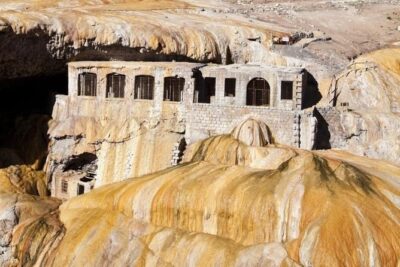
Andes Day Trip from Mendoza Including Aconcagua, Uspallata and Puente del Inca
Read our review →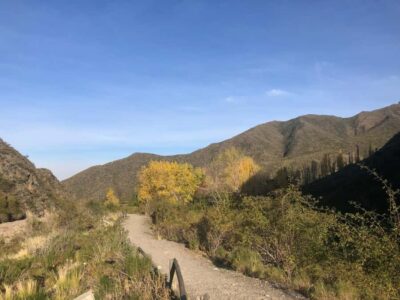
From Mendoza: Andes High Mountain Full-Day Tour
Read our review →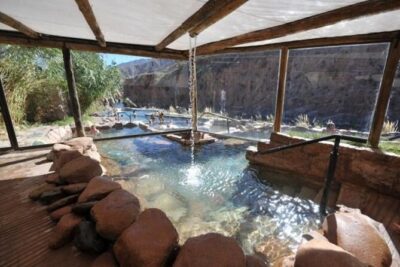
Mendoza: Full Day Wine Tour with 3 Course Lunch
Read our review →
Browse the lists this tour appears in